DJI Initiates Legal Action, Insta360 Responds with Emotional Weibo Post
 03/31 2026
 522
522
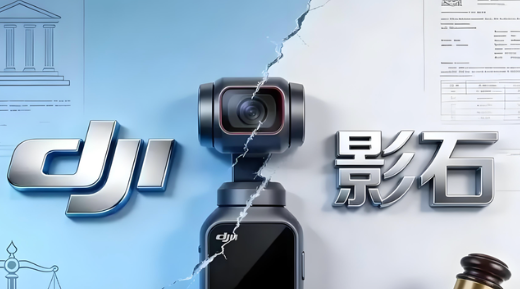
In the world of business, competition centers on technology. Courtroom battles hinge on reason, while winning the public opinion war demands strategic tactics to capture hearts and minds.
The business landscape is inherently tumultuous—competition is the constant, and peace is but a fleeting moment.
The global drone leader DJI and the panoramic camera giant Insta360 are currently embroiled in a clash—engaging in commercial, legal, and public opinion battles in succession.
Recently, DJI filed a lawsuit against Insta360 Innovation in the Shenzhen Intermediate People's Court, Guangdong Province, involving six patent ownership disputes. The court has accepted the case.
The six patents in question include three invention patent applications and three granted utility model patents, with technical fields primarily focused on drone flight control, structural design, and image processing.
In its complaint, DJI alleges that the first inventors or core inventors of all six patents were once employed in DJI's core R&D department, directly engaged in work closely related to the disputed patents. The timing is particularly noteworthy—these disputed patents were invented by former employees within one year of their departure from DJI.
According to Article 6 of the Patent Law of the People's Republic of China and Article 13 of its Implementing Regulations, inventions made by employees within one year after retirement, transfer, or termination of employment, if related to their original duties or tasks assigned by the original unit, are considered service inventions, and the patent application rights belong to the original unit. It appears that DJI's lawsuit is well-founded.
With solid evidence and clear legal reasoning, after DJI took legal action, Insta360's CEO Liu Jingkang couldn't remain passive and personally joined the public opinion fray, taking to Weibo to insist that the disputed patents were invented during the employee's tenure at Insta360.
In the realm of business, competition revolves around technology; legal battles hinge on reason; and winning the public opinion war requires strategic tactics to capture hearts and minds. The notion that "the underdog is always right" often proves effective. However, the market and the court do not operate on emotions; they invest only in strength.
I
Courtroom Tactics: Innovation as the Limit, Infringement as the Red Line
DJI, a prominent player in the business world, has traditionally maintained a low-key and relaxed demeanor—previously, DJI had never initiated a patent ownership dispute in China. After all, DJI is not a "patent troll"; it relies on product sales, not patent enforcement, for profit.
Why has DJI abandoned its laid-back approach this time, wielding the first domestic patent infringement lawsuit against Insta360? Probably because it could no longer tolerate the situation—I invest money and talent in R&D, while you easily poach talent and undermine me; who could tolerate that?!
With detailed evidence and clear legal provisions, DJI seems to have the upper hand. Of course, the final verdict rests with the court.
Perhaps to avoid suspicion, for two of the disputed patents, Insta360 registered the inventors as "requesting non-disclosure of name" in their Chinese applications. However, in the corresponding international patent applications, the true names of the inventors, who were indeed former DJI R&D personnel, were listed.
Some unaware individuals might think DJI's lawsuit is aimed at crushing its rival—this underestimates DJI and overestimates Insta360. DJI can tolerate rivals but not infringement.
As a technology-intensive industry, breakthroughs in cutting-edge drone technologies require "systematic, capital-intensive, and long-term" efforts, demanding significant investments, top talent, long cycles, and patience from companies. Allowing infringement through poaching and taking shortcuts would severely undermine the innovation mechanism.
DJI and Insta360 have become global leaders thanks to an environment that protects innovation. By 2025, Insta360's R&D expenses had surged to 1.649 billion yuan, exceeding the total of the previous three years, demonstrating its strong emphasis on innovation.
Only by protecting innovation can more companies be incentivized to invest in long-term R&D. This concerns not just corporate interests but also industrial upgrading and even national competitiveness. Thus, a well-founded patent infringement lawsuit also serves as a "whack-a-mole" for China's overall patent protection environment.
At the macro level, the Chinese government has prioritized intellectual property protection. The Outline for Building a Strong Intellectual Property Country (2021-2035) clearly states that IP protection is a strategic goal for building a strong country and emphasizes the need to continuously strengthen the role of patent protection in incentivizing original, pioneering, leading, and disruptive innovations. The outline highlights that patent protection is crucial for creating a market-oriented, law-based, and internationalized first-class business environment, integrating national strategic scientific and technological forces and social innovation resources, and stimulating the vitality of various market entities and innovators.
Statistics show that public satisfaction with IP protection in China has risen from 80.05 in 2020 to 82.36 in 2024, while the industrialization rate of corporate invention patents has increased from 44.9% to 53.3%.
Globally, cracking down on infringement and protecting innovation are also widely recognized.
In 2017, Google's Waymo sued a former engineer. Ultimately, the latter's affiliated company, Uber, paid $245 million in compensation, and the former engineer was sentenced to prison.
In 2018, Tesla accused former battery engineer Martin Tripp of stealing confidential data and spreading false information, seeking $167 million in damages.
In 2018, Apple accused former Chinese employee Zhang Xiaolang of stealing secrets from its autonomous driving project and attempting to join XPeng Motors. Ultimately, Zhang pleaded guilty and was sentenced to prison.
In summary, cracking down on infringement and protecting innovation are global consensus, with infringers facing not only civil liability but even criminal penalties.
II
Business Offense and Defense: DJI on the Attack, Insta360 on the Defensive?
The CEO's personal involvement may stem from the immense pressure Insta360 is under—besides being pursued legally by DJI, it seems to be facing business encroachment as well.
Originally, the two companies operated in distinct areas. DJI defined the product form of consumer drones, maintaining a global market share of over 70% in the consumer drone sector for a long time. Insta360, meanwhile, leads in the panoramic camera race. According to an IDC report, Insta360 has been the global leader in the panoramic camera category for eight consecutive years.
That was until July last year when the two giants met at the peak, each entering the other's territory, and the offensive-defensive battle officially began.
In August 2025, Insta360 globally launched the 'Antigravity' panoramic drone, entering the drone sector with panoramic cameras. On July 31 of the same year, DJI released the DJI Osmo 360 panoramic camera, marking its first foray into the panoramic drone sector and breaking Insta360's monopoly in the panoramic camera market. Jiujian Middle Platform disclosed that in Q3 2025, DJI's revenue share in the panoramic camera sector reached 43%, while Insta360's dropped to 49%.
Keep in mind that panoramic cameras were once Insta360's largest revenue pillar. If DJI overtakes in this category, it would be like "cutting off the fuel supply," shaking Insta360's foundation.
The Avata 360 flagship panoramic drone, released on March 26 this year, is DJI's masterpiece.
In China, 24-hour full-channel terminal sales exceeded 10,000 units, with sales nearing 60 million yuan, a 341% increase compared to Insta360's Antigravity A1 released last year. At that time, Antigravity A1's sales in China had just surpassed 30 million yuan in 48 hours.
The popularity spread overseas, with global orders for Avata 360 quickly surpassing 100,000 units. In comparison, Antigravity A1 shipped only 30,000 units in 30 days last year, less than a third of Avata 360's volume.
Not limited to the panoramic drone category. According to a Jiujian report, DJI ranked first globally in revenue from handheld smart imaging devices (excluding gimbal cameras) in 2025 with a 55% market share, nearly double that of second-place Insta360 (30%).
According to Loctek Technology's 'China Action Camera Online Retail Market Weekly Tracking,' during Weeks 7-8 of 2026 (February 9-22), DJI Osmo 360 surpassed to take the top spot with a 52.9% sales share, while Insta360 ranked second (45.1%).
Strictly speaking, these statistics are estimates, but the data from both institutions mutually confirm that the trend is clear—under DJI's fierce attack, Insta360 is on the defensive.
The long-term competition between the two will continue, with technology, capital, and branding being key factors for victory.
First, consider technological accumulation. DJI has a first-mover advantage, with over 38,000 global patents as of 2025; in the panoramic field, Insta360 has nearly 1,400 patents, with invention patents accounting for nearly 60%. A deep technological moat can be efficiently leveraged into related fields, supporting DJI's rapid catch-up in new sectors. In the technological duel with Insta360, DJI is fighting a dimensionality reduction war.
Next, consider revenue scale—a long-term war of attrition requires sufficient resources. According to Lei Feng Network, DJI's total revenue in 2025 is estimated to be around 85-90 billion yuan. In comparison, Insta360's revenue for the same year was 9.858 billion yuan, an order of magnitude smaller. In a close-quarters battle, price wars are inevitable, requiring continuous infusions of capital. After DJI's Avata 360 release, according to Dewu data, the price of Insta360's Antigravity A1 drone's long-endurance exploration package dropped from 9,999 yuan to 7,800 yuan, a 22% reduction. Can Insta360, with revenue possibly several times smaller than DJI's, withstand the long-term bombardment?
Cross-platform ecosystem synergy is DJI's strength. With a complete ecosystem from drones to stabilizers, Osmo 360 can seamlessly integrate with DJI's products, offering a "one-stop creative solution." This ecological advantage helps DJI quickly convert existing users and boost new product sales.
The battle between the two has entered a multi-dimensional phase, and victory will ultimately belong to the stronger party.
III
Public Opinion Tug-of-War: Insta360 Appeals Emotionally, DJI Argues Rationally
The low-key DJI believes in the law, so it chose to sue. Insta360, forced to respond, chose to publicly accuse and launch a public opinion war. Both litigation and public opinion wars are common tactics in business warfare, which companies can flexibly employ.
Unlike DJI founder Frank Wang, who prefers to stay out of the limelight, faced with the evidence presented by DJI, Insta360's CEO Mr. Liu took the lead in the public opinion war. After defending himself, he shifted gears to show sentimentality, saying, "We don't engage in stock competition (competition for existing market share); we only expand the market through continuous innovation."
However, innocence is never proven by self-declaration, nor is sentimentality sustained by self-indulgence. The law doesn't care who is more vocal but who has evidence. Mr. Liu would be better off presenting evidence to the court rather than seeking sympathy from onlookers.
In the public opinion arena, the public often shows sympathetic kindness, and the notion that "the underdog is right" often proves effective. But in the business world, reason ultimately prevails over emotion. If "weakness" equates to justice, who would strive to grow?
With business offenses and defenses, legal clashes, and public opinion tug-of-wars, the business warfare between DJI and Insta360 is not a simple case of "giant crushing" or "underdog resistance" but a dual game of innovation boundaries and commercial competition.
The "underdog narrative" in the public opinion arena may garner temporary sympathy, but the law doesn't favor the weak, nor does the market invest in emotions. The true strength lies in upholding innovation and adhering to rules.
-
![]()
Smartphone Prices Surge Amid Manufacturer Anxiety
-
![]()
Orbbec Soars to Record Heights, Eyes Further Capital Influx of 980 Million!
-
![]()
Tongding Interconnect Sets Up Shop in Shaoguan with 800 Million Yuan in Registered Capital
-
![]()
Before Kimi’s A-Share Debut, Zhipu Aims to Secure More 'Strategic Funding'
-
![]()
Innovative Leap | Fiber-Pluggable 1470nm Laser Source: Revolutionizing Precision Laser Weeding
-
![]()
73-Day Rapid Listing: Where Does Unitree's Wang Xingxing's 'Sense of Urgency' Come From?
-
![]()
AI Project Mindverse, Backed by Meituan, Faces Data Inflation Allegations Over Its Macaron Product
-
![]()
3000-word In-Depth Analysis | What Makes Physical AI So Magnetic? It Has Captivated Masayoshi Son, Jensen Huang, and Justin Sun All at Once