JD.com’s ‘Double Subsidies of Ten Billion’ Initiative Revolutionizes the Home Appliance Market
 04/02 2026
 519
519
The most buzzed-about development in the home appliance sector over the past couple of days has been JD.com’s bold rollout of the ‘Double Subsidies of Ten Billion’ initiative, in collaboration with over 100 leading brands, including Haier and Midea. Ten billion yuan is a substantial sum in any industry.
However, as someone who has been closely monitoring this industry for eight years, I would argue that the underlying rationale of these subsidies is far more compelling than the figure itself.

This is no simple price war
Let’s first demystify what the ‘Double Subsidies of Ten Billion’ actually entails.
According to JD.com, this ten-billion-yuan special project fund will operate along two key fronts: firstly, direct subsidies for consumers looking to upgrade their appliances, covering major categories such as refrigerators, air conditioners, and TVs; and secondly, supply chain collaboration subsidies for brands to help reduce their overall costs in areas like warehousing, logistics, and marketing.
In layman’s terms, JD.com is distributing red envelopes to consumers while simultaneously cutting costs for brands. Such a move is unprecedented in the history of home appliance distribution.
What’s the usual approach? Platforms launch grand promotions, brands respond with price cuts, but ultimately, the gross profit gap is shouldered by the brands themselves. Platforms gain traffic, brands gain exposure, but the razor-thin profit margins—only they know the true pain.
This time, however, JD.com is setting its sights on its own supply chain foundation.

Subsidizing the vast, silent market of ‘outdated’ appliances
Why now?
Consider these statistics: According to the China Household Electrical Appliances Association, over 300 million household appliances in China are operating beyond their intended lifespans. Many families continue to use refrigerators for over a decade and air conditioners for over twelve years, with pitifully low energy efficiency and power consumption two to three times that of new top-tier energy-efficient products.
It’s not that these ‘old companions’ don’t want to be replaced—it’s that many can’t afford it.
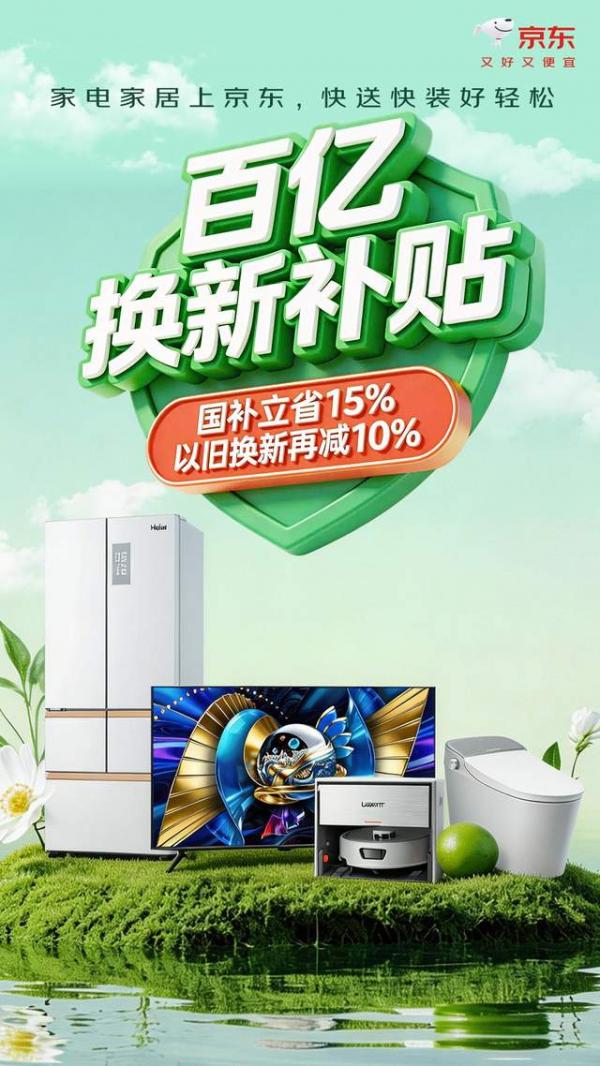
A new top-tier energy-efficient side-by-side refrigerator from a mainstream brand costs between 4,000 and 6,000 yuan. For many households, this is not a small sum to decide on spontaneously. Especially after years of economic cycles, ordinary families are making more cautious consumption decisions.
JD.com’s ‘Double Subsidies of Ten Billion’ initiative targets this very issue, lowering the barrier to upgrades with tangible financial support.
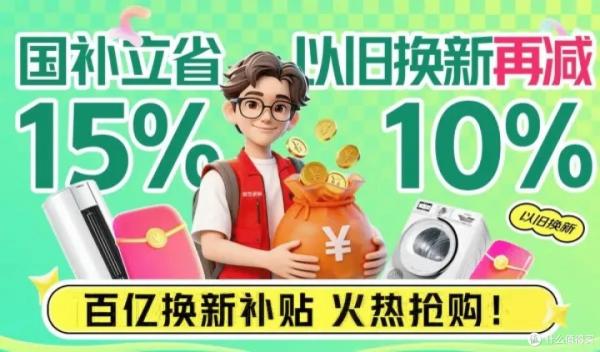
Based on the current subsidy intensity, combined with trade-in and platform subsidies, the actual prices of some categories are 15% to 20% lower than usual. This discount is significant enough to sway many undecided consumers.

Brands’ rationale: Not just support, but self-preservation
Haier, Midea, Hisense, TCL, Gree, Xiaomi, Siemens, Panasonic—over 100 brands have joined the initiative. Some may say this is brands supporting the platform. I see it as brands finding their own way out.
The past two years have seen no real relief in raw material costs. Copper prices hover around 95,000 yuan per ton, chip supply chains fluctuate, and logistics and labor costs continue to rise. Brands are under immense pressure.
If price hikes aren’t feasible, then increasing sales volume becomes the logical approach.
JD.com’s bulk procurement model offers tangible benefits for brands. Centralized platform purchasing leads to more stable production plans, faster inventory turnover, and lower marketing expenses for brands. Some of these savings are passed on to consumers as subsidies, while the rest bolster brands’ profit margins.
This is the fundamental reason brands are willing to participate wholeheartedly.

JD.com’s ambition: From seller to orchestrator
On the surface, ‘Double Subsidies of Ten Billion’ looks like a promotional campaign. But delving deeper, JD.com is quietly transforming its role—from a mere home appliance retail channel to an integrator of the home appliance industrial chain.
Traditionally, brands held the reins in the home appliance industry. They set prices, production schedules, and marketing strategies, while channels merely handled sales.
But now, with JD.com’s expanding market share in home appliance retail and its increasingly robust capabilities in delivery and installation services for major appliances, it has gained the ability to influence the industrial chain.
‘Double Subsidies of Ten Billion’ is a prime example. Using its own funds and supply chain capabilities, JD.com has mobilized resources from over a hundred brands, ultimately forming a closed loop where ‘platforms offer discounts, brands cut costs, and consumers benefit.’ Once this loop runs smoothly, JD.com’s influence in the home appliance industrial chain will reach unprecedented heights.

Is now a good time for consumers to buy?
Let’s get practical. If your refrigerator, air conditioner, or washing machine is over eight years old, or if you’ve noticed a significant increase in your electricity bills, this round of subsidies is worth serious consideration.
But my advice is to look beyond the subsidy amounts and focus on the actual prices. Sometimes, platform subsidies combined with brand promotions can offer substantial discounts; other times, subsidies are applied after price hikes, resulting in limited real savings. 
I recommend paying close attention to a few key points: firstly, the ‘Double Subsidies of Ten Billion’ dedicated pages on major brands’ official JD.com flagship stores, where subsidized prices are clearly displayed; secondly, check if trade-ins are supported, as the combined value of your old appliance and platform subsidies can sometimes yield surprising amounts.
Here’s a lesser-known but practical tip: ask if you can ‘lock in’ prices at offline stores. Many offline dealers partner with JD.com, so if online subsidies are substantial, offline stores may match the same prices or even offer additional gifts.
In the home appliance industry, distribution remains paramount. JD.com’s ten-billion-yuan initiative isn’t about charity—it’s about capturing growth in a mature market.
For consumers, who wins or loses doesn’t matter; getting a good deal on a reliable appliance does. For industry observers like us, the real spectacle is how far this ‘Double Subsidies of Ten Billion’ initiative will go and whether it will force other platforms to follow suit.
After all, the home appliance sector hasn’t seen this much excitement in a long time.
-
![]()
Smartphone Prices Surge Amid Manufacturer Anxiety
-
![]()
Orbbec Soars to Record Heights, Eyes Further Capital Influx of 980 Million!
-
![]()
Tongding Interconnect Sets Up Shop in Shaoguan with 800 Million Yuan in Registered Capital
-
![]()
Before Kimi’s A-Share Debut, Zhipu Aims to Secure More 'Strategic Funding'
-
![]()
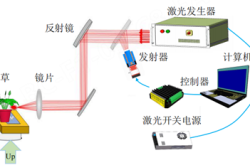
Innovative Leap | Fiber-Pluggable 1470nm Laser Source: Revolutionizing Precision Laser Weeding
-
![]()
73-Day Rapid Listing: Where Does Unitree's Wang Xingxing's 'Sense of Urgency' Come From?
-
![]()
AI Project Mindverse, Backed by Meituan, Faces Data Inflation Allegations Over Its Macaron Product
-
![]()
3000-word In-Depth Analysis | What Makes Physical AI So Magnetic? It Has Captivated Masayoshi Son, Jensen Huang, and Justin Sun All at Once