Can Goertek Weather the Storm in Its Rocky Relationship with Apple and Excel in AI Glasses Contract Manufacturing?
 04/03 2026
 671
671
Produced by | Frontline of Entrepreneurship
Art Editor | Xing Jing
Reviewed by | Song Wen
The relationship between Goertek and Apple has taken a significant leap forward.
Recently, Apple's spatial computing device, Vision Pro, has found a new contract manufacturer. According to XR Control, citing information from the China Quality Certification Center, Goertek has been added as a new contract manufacturer for its external batteries.
This contract manufacturing behemoth, which began supplying Apple with components like speakers and microphones over a decade ago, has been the contract manufacturer for the acoustic components of Vision Pro since its inception. However, the assembly of this "groundbreaking" product was entrusted to its "arch-rival," Luxshare Precision.
Unfortunately, this product, which has been on the market for over two years and embodies Apple's aspirations for future XR hardware, has yet to yield a commercial return.
In January of this year, foreign media reported that Apple had shelved plans to enhance Vision Pro. Recently, rumors have circulated that Apple has essentially halted maintenance on the industrial side of Vision Pro, shifting its research and development focus from immersive headsets to lighter AR devices. This move is nothing short of a seismic shift for component suppliers at the end of the supply chain.
Goertek has already experienced the ripple effects of business fluctuations from a major customer once before. Three years ago, the discontinuation of a single product supplied to Apple led to Goertek suffering a significant blow to both its stock price and earnings. At that time, Goertek managed to weather the storm by contract manufacturing game consoles and head-mounted displays for giants like Sony.
As one of the three major contract manufacturers in Apple's supply chain, Goertek is heavily reliant on Apple but is also striving to shed the label of over-dependence, maintaining its revenue share from Apple at around 30%.
Leveraging its technological prowess in acoustics and optics, Goertek is now attempting to transition from a traditional hardware contract manufacturer to a solution provider for "AI + smart hardware."
If its turbulent relationship with Apple represents its past, Goertek now needs to achieve greater success in the VR/AR field to demonstrate its ability to move forward more steadily.
1. A Rocky Relationship with Apple
Goertek's story began at the Weifang No. 8 Radio Factory in the last century.
At that time, the factory was poorly managed and eventually went out of business. Jiang Bin, who had served as a workshop technician at the factory, teamed up with several colleagues to establish Weifang Elite Acoustics Co., Ltd., the precursor to Goertek, in 2001, specializing in the manufacture of microphone-related products.
As the company expanded, it was renamed GoerTek Acoustics Co., Ltd. in 2006, went public on the Shenzhen Stock Exchange in 2008, and was renamed GoerTek Inc. in 2016. This trajectory reflects its business expansion from acoustics to a broader range of smart hardware and precision components.
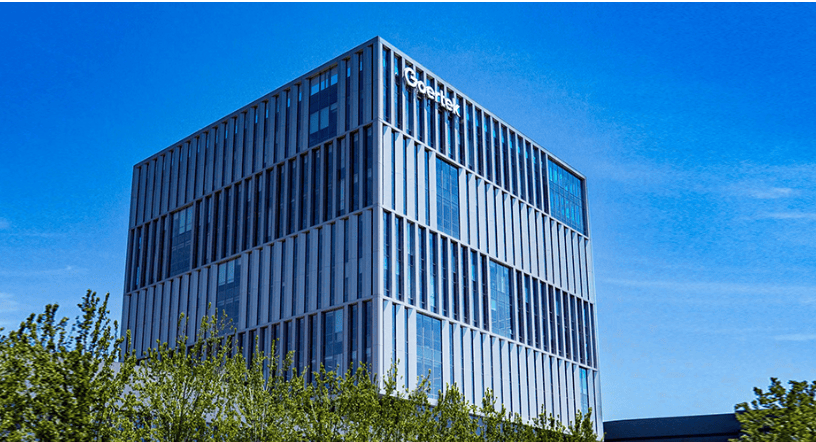
Looking back at Goertek's over two-decade development history, founder Jiang Bin has extensive practical business experience in China, while his younger brother Jiang Long boasts an impressive overseas background. Jiang Long's interdisciplinary knowledge and management experience brought an international perspective to Goertek in its early days.
The two brothers may have never imagined that the startup factory in the small city of Weifang would become a contract manufacturing leader with a market capitalization exceeding 180 billion yuan at its peak. Becoming one of Apple's core suppliers in 2010 marked a turning point in Goertek's fate.
That year, Goertek entered Apple's supply chain for the first time as a supplier of acoustic components such as microphones and speakers, providing wired earphones and acoustic modules for the iPhone. This marked the beginning of its meteoric rise.
Goertek's revenue and net profit in 2010 reached 2.645 billion yuan and 277 million yuan, respectively, with year-on-year growth rates of 134.7% and 176.79%.
To better meet Apple's stringent supplier requirements, Goertek continuously acquired acoustics and optics companies to bolster its technological reserves.
For example, in 2014, Goertek acquired Dynaudio, a Danish high-end audio brand, to enhance its acoustic design and manufacturing capabilities. In 2017, it invested $24.6 million to acquire a stake in Kopin, a U.S. microdisplay company, to gain access to AR/VR optical technologies.
These strategic moves laid the foundation for Goertek to secure orders for Apple's AirPods.
In 2016, Apple launched the first-generation AirPods, and the following year, Luxshare Precision secured the initial order for AirPods. It wasn't until 2018 that Goertek began contract manufacturing AirPods, becoming the second-largest contract manufacturer in Apple's supply chain after Luxshare Precision.
AirPods were the first product outside the iPhone to sell over 100 million units annually. The stable product orders also catapulted Goertek into the ranks of bona fide acoustic giants. Goertek's revenue and stock price soared, and at one point, the company's market capitalization exceeded 180 billion yuan.
In the 2022 New Fortune Magazine 500 Richest People list, Goertek founder Jiang Bin and his family ranked 68th with a massive net worth of 57.5 billion yuan, earning Jiang Bin the title of "Wealthiest Person in Shandong."
However, Goertek's success was inextricably linked to Apple, and so was its downfall.
In November 2022, Goertek issued a Risk Warning Announcement stating that it had received notice from a major overseas customer to suspend production of one of its smart acoustic products. It was speculated that the product in question was Apple's AirPods Pro 2 earphones. Luxshare Precision replaced Goertek as the sole assembler of AirPods Pro 2.
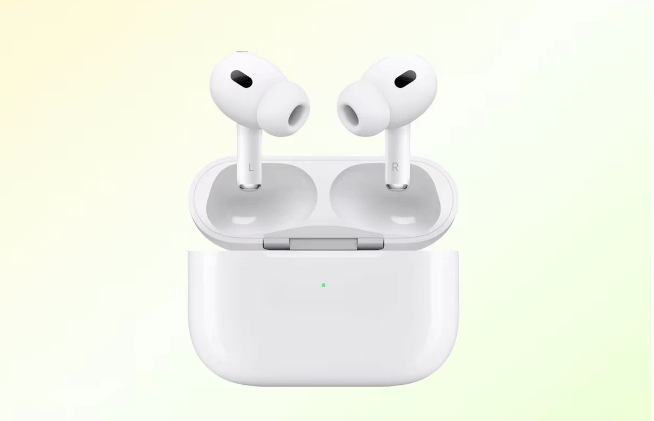
(Image via Tmall Supermarket)
As a result, Goertek's revenue from smart acoustic products fell by 14.58% year-on-year in 2022, and its net profit attributable to shareholders plunged by 59% year-on-year. There were even doubts about whether Goertek would be "kicked out" of Apple's supply chain like O-Film.
However, according to a post by Tianfeng International analyst Ming-Chi Kuo on November 12, 2024, Goertek has become the NPI supplier for two new Apple products: smart home network cameras and AirPods for 2026, indicating a normalization of their cooperation.
Benefiting from the renewed enthusiasm in the consumer electronics industry driven by AI products and policy support for AI-related products, Goertek's performance has also begun to recover.
The third-quarter report for 2025 showed that Goertek achieved revenue of 68.11 billion yuan in the first three quarters, down 2.21% year-on-year, while net profit attributable to shareholders reached 2.587 billion yuan, up 10.33% year-on-year.
Overall, Goertek's more than a decade-long partnership with Apple has built its contract manufacturing empire but has also exposed it to repeated shocks from order fluctuations. Even though it is gradually repairing its cooperative relationship and returning to a growth trajectory, the hidden worry of "over-reliance on Apple" has not truly dissipated.
2. Contract Manufacturing VR: Can It Weather the Storm?
After the suspension of earphone production, Goertek experienced a simultaneous decline in performance and stock price in the short term. It managed to weather this storm by contract manufacturing for VR and game console manufacturers, offsetting the risk of declining revenue from precision components.
As early as 2012, Goertek recognized the development prospects of the smart hardware field and began research and development in VR, establishing partnerships with giants like Meta and Sony. It initially contract manufactured electronic game consoles for them and gradually expanded into areas such as VR/AR, smartwatches, and fitness trackers.
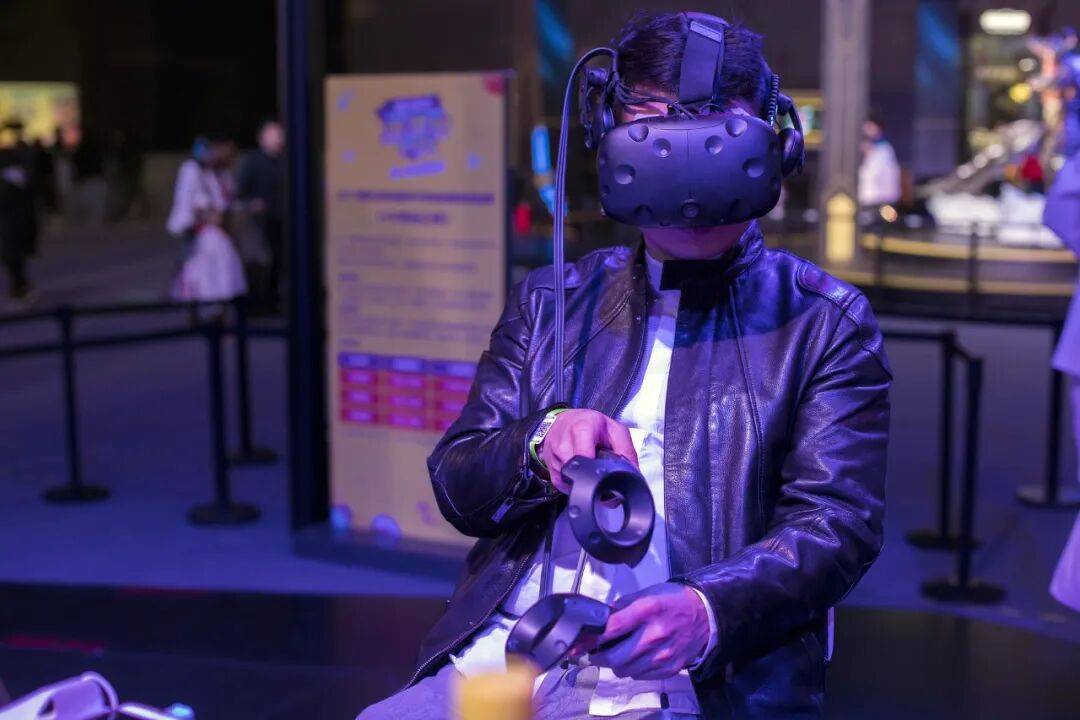
In 2016, Goertek became the exclusive distributor of Sony's PSVR. In 2020, it secured the exclusive supply order for Meta's flagship VR product, Quest 2.
According to financial report information, Goertek's top five customers contributed 87.91% of its sales in 2022. It is speculated that the top three customers were Apple, Meta, and Sony.
Goertek has three main business lines: precision components, smart hardware, and smart acoustic products. The first two are widely used in smartphones, tablets, VR/AR, smart wearables, and smart home devices, while smart acoustic products mainly include wireless/wired earphones and smart speakers.
As early as 2021, Goertek's smart hardware business already contributed 41.94% of its revenue, while the revenue share of precision components was 17.69%. By 2022, the revenue share of smart hardware exceeded 60%, while the share of precision components declined to 13.35%.
During this period, Goertek also continuously enhanced its technological capabilities in optics and microelectronics through acquisitions.
In August 2025, the company supported the acquisition of Micro-LED technology company Plessey and subsequently acquired a 100% stake in Shanghai Aolei through its subsidiary Goertek Optics for 1.903 billion yuan, providing underlying technical support for AI glasses and AR businesses.
With over a decade of strategic deployment, Goertek is now the core contract manufacturer for VR products from companies like Meta and Pico. It has also secured orders for Xiaomi's first AI glasses and holds a market share of over 70% in VR contract manufacturing.
By 2024, Goertek's sales share from its largest customer (Apple) had dropped to 31.96%, far lower than Luxshare Precision's approximately 70%.
It is worth noting that the precision components business focuses on products such as acoustics, optics, microelectronics, and structural parts, with main products including speakers, optical devices, and acoustic sensors. This business is more challenging and has higher gross margins than pure contract assembly.
As of the first half of 2025, Goertek's precision components business accounted for 20.25% of its revenue with a gross margin of 23.49%, while smart hardware contributed 54.17% of its revenue but had a gross margin of only 11.51%, a difference of ten percentage points from the components business.

One piece of evidence is that, according to teardown estimates by Tianfeng Securities, Zhongtai Securities, and Guosen Securities, the value of a single VR headset contract manufactured by Goertek is approximately $70, slightly lower than the $93 for AirPods.
Smart hardware has provided Goertek with performance growth potential and breathing room, partially offsetting the risks associated with Apple's supply chain. However, its relatively low gross margins mean that the precision components business cannot be ignored in the short term.
Despite the hype surrounding the VR/AR market, Goertek, as a downstream contract manufacturer, is still earning hard-earned money. With high revenue but low gross margins, the company has yet to break through the profit ceiling of the contract manufacturing industry.
3. The AI Narrative: Inextricably Linked to Industry Giants
While Goertek is trying to shed its label of over-reliance on major customers, it is continuously strengthening its capabilities in precision components.
In July 2025, Goertek announced a massive acquisition worth 10.4 billion Hong Kong dollars (approximately 9.5 billion yuan), targeting two precision manufacturing companies, Mia Precision and Changhong Industrial, under Hong Kong-based Lianfeng. The scale of this acquisition sent shockwaves throughout the consumer electronics industry.
Goertek stated that the core reason for this acquisition was to respond to the industry trend of "increasingly high requirements for precision structural components and other parts."
However, industry insiders analyzed that the acquisition targets are both Apple supply chain companies, suggesting that Goertek's move was aimed at strengthening its position in Apple's supply chain and deepening its cooperation with Apple.
In the highly mature consumer electronics manufacturing industry, contract manufacturers and tech giants often have a symbiotic relationship. The former not only secures orders from the giants but also gains insights into cutting-edge technologies and market trends.
Nevertheless, this merger and acquisition ultimately did not materialize. In October of the same year, Goertek planned to terminate the acquisition, mainly due to "the failure of both parties to reach agreement on key terms related to the transaction."
Apple's product development trends reveal why Goertek is eager to lay the groundwork in precision manufacturing in advance. Beyond traditional businesses like phones, earphones, and computers, the Vision Pro headset represents Apple's true ambitions in spatial computing.
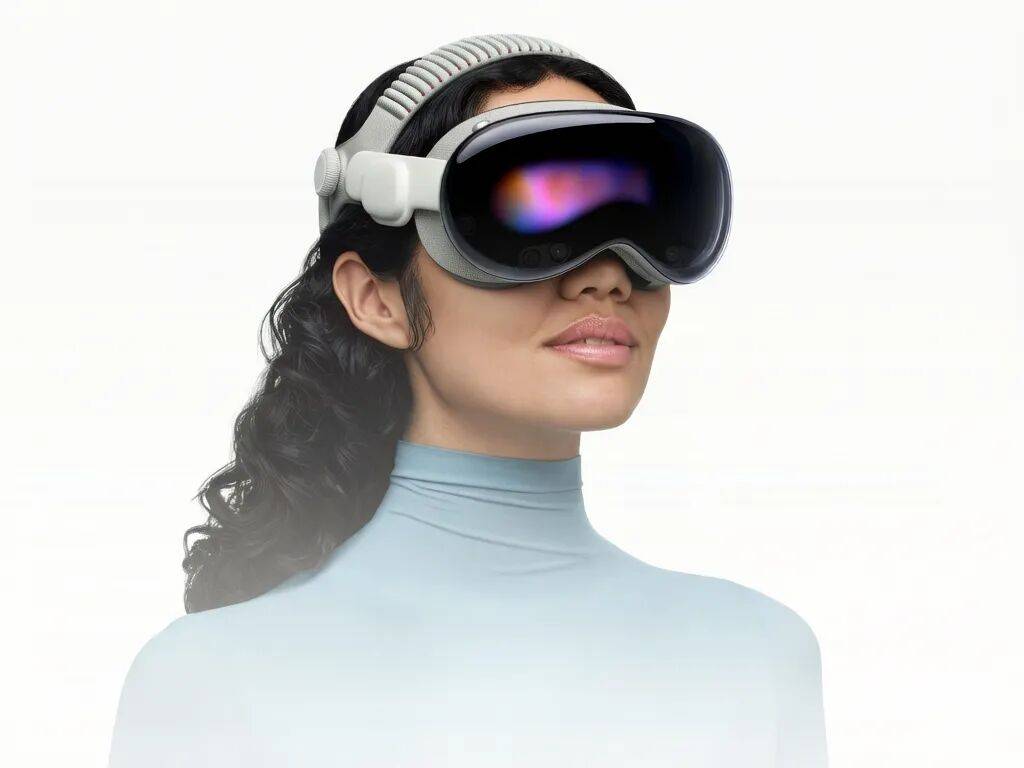
Rewind to Apple's Worldwide Developers Conference in 2023, where Tim Cook introduced the most important "one more thing"—the Apple Vision Pro.
(Image via Apple's official website)
This device, years in the making, was seen by Cook as a revolutionary product. In addition to immersive experiences like watching movies and playing games, the Vision Pro can integrate digital content into the real world, enabling augmented reality.
Although its price of $3,499 (approximately 24,000 yuan) limited market acceptance, Apple's entry seemed to signal a new phase in the AR/VR industry's competition.
Nevertheless, two years post-launch, the Vision Pro has transitioned from a "rising star" to a proving ground for avant-garde technology, largely due to a disconnect between its functionality and price point. Citing Leike Technology, Apple has effectively halted significant enhancements to the industrial aspects of the Vision Pro, with reports indicating a strategic pivot from immersive headsets towards the development of lightweight AR glasses.
As per LatePost, Goertek, a key player in Apple's supply chain, not only supplies precision components to Apple but also undertook the production of acoustic elements, light shields, and external battery modules for the initial iterations of the Vision Pro.
Apple's reorientation in smart hardware R&D, though not yet mirrored in order volumes, has cast a shadow of uncertainty over the contract manufacturing landscape for smart hardware.
After all, Apple is adept at nurturing a diverse supplier ecosystem. Luxshare Precision, one of Apple's three primary assembly partners, was previously entrusted with the assembly of the Vision Pro. Adjustments in Apple's product strategy are poised to ripple through the entire supply chain.
Furthermore, Goertek's another significant client, Meta, is grappling with its own set of hurdles.
Previously, riding the wave of metaverse enthusiasm, Meta ramped up its R&D and production efforts for related products. Goertek was primarily engaged in contract manufacturing VR headsets and glasses for Meta.
According to Cailian Press, informed sources have disclosed that Meta is contemplating a substantial round of layoffs, potentially impacting 20% or more of its global workforce.
Industry insiders suggest that this move is aimed at mitigating the escalating costs associated with AI infrastructure investments and laying the groundwork for AI-augmented office operations and even autonomous AI-driven tasks.
Meta is preoccupied with its internal challenges. To bolster investment in AI infrastructure, it is compelled to scale back investment in VR devices. As early as 2023, Goertek's smart hardware growth fell short of projections due to Meta's reduced VR headset shipments, compounded by Apple's order reductions.
However, when juxtaposed with AR and VR, AI glasses undeniably occupy the spotlight in the current smart glasses arena.
IDC forecasts that by 2029, global smart glasses shipments will surpass 40 million units, with the Chinese market's five-year compound annual growth rate (from 2024 to 2029) soaring to 55.6%, the highest globally.

From Goertek's vantage point, the deepening synergy between AI technology and products like smartphones is fueling market demand for high-performance acoustic sensors and micro-speaker products. This trend is anticipated to unlock fresh growth avenues for the company's precision components division in the foreseeable future.
Its performance upswing indeed stems from the burgeoning hardware segment of AI glasses OEM.
Presently, Goertek is the sole OEM for Meta's Ray-Ban series AI glasses. It has also clinched an order for 300,000 units of Xiaomi's inaugural AI glasses (accounting for 70% of Xiaomi's AI glasses OEM market share) and secured 70% of Huawei's AR glasses order volume.
Moreover, Goertek extends AI glasses OEM services to entities such as Google, XREAL, Rokid, and Sony.
With the proliferation of novel smart terminals like AI glasses and VR headsets, demand for lightweight, high-strength precision structural components from leading manufacturers has spiked, continually elevating OEM benchmarks. Coupled with heightened international trade risks, global behemoths like Apple, Google, Samsung, and Meta are also inclined to emulate automotive OEMs by diversifying their supply chains.
Goertek's forte lies in precision manufacturing prowess rather than AI technology R&D. Whether it can rise to the occasion and meet the more exacting standards and supply demands of major manufacturers in the AI hardware epoch remains a formidable challenge.
Goertek still has considerable ground to cover in refining its AI narrative.
*Note: The featured image in this article is sourced from Goertek's official website; other uncredited images are from Shetu.com, utilized under the VRF agreement.
-
![]()
Smartphone Prices Surge Amid Manufacturer Anxiety
-
![]()
Orbbec Soars to Record Heights, Eyes Further Capital Influx of 980 Million!
-
![]()
Tongding Interconnect Sets Up Shop in Shaoguan with 800 Million Yuan in Registered Capital
-
![]()
Before Kimi’s A-Share Debut, Zhipu Aims to Secure More 'Strategic Funding'
-
![]()
Innovative Leap | Fiber-Pluggable 1470nm Laser Source: Revolutionizing Precision Laser Weeding
-
![]()
73-Day Rapid Listing: Where Does Unitree's Wang Xingxing's 'Sense of Urgency' Come From?
-
![]()
AI Project Mindverse, Backed by Meituan, Faces Data Inflation Allegations Over Its Macaron Product
-
![]()
3000-word In-Depth Analysis | What Makes Physical AI So Magnetic? It Has Captivated Masayoshi Son, Jensen Huang, and Justin Sun All at Once