Who Blocked the Market Alerts Sent to South Korean Headquarters Before Samsung China's Retreat?
 04/14 2026
 649
649
By: Jinze Piao
Edited by: Yu Hou
As a leading global technology company, Samsung Electronics once had extremely high expectations for the Chinese market—its headquarters in China was named "China Samsung," rather than the industry-standard "Samsung (China)." This detail reflected Samsung's commitment to deeply engaging with the Chinese market and embodied its brand vision of "becoming the most beloved company among Chinese people."
During its peak in 2013, Samsung Electronics achieved approximately RMB 245.4 billion in net sales in China, making it the company's largest single market globally. At that time, Samsung launched exclusive models tailored to Chinese households and customized marketing campaigns aligned with local festivals like the Spring Festival and National Day, fully promoting brand localization.
Despite these efforts and investments, Samsung's core businesses continued to decline in the Chinese market, ultimately leading to a gradual withdrawal. The seeds of this retreat were sown in subtle signals from industry exhibitions.
The AWE China Home Appliances and Consumer Electronics Expo, hosted annually in March by the China Household Electrical Appliances Association (CHEAA), serves as a barometer for a company's industry standing. For mainstream home appliance and consumer electronics companies, participating in the expo is almost an industry consensus as long as their operations are not in crisis. It is both a tradition and a necessary move to maintain relationships with the association and secure industry influence.
During AWE 2026, Midea, which had been absent from the expo for years, still held a special event in Shanghai to make its voice heard. In contrast, Samsung, despite its long-standing presence in China, skipped the expo entirely and did not engage in any alternative promotional activities, appearing completely disconnected from the industry's momentum in China. This unusual signal quickly fueled rumors that Samsung's home appliance business would fully exit the Chinese market.
In fact, speculation about "Samsung Electronics' retreat from China" had long circulated. This round of rumors pointed directly to the core: Yicai Global cited AVC Revo and industry insiders, stating that Samsung no longer considers China a core growth market for its home appliance business. In the second half of 2026, its white goods business in China may fully transition to an agency model, while adjustments to its black goods business model remain unconfirmed. Subsequent investments in resources, channels, R&D, and marketing will be significantly downgraded.
China Business Journal reported that Samsung China is pursuing a strategic "slimming" plan, intending to retain only its mobile and storage businesses as core operations, with other businesses like home appliances likely to be phased out. In response to these rumors, Samsung Electronics' PR department told the media, "We are unaware of the rumors and have not received any notifications about strategic adjustments." Samsung Electronics' customer service also stated that no such notifications had been received.
However, multiple home appliance industry analysts and frontline channel partners confirmed that, based on Samsung's recent actions—such as channel contractions, factory closures, and stalled localization of new products—the signal of a home appliance business exit is clear.
The performance in the terminal market is even more telling: mainstream home appliance chain stores continue to reduce the floor space allocated to Samsung, while online platforms prioritize Samsung products less frequently. Samsung home appliances are rapidly fading from the mainstream market. In recent rankings of leading home appliance brands, Samsung's position has plummeted, its brand presence has weakened, and its marginalization in the market has become inevitable.
The crisis in the channel segment is equally fatal. As early as 2021, Samsung's China management handed over its white goods business to Huitongda and Shenzhen Feide Industrial Group. After the outsourcing, Samsung's white goods sales declined year by year, far exceeding the average decline of other foreign home appliance brands during the same period. Recently, it was reported that Feide Industrial has begun to scale back or even abandon its agency business with Samsung, bringing their cooperation to the brink of collapse and further worsening Samsung's struggling home appliance business.
If Samsung ultimately retains only its mobile and storage businesses, and given that its mobile phones continue to struggle for recognition in China while storage is a more upstream B2B business, it would essentially amount to a complete withdrawal from China's consumer electronics market—no different from a full exit.
Global strategic adjustments take effect, shifting from offense to defense
Samsung's contraction in the Chinese home appliance market reflects the implementation of its global business restructuring by the South Korean headquarters from 2025 to 2026. Samsung's headquarters has thoroughly restructured its traditional businesses, integrating the former Consumer Electronics (CE) and Mobile Communications (IM) departments into the DX (Device eXperience) business group, while redirecting core resources toward high-margin sectors such as DS semiconductors, AI core computing power, and high-end display panels. The DS semiconductor division is a key profit driver for Samsung Group, focusing on core businesses like memory and logic chips.
This strategic shift is supported by clear financial performance: Samsung Group's public financial reports show that in 2025, the semiconductor division contributed approximately 80% of the group's total profits, while overseas home appliance terminal businesses were classified as low-priority stability sectors. In the fourth quarter of that year, Samsung's Visual Display and Digital Appliance businesses reported combined revenue of approximately KRW 14.8 trillion and an operating loss exceeding KRW 0.6 trillion, further solidifying headquarters' resolve to contract the home appliance business.
The strategic adjustment directly impacted Samsung's China operations: the previously independent Living Appliances and Large Screen Audio-Visual divisions, which had local allocation authority, were placed under the direct management of DX Asia-Pacific headquarters, significantly reducing local autonomy. Meanwhile, Samsung gradually shut down its home appliance and consumer electronics production bases in China, from the closure of its Shenzhen communications factory in 2018 to the suspension of its Suzhou computer factory and Tianjin TV factory (Samsung's only TV production base in China) in 2020, with a clear contraction path.
In September 2024, Samsung Electronics' China sales department initiated personnel optimization, affecting hundreds of regional sales staff. Simultaneously, it halted large-scale local market investments, froze new positions in the home appliance sector, and stopped developing China-exclusive adaptations for non-core new products, shifting from an active market expansion stance to a passive defensive posture—a stark contrast to its peak-era layout (layout).
Core talent exodus leaves management in name only
The contraction of business lines triggered a massive exodus of core talent. A decade ago, Samsung was widely regarded as a talent hub in the home appliance industry, attracting top professionals from various fields and leveraging its efficient execution to capture the Chinese market.
Today, core talent continues to depart: Liu Junguang, former head of Samsung Greater China's color TV business, left to join Huawei and Haier; Xu Bin, former head of living appliances, who spearheaded multiple channel strategy adjustments, exited Samsung's core business circle after his resignation; and recently, Sun Zhitao, vice president of Samsung Greater China's color TV marketing division, also left to join Pinduoduo. The loss of core talent has left Samsung's Chinese home appliance division without a dedicated team to drive growth.
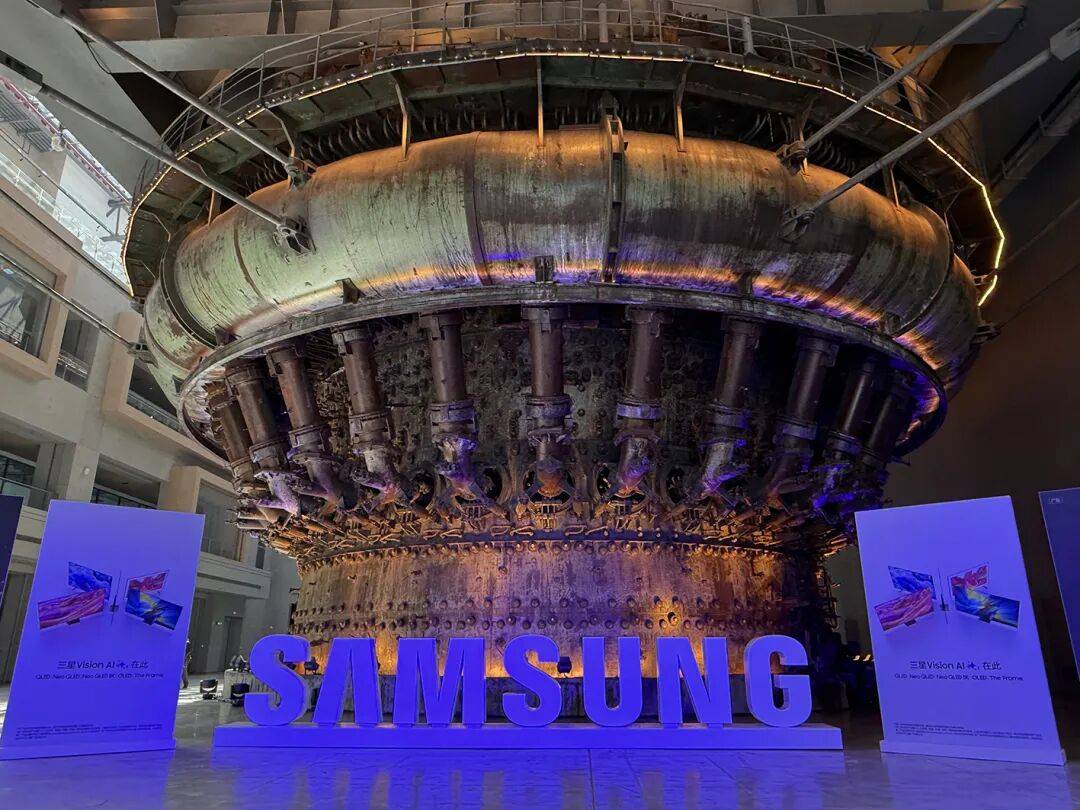
Personnel optimization and the exodus of core talent have exacerbated Samsung China's talent crisis. Multiple insiders revealed that some remaining managers occupy key positions and receive corresponding salaries but shoulder disproportionately low operational responsibilities. Previously, many business executives personally visited frontline markets, engaged with core channels, and studied local consumer trends. However, today's executives focus solely on process approvals and responding to headquarters' checks, adhering to a "no mistakes, no accountability" principle and uniformly stating, "This is the company's current situation; we have no autonomous decision-making power."
This passive work attitude has accelerated the brand's decline. During its peak, Samsung China's executive team was bold and proactive in driving localization. Today, the remaining team has fallen into a procedural and conservative state, with organizational stagnation causing far greater harm to the business than market data declines.
Channel mismatches and communication breakdowns cripple the market system
For multinational consumer electronics giants, channel systems and information communication systems are the two core pillars for establishing a foothold in the Chinese market. While talent loss is a chronic drain, the failure of channel and information systems has directly accelerated the decline of Samsung's core businesses.
Consider the most glaring example: in 2021, Xu Bin, mentioned earlier, led the signing of white goods business agreements with Huitongda and Feide Industrial, planning to leverage Huitongda's sinking channel ( sinking channel , "downmarket channels") to expand into rural markets and promote Samsung's BESPOKE series white goods.
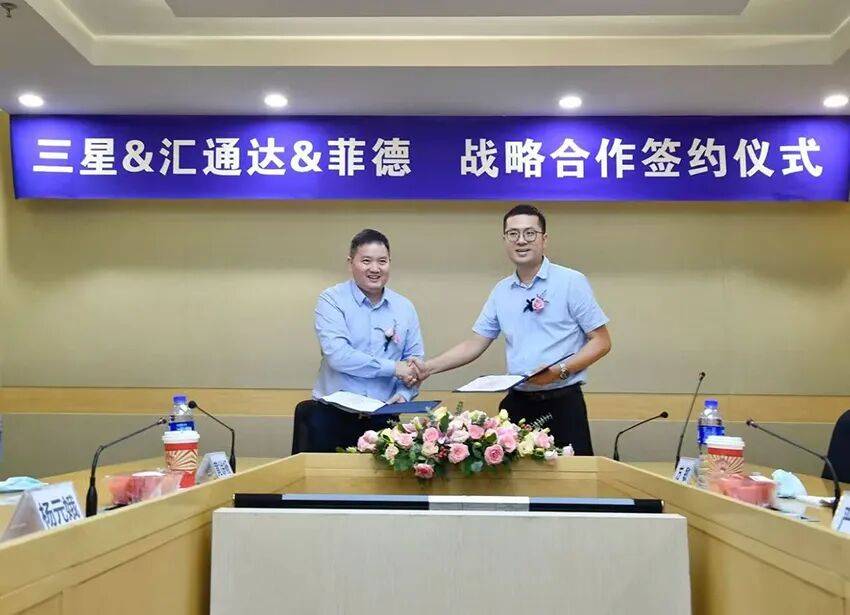
Huitongda is a rural/downmarket industrial internet platform specializing in serving rural mom-and-pop stores and focusing on high-cost-performance products. Feide Industrial, founded in 1997, is a professional company specializing in imported kitchen appliances. For over two decades, it has been dedicated to introducing imported kitchen appliances and primarily assisting new foreign high-end brands in market entry.
First, Samsung, as a mature high-end home appliance brand, had a severe mismatch between its product pricing and the purchasing power of rural consumers when partnering with Huitongda.
Additionally, by 2021, Samsung already had a sufficient user base in the Chinese market and had no need for niche channels like Feide to re-establish its presence. Thus, industry insiders widely believed that this strategy was fundamentally flawed in positioning and should not have been spearheaded by executives like Xu Bin, who possessed strong business insights.
Despite this, Samsung allocated resources to advance this market-detached and absurd project. Although it failed to generate meaningful sales conversions and completely deviated from local market demands, no one took responsibility or initiated any accountability.
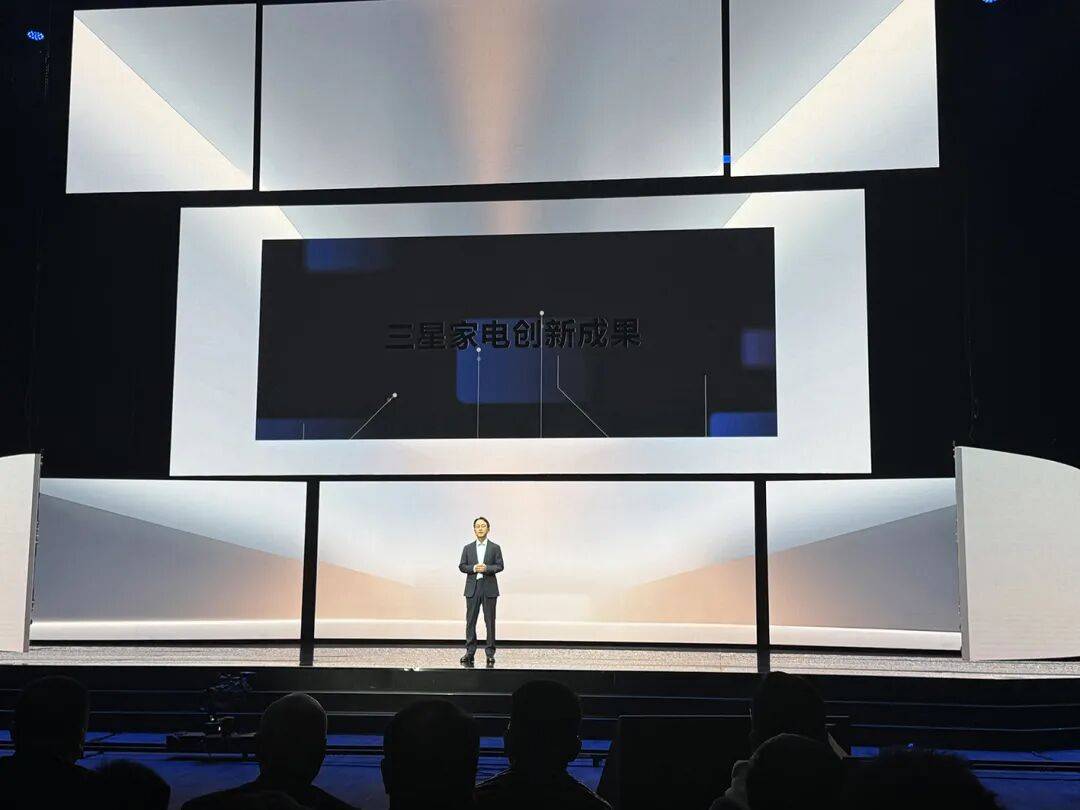
It is also worth noting that such a critical channel strategy was scarcely known to the public, with few related reports. Due to poor information dissemination, this problematic decision was not promptly identified and corrected by headquarters.
A multinational company's communication system in overseas markets should serve two core functions: internally, it should provide timely and accurate feedback on frontline realities to headquarters for reliable decision-making; externally, it should clearly and effectively convey brand value and product information to local consumers. However, Samsung Electronics' communication system in China has largely failed in both regards.
Beyond channel mismatches, Samsung Electronics (China)'s communication system has shifted from proactively disseminating market dynamics to information control in recent years, becoming a veritable "information filter."
During the 2025 AWE expo, even if Samsung had participated, it would have strictly pre-reviewed and controlled all press conference information. Samsung Electronics stated that all media interviews and observations required headquarters' approval. Excessively compliance-focused processes suppressed external visibility, preventing real market competition dynamics from being effectively reported.
From the results, various business departments have shown a tendency toward selective reporting, failing to fully and honestly convey real business progress and market conditions to South Korean headquarters. The channel sink (downmarket) project led by Xu Bin is just the tip of the iceberg.
After the pandemic, the gradual withdrawal of South Korean special envoys further exacerbated information gaps. This top-down information blocking directly led to severe misjudgments by South Korean headquarters about the Chinese market, resulting in a series of contractionary decisions. These contractionary strategies, in turn, accelerated the collapse of Samsung's China operations, creating a vicious cycle: headquarters continuously cut resource investments based on distorted market performance, making channel expansion and new product launches increasingly difficult. Meanwhile, the China team maintained a conservative stance under the guise of headquarters' directives, worsening information distortion and ultimately trapping Samsung in a deadlock in the Chinese market.
The THAAD incident as an excuse, inaction proves fatal
The THAAD incident marked a turning point toward conservatism in Samsung China's management style.
Before the incident, Samsung China's executives were pragmatic and proactive, with headquarters delegating some decision-making power. The team frequently visited frontline markets and flexibly adapted local distribution and promotional models. After the incident, management shifted entirely to a conservative stance, attributing sales declines and channel contractions solely to external factors while rarely reflecting on their own decision-making and execution.
During the same period, local brands like Haier, Midea, and TCL accelerated their efforts. From 2022 to 2024, Haier launched its Casarte high-end suite, while Midea deployed whole-home smart solutions, further seizing the high-end market and squeezing Samsung's survival space. (Extended reading: The white goods trio now exists in name only; a "one superpower, one strong player, one challenger" pattern (geju, "landscape") has emerged.)
Liu Buchen, a senior home appliance industry analyst, believes that around 2010, Samsung dominated the Chinese market in both mobile phones and TVs, with a commanding market share. Today, rumors of a potential withdrawal from China suggest that the issue is not Samsung's lack of product competitiveness or disregard for the Chinese market, but rather an inevitable consequence of the global rise of Chinese home appliance and mobile phone companies.
After the 2016 Note7 explosion incident, Samsung's differential treatment of the Chinese market triggered a severe brand trust crisis, crippling its mobile phone business and spilling over into the home appliance sector, causing Synchronized decline (tongbu xiahua, "simultaneous declines") in sales. This critical misstep should have been a focal point for reflection but was instead lumped in with "external environmental impacts" and ignored.
Geopolitical tensions and market fluctuations are normal for globalized companies. External risks do not determine a company's survival; internal responsiveness is key. Even after Sino-South Korean relations improved, Samsung's management failed to seize opportunities for a breakthrough, remaining in a Observing stagnation (guanwang tingzhi, " Observing stagnation ," " wait and see and stagnant") state. During the window when Chinese brands aggressively promoted smart and suite-based products, Samsung did not implement any substantive optimizations.
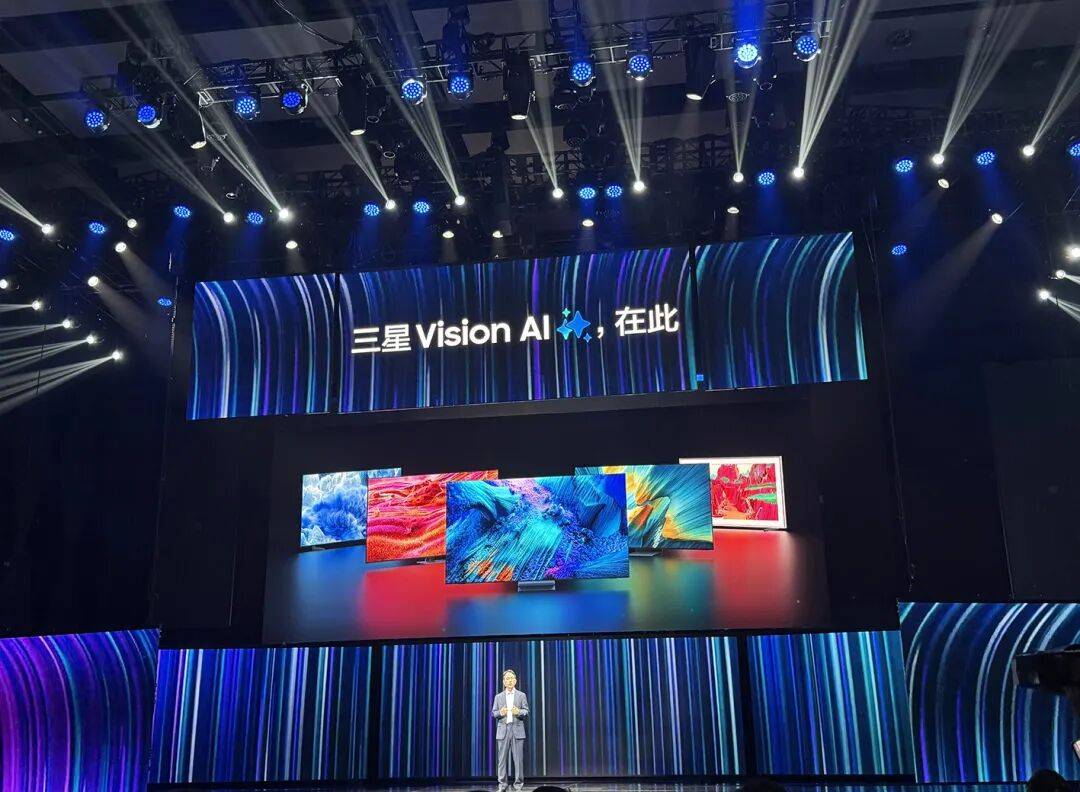
After the 2021 white goods outsourcing failure, Samsung's market share in China for white goods quickly fell below 1%, compared to 8.5% during its peak—a staggering decline. Some managers even used "external environmental uncertainties" as an excuse to foster a "less execution, less accountability, more process-focused" culture, evading responsibility for operational failures.
The marginalization of Samsung's home appliance business stems not from the THAAD incident but from core talent loss, inefficient internal execution, decisions detached from local realities, and information blocking that led to headquarters' misjudgments. These intertwined issues caused the former industry leader to miss its chance to remain in China's mainstream market.
The real culprit blocking alerts was not an individual but a organizational system that reported only good news, prioritized processes over markets, and layered on blame-shifting mechanisms.
This retreat is both an inevitable result of Samsung's global strategic shift toward high-margin sectors and a direct consequence of long-term conservative execution and poor information flow in China. Liu Buchen pointed out that this effectively means Samsung Electronics' retreat from the Chinese market is a prelude to its global decline, with Chinese brands set to gradually erode Samsung's overseas market share outside China. A similar scenario has already played out among Japanese home appliance companies. (For details, see: AWE's Evolution: From Participant to Global Center Stage, Chinese Brands Export Global Values.)
It serves as a wake-up call for the localization operations of all multinational enterprises. Accurate and smooth transmission of market information is the foundation for companies to make correct decisions in the Chinese market. Ensuring consistency of information between headquarters and frontline operations, and eliminating internal information filtering, are the keys to the localization operations of multinational enterprises. This is also the most profound lesson left by Samsung's downfall.
-
![]()
Breaking News | Core Chip Team Member Unexpectedly Changes Jobs! OpenAI Transforms into Anthropic's Talent Hub, with Over 15 Ex-OpenAI Core Members Now Holding Key Roles at Anthropic
-
![]()
When European Factories Face Idle Capacity, Chinese Brands Offer a ‘Traditional Chinese Remedy’
-
![]()
SEER Robotics Passes IPO Hearing: How Valuable Is the 'First Robot Brain Stock?'
-
![]()
5 Years, 170 Billion Yuan Wealth Vanishes: Where Did Wei Jianjun Go Wrong?
-
![]()
What Exactly Has Changed with the AI That Automatically Opens a Browser to Search Xiaohongshu?
-
![]()
Over 3,000 Heat-Related Deaths Daily, Yet India Imposes Ban on Chinese Air Conditioner Imports: Unraveling the Underlying Motives
-
![]()
Second-Hand Car Prices Plummet: Are Gasoline Vehicles on the Verge of Collapse?
-
![]()
800V vs. 48V: Which Reigns Supreme? Online Clash Between Executives Intensifies Debate Over Li Auto and NIO's Suspension Systems | MIRROR Pro