Can Apple Still Change the World After Cook's Departure?
 04/23 2026
 587
587
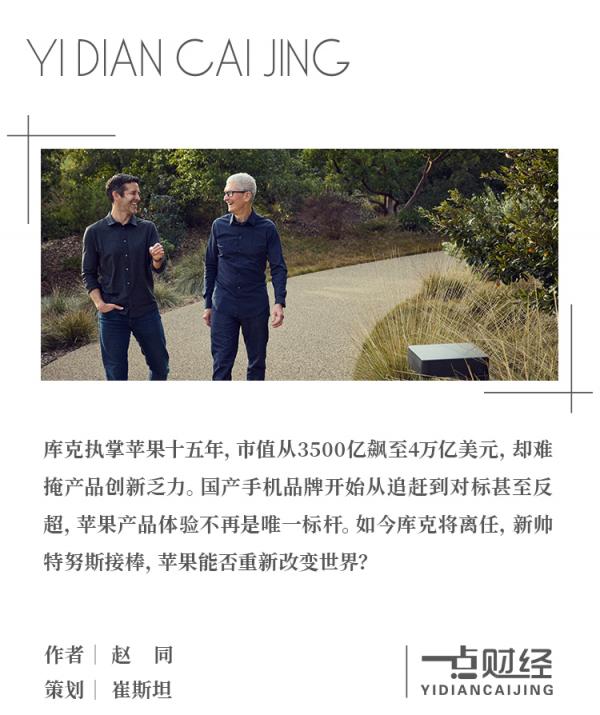
In 2011, Jobs called Cook to his home.
By then, Jobs was gravely ill, but he didn’t discuss his health or products with Cook. Instead, he left one directive: Never ask what I would do—do what you believe is right.
Fifteen years later, Cook, who succeeded Jobs, accomplished one critical feat as Apple’s CEO: growing the company’s market value from $350 billion to $4 trillion.
A few days ago, Apple officially announced Cook’s retirement as CEO on September 1, 2025, with John Ternus, Apple’s head of hardware engineering, named as his successor. At an internal meeting, Ternus declared with emotion: “
“We’re about to change the world again.”
Everything points to one conclusion: The Cook era is over.
The question remains: What kind of Apple did Cook leave behind? And what will the new CEO bring?
Jobs Dreamed, Cook Monetized
In October 2011, Cook debuted as CEO at the iPhone 4S launch.
He wore a navy shirt tucked into his pants, pacing the stage awkwardly like a product manager learning to present. He delegated product demos to other executives, focusing on opening remarks and transitions while emphasizing “teamwork.”
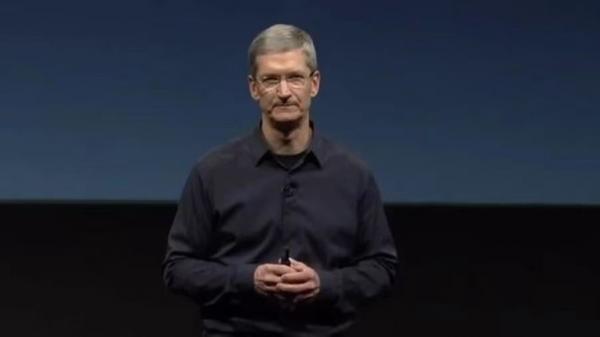
△ Cook’s first iPhone launch as CEO
Jobs was nothing like this.
With his signature black turtleneck, round rimless glasses, and jeans, Jobs strode confidently onstage, captivating audiences with infectious language and dramatic product reveals. When he swiped to unlock the iPhone 4 or pulled the first MacBook Air from a manila envelope, the crowd erupted—the world witnessed a new era.
Cook’s debut was panned by media. “Disappointing,” “underwhelming,” “lacking surprise”—criticism rained down. From that moment, “lack of innovation” became Cook’s permanent label.
Ironically, after the disastrous launch, the iPhone 4S sold like crazy. Following Jobs’ death, it became a commemorative item, with some interpreting “4S” as “For Steve.”
Cook and Jobs also differed sharply in management style.
Jobs would call suppliers at midnight over a screw’s finish. He once smashed a product onstage during a demo gone wrong. Yet he turned devices into art, making users camp out days in advance.
Cook is nothing like this. He rises at 3–4 AM to check emails, surrounds his office with data dashboards, and grills teams on “inventory turnover days.” Apple employees call him a monk, poring over global sales data in late-night meetings.
Diplomatically, the two were polar opposites.
Jobs never visited China, viewing it merely as a factory and market. China never got first dibs on new products; WiFi was even crippled in early models.
Cook reversed this. In 2011, he made China his first international stop as CEO, visiting annually thereafter—over 20 trips total.
By 2016, as U.S.-China tensions rose, Cook doubled down on China. He dined with Trump at the White House, pledging $100 billion in U.S. investments, while assuring Chinese leaders that “China is Apple’s most critical supply chain hub.”
Both sides bought his act.
This dual-track diplomacy was beyond Jobs. Cook mastered it. Analysts call him “90% CEO, 10% diplomat.”
Over 15 years, Cook’s record is stellar: Apple’s revenue surged from $108 billion to $416 billion, tripling, with net profit hitting $112 billion. Since resuming dividends in 2012, Apple returned nearly $1 trillion to shareholders.
Supply chain management was revolutionary. He slashed inventory turnover from 30 days to 3–7 days—no consumer electronics firm matches this.
Cook turned profit-making into an art. As a steward, he succeeded.
But he fell short on products.
The Cook Era: Apple’s Products Lost Their Edge
The iPhone’s world-changing magic faded into incremental yearly updates.
Each September, fans watched launches hoping Cook would unveil something groundbreaking. Instead, they got relocated cameras, renamed chips, extra colors, and higher prices. The most common bullet chat (live chat) comment:
“That’s it?”
Netizens joked: “Under Jobs, you bought iPhones for their revolution. Under Cook, you buy them because your old battery died.”
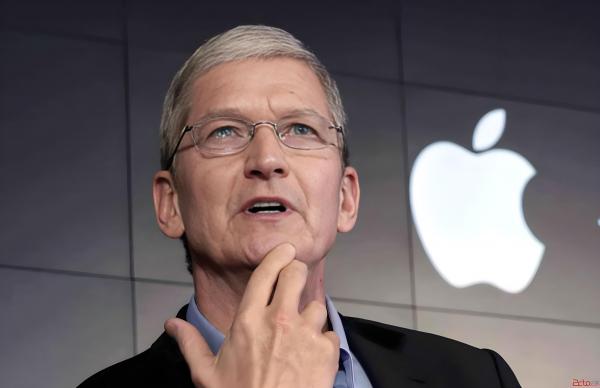
Apple Car burned cash for a decade, spawning rumors, concept renders, and “insider leaks.” Cook never acknowledged it publicly, but supply chain chatter never stopped. What arrived wasn’t a car—but an internal email:
Project canceled, team disbanded.
Vision Pro was performative art.
Hyped as “the dawn of spatial computing,” it launched at $3,499 (with resale prices hitting $6,000 in China). Silicon Valley tech influencers wore it shopping, dining, and commuting, creating viral content.
But within two months, returns surged. Users complained of dizziness, poor battery life, and confusion post-use. Annual sales hit just 300,000–400,000 units—a fraction of iPhone’s tens of millions.
One returnee quipped on social media: “It made me feel like I’d time-traveled to the future—until my neck ached from the weight.”
AI was the biggest embarrassment.
At the 2011 launch, Siri debuted as a “revolutionary AI assistant.” Cook, beaming, called it “the future of personal computing.”
Fifteen years later, asking Siri to “set an alarm” yields: “Here’s what I found about alarms.” Asking about the weather prompts: “Unlock your phone first.” Multi-round conversations confuse it.
As AI becomes ubiquitous, Siri’s reputation is unanimous: useful only for changing songs hands-free while driving (which it often messes up).
Apple lags Google, Microsoft, and Meta in AI, with the gap widening.
Jobs’ parting words were: “Do what you believe is right.” Cook did—turning Apple into the world’s most profitable company. But Jobs also said:
“Money isn’t the goal. Creating great products is.”
Cook nailed the first half. The second? Not so much.
This is the divide: Jobs treated products as religion. Cook treats religion as a business.
Apple Coasts, Chinese Smartphones Leap Forward
While Cook’s Apple focused on profits and incremental updates, Chinese firms evolved from followers to leaders in key areas.
In 2012, China’s smartphone market was nascent. IDC data showed Apple at 11% market share, Samsung at 19%, and Lenovo, Huawei, Coolpad, and ZTE (“ China Cool Union ”) collectively matching Samsung.
At launches, Chinese firms contrasted their specs with iPhones, claiming parity or superiority. Applause was polite—everyone knew they were chasing Apple.
By 2025, the tide turned. IDC reported China’s smartphone shipments at 285 million units. Huawei led with 46.7 million units (16.4% share), reclaiming the top spot after five years. Apple and vivo tied for second at 16.2%, with Xiaomi and OPPO following above 15%.
In Q1 2026, Huawei’s momentum grew. Omdia data showed 69.8 million smartphones shipped in mainland China, with Huawei at 13.9 million units (20% share), Apple at 13.1 million (up 42% YoY but trailing Huawei).
From catching up to matching to surpassing, Chinese firms now compete with Apple across all fronts, not just specs.
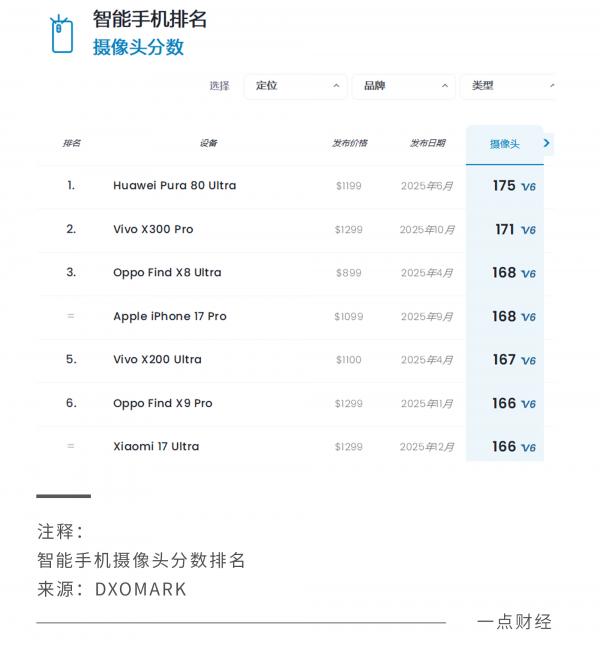
Take imaging: DXOMARK’s latest rankings put Huawei Pura 80 Ultra first (175 points), vivo X300 Pro second (171), and iPhone 17 Pro tied with OPPO Find X8 Ultra third (168). Chinese brands dominate the top 10, with Apple’s best at third but no longer on top.
Apple’s foldable phones became a running joke.
Android rivals started folding screens in 2019. Samsung’s Galaxy Fold hit seventh-gen, Huawei’s Mate X series soared, and Xiaomi/OV/Honor slashed prices to $1,000–$1,200. Apple fans ask annually: “Where’s our foldable?” The answer is always: “Next year.” Five “next years” later, no foldable iPhone exists.
Netizens quip: “By the time Apple launches a foldable, Android will have moved on to triple-folding, rollable screens, and ‘foldable clearance sales.’”
To be fair, Apple’s moat remains wide. But undeniably, it’s no longer the undisputed leader in product experience.
This is Cook’s legacy to Ternus: a cash-rich but sluggish giant.
New CEO Ternus: Engineer to Apple’s Helm
Little is known about Ternus.
No social media, scant personal details, few photos. The man set to lead a $4 trillion empire lives like a hermit.
But his resume is solid. A 1997 Penn mechanical engineering grad, he joined Apple in 2001 at 26, working under Jony Ive’s design team. His first task? Designing the humble Cinema Display.
He climbed steadily: hardware engineering VP in 2013, senior VP in 2021, entering the top ranks through product work.
Two stories reveal why Apple chose him.
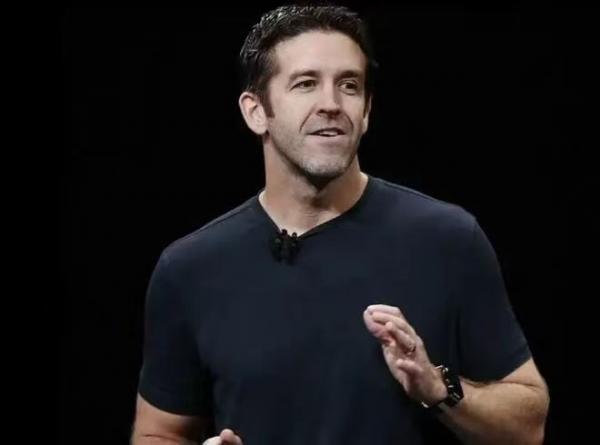
First, failure.
Early in his career, Ternus worked during Ive’s “thinner is better” era. Keyboards became fragile, butterfly mechanisms failed, ports vanished except for Type-C, and the Touch Bar—a near-useless strip—drew three years of user ire.
Ternus helped design these products.
As hardware chief in 2021, his first move was the 2021 MacBook Pro: ditching Touch Bar, replacing butterfly keyboards, restoring HDMI and SD slots. Users reacted not with “What’s new?” but “Finally, they fixed past mistakes.”
He didn’t cling to pride—he admitted errors and corrected them.
Second, turnaround.
For years, Macs used Intel chips, lagging Windows in performance. Ternus led “Project Kalamata”: ditching Intel for Apple silicon.
The shift was complex: redesigning motherboards, overhauling cooling, adapting software, migrating developer tools. A single misstep could cripple Macs.
The 2020 M1 chip debuted with performance surpassing Intel and battery life doubling. Outsiders called the transition “seamless.” Mac sales rebounded, and fans no longer felt inferior to Windows users.
This was Apple’s most impressive turnaround in a decade. Ternus led it.
He’s also pragmatic.
He skips middle management, sitting beside engineers to dissect issues. A former Apple procurement exec called him “a meticulous engineer and cautious manager.” His emails are careful, public remarks rarely controversial, but he scrutinizes product details.
Like Cook, he’s mild-mannered—no Jobs-style outbursts. He avoids internal conflicts, drives decisions swiftly, and prefers talking to frontline staff over layers of reports.
Apple’s CEO choice is clear.
Cook praised Ternus as having “an engineer’s mind, an innovator’s soul, and a leader’s integrity.” This reflects Apple’s dilemma: No lack of money (no shortage of cash), talent, or supply chains—but lacking outstanding products.
Cook maximized profits but let product innovation lag. Ternus, tech-savvy and hands-on, knows when to pivot and when to push—a classic “product guy.”
Cook left Ternus plenty of cash, but money can’t solve Apple’s real challenge.
Can the new Apple change the world? Only time will tell.
-
![]()
"3D Vision Pioneer" Grapples with Internal Strife: $120 Million in Share Reductions Offset by $147 Million Private Placement
-
![]()
The domestic auto sales have declined so much that dealers who can't hold on have started closing stores en masse
-
![]()
Five Brands Team Up with Huawei: Will Dongfeng Still Pursue Independent R&D?
-
![]()
The Large Six-Seater SUV Market: Overhyped and Overrated
-
![]()
The Smart Driving Blue Light: Urgent Need for Rectification
-
![]()
Would OpenAI Be Fascinated by Anthropic’s Concepts?
-
![]()
Tencent: Few Great Queries, Yet Possessing the Ultimate One
-
Does DingTalk Need Revolutionaries or Reformers?