The Dual Facets of CCD’s Comeback: ‘Retro Tech’ Trends at Canton Fair Struggle in the Secondhand Market
 04/29 2026
 530
530
The Canton Fair showcases innovation; Dashatou Market reveals the reality.

Did a wave of nostalgia sweep the Canton Fair with secondhand gadgets?
At the recent 139th Canton Fair, retro items like cassette players, CD players, and CCD cameras made a surprising reappearance on exhibition stands, drawing significant interest from international buyers. Following coverage by CCTV News, the topic went viral across social media, reaching unprecedented levels of attention.
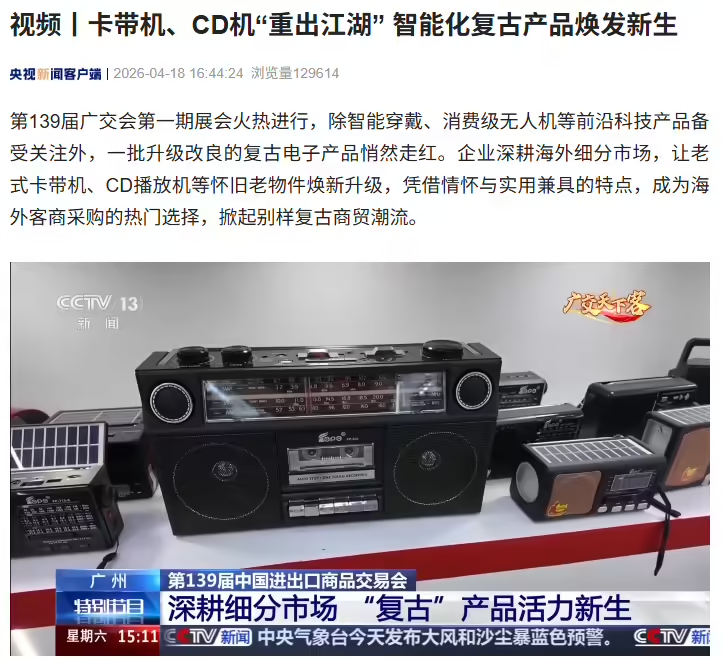
(Image source: CCTV News)
However, since the Canton Fair is mainly an import and export trade exhibition, to truly gauge the popularity of these ‘retro items,’ a visit to a more grassroots location is necessary. Therefore, Leitech (ID: leitech) decided to explore Dashatou Market, Guangzhou’s largest secondhand goods trading hub, to observe any changes following the resurgence of these vintage items.
Retro items are in vogue, but secondhand market vendors say: ‘We haven’t noticed.’
Dashatou, located in Yuexiu District, is Guangzhou’s largest secondhand digital market. The buildings may not be towering, but the market spans four floors, each dedicated to different categories. The ground floor primarily deals in secondhand phones, the second floor in cameras, and the third floor in record players and cassette players. The market is usually lively, attracting many enthusiasts on both weekdays and weekends, including a significant number of foreigners.
On a weekday afternoon, when I arrived at Dashatou, the ground floor was even more crowded than I had anticipated, with corridors packed with people. However, these crowds were not what I expected—most were African customers with dark skin, speaking English with various accents, gathered in groups of three or four in front of phone stalls, comparing different models. The entire floor was so crowded that it was difficult to breathe, and you had to squeeze sideways to navigate the aisles.

(Image source: On-site photography by Leitech)
These customers had a clear objective: secondhand phones. iPhones and Samsungs were the most frequently inquired about, but the interest wasn’t limited to these two brands. Xiaomi stalls also saw frequent visitors, and even realme devices were being sold. Store owners would retrieve phones from glass cabinets, insert SIM cards to test them, and customers would lean in to inspect the screens and negotiate prices in a harmonious atmosphere. Interestingly, the vendors here had decent English skills—at least I observed two or three who rejected ‘bargaining’ requests from African customers.
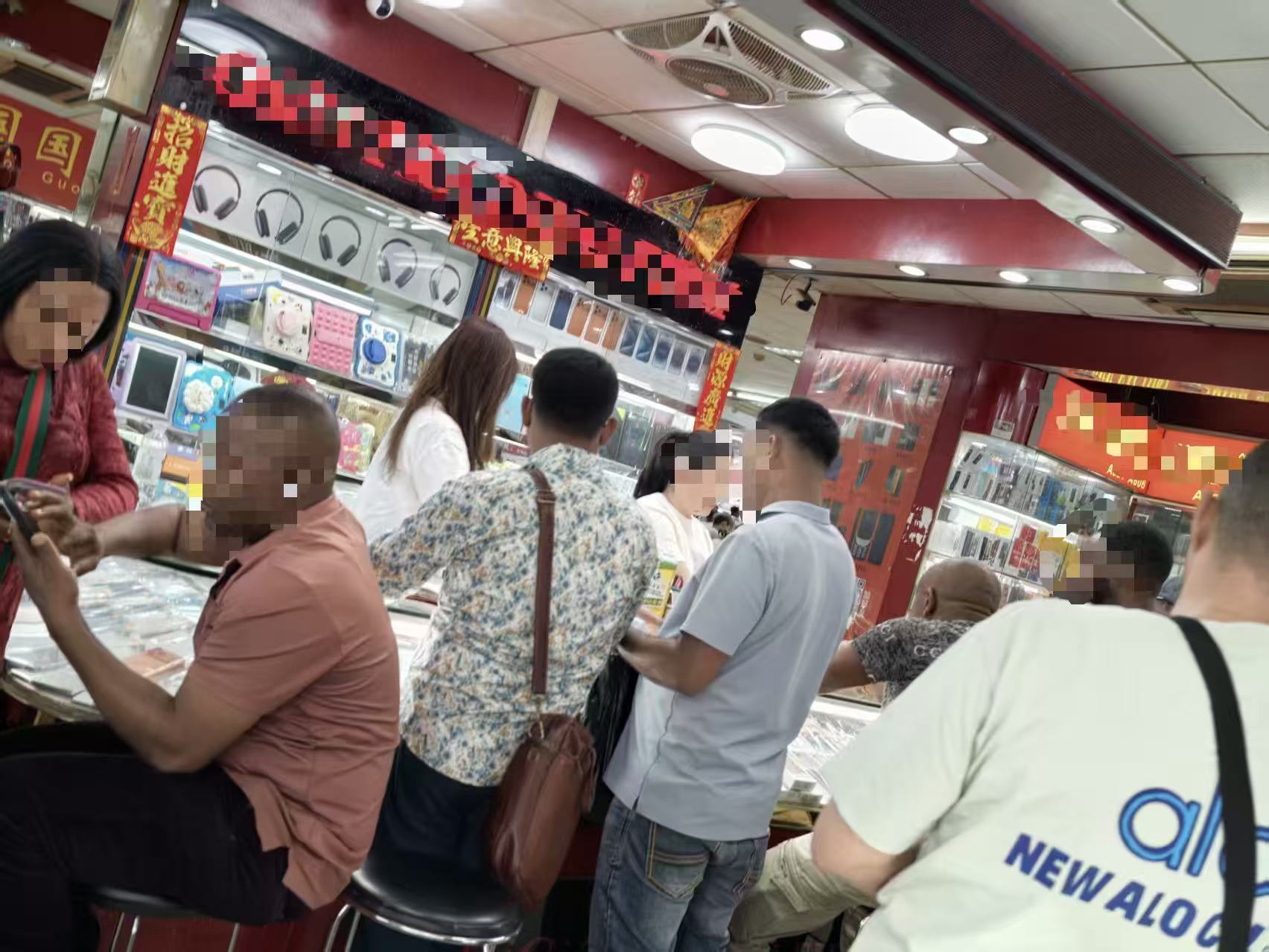
(Image source: On-site photography by Leitech)
The CCD camera stalls were located on the second floor, with glass cabinets displaying various vintage compact cameras from Sony, Canon, Casio, and Olympus, priced from a few hundred to over a thousand yuan. However, the crowds buying phones rarely ventured to this side. Besides foreigners, the second floor also attracted many enthusiasts, such as camera collectors. In addition to CCD cameras, there were also some affordable secondhand DSLRs, and customer traffic was quite good.
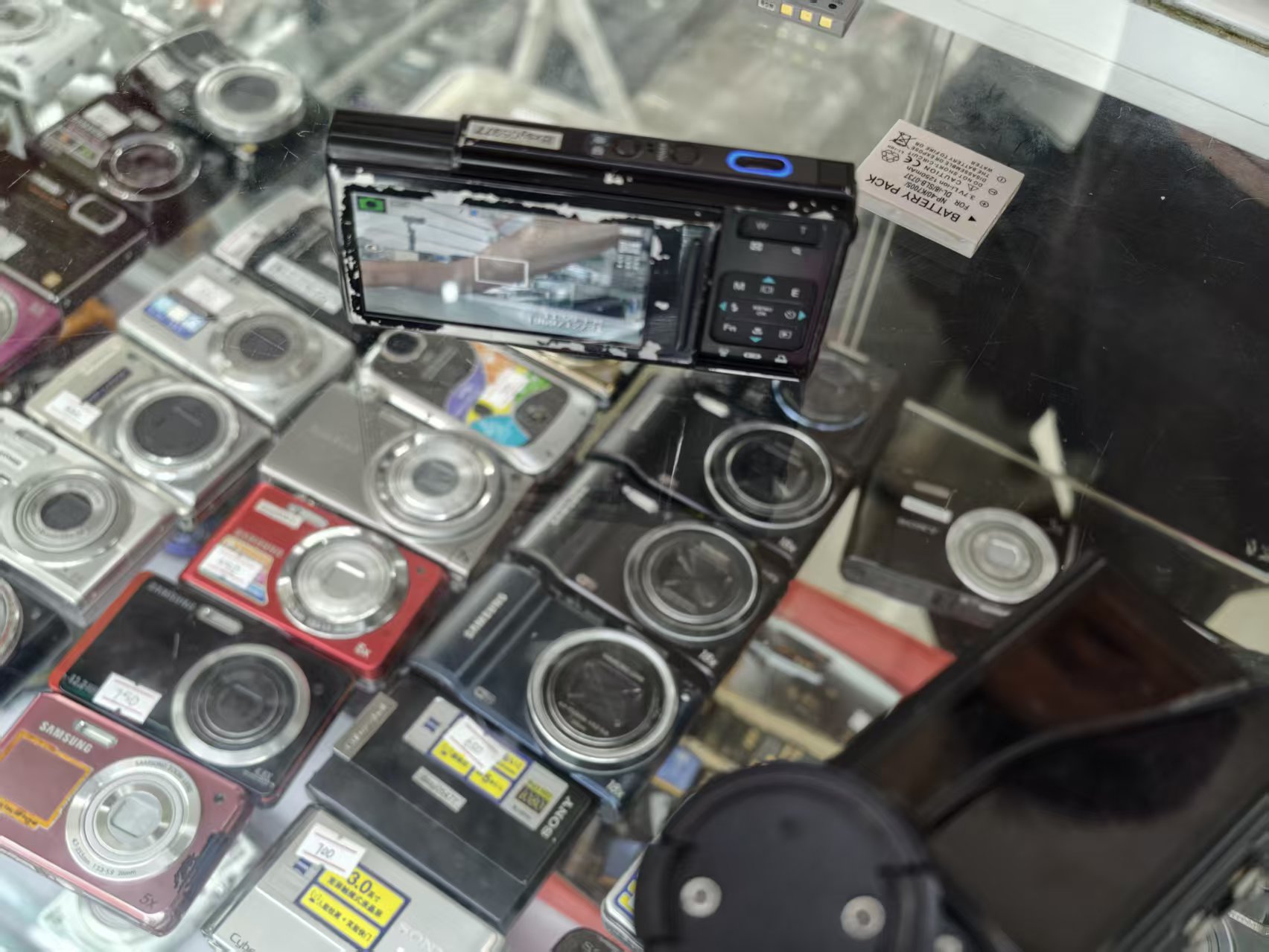
(Image source: On-site photography by Leitech)
I spoke with several CCD camera store owners. One boss, who specialized in old cameras and had been in business for nearly a decade, mentioned that while there had been more foreign customers during the Canton Fair than usual, it wasn’t a significant increase. His store sold both CCD cameras and legitimate DSLRs, so he felt that the customer base remained largely unchanged.
However, he noted that foreign customers were quite interested in the cameras on display, picking them up and examining them closely, though most were just browsing and few actually made purchases. When asked about their reactions, he said that some recent customers were genuinely curious about CCD cameras, asking why they were so expensive and whether they were popular in China.
In reality, most foreign buyers who came to the Canton Fair after hearing about these items were aged between forty and fifty-five. For them, these compact cameras, Walkmans, and CD players were genuine nostalgic items—products their families had saved up for a long time to afford. Now, being sold as secondhand goods at these prices, they were understandably puzzled.

(Image source: On-site photography by Leitech)
In contrast, the Chinese customers buying CCD cameras at Dashatou Market were a completely different demographic, mostly around twenty years old and predominantly female. They compared the colors of the cameras on display and asked which models produced a stronger ‘atmospheric’ feel in photos.
The boss of another store, which specialized in exports, said that cassette players were still quite popular, especially among Japanese buyers who had an emotional attachment to these items. European buyers preferred CCD cameras but were very particular about their condition, rejecting anything with even slight wear. She mentioned that during the Canton Fair, some people came to purchase goods for resale in their home countries, buying a dozen or so at a time. However, since most of these products were secondhand finds, it was impossible to supply large quantities of the same model.
After spending two to three hours in the market and speaking with seven or eight store owners, my overall impression was that the Canton Fair had brought a wave of ‘onlookers,’ but there had been no significant change in transaction volumes. More bluntly, the buzz generated by the Canton Fair seemed to exist only on social media—in the actual secondhand market, the customers who truly made purchases were still the same group.
Prices of secondhand goods are no longer exorbitant
In recent years, with the popularity of retro trends and Y2K styles, prices of secondhand goods have soared, including CCD cameras, radios, cassette players, and even wired headphones. Among these, CCD cameras were the most extreme example.
Around 2020, a surge of content about CCD cameras began appearing on Xiaohongshu. Ouyang Nana shared photos taken with a CCD camera in her vlog, and Yi Yangqianxi, Zhang Zifeng, and Yu Shuxin were later discovered by fans to be using them privately as well. With the ‘celebrity endorsement’ label, search volumes for related models skyrocketed. Meanwhile, a large number of influencers began creating buying guides and reviews for CCD cameras, flooding the platform with promotional content. At its peak, CCD-related topics on Xiaohongshu exceeded 4 billion views, while on Douyin, related hashtags surpassed 8 billion views.
As a result, the secondhand prices of CCD cameras were pushed to absurd levels. This explains why some store owners told Leitech (ID: leitech) that many foreigners couldn’t understand why these cameras were priced so high. According to observations, ordinary models generally sold for several hundred yuan, while better models could go for seven to eight hundred or even over a thousand. Popular models like the Sony DSC-W830, which retailed new for 750 yuan, saw secondhand prices on Xianyu surge to 1,800 yuan at one point—nearly two and a half times the original price.

(Image source: On-site photography by Leitech)
However, at Dashatou, it was clear that this wave of popularity had significantly subsided. Brands like Olympus, Canon, and Casio, which had been the most hyped, now had noticeably lower price tags in the display cabinets. When I asked several store owners, their responses were consistent: ‘Prices have dropped by more than half.’ One owner even showed me a Casio compact camera, saying that this model could sell for eight to nine hundred yuan two years ago but now went for around four hundred, including a memory card and a carrying case.
It must be said that what initially fueled the CCD camera craze was the ‘atmospheric’ demand created by social media. Strip that away, and these products are purely ‘electronic waste.’ For example, many have incompatible memory cards, cannot be charged directly, and some cameras I saw on-site couldn’t even autofocus. And the prices? The cheapest ones still cost around four hundred yuan.
The situation was similar for stalls selling cassette players and CD players on the third floor. Walkmans and vintage CD players had seen a price surge during the retro trend, with some well-preserved machines fetching four to five hundred yuan. Now, prices had softened, and ordinary Walkmans sat largely ignored. Store owners said that the models that still sold well were either in exceptional condition or relatively rare.
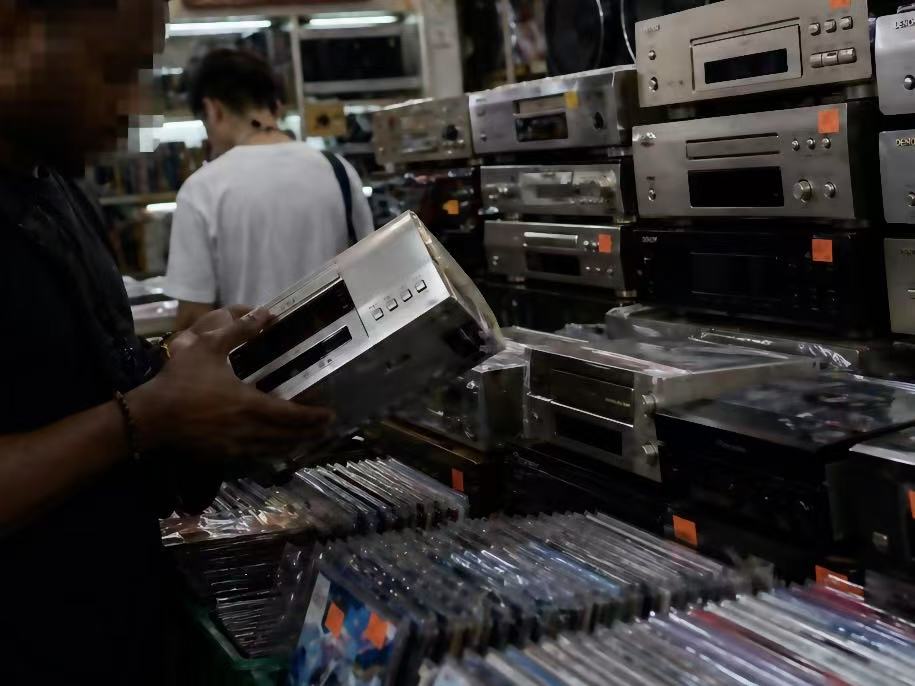
(Image source: On-site photography by Leitech)
Of course, it's not that these old items have no buyers at all—there was indeed a wave of trend-following customers, but they were deterred by the high prices. The remaining buyers were more knowledgeable about these products, willing to spend time selecting machines, and had higher requirements for condition, appearance, and specific models. Thus, some store owners admitted that this was actually a good thing—in previous years, many ‘novices’ would ask endless questions and require constant explanations, leaving them overwhelmed.
But other store owners said that with fewer ‘novices,’ the market had become much calmer. And by ‘calmer,’ they likely meant the chaos of the previous secondhand goods frenzy.
Secondhand goods ‘diluted,’ store owners suffer
Retro digital products have been extremely popular in recent years, but the ones benefiting weren’t these store owners—instead, it was the ‘unscrupulous merchants’ looking to make a quick buck.
The market was flooded with products that had undergone ‘shell modifications,’ where sensors from dashcams or even lower-end components were installed into vintage bodies and sold as ‘CCD cameras.’ These counterfeit products were cheaper than genuine models, indistinguishable in appearance, but produced completely different image quality. Ordinary buyers had no way to tell the difference, but the reputable store owners rooted in Dashatou often bore the brunt of accusations for being unscrupulous.
There were also cases of secondhand products being repaired with stolen or swapped parts. For example, a camera sent for repair might come back with critical components secretly replaced. However, CCD camera buyers generally lacked professional identification skills, making them more likely to ‘step into pits.’ Even worse, there was almost no way for buyers to prove what parts had been replaced or the original condition of the item—after all, these were used goods, so who knew what they were originally like?
When I tried discussing these issues with several store owners in the market, their reactions fell into two categories: some directly admitted, ‘The market is chaotic, but we don’t engage in that,’ while others changed the subject, saying things like, ‘We’ve been doing this for years—reputation is everything.’ No one addressed the issues head-on.
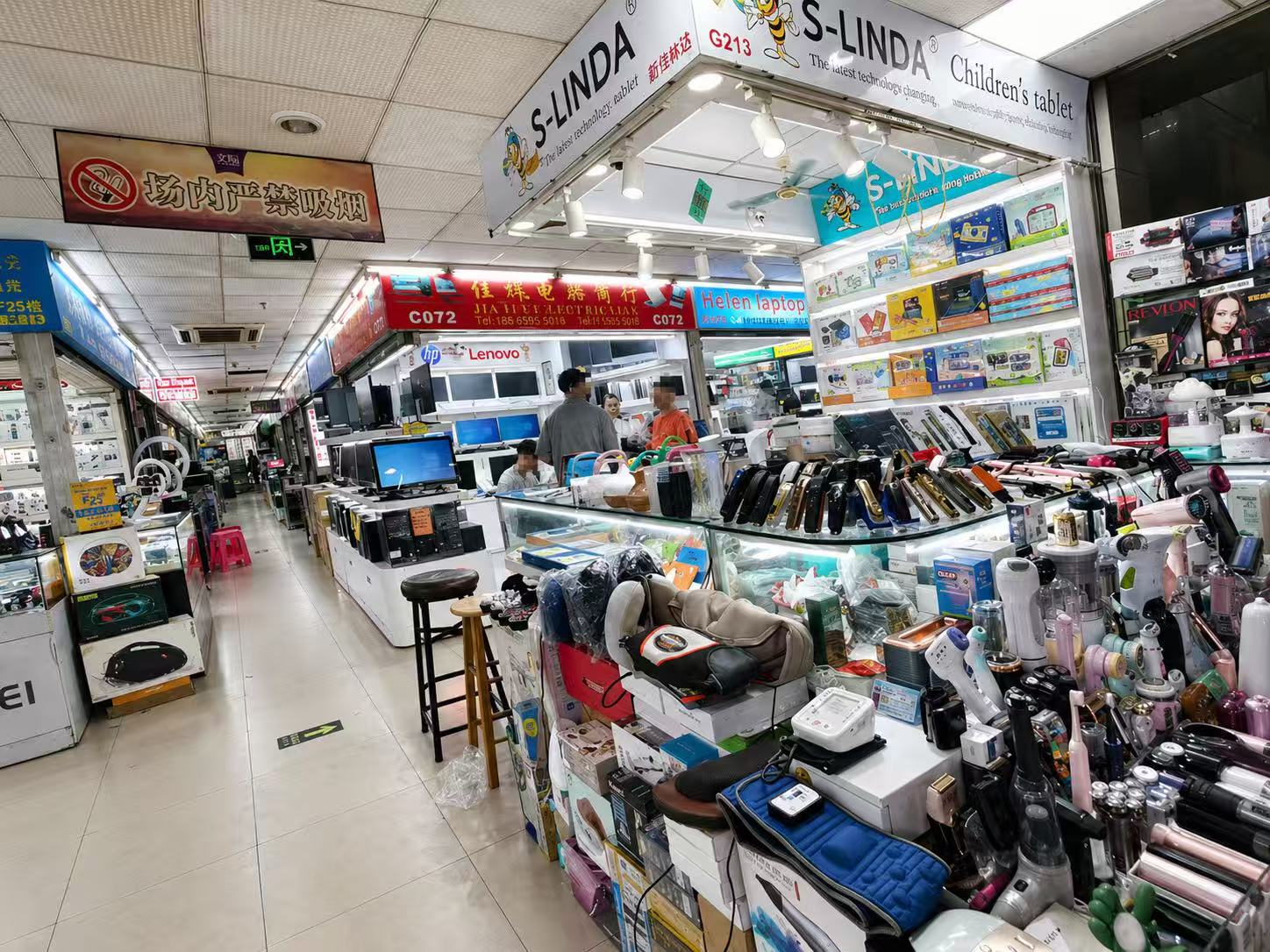
(Image source: On-site photography by Leitech)
The main issue is that old digital products like CCD cameras, CD players, and vintage cassette players lack mature authentication standards or official certification channels, making it inevitable that some would take advantage of the situation. Now that the hype has died down and the remaining buyers are more knowledgeable, it's actually a good thing for sellers.
Before visiting, I had expected the Canton Fair's popularity to be clearly reflected at Dashatou, but in reality, there was no significant impact. The business model here has long had its own rhythm, unaffected by a single wave of hype. However, after exploring the market, Leitech believes that the retro digital business still has significant potential—it's just that the onlookers attracted by the Canton Fair are unlikely to be the ones to transform the industry.
Secondhand digital products, CCD cameras
Source: Leitech
Images in this article come from: 123RF Royalty-Free Image Library
-
![]()
Let's Imagine: What If DeepSeek and Kimi Merged?
-
![]()
Why Are Young People Choosing 'Reverse Car Upgrades'?
-
![]()
Who 'Killed' the Profits of Cars in the Era of Intelligent Electric Vehicles?
-
![]()
China’s Smart Box Market: Scale Hits Rock Bottom; Breakthroughs Seen in Gaming, Learning, and AI Integration
-
![]()
70.06 Million Yuan in Subsidies Lead to First-Quarter Profitability, Moore Threads Continues to Await Commercialization Turning Point
-
![]()
Momenta's Ambitions for 'Physical AI' Must Overcome the Challenge of 'Momenta Quotient'
-
![]()
China’s Former Color TV Titan Now Faces Delisting Crisis
-
![]()
The Dual Facets of CCD’s Comeback: ‘Retro Tech’ Trends at Canton Fair Struggle in the Secondhand Market