From Growth Dividends to Growth Capabilities: Who Will Win the Second Half of the Kitchen Appliance Market?
 05/06 2026
 374
374
"This is the worst of times, yet also the best of times."
This phrase aptly describes today's kitchen appliance industry.
China's kitchen appliance sector in 2025 is a tale of two extremes: leading enterprises enjoy steady growth, while the overall industry (retail sales) contracts, inevitably impacting players across the board.
Although national subsidy policies briefly stimulated sales in 2025, they failed to resolve long-standing growth challenges. More alarmingly, when subsidies decline, pent-up demand will backfire on the industry, ushering in an era of even greater differentiation, volatility, and brutal consolidation.
Meanwhile, AI injects unprecedented growth momentum and imaginative potential into the sector. The critical moment has arrived to transition from relying on "growth dividends" to cultivating "growth capabilities" through technological, business model, and operational innovation.
Robam Appliances' 2025 financial results and Q1 2026 report reveal a strategic approach to navigating these challenges. The company maintains the highest profit margins among A-share kitchen appliance firms, with strong dividend payouts, high cash reserves, and sustained AI investment guided by a "long-termism" philosophy—cementing its position as an industry benchmark during turbulent times.
[Strengthening Foundations, Embracing Transformation]
The kitchen appliance industry now faces an era of intensified differentiation and deep adjustment.
Under pressure, Aowei Cloud Network data shows 2025 kitchen appliance retail sales at RMB 161.3 billion (-8.5% YoY), with volumes at 89.77 million units (-5.3% YoY).
National subsidies triggered a replacement wave of 128 million home appliances and 12,000 kitchen/bath products in 2025. However, the market decline exposes a harsh reality: short-term policies can boost sales temporarily but fail to address systemic industry issues.
Policy disruptions, demand fragmentation, price wars, and AI technological challenges inevitably impact all participants at this transformative crossroads.
In contrast, industry leader Robam Appliances demonstrated relative stability in 2025 and Q1 2026. It achieved RMB 10.116 billion in revenue and RMB 1.256 billion in net profit for 2025, with Q1 2026 revenue at RMB 1.963 billion and net profit at RMB 307 million—maintaining a dominant profit lead in the A-share kitchen appliance sector.
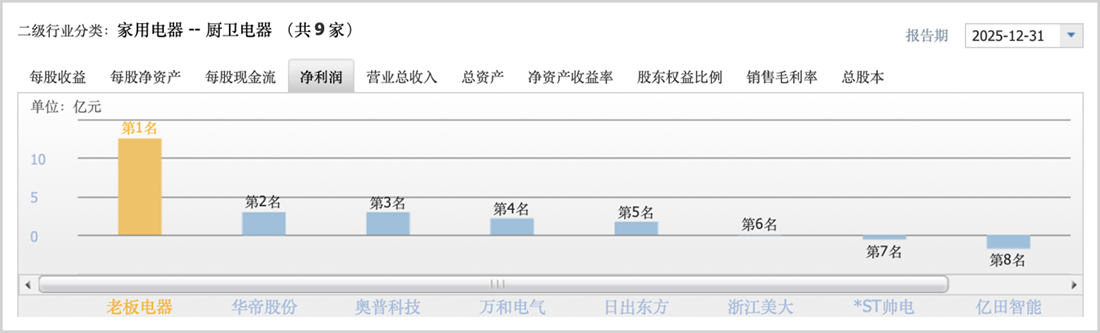
Affected by macroeconomic conditions, Robam's growth rate slowed, but this reflects proactive strategic adjustments to "stockpile resources" during downturns, trading short-term speed for long-term stability. The temporary slowdown positions the company for future resurgence.
Moreover, Robam's core business remains robust, with leading market shares in key products. A solid foundation enables successful new business transformations.
In 2025, core categories maintained stability while emerging segments expanded aggressively.
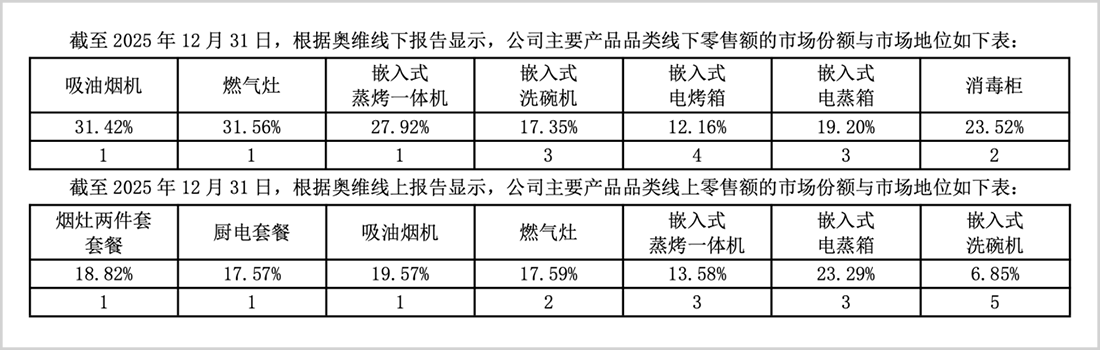
Range hoods/gas stoves retained #1 market share; integrated stoves and all-in-one machines led offline retail sales; online kitchen appliance package sales ranked #1. Both categories saw rising gross margins despite industry-wide declines in volume and value, highlighting product quality advantages.
In the more competitive global market, Robam's range hoods and stoves led for 11 consecutive years, with large cooking appliances topping sales for five years—building strong "brand awareness" for future international expansion.
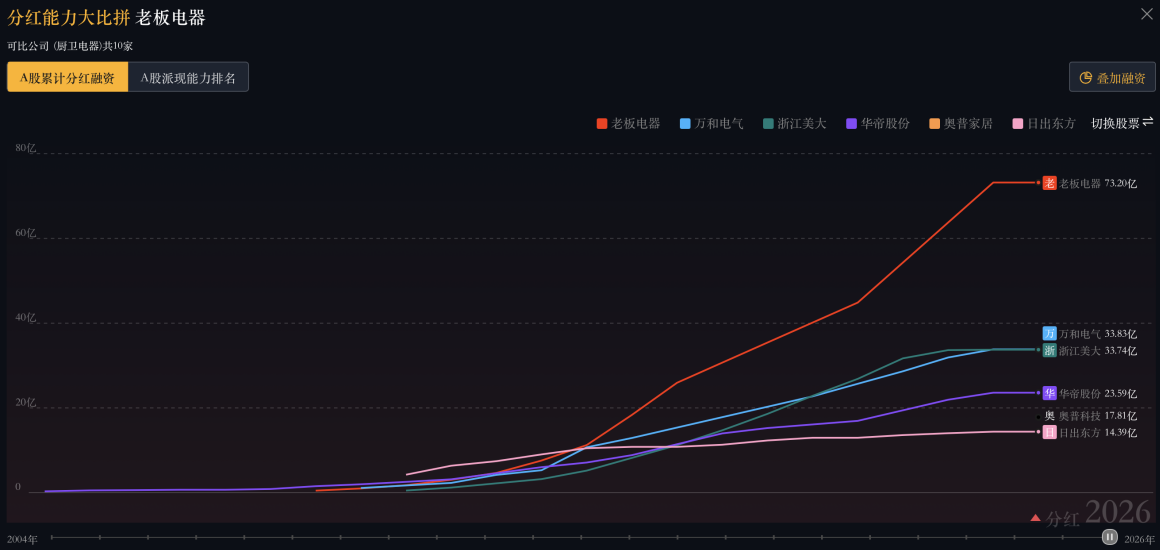
Since 2025, China's A-share market has seen structural opportunities in AI and other hard technologies, attracting significant attention. However, dividend-paying stocks like China Shenhua have steadily risen, hitting record highs.
From a long-term growth perspective, Robam's revenue has grown over 7.2x and net profit over 8x since its 2010 IPO.
Now, amid industry pressures, the company remains committed to high dividends. In April 2024, it announced a "Three-Year Shareholder Return Plan" guaranteeing biannual dividends, with a 2025 payout ratio of 75.2% (+15.4pp YoY) and no less than 50% planned for 2026.
Cumulative dividends since listing exceed RMB 7.32 billion—the highest in the sector—with a current dividend yield of 5.17%, surpassing some bank stocks.
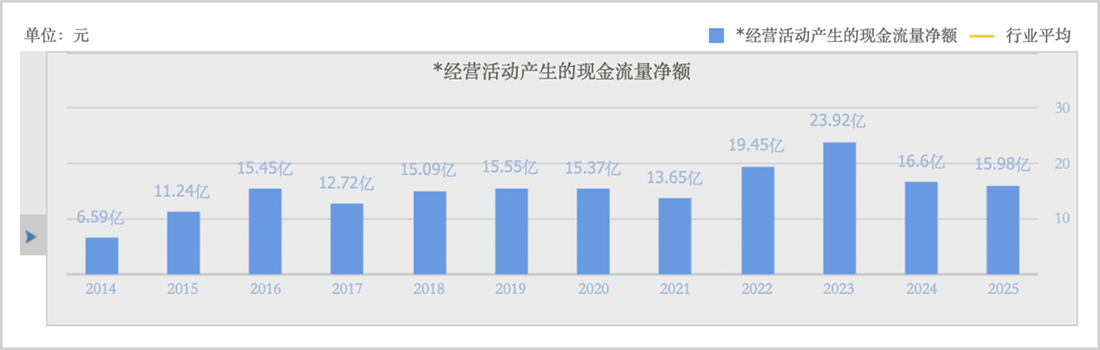
Operating cash flow remains robust and abundant (ample), maintaining historical highs over four years and demonstrating strong capital management. By Q1 2026, gross and net profit margins had rebounded significantly.
As an industry benchmark for sustained growth, high dividends, and market leadership, Robam's PE and PB ratios are at historical lows, representing an undervalued "gem" among dividend stocks.
[AI Disruptor, Redefining Kitchen Dynamics]
Compared to other home appliance categories, kitchen products have longer replacement cycles and slower adoption rates.
With the current market contraction, traditional price competition and functional homogenization no longer satisfy discerning consumers. Firms still focused solely on hardware upgrades face shrinking survival space.
Industry consensus: the Matthew effect will intensify, necessitating new growth drivers.
"AI + Cooking" has emerged as a strategic battleground.
2025 marks the "First Year of AI Cooking," with AI becoming a ubiquitous narrative in appliance firms' annual reports. Haier launched its "AI Penetration Initiative" with RMB 100 billion in planned investment over five years; Midea accelerated its "AI + Technology" transformation (transformation); Skyworth initiated an "AI Living Room Revolution"; and Changhong integrated "AI + Manufacturing" across its supply chain...
However, as the entire industry rushes into AI, firms face technical barriers, massive investment requirements, and commercialization challenges. Many remain tight-lipped about AI-specific ROI.
In the kitchen appliance niche, Robam Appliances demonstrates core AI disruption capabilities.
First, AI success hinges not on complex parameters but deep cooking expertise.
With 47 years of culinary data, Robam has built vast public/private knowledge bases and secured seven data property rights certificates—the first kitchen appliance firm to achieve unified data ownership, usage, and operational rights.
These massive digital assets fuel continuous evolution of its "Shishen" AI model.
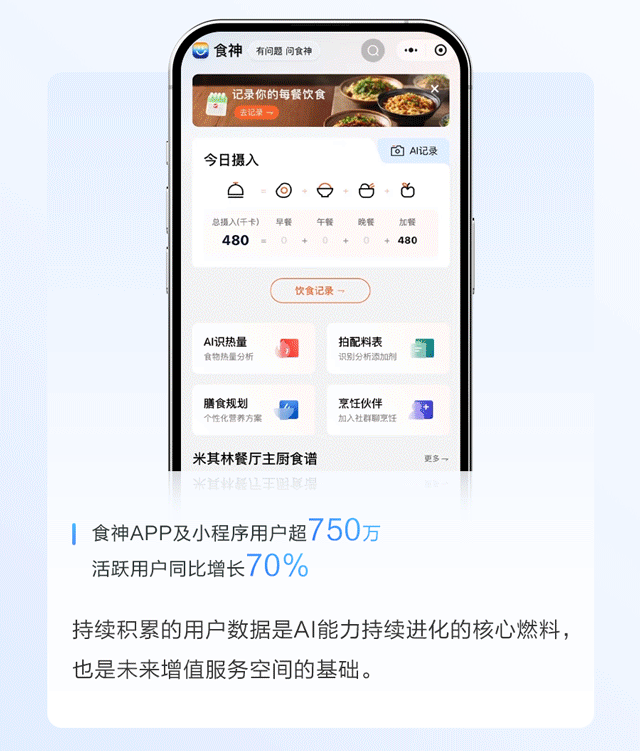
Today's consumers crave personalized, emotionally resonant experiences. The Shishen model goes beyond rational analysis—it learns from each user's cooking data to precisely match individual preferences, becoming increasingly intuitive through iterative upgrades.
Unlike basic model integrations by competitors, Shishen functions as an emotional, humanistic AI Agent, recommending seasonal dishes and cooking methods for specific occasions.
Second, Robam broke down barriers between virtual and physical worlds, creating a holistic "Hardware + Software + Content + Ecosystem" AI cooking solution.
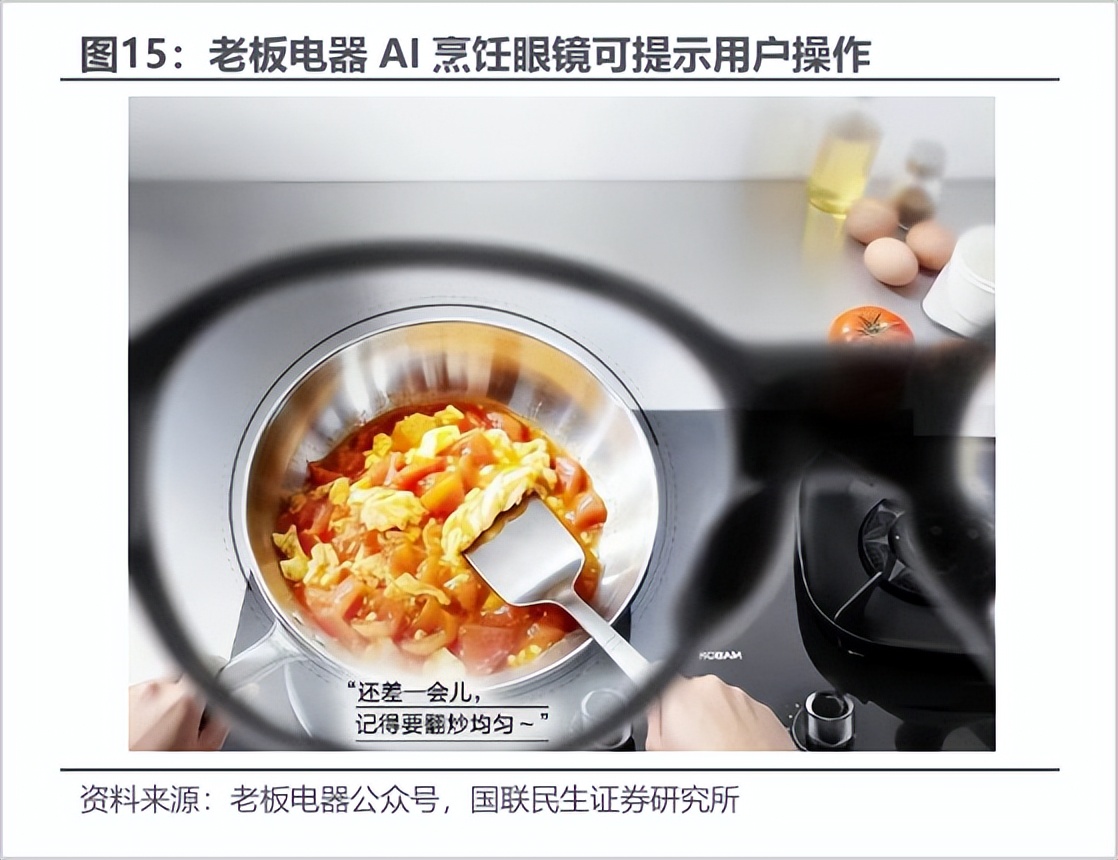
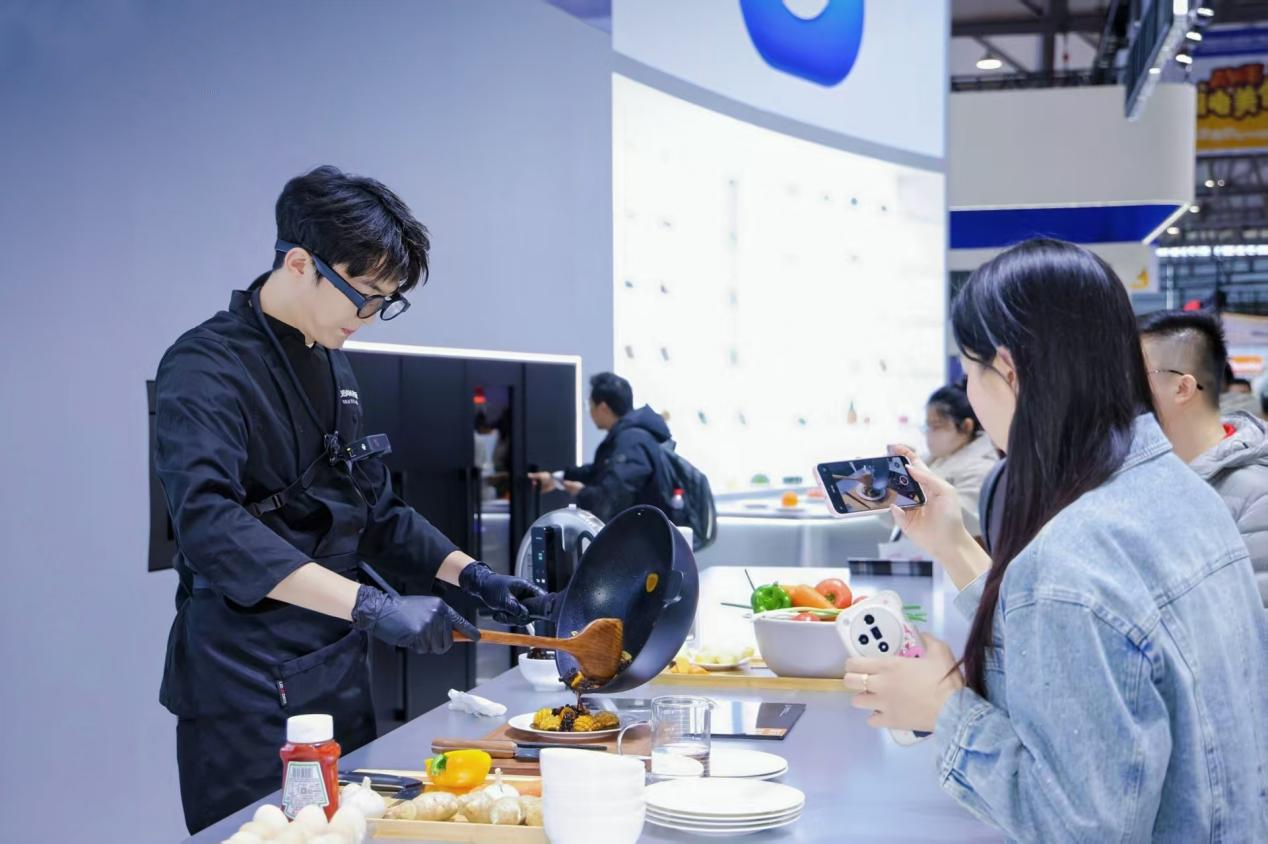
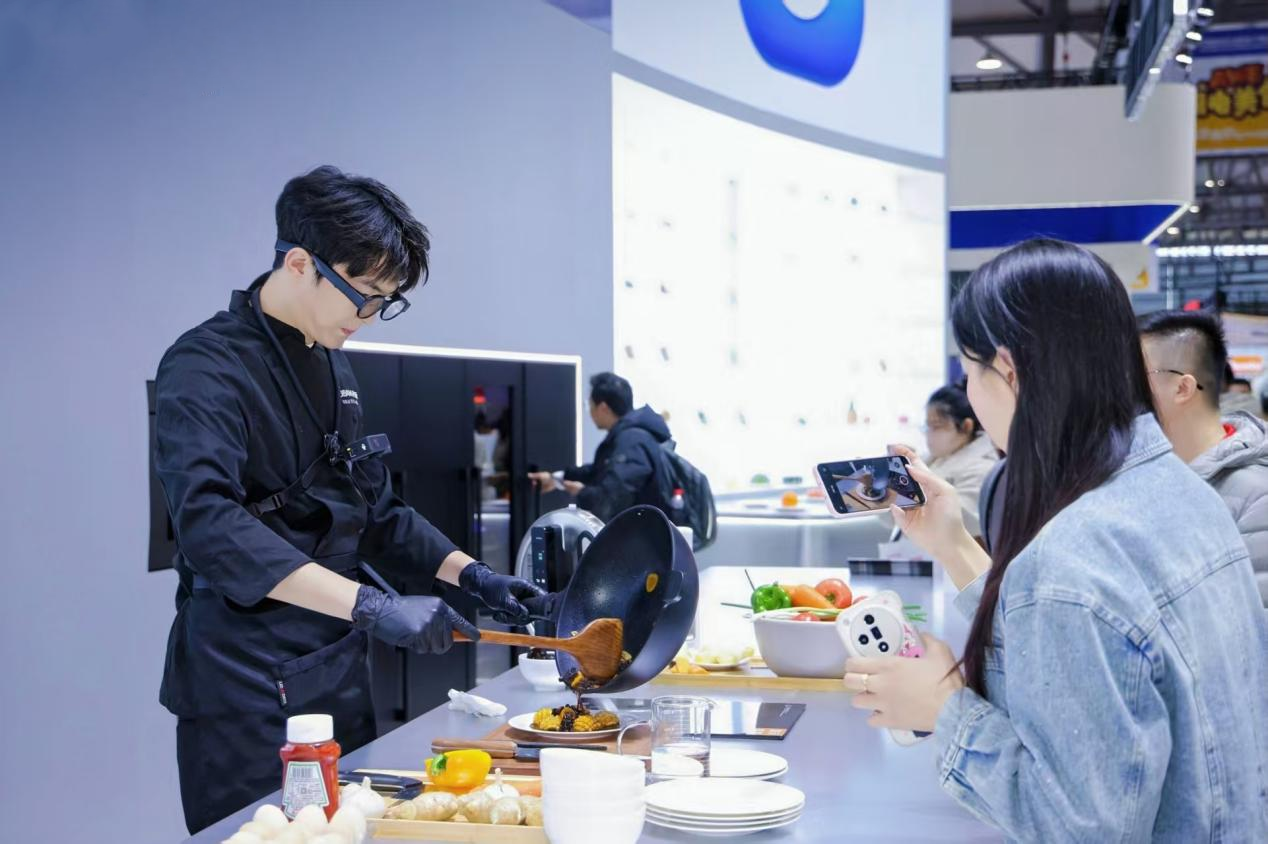
The company launched the world's first AI cooking glasses capable of preparing meals and the first AI seasoning robot that dispenses ingredients precisely according to recipes. Together with Shishen and AI digital kitchen appliances, they form a closed-loop system spanning "perception-decision-execution."
Take the AI cooking glasses: using a first-person perspective, they identify ingredients, monitor heat levels via the Shishen AI model, and provide AR-guided cooking instructions—such as adjusting heat or adding seasonings during stir-frying. They also sync with range hoods, stoves, and steam ovens to cover the entire cooking process from prep to plating.
For the first time, AI enables a complete kitchen workflow closed loop (closed loop). AI cooking agents have transitioned from concept to reality.
Third, Robam shapes "AI + Cooking" industry standards through technological leadership. In 2025 alone, it filed 890 invention patents (363 granted), ranked #1 in China for AI cooking model patents, and officially released IEC international standard proposals it spearheaded.
The company also established three research institutes—Digital Kitchen Appliances, AI, and Chengdu—to create a full-chain "Hardware + Algorithms + Scenarios" ecosystem.
These strengths enabled Robam to validate its AI strategy with concrete data when competitors remained silent on AI outputs.
In 2025, its digital kitchen appliance sales reached RMB 2.35 billion (+36% YoY), with its i-series surging 65% YoY. The "AI + Cooking" strategy has moved from concept to scalable commercialization, becoming Robam's second growth engine.
[Dividend Decline, Reshaping Growth Momentum]
Over the past decade, the kitchen appliance industry benefited from real estate booms, emerging category penetration, and policy incentives (national subsidies). Now, with external growth dividends fading and inventory (stock) competition intensifying, the industry now competes on innovation, business models, user experience, and refined operations.
Beyond AI, Robam cultivates additional growth engines for the stock era.
1. Multi-brand strategy to meet diverse demands: Through market segmentation, firms can precisely target consumer pain points to gain competitive advantage. McDonald's successfully captured children and young users through this approach.
Robam employs a multi-tiered brand strategy in kitchen appliances: "Dachoo" targets young, style-conscious female users with aesthetic design and AI smart features, boosting annual user engagement to 40% and dominating Tmall's desktop range hood category for 12 months.
For value-conscious down-market consumers, Robam leverages its "Robam + Mingqi" dual-brand strategy. Mingqi positions itself as practical kitchen appliances, generating RMB 561 million in revenue in 2025, with its online flagship range hood and stove suites breaking into the industry's top 10.
2. Expanding business value and channel opportunities:
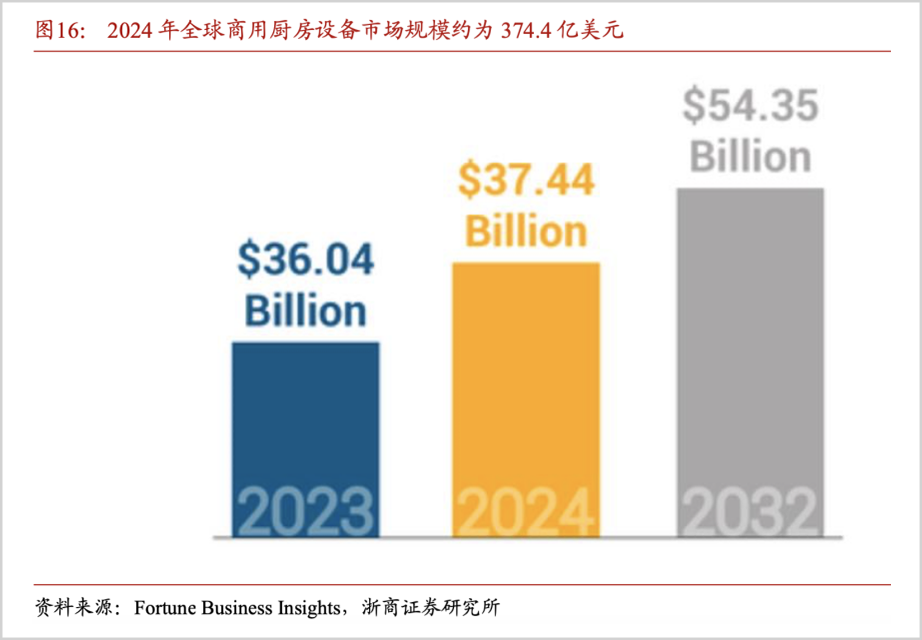
The RMB 100 billion commercial kitchen market remains promising. Robam established a commercial kitchen subsidiary late last year, achieving explosive single-point growth in channels. Q1 2026 saw contracted value, invoiced amount, and average project price surge 633.58%, 286.57%, and 1,000.37% YoY, respectively.
Meanwhile, the company made a RMB 100 million strategic investment in UTI Smart Kitchen, a leading domestic commercial cooking robot firm. With intelligentization (smart) penetration in the >RMB 100 billion commercial kitchen market below 10%, this partnership repurposes consumer-end AI capabilities for commercial use, securing early-mover advantage in this growing segment.
Beyond commercial kitchens, vast overseas markets await. In 2025, Robam began exploring "overseas business partnership" models, progressing from product exports to model/cultural exports.
With a solid core business, emerging AI-driven growth, and new dividend opportunities, Robam remains confident in navigating cycles through "long-termism."
Disclaimer
This article contains analyses and judgments based on publicly disclosed information (including interim announcements, periodic reports, and official interaction platforms) from listed companies as required by law. The information and opinions herein do not constitute investment or business advice. Shizhi Observer assumes no liability for any actions taken based on this article.
——END——
-
![]()
The Rise of Paid Services: Don’t Underestimate Doubao
-
![]()
How Much of Alibaba and ByteDance's 'Model Answers' Can Xiaohongshu Score?
-
![]()
Amazon Unlocks Logistics Network, Ushering in a New Era for Traditional E-commerce
-
![]()
Why is Doubao Monetizing in the 'Most Pragmatic' Way?
-
Liu Jingkang’s ‘Overt Strategy’: Can Insta360’s Short-Term Profit Sacrifice Secure Its Future Competitive Edge?
-
![]()
From Growth Dividends to Growth Capabilities: Who Will Win the Second Half of the Kitchen Appliance Market?
-
![]()
Understanding in One Read - Whether Intelligent/Self-Driving Cars Should Use LiDAR: It May Not Just Be a Technical Issue
-
![]()
From Hardware Race to Large Model Dominance in Autonomous Driving?