Samsung Home Appliances' Market Exit: Dealers Offload Stock on Xianyu—Are the Bargain Prices Too Good to Be True?
 05/09 2026
 391
391
Beware: Low Prices May Hide High Risks
On May 6, Samsung China officially announced its withdrawal from the Chinese home appliance market. The company will now focus primarily on smartphones and storage solutions in the domestic market. For products already sold, Samsung has assured compliance with all relevant laws and regulations to ensure continued after-sales support.
However, Samsung's market exit has implications beyond just consumers—a large number of dealers are now scrambling to clear their inventories.
Recently, evidence of Samsung dealers offloading stock has surfaced on second-hand platforms like Xianyu, where numerous Samsung home appliances are being offered at heavily discounted prices. While some consumers see this as an opportunity to grab a bargain, many are concerned about whether after-sales services will remain intact without ongoing brand support.
Samsung Home Appliances Flood Xianyu, with Discounts as the Main Draw
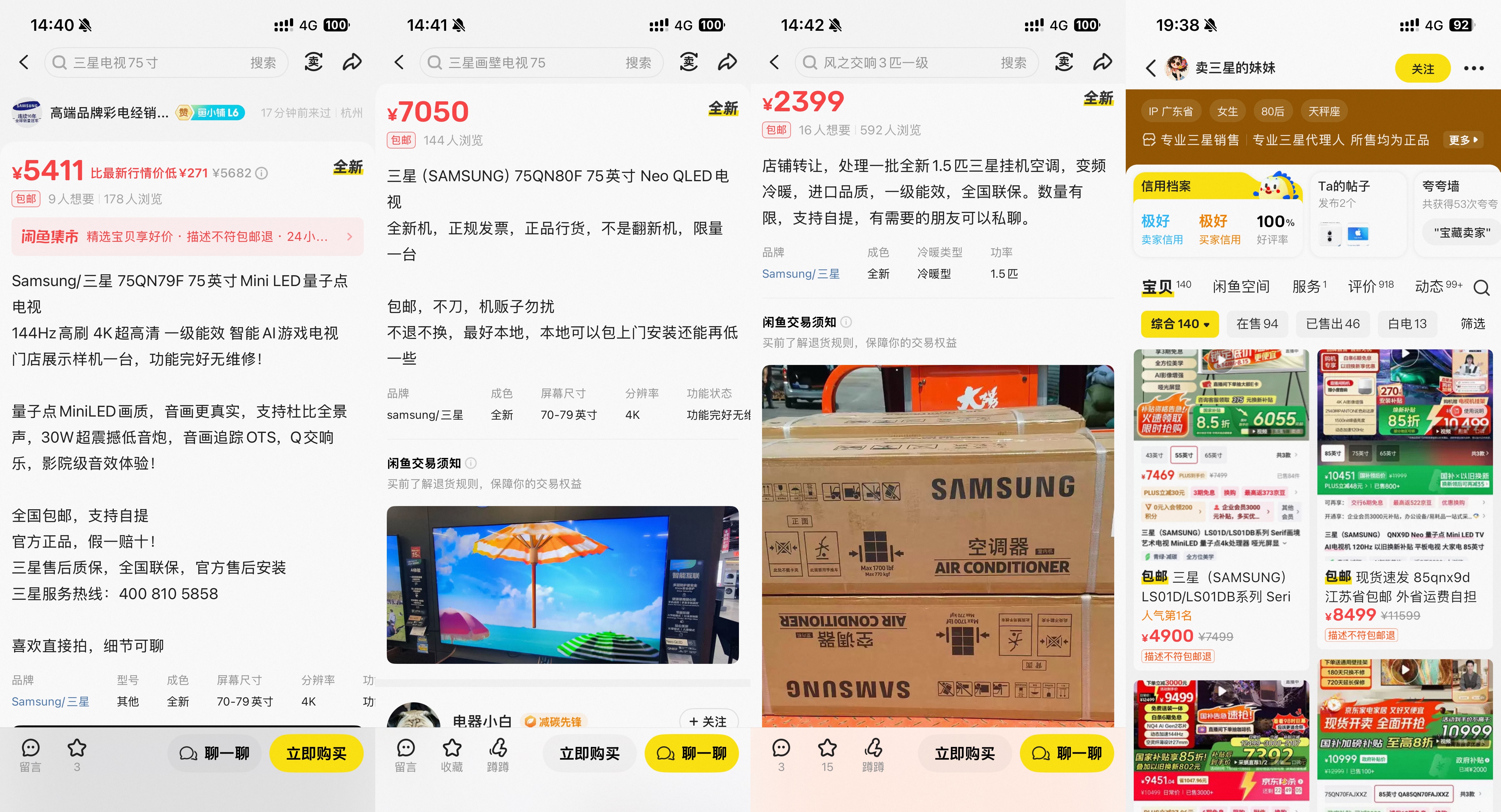
A search on Xianyu for terms like 'Samsung Home Appliances,' 'Samsung TV,' and 'Samsung Refrigerator' reveals a significant number of brand-new Samsung products listed for sale. Based on seller account details and activity patterns, these listings do not appear to be from ordinary users.
(Image Source: Leitech)
Given that Xianyu is primarily a second-hand platform, the prevalence of brand-new listings strongly suggests the involvement of professional merchants. These sellers, even if not official Samsung dealers, likely sourced their inventory from dealers looking to offload stock.
Despite being a global tech giant, Samsung's home appliance division has struggled to gain significant brand recognition in China. Even among tech-savvy consumers, awareness is largely limited to Samsung TVs and monitors.
A price comparison between Xianyu listings and official channels confirms substantial discounts. For instance, the Samsung TV model 75Q7FA is priced at just 5,214 yuan on Xianyu, nearly 3,000 yuan less than its official price of 7,999 yuan.
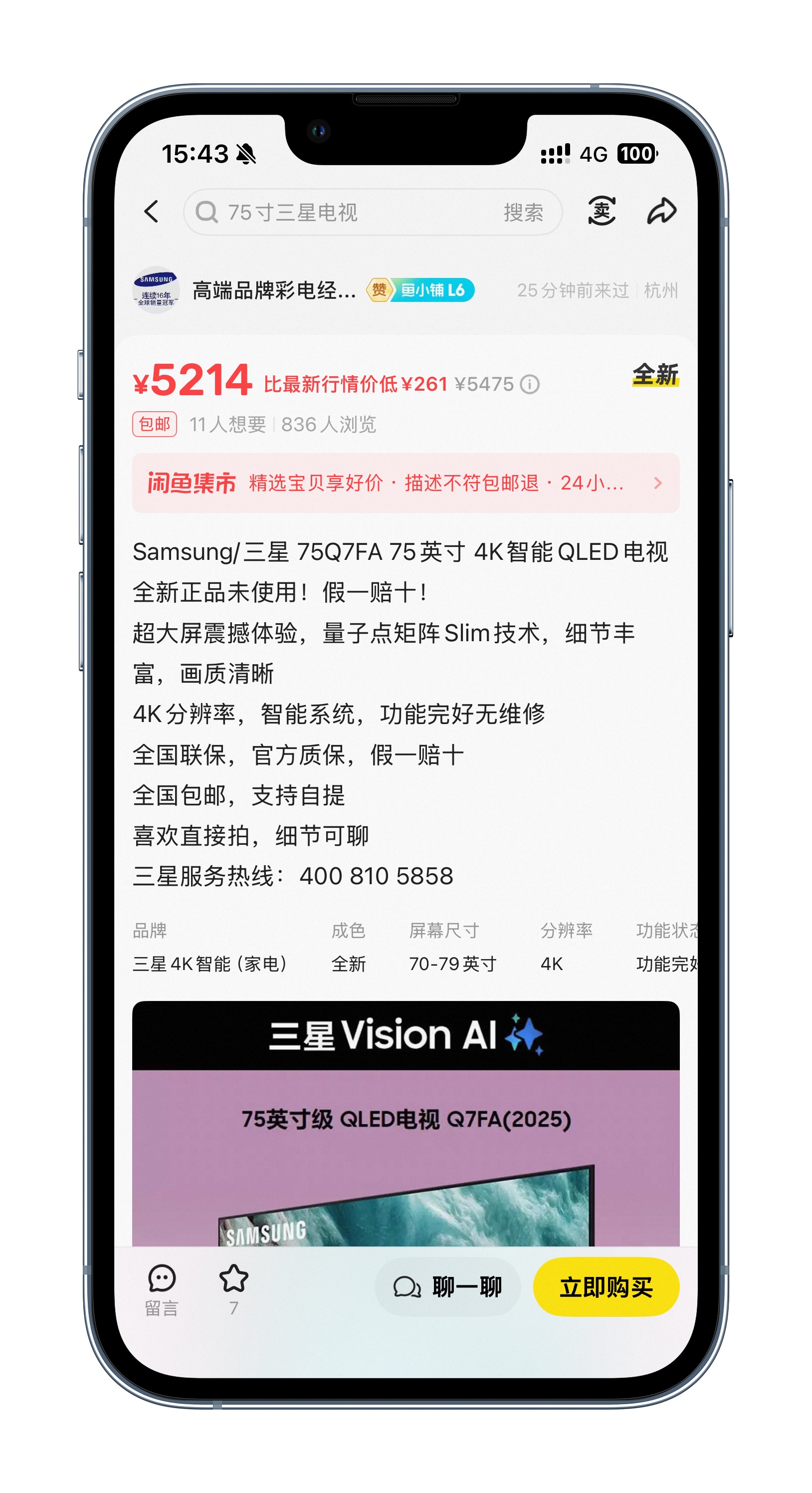
(Image Source: Leitech)
Similarly, the Samsung monitor model S27A800UJC is available for 1,083 yuan on Xianyu, roughly half its official price.
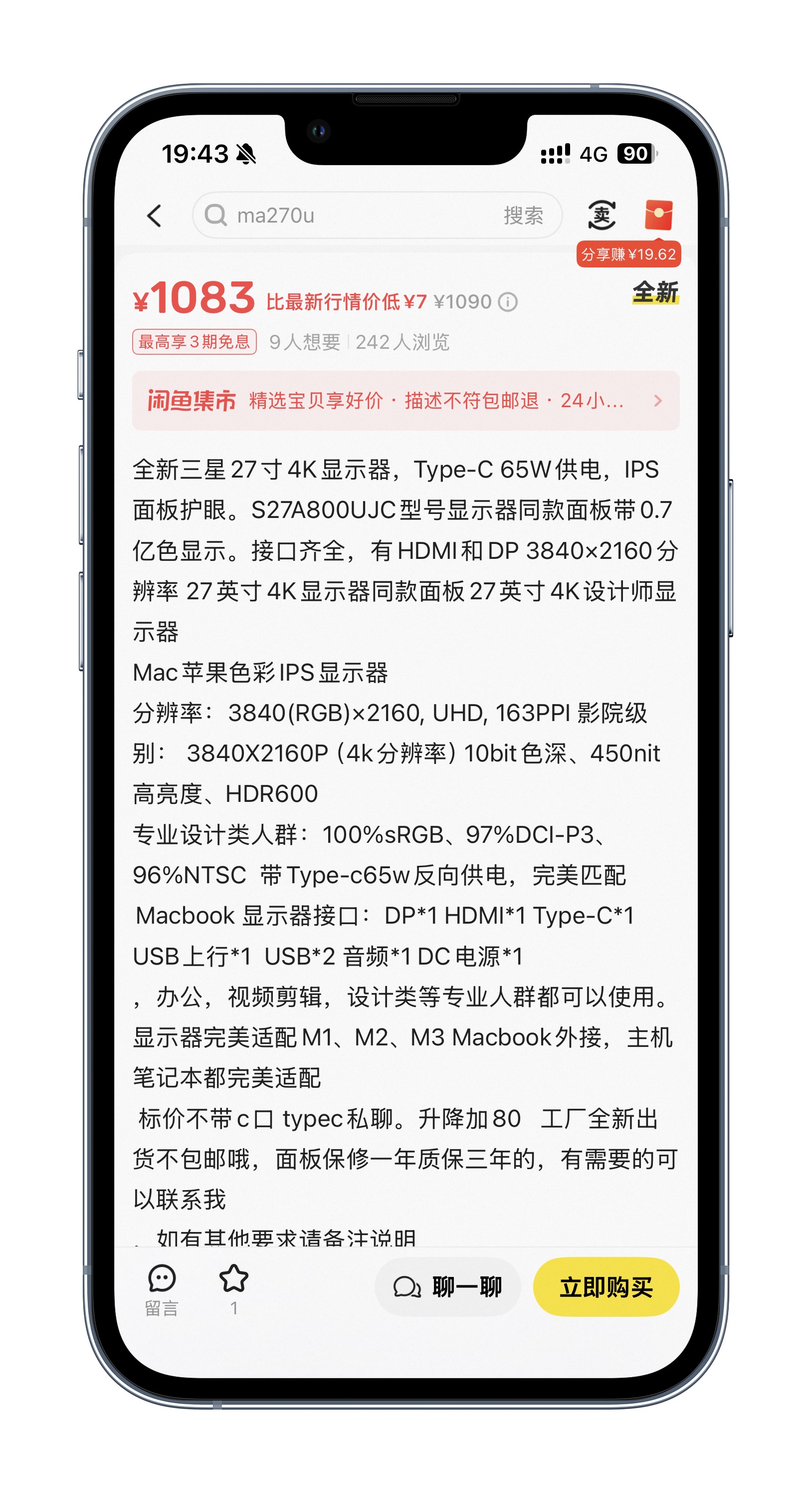
(Image Source: Leitech)
Interestingly, these sellers typically claim their inventory comes from 'direct factory supply' and avoid disclosing specific dealer relationships. However, it is clear that Samsung does not directly supply products to Xianyu sellers.
In reality, Samsung Home Appliances have relied on an extensive offline sales network in China, partnering with retailers such as Suning and Dixintong. In Guangzhou alone, there are 38 offline stores selling Samsung home appliances.
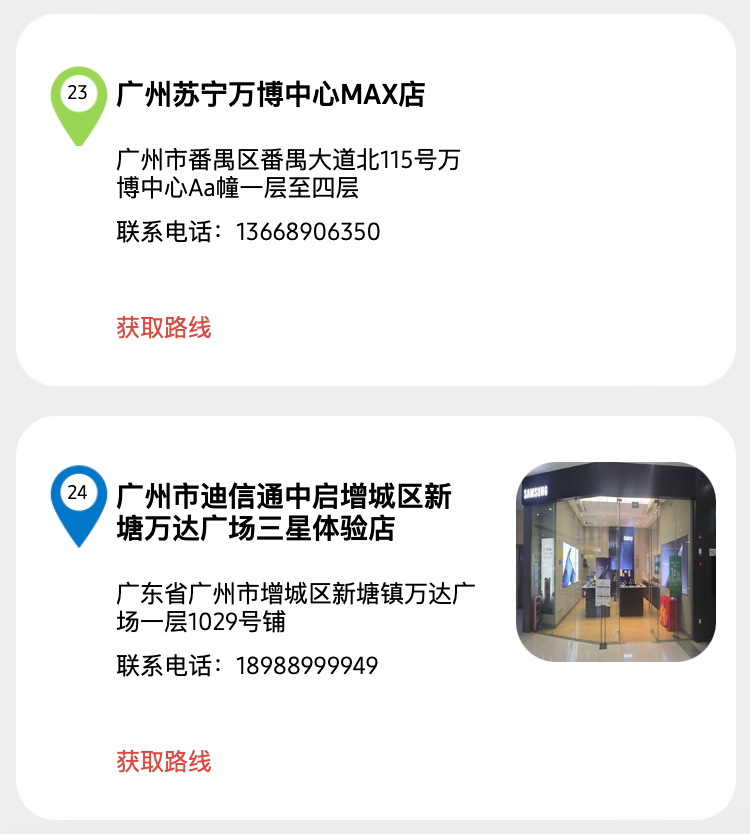
(Image Source: Samsung)
Additionally, information about Samsung dealers clearing inventory can also be found on Xiaohongshu, where some are offering Samsung refrigerators at a 30% discount, while others share promotional details about authorized stores clearing stock at 50% off.
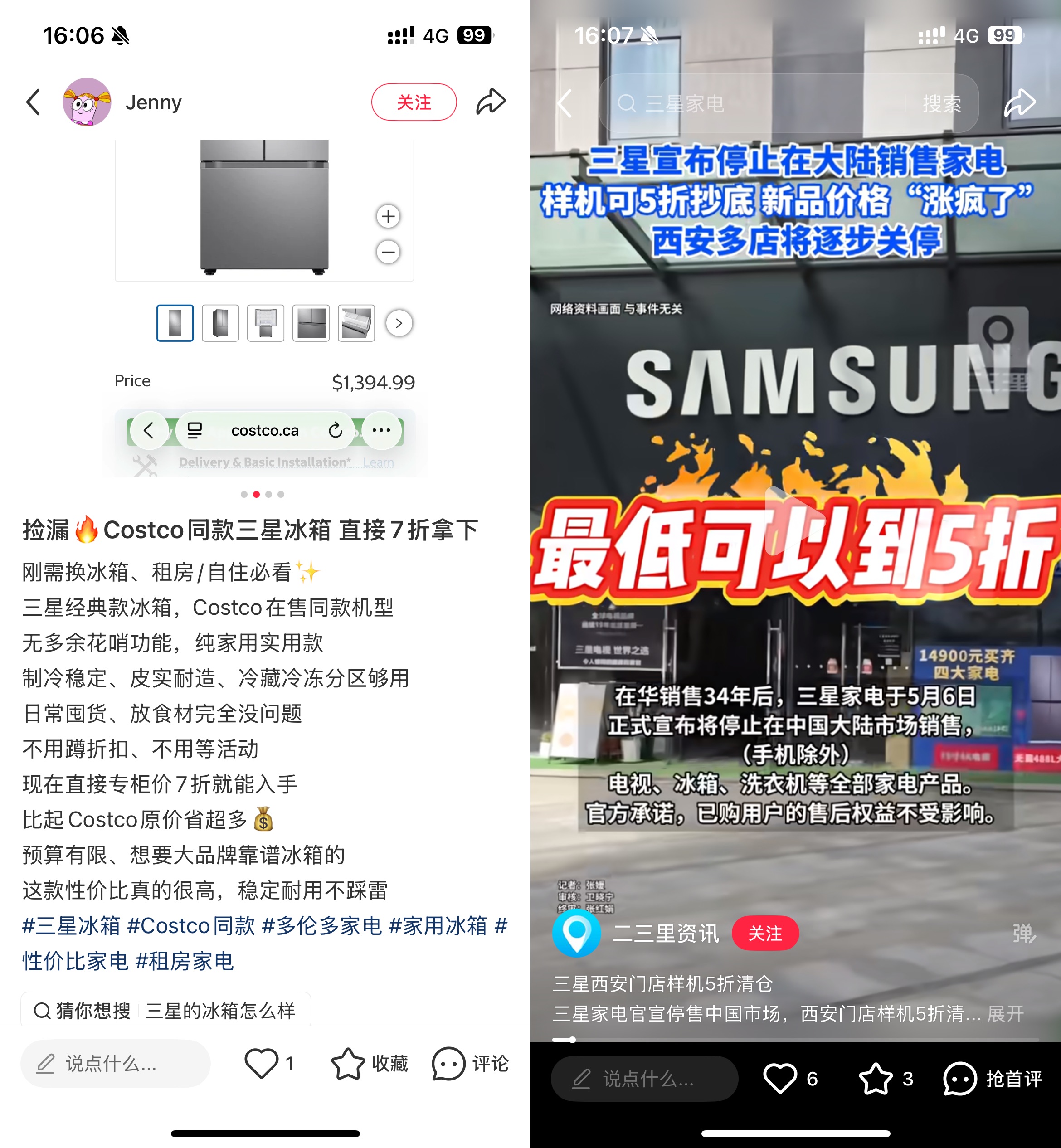
(Image Source: Leitech)
In summary, following Samsung's market exit announcement, dealers have been exploring various channels to clear their inventories and minimize potential losses.
Are Deeply Discounted Samsung Home Appliances Worth the Risk?
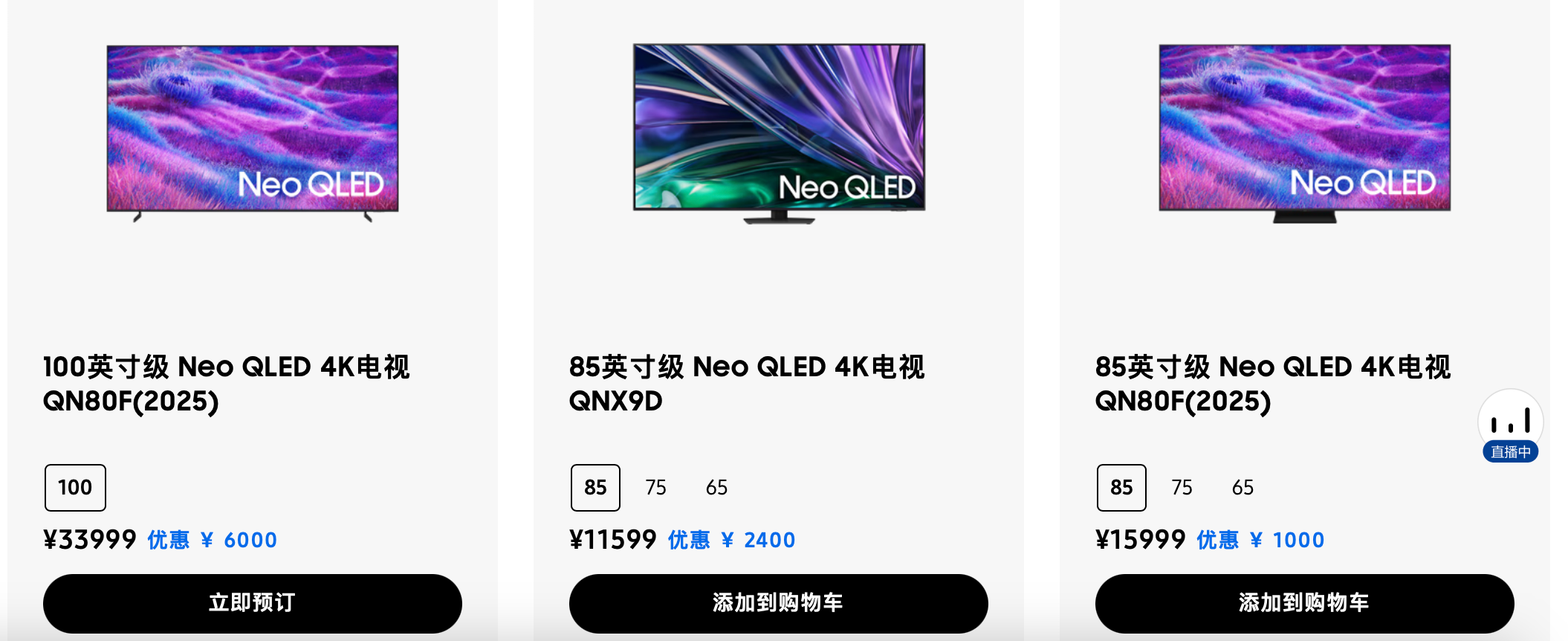
Samsung Home Appliances' poor sales performance in China, ultimately leading to its market exit, reflects its inability to compete with domestic brands. While Samsung holds technological advantages in display-related products, domestic competitors like TCL CSOT, BOE, and Tianma have rapidly closed the gap in OLED panel technology.
Today, Chinese consumers can purchase OLED smartphones, monitors, and TVs at relatively affordable prices. Under such circumstances, Samsung's premium-priced TVs and other products struggle to gain market traction.
(Image Source: Samsung)
With Samsung's market exit now confirmed and dealers clearing inventory, Samsung home appliances have become more cost-effective, as their price premiums have largely evaporated. After all, Samsung monitors priced just over 1,000 yuan and large-screen TVs for three to four thousand yuan were previously unheard of. From a purely price-based perspective, these discounted products seem like a great deal.
However, at Leitech (ID: leitech), we advise caution. These seemingly cheap Samsung home appliances carry hidden risks.
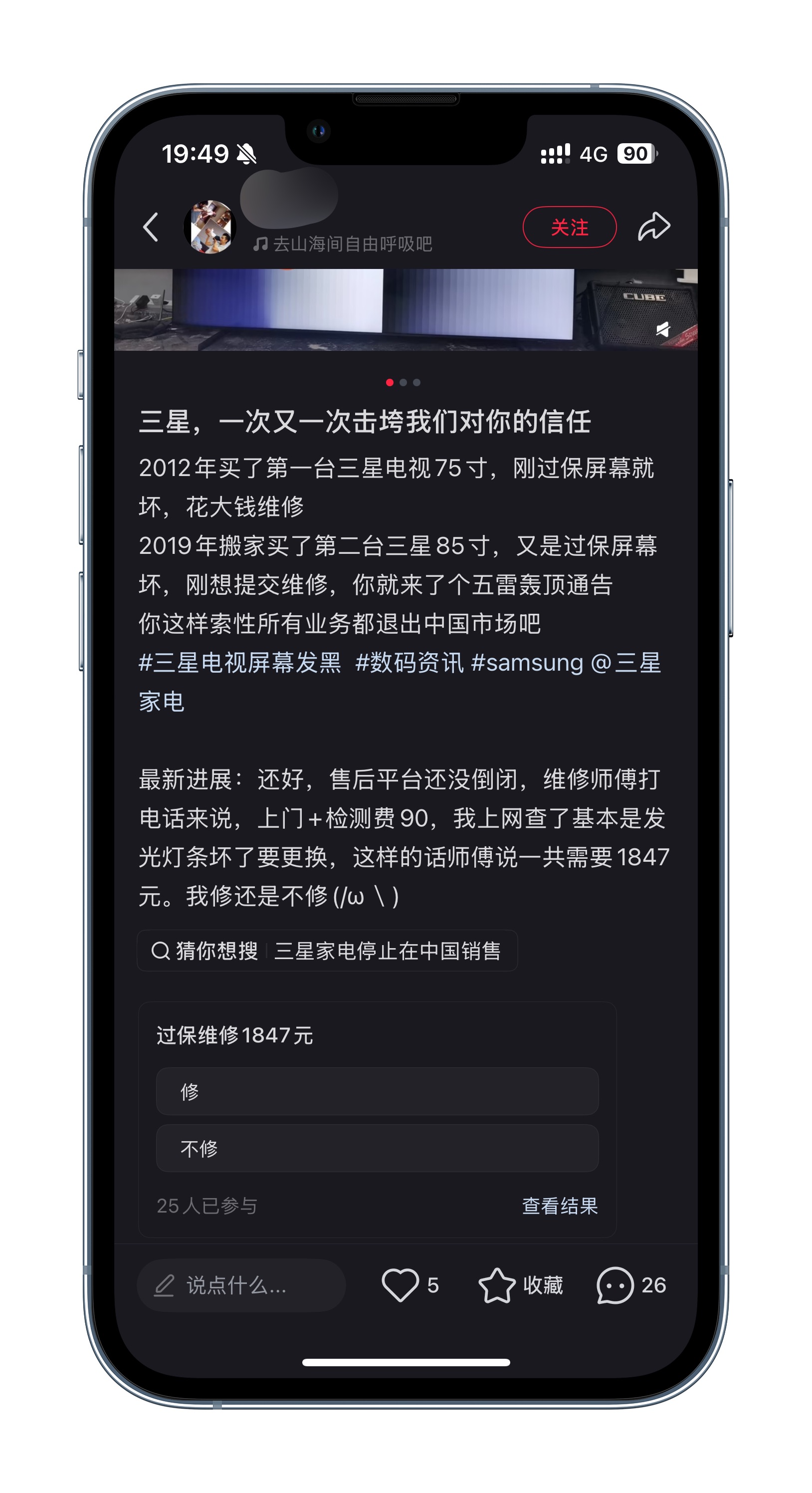
First is the after-sales issue. While Samsung officially states that after-sales service for purchased products will remain unaffected, this promise assumes purchase through officially recognized channels. Discounted products sold by dealers through unofficial channels are unlikely to come with proper invoices, raising questions about their eligibility for official after-sales support.
Another critical concern is the warranty period. Home appliances typically have much longer warranties than portable devices like smartphones. For example, Samsung provides a one-year warranty for the entire TV and a three-year warranty for major components in China. As Samsung exits the market, after-sales departments will inevitably downsize.
In the future, Samsung may transfer some after-sales services to third-party providers, potentially diminishing the quality of warranty support. Third-party service providers often handle multiple brands and may lack adequate training for repairing less common products.
(Image Source: Leitech)
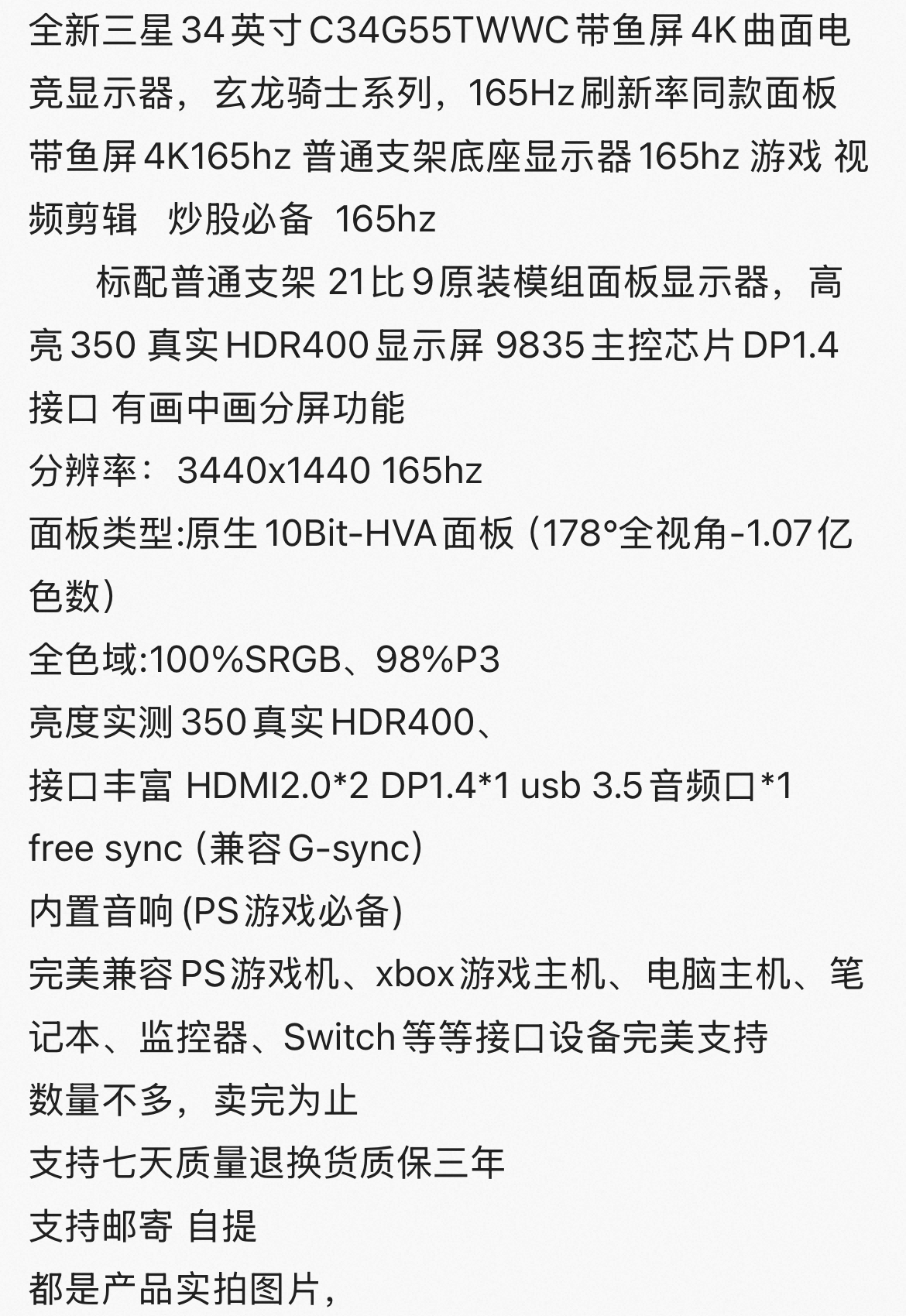
There are also quality risks associated with the products themselves. Platforms like Xianyu and Xiaohongshu are not officially recognized sales channels, so consumers must independently verify product authenticity and quality. Some counterfeit products have been found amid the liquidation sales.
For monitors, unscrupulous merchants use vague descriptions like 'Samsung-equivalent quality' to mislead consumers. These may appear to be low-priced alternatives to genuine Samsung products but are actually unbranded items with no quality or after-sales guarantees.
(Image Source: Leitech)
Even if the product is genuine, questions remain: Is it truly brand-new, or is it a display model that has been used multiple times? Does it function flawlessly, or does it have hidden defects? For ordinary consumers, verifying these aspects is costly and difficult.
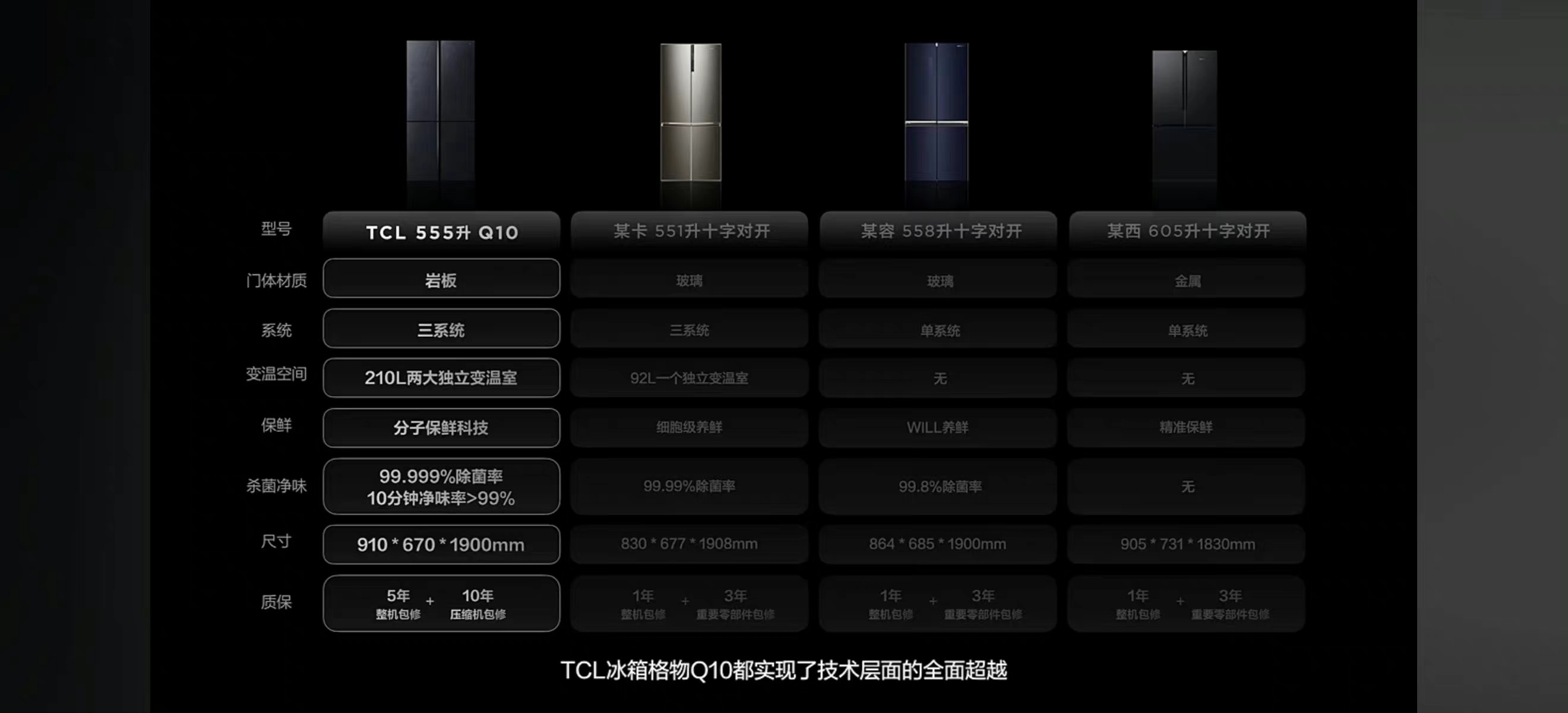
More importantly, domestic home appliance brands have now fully risen to prominence. Whether it's traditional giants like Midea, Haier, Gree, Hisense, TCL, and Skyworth, or new internet-powered players like Xiaomi, Dreame, and Bear, they offer a wide range of products capable of meeting diverse household needs.
In terms of technological prowess, product functionality, and user experience, domestic brands now hold their own against international giants like Samsung, Sony, and LG. In recent years, domestic brands have even been expanding aggressively in overseas markets, capturing territory once dominated by foreign brands.
As mentioned earlier, Samsung Home Appliances' exit from China reflects its inability to compete with domestic brands. Therefore, for most domestic users, instead of buying unguaranteed, low-priced Samsung home appliances on second-hand platforms, it is wiser to choose cost-effective domestic products through official channels. Subsidies like the 10 billion yuan consumer vouchers, national subsidies, and upcoming 618 promotions offer attractive discounts through legitimate channels.
Final Thoughts
Samsung Home Appliances' quiet market exit represents both a reluctant loss-cutting measure by a foreign giant in China's competitive market and an inevitable outcome of the full rise of domestic brands. As Chinese manufacturers dismantle so-called technological barriers, the former premium aura of international brands no longer justifies high markups.
Faced with this seemingly festive clearance sale on second-hand platforms, consumers must remain rational. Unlike low-priced fast-moving consumer goods or frequently updated tech gadgets, home appliances typically accompany us for years or even decades.
Long-term user experience, stable product operation, and official after-sales support are far more important than the temporary thrill of snagging a bargain. Bearing the risks of future lack of after-sales support, receiving products that don't match descriptions, or even buying refurbished display models for the sake of a partial price difference is never a wise trade-off.
(Image Source: TCL)
Today, when domestic home appliances offer perfect cost-effectiveness, smart ecosystems, and localized services, consumers have far more stable options. The era of Samsung Home Appliances in the domestic market may be ending, but for us, bidding farewell to high-priced overseas brands and enjoying the peace of mind and affordability brought by a mature domestic industrial chain is the truly logical consumer choice.
Instead of taking chances in the chaotic second-hand market, we should take advantage of e-commerce promotions to explore domestic home appliances genuinely committed to the domestic market and capable of providing long-term consumer protection.
Samsung Home Appliances, Second-hand Trade of Samsung Home Appliances
Source: Leitech
All images in this article are from 123RF's licensed image library.
-
![]()
Sales Review of Top Five Independent Automakers in April 2026: BYD Leads, Chery Closely Pursues
-
![]()
2026 Beijing Auto Show: A Spectacular Showcase of 9-Series Flagship Vehicles
-
![]()
Triple Gamble: Is Insta360 Eyeing the Next 10 Billion Yuan Market?
-
![]()
Foreign Home Appliance Brands' Mass Exit: Chinese Brands Still Face Uphill Battle
-
![]()
Coreweave: Computing Power Sales Soar, But Profits Falter—Is Nvidia's 'Foot Soldier' Fighting for Survival?
-
![]()
Coreweave: Strong Computing Power Sales, But Profitability Challenges Persist—Is Nvidia's 'Foot Soldier' Just Stuck in a Tough Spot?
-
![]()
The Rationale Behind the Financing Rush Among Major Model Firms: Dark Side of the Moon and StepFun Spearheading the Charge
-
![]()
DeepWay Makes Another Attempt at HKEX Listing: Annual Revenue Hits 4 Billion, Operating Cash Flow Turns Positive, Has the 'Tesla of Heavy Trucks' Overcome Its Toughest Challenge?