Commentary | The Second Fundamental Reason Behind the Sluggish Growth of China's AI Glasses Industry
 05/25 2026
 495
495
01 Unveiling the True Market Landscape
In February 2026, we penned an article titled 'Commentary | Delving into the Core Reasons Behind the Stagnant Growth of China's AI Glasses Market', highlighting the stark disparities between the Chinese and international AI glasses markets. Fast forward to late May 2026, how has the AI glasses market fared this year? Has the gap between the two markets narrowed? In the first half of the year, tech giants Alibaba and Huawei unveiled their AI glasses with integrated shooting capabilities (featuring QQ video calls and smartwatch synchronization; for a comprehensive review of Huawei's inaugural AI glasses, refer to our dedicated article). Huawei's foray into the market garnered significant attention from both consumers and investors. However, online sales figures for AI glasses from various manufacturers have been less than stellar. Take Huawei, for instance: despite being on sale for a month, it has only managed to sell slightly over 1,000 units via Tmall, a figure that falls short of Huawei's market influence.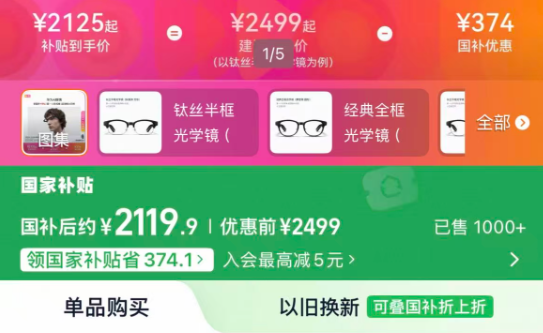
"AI glasses haven't fared well in the first half of the year; even Meta's performance has been lackluster," a sales vice president from a renowned AI glasses supply chain manufacturer candidly shared with the author. Recently, several manufacturers have announced plans to launch upgraded versions of AI glasses with enhanced shooting capabilities. Compared to the hastily released products last year, this year's upgrades boast improvements in shooting effects, weight, comfort, aesthetics, AI capabilities, and application scenarios. Nevertheless, distributors seem unenthusiastic about these enhancements. "It appears that AI glasses with shooting capabilities aren't selling well in China. Instead, models that combine shooting and display functions are more popular, despite their higher price tags," remarked Chen Yongfeng, General Manager of Shanghai Qianguan Electronic Technology Co., Ltd., a company deeply entrenched in the AI glasses sector. This sentiment is echoed by multiple distributors and brands. "Rokid Glasses and Qianwen S1 are more appealing to users than their shooting-only counterparts."
"Customers initially interested in shooting-only AI glasses can be easily persuaded to opt for smart glasses with both shooting and display functions with a little guidance from customer service," Chen added. "Currently, offline digital channels are outperforming traditional eyewear channels," a well-known offline distributor informed the author. These real-world market insights are perplexing; the outcomes are vastly different from our initial expectations. What went awry? The CEO of a prominent smart glasses company shares the same bewilderment: "We're also analyzing the reasons; perhaps AI glasses aren't a good fit for the Chinese market."
02 Navigating Through Our Confusion
Let's retrace the origins of the AI glasses craze. It all began with the remarkable performance of Rayban Meta's second-generation AI glasses in the first quarter post-launch, followed by consecutive record-breaking quarters, swiftly surpassing a million units in cumulative sales. This milestone was hailed as the PMF (Product-Market Fit) moment for AI glasses. Coupled with AI's quest for real-world applications, major manufacturers jumped on the bandwagon, leading to the 'Hundred Glasses Battle' in 2025. The underlying logic was as follows: Rayban and Meta's first-generation co-branded product, Rayban Meta Stories, didn't fare well, with only about 300,000 to 400,000 units sold throughout its lifecycle, far below expectations. In contrast, Rayban Meta's second-generation co-branded product achieved over 300,000 units in sales in the first quarter alone. The primary distinction between the two products was shooting capabilities; AI was a later addition. Hence, the real reason for Rayban Meta's success was attributed to shooting. This analysis seems plausible, but it overlooks a crucial premise: the collaboration between Rayban and Meta.
According to information disclosed by various media sources, including statements from Snap's CEO during interviews:
- There exists a $50 price differential between Rayban glasses and Rayban Meta.
- Customers visiting Rayban offline stores with the intention of purchasing Rayban sunglasses are guided by sales staff towards Rayban Meta models.
The effectiveness of this strategy indicates that customers who opt for the upgrade believe the value added by the electronic smart features (shooting + TWS + AI capabilities) justifies the additional $50. Upgrading to the smart version incurs an extra $50 and entails a heavier weight, but the benefit is gaining electronic smart functions.
Similarly, let's analyze other brands' shooting-capable AI glasses using this framework. If a certain brand's shooting-capable AI glasses share the same appearance design as traditional myopia glasses, in users' minds, the price of these glasses might only be deemed worth 100-200 yuan. For instance, if Alibaba, Huawei, or Xiaomi were to announce their entry into the traditional myopia glasses market and release a myopia glasses product, users wouldn't attribute a high premium to it. Many startups' offerings would be close to being generic (white-label) products. However, with electronic smart features, the price jumps to 1999 yuan or even higher. Suppose a manufacturer releases a traditional frame version of AI glasses with the same appearance and materials, priced at 100-200 yuan, while most shooting-capable AI glasses are priced at 1999 yuan. In this calculation, the electronic smart features are valued at 1799 yuan. Users willing to buy such AI glasses must acknowledge this value and accept the appearance and weight. Since 1799 yuan is five times $50, the conversion threshold for domestic AI glasses is significantly higher than that of Rayban Meta. However, Rayban Meta Stories didn't sell well, implying that the electronic smart features of Stories weren't worth $50 to users. After the second-generation upgrade, users believed the electronic smart features were worth the price.
In the domestic market, only tech enthusiasts and early adopters would acknowledge the value of electronic smart features at 1799 yuan, turning the product into a digital device logic. Now, let's consider Rokid Glasses, a display + shooting AI smart glasses. The electronic smart features are priced at nearly 2799 yuan. The fact that it sells better than shooting-only AI glasses indicates that tech enthusiasts recognize the combined value of these electronic smart features as offering better cost-effectiveness than shooting alone. However, it still primarily adheres to the logic of consumer electronics rather than the eyewear-centric logic of Rayban Meta. In essence, Rayban's brand effect played a pivotal role in the success of Rayban Meta AI glasses. After a year of development, the industry has reached a consensus: AI glasses are first and foremost glasses, and wearing comfort and aesthetics are paramount. However, merely excelling in both eyewear and electronic functions isn't sufficient to break through. Aesthetics and comfort are also available in generic and traditional eyewear; brand premium is the linchpin. Therefore, domestic AI glasses manufacturers should further enhance the practicality of their functions and seek collaborations with higher-premium brands.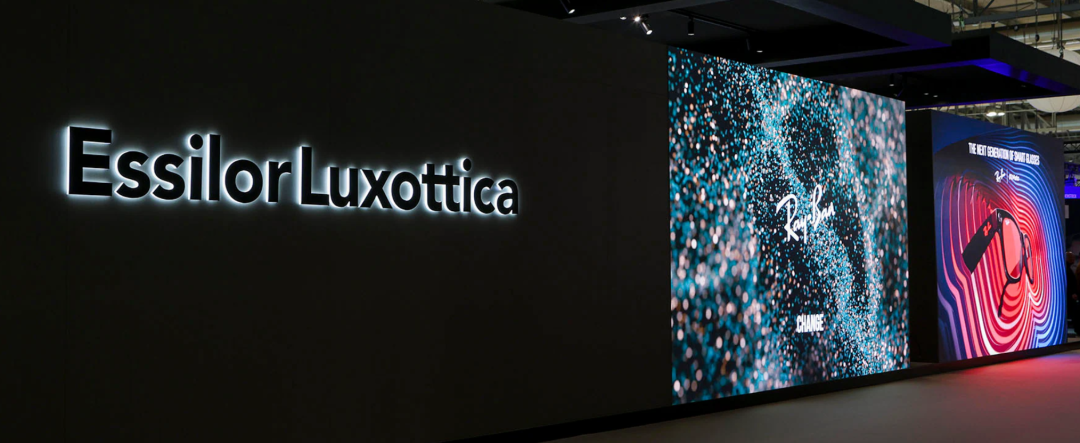
Of course, there are precedents for co-branding collaborations in China, such as the partnership between BOLON and Rokid. However, the author believes that BOLON's brand premium is still insufficient. Traditional BOLON glasses are priced around 500-600 yuan, while BOLON AI glasses are priced at about 1999 yuan, meaning the electronic smart features are priced at around 1399 yuan. Therefore, users must acknowledge that the electronic smart features are worth this price and accept the additional weight to be willing to purchase. 1399 yuan may not have reached the critical threshold, and the difference from 1799 yuan is not substantial.
Based on this rationale, the current collaboration between Google, Samsung, and Gentle Monster closely mirrors Rayban Meta's strategy. Next, we can validate this rationale by observing the sales of Google's product. However, fashion brands (not just eyewear brands but also brands from other categories) are scarce resources. Meta and Google, with their vast financial resources, have already secured resources from EssilorLuxottica, Gentle Monster, and Kering Group, leaving few brands for other manufacturers. However, if supply chain costs can continue to decline significantly, AI glasses will also witness a larger round of sales growth.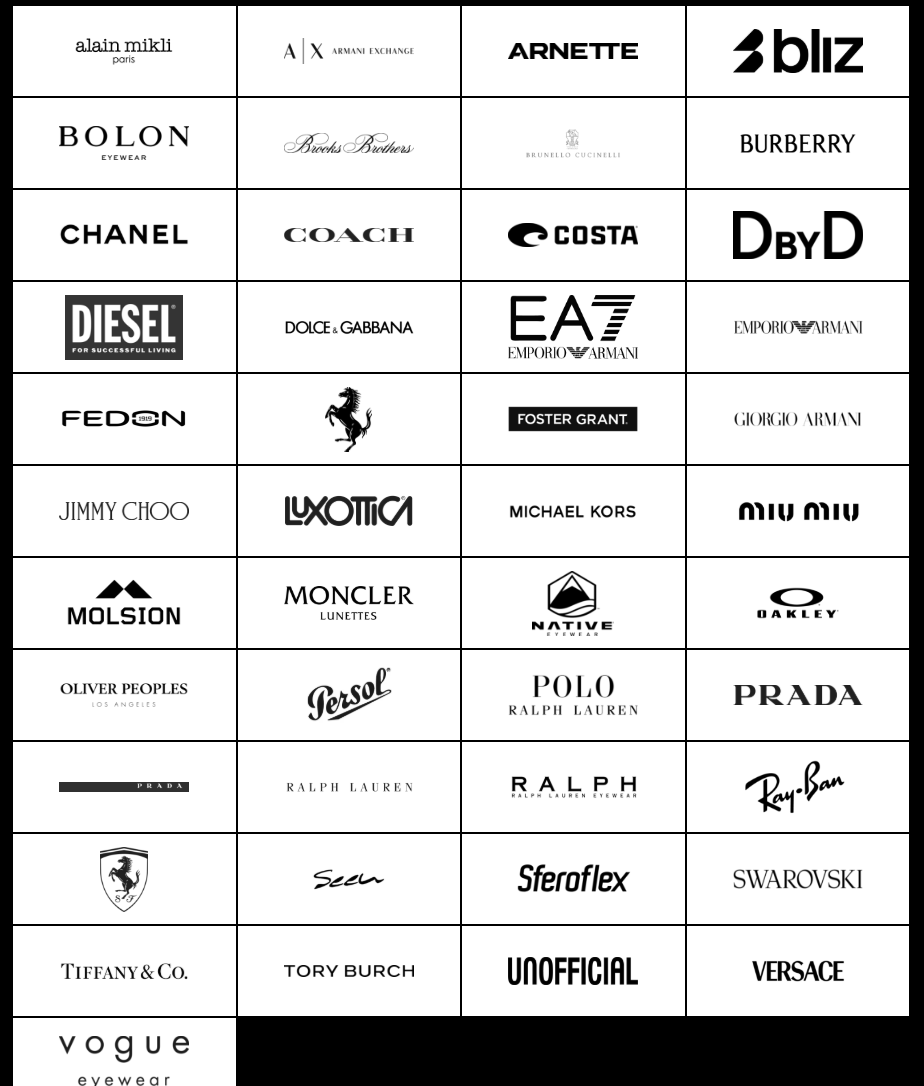 The aforementioned are personal opinions. Feel free to engage in discussion; please refrain from harsh criticism if you disagree.
EN
-
Ofilm Teams Up with ADSensE to Propel Large-Scale Deployment of All-Solid-State LiDAR Powered by ADS6311 Chip!
-
![]()
Loss of 2.5 Billion Yet Facing Strong Demand for Shares? Another Battle for Control of Lianchuang Electronics
-
![]()
Huawei’s Enjoy Series Flies Off the Shelves, Prompting Xiaomi to Double Down on Budget Smartphones
-
![]()
Beijing Hyundai's Top Executive Criticizes Industry Disorder: Certain Brands Treat Customers as Beta Testers
-
![]()
The domestic mobile phone market has declined for five consecutive quarters! Huawei defies the trend with significant growth: maintains its top market share
-
Annual Revenue Surpasses 3 Billion: An Automotive Trim 'Little Giant' Makes Its Debut on the Beijing Stock Exchange
-
![]()
The Space Force Wants to Spend $30 Billion on Rocket Launches: Is Trump Doubling Down, and Is SpaceX the Big Winner?
-
![]()
Going Crazy! One out of Every Three Plug-in Hybrids Sold in Europe is a Chinese Vehicle