Domestic Mobile Phone Makers Navigate Challenging Times
 05/28 2026
 453
453
A distributor has disclosed that Huawei has set its shipment targets (ST) at least 40% higher than those of the previous year.
Following the initial round of mobile phone price increases in March, Hu Meng, a mobile phone distributor based in Fujian, observed a roughly 20% decline in store sales. Multiple distributors have confirmed encountering similar situations. Traditionally, the period after the Spring Festival is a slow season for mobile phone sales, but the lackluster market conditions took him by surprise. "The more prices go up, the more consumers hesitate to buy," Hu Meng shared with Shuzhi Qianxian.
A fresh wave of product launches is set to commence this week. Domestic mobile phone brands are simultaneously releasing models targeting the mid-range market, including the Honor 600 series, OPPO Reno series, vivo S60 series, and Huawei Nova 16 series. Judging by the actions of OPPO and Honor thus far, all are experiencing price hikes. Compared to their predecessors, the price increases before national subsidies range from 500 to 1000 yuan.
When compared to the competition in flagship models, mid-range models priced between 2,000 and 4,000 yuan have always served as a litmus test for domestic manufacturers. As the cornerstone of sales volume for domestic mobile phone brands, the performance of mid-range models directly determines their annual market share. All models released at the end of May fall within this price bracket. The primary target audience for these models is students, with both the format of product launches and phone color options tailored to appeal to young people.
Now, with the combined impact of the 618 e-commerce promotion and the summer phone-buying rush, manufacturers are pinning their hopes on the market performance of this generation of mid-range models. However, this year differs from previous ones: On one hand, the industry widely believes that the storage shortage will not ease until 2027; on the other hand, the price hikes of mobile phones have cast a shadow over the already sluggish mobile phone market.
01 Are Prices Increasing or Decreasing?
Last week, a trending topic emerged on Weibo: "Domestic mobile phones suddenly drop in price by 2000 yuan." This contradicts the perception of many, considering that the mobile phone market just witnessed a rare wave of price hikes two months ago.In reality, the round of price reductions preceding the release of new models is not the norm. Not only do they come with platform subsidies, but manufacturers also carefully select the models chosen for price reductions. They are either high-end models priced at several thousand or even over ten thousand yuan, including the iPhone 17 Pro and Huawei Mate X7, which have seen price reductions exceeding one thousand yuan; or models whose popularity has already waned, such as the Huawei foldable Mate X6 and Xiaomi 15 Ultra, both released over a year ago; or models that previously saw a price hike but failed to sell well and were subsequently readjusted, such as the REDMI Turbo 5 Max.
The price hikes in March were concentrated on mid-to-low-end models. However, multiple distributors revealed that after the price hikes, sales became sluggish, directly impacting store sales. Soon, mobile phone manufacturers introduced promotional policies for offline channels, offering a 100 yuan rebate for each activated unit (SO). "Honor initiated it first, and later OV followed suit at this price point," a mobile phone distributor from Liaoning told Shuzhi Qianxian.
In fact, compared to the price reductions by some manufacturers, price hikes are undoubtedly the prevailing theme of the current mobile phone market.
This is corroborated by the latest product releases. The starting price of the OPPO Reno16 standard version is 3499 yuan, a 500 yuan increase from the previous generation; the Pro version starts at 5299 yuan, a staggering 900 yuan increase from the previous generation. OPPO's Pro version even eliminated the 1TB version. Clearly, if the 1TB version were continued, it would mean that the maximum price of the mid-range Reno would severely overlap with the flagship Find X9.
Huawei has encountered similar price conflicts. The Huawei Pura 90 standard version and Nova 15 Ultra version have similar performance configurations, but the Nova 15 Ultra is priced even lower, significantly impacting the sales of the Pura 90 standard version.
Compared to OPPO's strategy of significantly raising prices while maintaining performance, Honor has adopted a different approach. The Honor 600 series maintains prices roughly in line with the previous generation while appropriately reducing configurations such as chips. For example, the Honor 500 standard version uses the Snapdragon 8S Gen4, while the Honor 600 Youth Edition and Super Edition use the Snapdragon 7 Gen4; the Honor 500 Pro uses the Snapdragon 8E, while this generation's Honor 600 Pro uses the Dimensity 8550E.
The effectiveness of these two strategies remains uncertain. From actual feedback, consumers still exhibit resistance to mobile phone price hikes, but there are also issues with the approach of reducing configurations.
Hu Meng told Shuzhi Qianxian that Honor released a Play 80 phone in April, priced at less than one thousand yuan, but the lowest memory version is only 4+128GB. This is essentially the entry-level mobile phone memory configuration from a decade ago. "It won't sell, and customers will complain bitterly. When customers come to upgrade, their old phones might even have better configurations than this."
Additionally, there were previous reports claiming that in the first quarter of 2026, the mobile phone industry had a backlog of nearly 200 million units in inventory, attributing manufacturers' price reductions to high inventory levels. However, no authoritative source has been found for such data.
Even multiple distributors told Shuzhi Qianxian that many models are now out of stock, with "models priced between one and two thousand yuan standing out." A distributor from Liaoning even plans to operate in reverse, preparing to stock up on older models before the release of new ones. In the mobile phone market, which has always favored "buying new over old," it is now common for older models to be in short supply upon the release of new ones.
However, this approach is not very feasible. Although prices are rising, the supply of older products for many models is insufficient. "Except for Huawei, which might have more stock, other brands have very little," the distributor said.
02 Manufacturers' Subtle Strategies
When price hikes are inevitable, everyone devises ways to mitigate their impact, such as manufacturers starting to focus on configurations and naming.The Honor 600 series introduced the Youth Edition and Super Edition, while vivo will also specifically release a lower-priced Youth Edition for the S60 series a few days later. These are product models that did not exist in the previous generation.
There are not significant differences between these versions. This phenomenon was evident at Honor's launch event. Unlike previous launch events that introduced each model in detail, Honor did not separately introduce the Youth Edition or Super Edition, almost glossing over them.
A distributor told Shuzhi Qianxian that there is a relatively strange phenomenon this year: manufacturers have significantly increased the number of new models, such as the Xiaomi 17 Max and iQOO 15T, but the products themselves do not have many distinctive features.
Behind this is manufacturers redefining new products by adjusting configurations (usually by downgrading the same model, including but not limited to processor downgrades, reducing long-focus lens configurations, shrinking battery capacity, changing ultrasonic fingerprints to short-focus fingerprints, etc.), not only reducing costs but also avoiding direct price hikes on already released models.
Moreover, since they all use mature molds, there is no need to incur significant additional design costs or procure special components; they only need to flexibly adjust the phone's configurations.
In addition to tricks in naming and product definitions, almost all manufacturers prominently display the prices after national subsidies to avoid stimulating consumers' sensitive nerves.
"Thank goodness for the national subsidies. Without them, we would really be in trouble," Hu Meng said. The portion of the price hike by manufacturers is roughly similar to the amount of the national subsidies, meaning that mobile phone manufacturers are using the national subsidies, which were originally intended to stimulate consumers, to cover the portion of the price increase due to storage costs. "After manufacturers factor in the national subsidies, the prices might be similar to the previous generation."
However, the enthusiasm for consumption stimulated by national subsidies is also waning. Hu Meng told Shuzhi Qianxian that the national subsidy policy has been in place for a relatively long time, and consumers' mindset is changing. They now take national subsidies for granted. "If the national subsidies were to disappear one day, we would suffer for a while again."
03 What Lies Ahead for the Market?
This wave of price hikes originated from a shortage of upstream storage. According to the latest data released by TrendForce in May, the contract price of 64GB (8GB capacity) LPDDR4X has reached $100, with about one-third of a mobile phone's cost coming from memory. Previously, this proportion was around 10% to 15%. Given the significant changes in the cost structure, new mobile phones priced under one thousand yuan have almost disappeared from the websites of various manufacturers.However, this reflects an awkward reality: high-endization remains the Achilles' heel of domestic Android manufacturers. Although three of the top five global mobile phone shipment manufacturers are domestic companies, the high-end market above $600 is still dominated by Apple, Samsung, and Huawei, with other companies having very limited market share. In the first half of 2025, the iPhone's market share in this segment was as high as 62%.
Therefore, when extreme market conditions such as significant and long-term storage price hikes occur, domestic Android manufacturers have to passively bear the tremendous pressure brought by price hikes. Apple, which has consistently dominated the high-end market, has not only avoided price hikes but has even chosen to gain greater market share through price reductions.
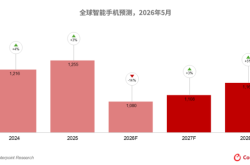
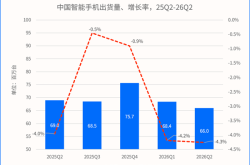
Domestic mobile phone brands are going through a tough time. Besides Meizu exiting the mobile phone market, in Hu Meng's view, even the top five domestic manufacturers will face a reshuffling of market shares in the next one to two years. According to a Counterpoint report, global smartphone shipments in the first quarter of 2026 decreased by 6% year-on-year.
Xiaomi is already feeling the pressure from the market. In the first quarter of this year, Xiaomi's mobile phone sales declined the most severely, dropping by 35% year-on-year in the domestic market. Caijing magazine quoted insiders as saying that Xiaomi internally expects its mobile phone business sales to decline by 13% this year and is adjusting its offline store strategy by shifting its revenue focus to large home appliances, halting offline store expansion, and transforming offline stores from "business-oriented" to "operation-oriented" to improve efficiency.
Huawei, on the other hand, has been relatively restrained with its price hikes among domestic mobile phone brands. Except for some price increases in low-end models, its flagship models and foldable phones have even seen some price reductions.
Behind this, in addition to Huawei mobile phones having relatively high gross profit margins, Teng Nan, a Huawei distributor in Southwest China, told Shuzhi Qianxian that Huawei is now very focused on sales volume, one reason being for the HarmonyOS system. The HarmonyOS ecosystem is still in its construction phase and has many user experience shortcomings. Only by increasing the volume can app developers' enthusiasm for adaptation be higher.
According to him, Huawei has been pushing inventory quite aggressively this year, setting their shipment targets (ST) at least 40% higher than last year. Based on current market performance, Huawei is highly likely to become the top seller in the domestic market this year.
However, the past two years have also been tough for top distributors. Teng Nan, the aforementioned distributor, revealed that since last year, Huawei has been requiring distributors to offer discounts and bear higher inventory pressures. Additionally, Huawei is promoting the operation of offline lifestyle stores, but these stores have high requirements for area and staffing, resulting in high costs. To his knowledge, few Huawei lifestyle stores in the local area are profitable. "The profit model is not good."
Moreover, the profit margins left for distributors by manufacturers have not changed. Among many mobile phone manufacturers, Huawei's profit margins have always been lower than other brands. For example, the Nova series has a profit margin of seventeen to eighteen points, the Pura series around sixteen points, the Mate series only fourteen points, and the Enjoy series is slightly higher. In contrast, OPPO, vivo, and Honor's mid-range products offer distributors profit margins close to twenty points.
However, for merchants, profit margins are not the only consideration. Huawei mobile phones have stronger liquidity. "They have a high turnover rate. No matter how much you stock, if you can't sell them, what's the use?" said the aforementioned Liaoning mobile phone distributor.
Merchants also face a dilemma: manufacturers have requirements for increasing sales, but price hikes are dampening market enthusiasm.
"At present, there simply isn't a perfect solution; we still have to temper expectations. Manufacturers are facing immense pressure, and I, too, must evaluate how much I can withstand," shared Teng Nan, a Huawei distributor operating in Southwest China. On the flip side, he's also striving to boost sales, fully aware that if he doesn't, manufacturers will turn to other merchants to achieve their goals. In a shrinking market, an uptick in competitors spells a downturn for his own business. Hence, beyond slashing prices, Teng Nan is actively pursuing customer acquisition through both online and offline channels, as well as venturing into the realm of instant retail. "The strategies we're employing now are all tried-and-true methods from the past; the key lies in who can execute them more effectively."
(Note: The mobile phone distributors referenced in this article are referred to by pseudonyms.)
-
Ofilm Teams Up with ADSensE to Propel Large-Scale Deployment of All-Solid-State LiDAR Powered by ADS6311 Chip!
-
![]()
Loss of 2.5 Billion Yet Facing Strong Demand for Shares? Another Battle for Control of Lianchuang Electronics
-
![]()
Huawei’s Enjoy Series Flies Off the Shelves, Prompting Xiaomi to Double Down on Budget Smartphones
-
![]()
Beijing Hyundai's Top Executive Criticizes Industry Disorder: Certain Brands Treat Customers as Beta Testers
-
![]()
The domestic mobile phone market has declined for five consecutive quarters! Huawei defies the trend with significant growth: maintains its top market share
-
Annual Revenue Surpasses 3 Billion: An Automotive Trim 'Little Giant' Makes Its Debut on the Beijing Stock Exchange
-
![]()
The Space Force Wants to Spend $30 Billion on Rocket Launches: Is Trump Doubling Down, and Is SpaceX the Big Winner?
-
![]()
Going Crazy! One out of Every Three Plug-in Hybrids Sold in Europe is a Chinese Vehicle