Apple’s Record-Breaking Price Drop: iPhone 17 Pro Now Starts at 6,999 Yuan—Is This Tim Cook’s Parting Shot Before Exiting?
 05/28 2026
 547
547
Source | Jiadpai (Home Appliance Pai)
Author | Xiaoxiao

“6,999 yuan.” That’s the new price tag for the 256GB iPhone 17 Pro as of midnight on May 15th. What does this signal? For the first time ever, Apple’s Pro series has broken into the 6,000-yuan price bracket. Meanwhile, the base model iPhone 17 isn’t far behind—after stacking subsidies and trade-in deals, the 128GB version can be yours for just 4,499 yuan.
The price cuts hit without warning, but what’s even more striking is their timing: they landed just three weeks after Apple’s leadership shakeup sent shockwaves through the tech industry.
In late April 2026, Apple confirmed that Tim Cook, who had steered the company for 15 years, would step down as CEO on September 1st and transition to Executive Chairman of the Board. His successor? John Ternus, Senior Vice President of Hardware Engineering and Apple’s eighth CEO.
Saying “an era has ended” feels cliché. A sharper way to put it: Apple’s playbook is being rewritten.

Over the past 15 years, Cook transformed Apple from a “cult favorite” into a “financial juggernaut.”
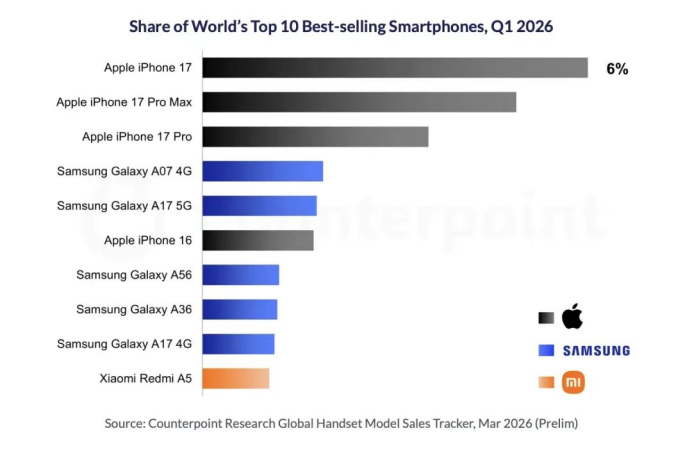
At its peak, its market cap soared past $4 trillion, it dominated global smartphone shipments in Q1 (per Counterpoint), with the iPhone 17 alone capturing 6% of the market. In China, despite Huawei’s comeback and fierce competition from domestic brands, Apple still reigns supreme in the premium segment.
But here’s the catch.
In an era where AI is reshaping industries, Apple’s “incremental innovation” feels stale. While Chinese rivals race ahead with on-device AI models, AI imaging, and smart interactions, Apple’s AI features only debuted in 2025 with the overseas iPhone 17 series—and the China version is still stuck in regulatory limbo.
Worse, amid Silicon Valley’s AI gold rush, Apple has lost key AI and software talent, forcing it to lean on external partnerships. Some call Cook cautious. But honestly, if you were running a $3 trillion company facing an uncertain, costly AI arms race, you’d hesitate too.
Under Cook, Apple prioritized steady profits and shareholder returns over risky tech bets. It was a mature, commercial empire—not a startup.
The problem? AI doesn’t wait for anyone.

Apple’s board didn’t pick Ternus by accident. The message is clear: ditch commercial conservatism and refocus on product-driven innovation.
Ternus joined Apple in 2001 and has spent 25 years at the company, bridging the Jobs and Cook eras. A hardware engineer by training, he led development for Mac, iPhone, and iPad. More critically, he spearheaded R&D for Apple’s A-series and M-series chips—the “chip duo” that freed Apple from Intel, unified its ecosystem, cut costs, and supercharged AI computing.
Promoted to Senior Vice President of Hardware Engineering in 2021, he’s overseen hardware R&D while diving deep into product strategy and supply chain management.
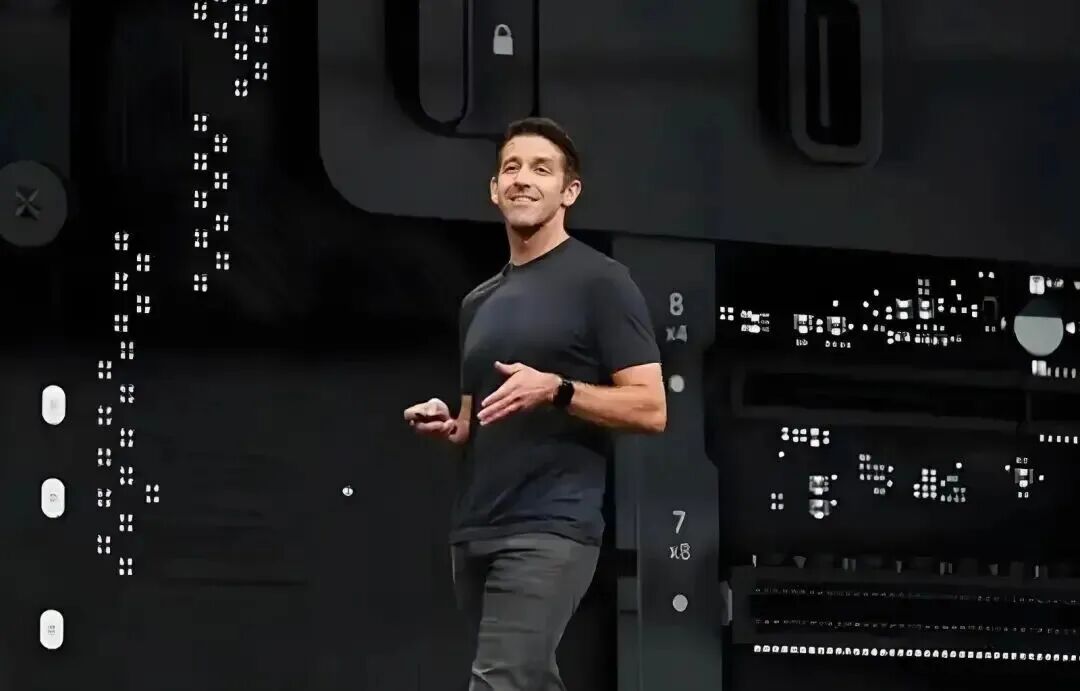
Cook once said his job was to “groom multiple successors and hope the next CEO comes from within.” Ternus fits the bill: he understands both cutting-edge tech and the nitty-gritty of supply chains and commerce—a rare combo.
His AI philosophy? “We don’t chase technologies for their own sake. We ask: How can this technology create exceptional products?”
In plain terms: instead of competing with Google and OpenAI on general-purpose AI models, Apple doubles down on integrating AI deeply into its hardware-software ecosystem. Classic Apple.

It sounds promising, but Ternus inherits a company with no shortage of challenges.
First hurdle: Can he redefine smart devices in the AI age?
Steve Jobs did it. Tim Cook didn’t. Ternus must.
Second hurdle: Global supply chain and regulatory risks.
India just launched an antitrust probe into Apple for “abusing market dominance,” with a final hearing set for May 21st and potential fines up to $38 billion. That’s real money.
Third hurdle: The iPhone 18 series launches in four months.
The new CEO’s first report card—expectations are sky-high. Both sales and innovation must deliver.
Is Apple really falling behind? Not quite. It’s more like holding back a trump card.
On-device AI demands powerful chips, bigger memory, and better cooling—all of which drive up costs. But Apple, with its in-house chips, supply chain clout, and 80%+ share of premium profits, is uniquely positioned to lead this fight.
Canalys reports AI smartphone penetration hit 34% globally in 2025. IDC predicts China’s AI phone adoption will exceed 50% in 2026. AI is no longer a gimmick—it’s a baseline feature.
Apple’s strategy? Skip generic AI models and focus on “on-device AI + hardware.” The Vision Pro project has been scaled back, with its team merged into Siri and next-gen smart glasses R&D. That’s Ternus’s vision.

Critics compare Apple to Nokia today: “Nokia ruled feature phones, then collapsed with smartphones. Now Apple is the next Nokia facing AI.”
Tempting analogy, but flawed.
First, Nokia collapsed because it ran out of cash. Apple? It’s drowning in it.
Nokia’s downfall wasn’t just losing to the iPhone—it was a financial meltdown. From 2011–2013, Nokia lost over €6 billion and nearly exhausted its cash reserves. It couldn’t afford R&D, supply chains, or a painful transition to smartphones.
Apple? As of Q1 2026, it holds $160+ billion in cash and securities. Translation: Apple could sell zero phones for three years and still fund R&D and thrive.
Money buys room for error. On the AI path, Apple can afford to move slowly—even stumble a few times.
Second, Nokia lacked an ecosystem moat; Apple has one.
In the Nokia era, “brand loyalty” meant “no better options.” Switching phones meant losing nothing—no data, apps, or habits. Migration costs were zero.
Today’s Apple users? They’re trapped by iCloud photos, Apple Pay cards, App Store purchases, AirDrop habits, and that Apple Watch on their wrist.
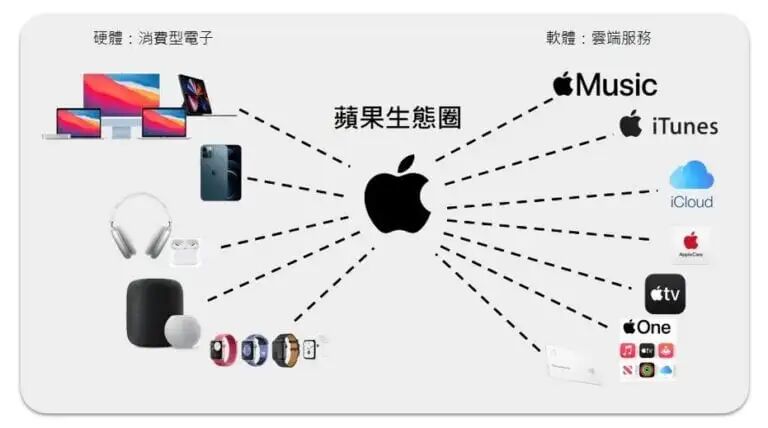
This is Apple’s ecosystem moat. It’s not a wall—it’s a net. The more you use it, the tighter it pulls.
Data shows iPhone retention rates consistently above 75%, while Android’s best—Samsung—barely hits 50%. What does this mean? Even if Apple lags in AI, most users won’t switch—they’ll wait.
They’ll stay until Apple gets AI right.
Third, Nokia failed to crack premium; Apple is premium.
Nokia’s late-stage strategy? Flood the market with models. Dozens of releases annually, spanning $100 to $1,000. Result? It failed to build premium credibility while earning thin margins on low-end devices—losing on both fronts.
Apple never touches mid-range or low-end markets. Even the “budget” iPhone SE remains mid-to-high-priced. Counterpoint’s Q1 2026 data shows Apple captures 80%+ of global smartphone profits with <20% market share.
That’s the power of brand premium. Premium users care less about price and more about experience and innovation. And the AI race demands premium markets—on-device models need powerful chips, big memory, and advanced manufacturing, all driving higher costs.
Low-end markets can’t afford this. Apple’s users can.
So here’s the bottom line:
In the AI era, whoever redefines smart devices first wins. But until that “era-defining gadget” emerges and educates the market, the premium segment remains the closest to power.
And in premium, Apple still reigns.
Ternus inherits an Apple that’s commercially unbeatable—healthy cash flow, a rock-solid ecosystem, and an impenetrable brand moat. But precisely because of this, he has more to prove in the AI age: not whether Apple can survive, but whether it can reinvent the world again.
In September, the iPhone 18 series arrives—his first major test. The world is watching.

-
Ofilm Teams Up with ADSensE to Propel Large-Scale Deployment of All-Solid-State LiDAR Powered by ADS6311 Chip!
-
![]()
Loss of 2.5 Billion Yet Facing Strong Demand for Shares? Another Battle for Control of Lianchuang Electronics
-
![]()
Huawei’s Enjoy Series Flies Off the Shelves, Prompting Xiaomi to Double Down on Budget Smartphones
-
![]()
Beijing Hyundai's Top Executive Criticizes Industry Disorder: Certain Brands Treat Customers as Beta Testers
-
![]()
The domestic mobile phone market has declined for five consecutive quarters! Huawei defies the trend with significant growth: maintains its top market share
-
Annual Revenue Surpasses 3 Billion: An Automotive Trim 'Little Giant' Makes Its Debut on the Beijing Stock Exchange
-
![]()
The Space Force Wants to Spend $30 Billion on Rocket Launches: Is Trump Doubling Down, and Is SpaceX the Big Winner?
-
![]()
Going Crazy! One out of Every Three Plug-in Hybrids Sold in Europe is a Chinese Vehicle