Is Laifen Confined to the Role of a 'Budget Alternative'?
 05/29 2026
 594
594
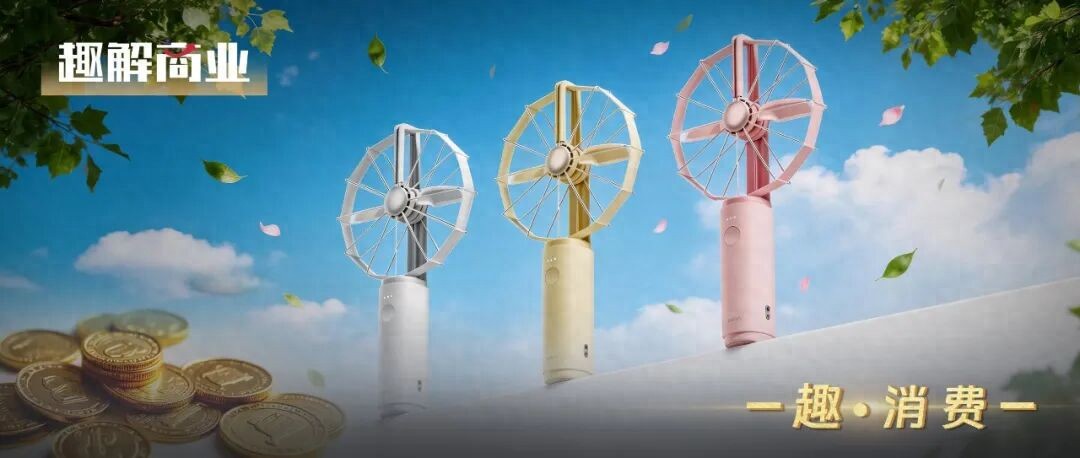
Laifen Aims to Avoid Being Just a 'Trendy Brand on Social Media'.
In the business realm, the 'halo effect' is a well-known phenomenon. It describes how consumers, when impressed by a company's flagship product, tend to view its other offerings favorably and are more likely to make purchases. Over the past few years, Laifen has seemed to demonstrate this phenomenon through its actions.
Laifen's product portfolio has expanded from hair dryers to include shavers, electric toothbrushes, and a variety of other household appliances. At a recent product launch event, Laifen unveiled eight new products in one fell swoop. However, one particular product, a handheld folding fan with a starting price of 399 yuan, drew significant skepticism and mockery from netizens. They questioned, "Why does Laifen think it can charge such a high price?"
From May 11 to 15, Laifen Technology held three consecutive new product launch events. Founder Ye Hongxin personally oversaw these events, unveiling eight new products, including shavers, children's toothbrushes, smart makeup mirrors, and more. These products spanned four categories: personal care appliances, beauty tools, household appliances, and home lighting.
One product, the AirFold handheld folding fan (standard version priced at 399 yuan, transparent explorer version at 459 yuan), faced significant ridicule and even led some netizens to question whether Laifen was attempting to overcharge customers. This prompted Ye Hongxin to respond personally, stating, "399 yuan is really not expensive! Look at foreign competitors' products—those are the ones that are truly expensive!" He directly referenced Dyson's newly released 'HushJet Mini Cool' fan, priced at 799 yuan for the domestic version, which had been released just a month earlier.
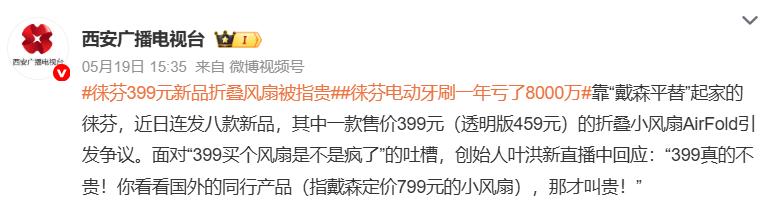
Source: Weibo Screenshot
This is not the first time Laifen's new products have sparked controversy.
Around the same time last year, Laifen released a shaver product, claiming it had taken four years of R&D and over 100 million yuan in investment. However, netizens not only questioned its striking resemblance to Panasonic's shavers but also criticized its high price, inadequate shaving performance, excessive noise, and strong vibrations.
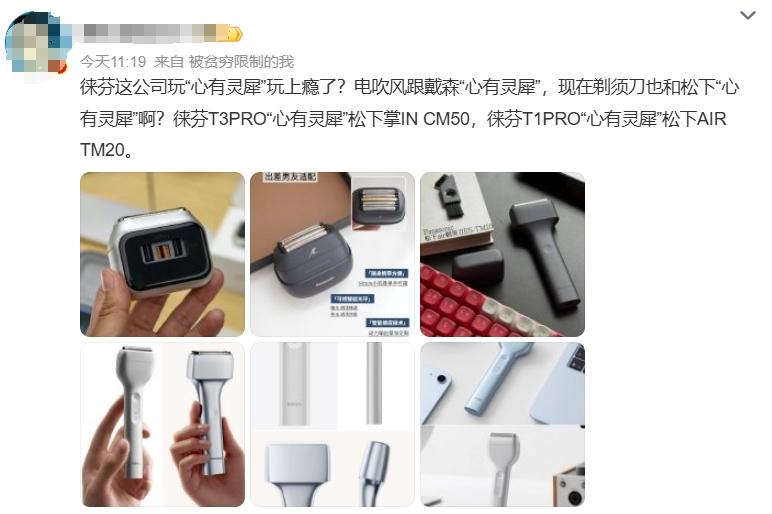
Source: Weibo Screenshot
In the past, Laifen stood out by offering technological innovations comparable to those of major brands, combined with better cost-effectiveness. It positioned itself as a 'budget alternative to Dyson' and quickly gained market share. Today, however, Laifen is frequently questioned by consumers for its 'high prices,' as its cost-effectiveness advantage gradually fades.
In recent years, Laifen has faced intense competition from both established and emerging players, including Xiaomi, Dreame, Midea, and others. Xiaomi's ecosystem and cost-control capabilities have driven the price of high-speed hair dryers below 200 yuan. Traditional home appliance giants, leveraging their channel advantages and brand recognition, have quickly followed suit.
As a result, Laifen's technological lead has been significantly narrowed. When competitors can offer products with similar features and parameters at more competitive prices, Laifen must demonstrate where its 'strength' lies or what justifies its premium pricing. However, currently, Laifen lacks clear technological advantages or brand competitiveness.
Take the controversial handheld fan, for example. From a technical and material standpoint, the AirFold folding fan's starting price of 399 yuan is not entirely unreasonable. Technologically, it features Laifen's self-developed axial flux motor and an innovative folding structure. It simulates gentle natural breezes through motor algorithms and fan blade design, with a battery life of up to 14 hours on the lowest setting. In terms of craftsmanship, materials commonly used in computers and digital products, such as aluminum alloy bodies and precision CNC machining, which are lightweight and durable, have also been incorporated into this product.
However, from a brand perception standpoint, Laifen's product may not be compelling enough to win over a broader consumer base. The technical barriers for handheld electric fans are relatively low, and when compared to unbranded products sold for a few dozen yuan on e-commerce platforms, how many consumers are willing to pay 399 yuan for a Laifen fan?
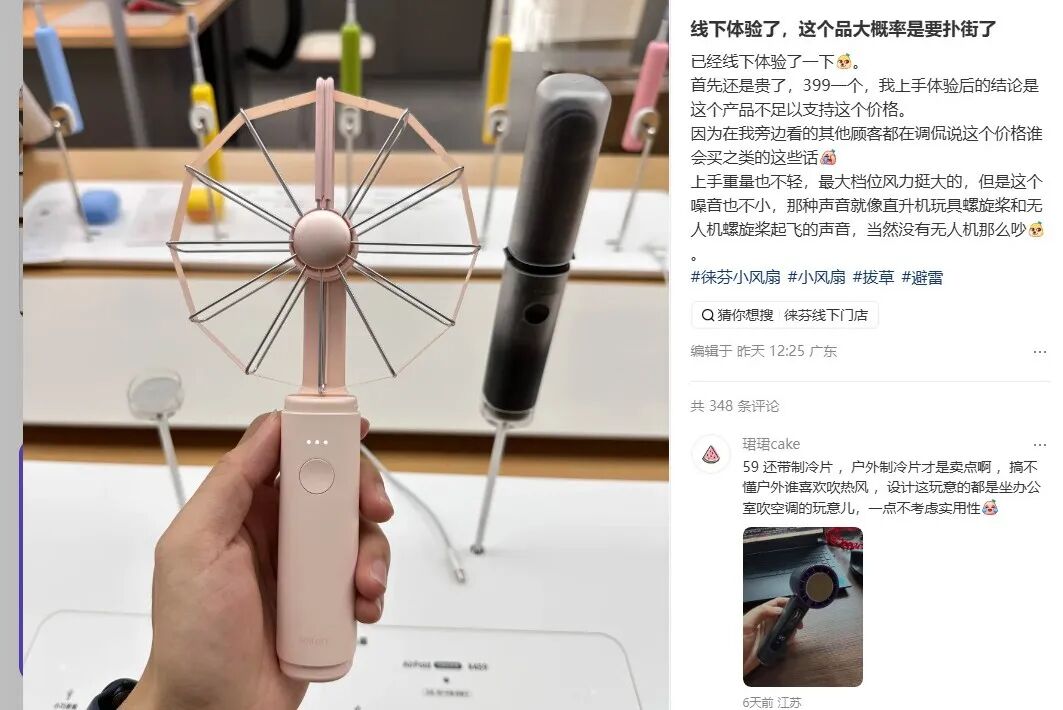
Source: Xiaohongshu Screenshot
In addition to questions about cost-effectiveness, Laifen's product quality has also been problematic in recent years.
In March 2025, Laifen's hair dryer products were flagged by market regulatory authorities in Dongtai City, Jiangsu Province, for failing to meet safety standards. On 'Heimao Tousu' (Black Cat Complaints, a consumer complaint platform), over 1,800 complaints mention 'Laifen,' many of which directly point to quality control and after-sales issues with Laifen's hair dryers and electric toothbrushes.
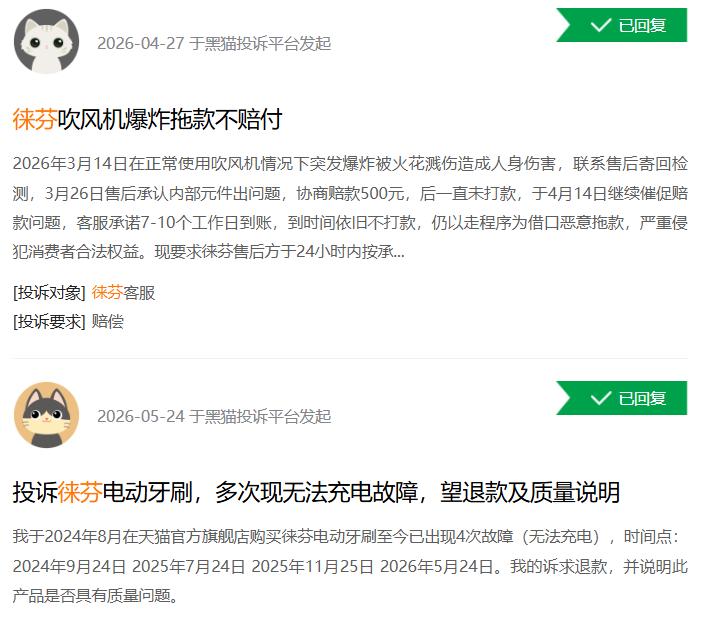
Source: Black Cat Complaints Screenshot
The key to product quality control lies in supply chain management.
Laifen has previously explained that the quality control crisis with its electric toothbrushes stemmed from its early reliance on external suppliers. This made it difficult to ensure hygiene standards in brush head production and address issues like 'corner-cutting' by suppliers. As a result, in August last year, Laifen officially launched a mega-factory in Zhuhai, spanning over 200,000 square meters and employing over 4,000 people, serving as its core in-house production base.
However, achieving efficient supply chain operations is no easy feat. From hair dryers to electric toothbrushes to fans, each product category has vastly different manufacturing processes, core materials, and quality control standards. Balancing production capacity and quality requires meticulous operational management from Laifen.
In addition to expanding its product categories and supply chain in recent years, Laifen has also been actively developing offline channels.
Since launching its self-operated stores in the second half of last year, Laifen's official website now lists 11 direct-sale stores. This year, Laifen plans to expand its store presence to 20 cities, including the Pearl River Delta, Yangtze River Delta, and Chengdu-Chongqing region, with a goal of opening 300 stores within two years. Currently, the focus is on direct operations, but franchising and agency models will be introduced in regions outside Shenzhen.
Opening 300 stores is no small feat. At the AWE exhibition (China Home Appliances and Consumer Electronics Expo) in March this year, Laifen disclosed plans for only 15 stores.
While the pace of store openings has fallen short of expectations, the aggressive store expansion target underscores Laifen's urgency in establishing an offline presence.
To achieve this, Laifen is also attempting to build a team capable of executing 'ground warfare.' Job postings reveal that Laifen is heavily recruiting for retail and marketing roles, with responsibilities explicitly including 'managing daily operations of offline stores,' 'expanding regional agents,' and 'collaborating with online marketing teams to drive offline traffic.'
Why is Laifen increasingly focusing on offline expansion? The answer lies in two aspects.
On one hand, offline physical stores serve as testing grounds for new product categories while also acting as new traffic entry points for immediate conversions.
Laifen's newly opened flagship stores have already tasted success. In May last year, just one week after the launch of Laifen's shaver, its first store opened in Yifang City (Yīfāng Chéng, a shopping mall in Bao'an, Shenzhen).
According to Laifen, the sales mix in offline stores differs significantly from online channels—online sales are dominated by hair dryers, while in stores, toothbrushes, shavers, and hair dryers account for roughly equal shares (1:1:1), with toothbrushes becoming the top-selling category.
This suggests that offline customers are not only attracted to hair dryers but may also be swayed by the industrial design and user experience of other Laifen products, such as toothbrushes, shavers, and personal care items. Additionally, sales performance across different categories in various channels helps Laifen refine its operational strategies.
On the other hand, offline channels provide consumers with tangible experiences while also strengthening brand perception.
In terms of store design, Laifen aims to cultivate a premium brand image by creating immersive experience scenes.
This strategy has proven effective, as many consumers who have visited Laifen's offline stores describe the experience as 'reminiscent of an Apple Store' on social media platforms.
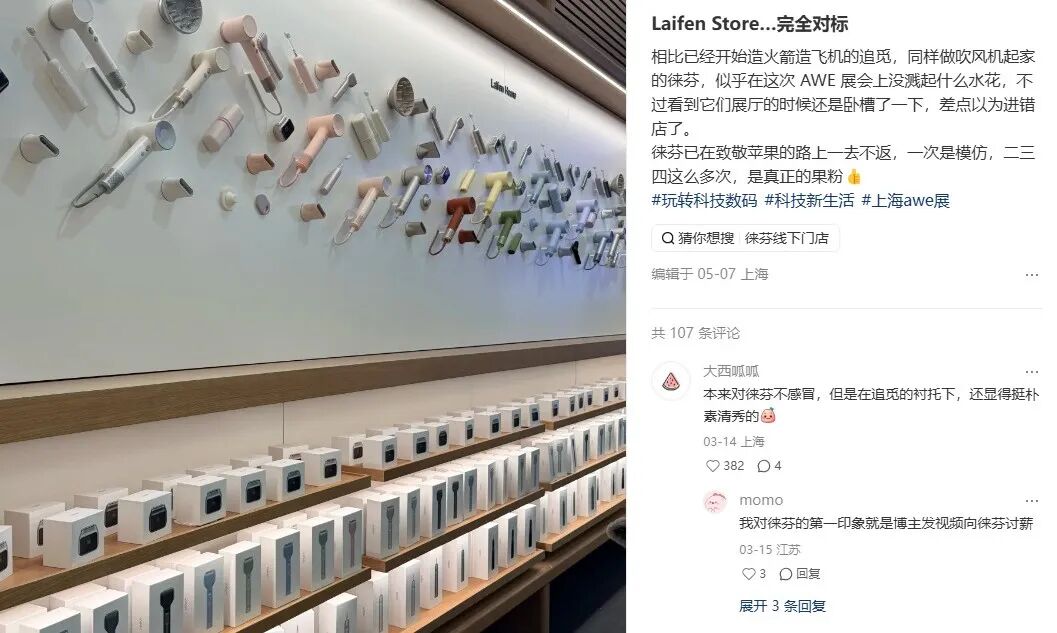
Source: Xiaohongshu Screenshot
This approach mirrors the channel upgrade logic of smart hardware brands, using offline spaces to reinforce brand recognition and consumer experiences to compensate for the limitations of online marketing. In some stores, Laifen also offers DIY services like laser engraving and sticker hand-painting, as well as after-sales support such as mail-in repairs and temporary loaner devices.
Industry insiders note that most consumer electronics brands undergo a similar transition from Phase 1.0 to Phase 2.0. Phase 1.0 involves refining products and building market buzz, driven by product excellence and rapid reach to early adopters through online channels. Phase 2.0 is driven by comprehensive brand-building, requiring offline experiences to establish broader user perception and expand the customer base.
However, the risks and opportunities of rapid store expansion are equally significant.
First, the operational logic of offline stores differs entirely from that of e-commerce. Offline retail is a capital-intensive, long-cycle business that requires meticulous management. Rapid scale-up inevitably brings substantial cost pressures. Finding a balance between rapid growth and profitability is the first hurdle Laifen must overcome.
Currently, all 10 of Laifen's stores are located in Shenzhen, benefiting from local customer traffic and cross-border shoppers from Hong Kong. Whether similar performance can be replicated in other cities remains to be seen. Additionally, Laifen's offline operations team is still in its growth phase, requiring time for refinement. Exploring how to synergize online and offline traffic and maintain offline appeal without relying solely on price reductions are also critical areas for exploration.
Second, if product strength and brand premium cannot be sustained, offline stores may amplify weaknesses. Online, product issues can be diluted by incentives for positive reviews and paid traffic. However, offline, a single poor experience can permanently lose a customer. When products are displayed unfiltered in offline stores, any quality control flaws or design shortcomings are likely to be magnified.
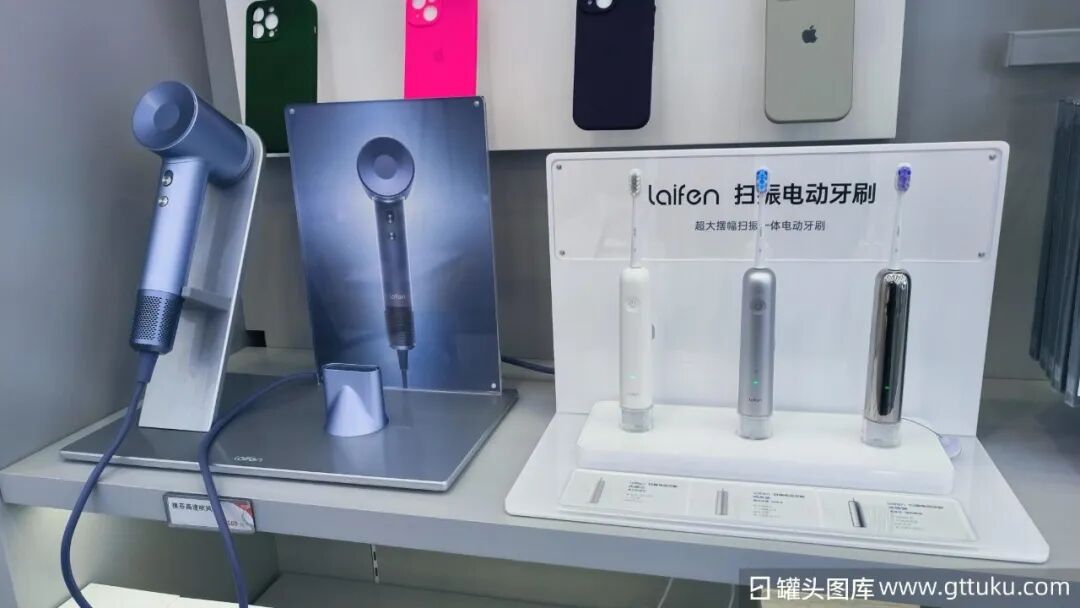
Source: Guantou Image Library
For Laifen, offline expansion resembles a high-stakes gamble with no turning back.
If successful, it could transform Laifen from a 'budget alternative to luxury brands' into a 'national treasure brand' with a solid user base. If unsuccessful, the vast store network could shift from a 'growth engine' to a 'heavy burden,' straining the company's cash flow and profitability.
Overall, in 2026, Laifen appears to be tightening every screw across product categories, supply chain, and channels, driven by underlying anxiety.
Over the past year, Laifen's growth has slowed, and its performance is under pressure. During the 2025 618 shopping festival, its GMV reached just over 300 million yuan, nearly 40% lower than the previous year's 500 million yuan. Although Laifen achieved 710 million yuan in sales and 2 million units sold during last year's Double 11, pulling growth back, industry data shows a 9.2% year-on-year decline in online hair dryer retail sales in 2025. This indicates diminishing growth opportunities for Laifen's core product, the hair dryer.
Meanwhile, Laifen's management has also experienced turmoil. Jiang Jun, the former R&D director; Shao Shi, the former head of overseas markets; and Liu Xuan, the core R&D lead for the shaver product line, have all departed. During Laifen's period of rapid expansion, such frequent personnel changes are not a positive signal.
In 2026, Laifen seems to be accumulating both strengths and pressures. Whether these factors will drive growth or become burdens remains to be seen, as time and the market will ultimately provide the answer.
-
Ofilm Teams Up with ADSensE to Propel Large-Scale Deployment of All-Solid-State LiDAR Powered by ADS6311 Chip!
-
![]()
Loss of 2.5 Billion Yet Facing Strong Demand for Shares? Another Battle for Control of Lianchuang Electronics
-
![]()
Huawei’s Enjoy Series Flies Off the Shelves, Prompting Xiaomi to Double Down on Budget Smartphones
-
![]()
Beijing Hyundai's Top Executive Criticizes Industry Disorder: Certain Brands Treat Customers as Beta Testers
-
![]()
The domestic mobile phone market has declined for five consecutive quarters! Huawei defies the trend with significant growth: maintains its top market share
-
Annual Revenue Surpasses 3 Billion: An Automotive Trim 'Little Giant' Makes Its Debut on the Beijing Stock Exchange
-
![]()
The Space Force Wants to Spend $30 Billion on Rocket Launches: Is Trump Doubling Down, and Is SpaceX the Big Winner?
-
![]()
Going Crazy! One out of Every Three Plug-in Hybrids Sold in Europe is a Chinese Vehicle