Laifen’s High-End Aspirations Stumble Amid Market Challenges
 05/29 2026
 662
662
In May 2026, Laifen made a bold move by launching several premium products, with the AirFold folding fan taking center stage. Priced at 399 yuan for the standard version, this fan far exceeded the typical price range of similar domestic products, sparking significant interest at launch. However, many consumers felt that its performance did not justify the higher price.
This setback was not Laifen’s first. In 2023, the brand ventured into the electric toothbrush market but faced backlash due to issues such as excessive vibration, stiff bristles, and charging problems. Despite releasing an upgraded toothbrush in 2025, priced at 399 yuan, Laifen struggled to reverse its declining market position.
That same year, Laifen also introduced an electric shaver, developed with an investment exceeding 100 million yuan. The product faced criticism for its controversial design and subpar shaving performance. Meanwhile, its core hair dryer business was affected by industry competition, with Aowei Cloud data showing a 9.2% year-on-year decline in domestic online retail sales in 2025, putting pressure on the brand’s growth.
Laifen’s shift from a budget-friendly alternative to a premium contender highlights a common challenge for domestic small home appliance brands. As the advantages of offering affordable options diminish, weak technological reserves, imperfect quality control systems, and an entrenched budget brand image make it difficult for Laifen to achieve its high-end ambitions.
While Laifen has increased its investment in R&D, talent acquisition, and factory expansion, it still needs to address technological gaps and overcome consumer perceptions. Amid rising consumer expectations and fierce industry competition, whether Laifen can break through these barriers and pave a high-end path for domestic brands remains uncertain.
1. Multiple Product Categories Face Skepticism
In recent years, Laifen, a domestic small home appliance brand that gained prominence with its high-speed hair dryers, has pursued a comprehensive high-end strategy across various categories.
In May 2026, Laifen introduced several premium products, including portable fans, hair curlers, and other personal care items. The AirFold high-end handheld folding fan was priced at 399 yuan for the standard version and 459 yuan for the transparent explorer edition, significantly exceeding the domestic mainstream price range of 39–99 yuan for portable fans and even surpassing the mid-to-high-end range of 100–150 yuan.
As a flagship product in Laifen’s high-end branding efforts, the fan’s airflow, battery life, and noise reduction met market standards. However, it lacked groundbreaking technological or functional upgrades. Its high pricing was not supported by corresponding product strength, leaving consumers unwilling to pay the premium.
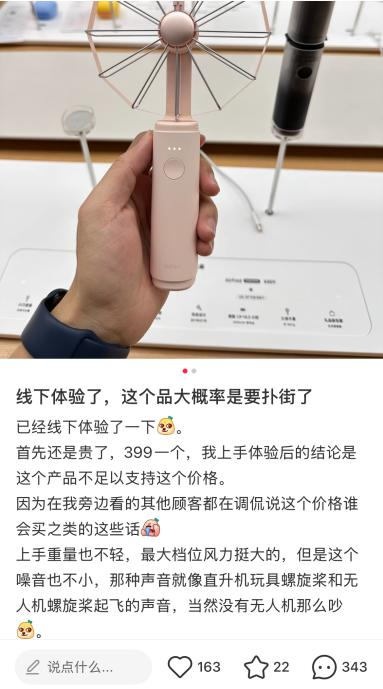
Image Source: Social Media
One social media user commented, “After trying it out, I concluded this product doesn’t justify the price.” Others nearby joked about who would buy it at such a high cost.
In fact, skepticism surrounding this high-end fan is not an isolated incident. Since expanding into new categories in 2023, Laifen’s price-hiked iterative products have failed to gain market acceptance.
In 2023, Laifen entered the electric toothbrush market with its first model priced at 299 yuan, officially diversifying its product range. However, the product received poor feedback, with consumers citing excessive vibration, a harsh feel, gum bleeding, and frequent quality control issues like charging failures. The poor user experience significantly impacted sales, with reports indicating that Laifen’s toothbrush line incurred a net loss of approximately 80 million yuan in 2024.
To repair its brand reputation, Laifen launched the upgraded i2 electric toothbrush in 2025, raising the price to 399 yuan instead of offering discounts. It also introduced a 30% discount for existing users to revive the market. However, the negative perception of the category proved difficult to reverse.
Additionally, in May 2025, Laifen released an electric shaver after four years of preparation and over 100 million yuan in R&D investment, entering the men’s grooming sector with high hopes. However, the product sparked controversy upon launch, with design similarities to Panasonic models drawing comparisons and a lack of distinct differentiation. Core performance issues, such as inadequate shaving and loud operation noise, became major consumer complaints, highlighting a gap between product quality and pricing expectations.
Not only have new categories struggled, but Laifen’s core hair dryer business, which established its market presence, also faces pressure to adjust its competitiveness amid industry contraction. Aowei Cloud data shows that domestic online hair dryer retail sales reached 9.1 billion yuan in 2025, down 9.2% year-on-year, signaling a new phase of intense competition.
2. Decline of Affordable Alternatives Makes High-End Transformation Imperative
The primary reason for skepticism toward Laifen’s high-end products lies in the decline of the affordable alternative advantage it once relied on, coupled with issues in its high-end transformation, such as “prioritizing pricing over quality and lacking technology.” While marketing investments have boosted brand visibility, they have fallen short in synchronously upgrading product strength, technological capabilities, and quality control, resulting in a mismatch between price and value.
Founded in 2019, Laifen quickly rose to prominence by positioning itself as an affordable alternative to high-end foreign brands. Its 2021 high-speed hair dryer, offering Dyson-like performance at a fraction of the price, rapidly captured the mass market.
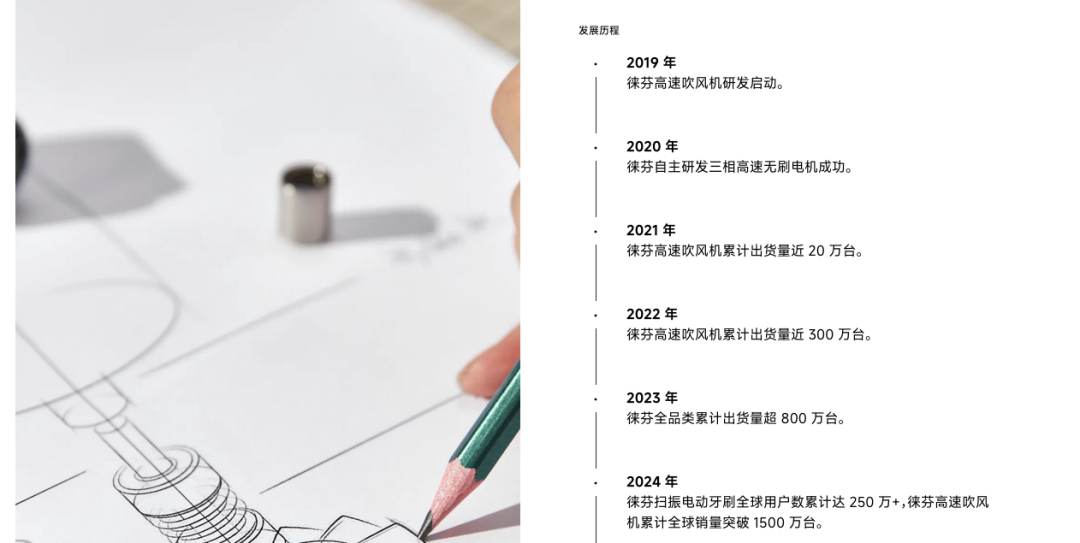
Image Source: Official Website
Official data shows Laifen shipped nearly 200,000 high-speed hair dryers in 2021, over 8 million units across all categories in 2023, and 2.5 million+ global users for its oscillating electric toothbrush by 2024, with cumulative global sales of its high-speed hair dryers exceeding 15 million units.
However, by 2024, the technological barriers in the high-speed hair dryer sector had rapidly lowered, intensifying industry competition and eroding Laifen’s growth advantages as an affordable alternative.
As manufacturers in the Pearl River Delta mastered high-speed motor production, the market became saturated with homogeneous products. GfK Zhongyikang reports indicate that by the first three quarters of 2024, the sub-300 yuan segment dominated online hair dryer sales, with volume growing 76.8% year-on-year.
Laifen’s long-standing cost-performance advantage in its price segment weakened significantly, with users diverting to competitors. Even its foray into budget products failed to alleviate market share losses.
Beyond the declining industry dividends, Laifen’s operational model, which heavily favors marketing over resource allocation to other areas, remains a core internal factor hindering its high-end transformation. The brand has long relied on online traffic acquisition and grassroots marketing to drive sales growth.
Prolonged resource allocation toward marketing has left Laifen with relatively limited core technological reserves. Qichacha data shows most of Laifen’s patents are for utility models and designs, with a smaller proportion related to inventions.
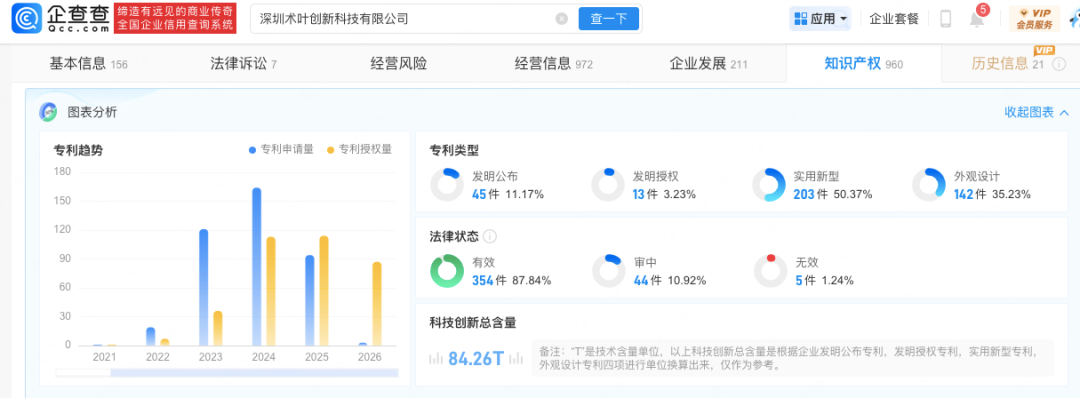
Image Source: Qichacha
Technological shortcomings have led to feedback that some of Laifen’s high-end products offer “higher prices without improved quality.” Whether its new folding fan, price-hiked electric toothbrush, or key electric shaver, most lack significantly differentiated core functions. Meanwhile, its quality control system remains underdeveloped, with ongoing product quality controversies.
Furthermore, an entrenched budget brand perception and team/supply chain shortcomings exacerbate the high-end transformation challenges. Years as an affordable alternative have solidified this label in consumers’ minds, yet many are unwilling to pay a premium for a budget brand, raising questions about the reasonableness of Laifen’s high-end pricing.
At the team level, Laifen’s executives mostly come from e-commerce operations, skilled in traffic monetization and sales but with limited experience in high-end brand building and product refinement.
Founder Ye Hongxin is a prime example. Entering Taobao e-commerce in 2007, he built his fortune through clothing and luggage businesses, with core competencies in e-commerce channel management and traffic conversion rather than long-term high-end brand development. While International General Manager Luo Mingbo has global brand operation experience, his strengths lie in cross-border traffic and channel management for consumer electronics.
At the supply chain level, the brand long relied on external contract manufacturing until its Zhuhai mega-factory became operational in 2025. High-end production processes and full-link quality control systems are still being established, with current support for high-end product quality delivery needing strengthening.
Even though Ye Hongxin publicly emphasized Laifen’s independent innovation capabilities and tech brand positioning in late 2025, a gap remains between its current product/technological performance and the expectations for a high-end tech brand.
3. Can Laifen’s High-End Transformation Succeed?
For Laifen, which has hit growth ceilings and faces sustainability challenges with its affordable alternative model, high-end transformation has become a critical strategic direction to break through profitability bottlenecks and achieve sustainable development. It is also a key path to optimizing its product mix for long-term growth. Currently in the initial exploration phase of high-end transformation, Laifen faces both opportunities from industry trends and challenges in technology, brand perception, and systems, with results yet to be seen.
From an industry environment and profitability perspective, growth potential in the low-end affordable alternative sector is limited. Intense competition and price wars in the budget small appliance market have squeezed profit margins, challenging the sustainability of the affordable alternative model. In contrast, the mid-to-high-end appliance market offers higher gross margins, holding promise to address Laifen’s profitability and growth weaknesses.
Meanwhile, domestic appliance consumption continues to upgrade, with consumer demand shifting from basic “functionality and usability” to high-quality, intelligent, and immersive experiences. The high-end small appliance market, once dominated by overseas brands like Dyson, now offers greater opportunities for domestic brands, providing a market foundation for Laifen’s high-end strategy.
Based on this, Laifen is attempting high-end transformation. Ye Hongxin revealed plans to raise R&D investment to 10% of revenue in 2025, up from 5%, to enhance product strength.
Simultaneously, Laifen has been recruiting technical and management talent from industry leaders like DJI and Midea in recent years to address team capability gaps.
At the brand level, management continues to promote its positioning as a high-end tech brand, downplaying its affordable alternative label, to support pricing strategies across its product lines.
However, Laifen’s high-end transformation is still navigating uncharted territory, with significant challenges ahead. The budget brand label is deeply entrenched in public perception, making it difficult to reshape. Building a high-end brand image relies on long-term product quality refinement, core technological breakthroughs, and improved supporting services, which cannot be achieved through short-term marketing alone.
The brand currently lacks a solid technological moat, with few market-competitive original core patents or cross-generational technological strengths. Most high-end products focus on aesthetic upgrades, struggling to win recognition from high-end consumer groups.
Meanwhile, the overall operational system for high-end routes remains immature. The team’s practical experience in high-end brand management is still accumulating, with own-factory quality control standards and production processes under continuous optimization. A full-process high-end service and delivery system is also being established.
-
Ofilm Teams Up with ADSensE to Propel Large-Scale Deployment of All-Solid-State LiDAR Powered by ADS6311 Chip!
-
![]()
Loss of 2.5 Billion Yet Facing Strong Demand for Shares? Another Battle for Control of Lianchuang Electronics
-
![]()
Huawei’s Enjoy Series Flies Off the Shelves, Prompting Xiaomi to Double Down on Budget Smartphones
-
![]()
Beijing Hyundai's Top Executive Criticizes Industry Disorder: Certain Brands Treat Customers as Beta Testers
-
![]()
The domestic mobile phone market has declined for five consecutive quarters! Huawei defies the trend with significant growth: maintains its top market share
-
Annual Revenue Surpasses 3 Billion: An Automotive Trim 'Little Giant' Makes Its Debut on the Beijing Stock Exchange
-
![]()
The Space Force Wants to Spend $30 Billion on Rocket Launches: Is Trump Doubling Down, and Is SpaceX the Big Winner?
-
![]()
Going Crazy! One out of Every Three Plug-in Hybrids Sold in Europe is a Chinese Vehicle