Mac mini Out of Stock: Has the “Headless MacBook” Emerged as the New Favorite for AI?
 06/01 2026
 531
531
Competitively Priced, Yet No Guarantee of Availability
About four or five years ago, a trend known as the “headless MacBook” gained popularity in the second-hand market. These were essentially MacBooks with damaged screens, where the top portion was removed and repurposed as a mini PC, complete with a keyboard and touchpad. These units were significantly cheaper compared to their intact counterparts.
However, with the rapid shift of Macs to in-house chips and the introduction of cost-effective Apple devices like the Mac mini M4, the headless MacBook lost its appeal and gradually faded into obscurity.
Yet, 2026 has proven to be an extraordinary year. The soaring prices of storage, coupled with the Lobster Craze, led to the Mac mini M4 selling out and subsequent price hikes. Currently, Apple has even discontinued the 256GB base model of the Mac mini M4, offering only versions with 512GB or more, significantly raising the entry price. Against this backdrop, the headless MacBook has made a surprising comeback, becoming a new favorite for AI enthusiasts.
From what I remember, shortly after its release, the Mac mini M4 saw price reductions on major e-commerce platforms, stabilizing at around 3,000 yuan with substantial subsidies for quite some time. The powerful performance of the M4 chip, coupled with a minimum of 16GB of memory and a compact, lightweight design, made this mini PC highly cost-effective. However, the Lobster Craze, sparked by OpenClaw in early 2026, quickly turned the Mac mini into an ideal device for raising lobsters, leading to its rapid sell-out and shortages on e-commerce platforms.
Subsequently, Apple’s official website, selling the Mac mini at its original price, repeatedly extended shipping times. Recently, with storage prices continuing to climb, the shortage of Mac minis has worsened, prompting Apple to discontinue the relatively low-profit 256GB version and start at 512GB.
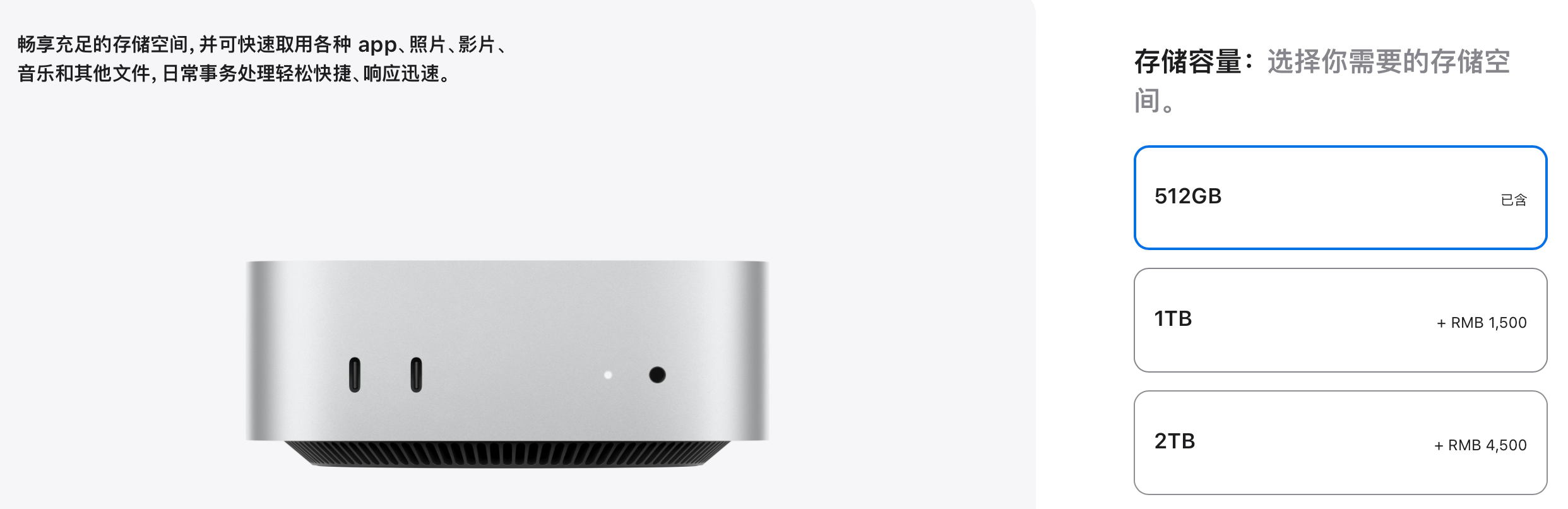
(Image Source: Apple)
Under these circumstances, the cost-effectiveness advantage of the Mac mini has gradually diminished. Correspondingly, the purchasing value of the headless MacBook has risen again. While browsing second-hand platforms, I noticed that a headless MacBook Pro M1 Pro with 16+512GB is priced at around 3,200 yuan. In contrast, a second-hand Mac mini M4 with 16+512GB is priced close to 5,000 yuan and is in short supply.
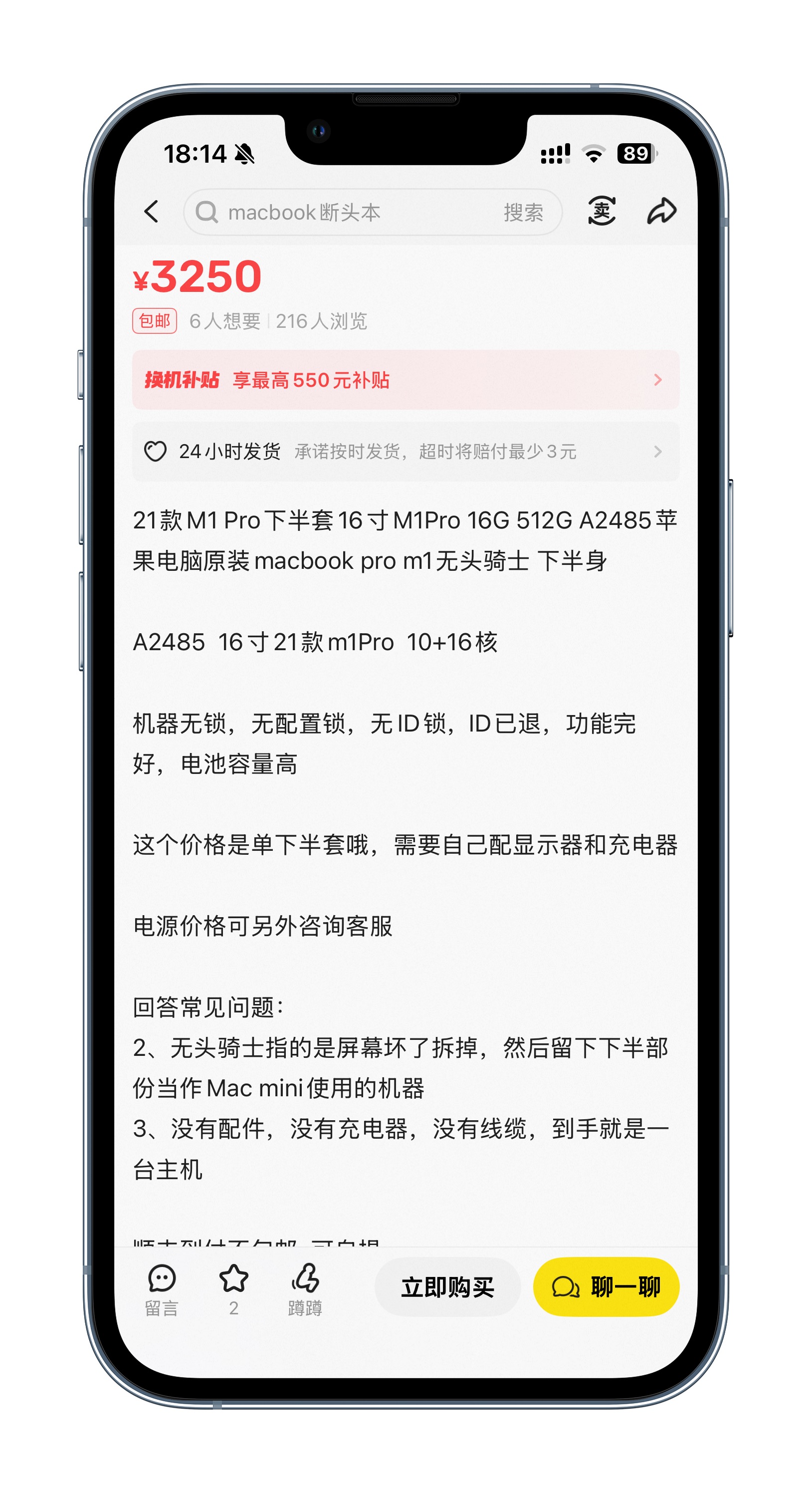
(Image Source: Xianyu)
In terms of performance, although the M1 Pro is several years old, it is positioned as a higher-end chip and still holds an advantage in GPU performance compared to the M4. Additionally, considering that the headless MacBook Pro comes with a keyboard and touchpad, its cost-effectiveness becomes even more apparent.
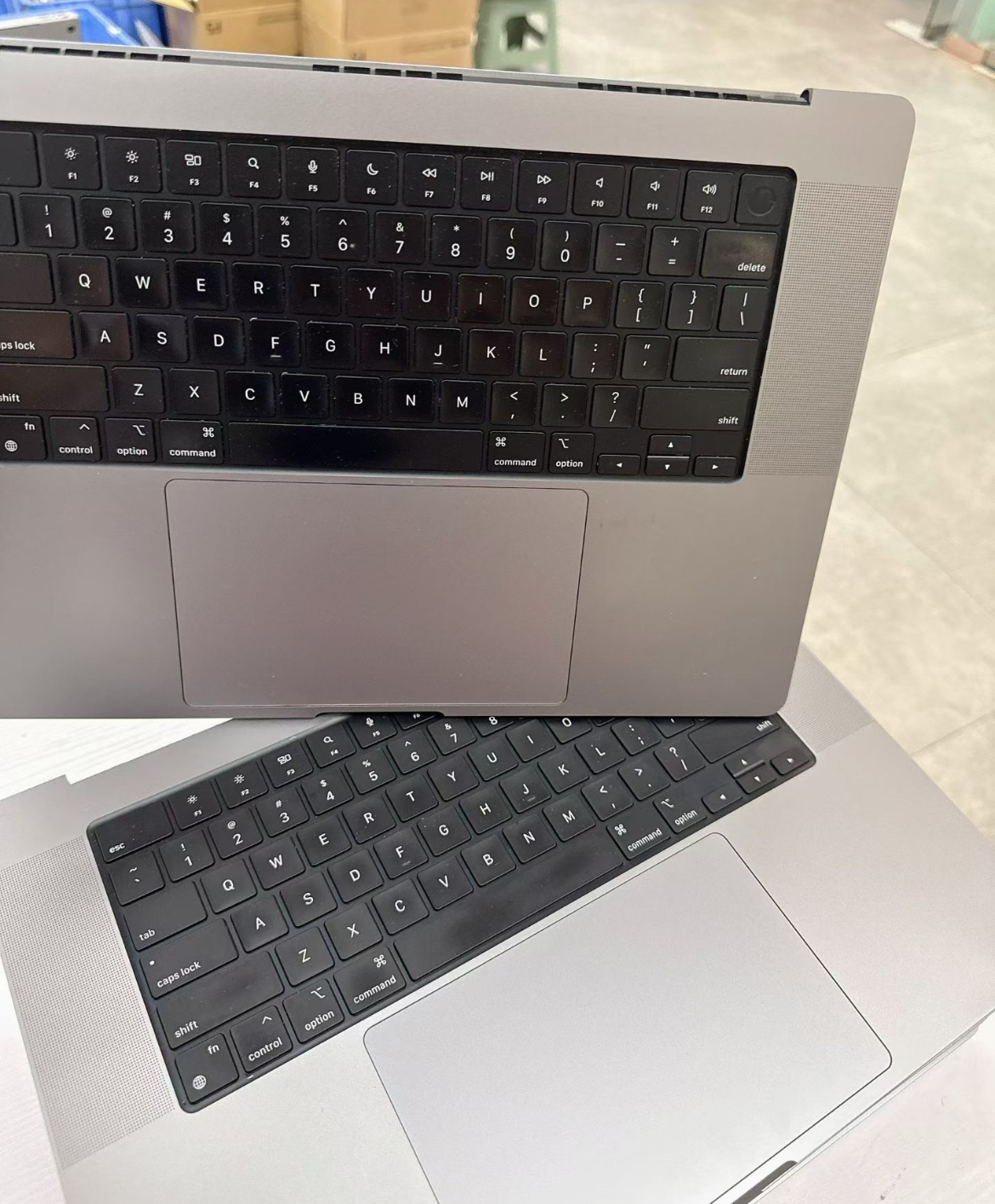
(Image Source: Xianyu)
The reason these headless MacBook Pros have become a new favorite for AI, besides their price advantage, is also tied to their application scenarios for raising lobsters. In the past, headless MacBooks were hard to sell partly because, without a screen, they completely lost their portability as laptops.
However, when used as a lobster-raising tool, running AI tools like OpenClaw 24/7, the MacBook can be accessed and controlled by other devices after deployment, making the screen largely unnecessary most of the time.
Coincidentally, my friend Xiaochen recently purchased a headless MacBook Pro to replace his old Mac mini. Initially, he wanted to buy a Mac mini M4 to run OpenClaw, but the persistent out-of-stock situation and higher prices led him to settle for a second-hand Mac mini M2. However, since this mini PC was the 8+256GB version, he found it inadequate after using it for a while and decided to replace it.
After some research, Xiaochen finally decided to buy a headless MacBook and sell the Mac mini. Surprisingly, the base model Mac mini M2 he bought for 2,200 yuan two months ago was now offered at 2,500 yuan by second-hand dealers, allowing him to make a small profit.
The specific model of the headless MacBook Xiaochen bought is a MacBook Pro M1 Pro with 32+512GB. He opted for the 32GB memory version over the 16GB version partly because the price difference wasn’t significant—the purchase price was 3,880 yuan, about 600 yuan more than the 16GB version, which was still acceptable given today’s soaring memory prices. On the other hand, having been frustrated by the 8GB Mac mini before, he naturally wanted more memory redundancy now. After all, 32GB of memory can theoretically run many local models and is much more usable than 16GB.
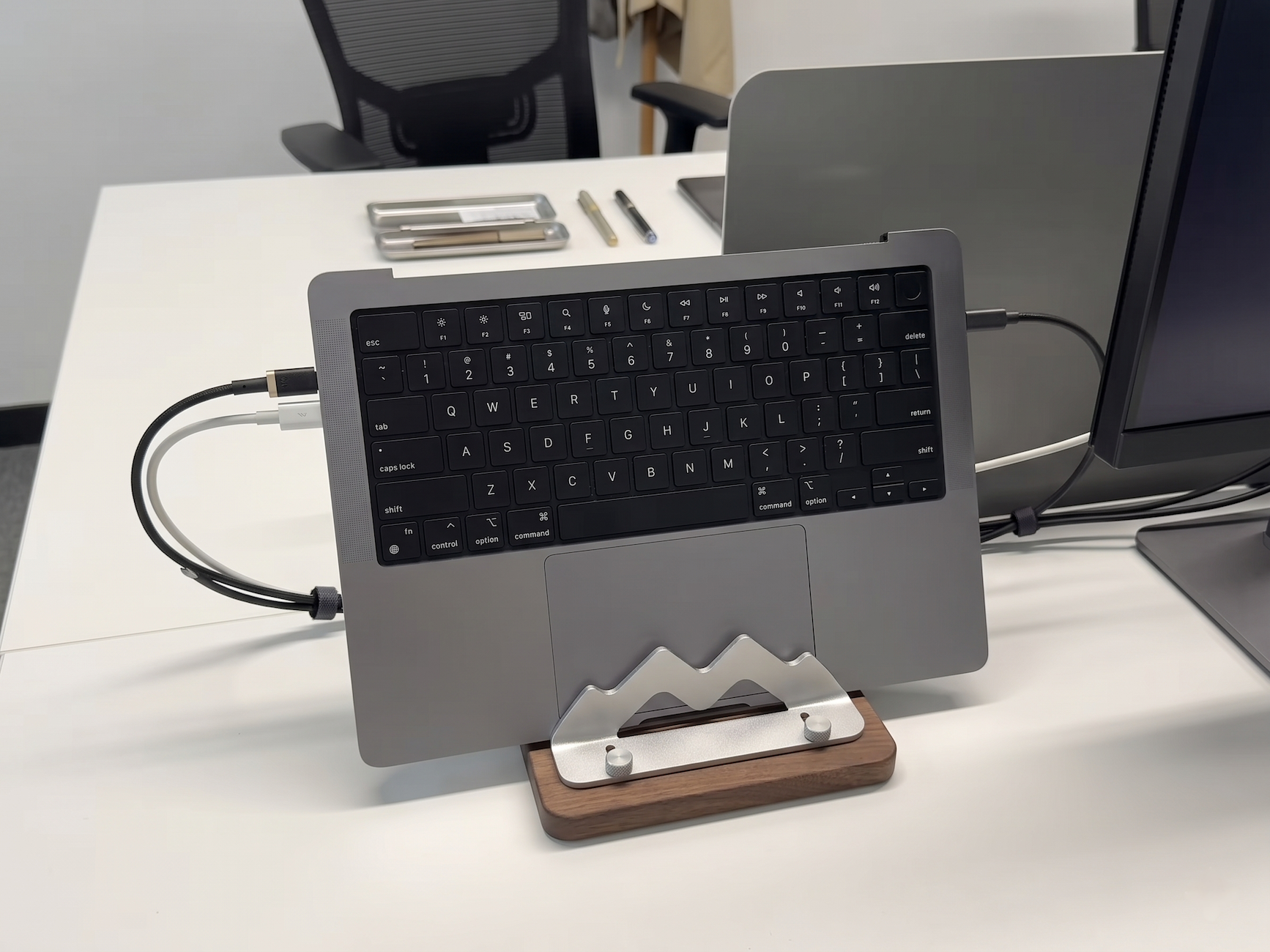
(Image Source: Leikeji)
Xiaochen ran OpenClaw on the headless MacBook Pro for a while but recently switched to the popular Hermes Agent. He mentioned that while OpenClaw is powerful and comprehensive, it is somewhat bloated and less stable. Sometimes, while on a business trip, he would suddenly find that the lobster in the office was inaccessible remotely and had to ask a colleague to restart the gateway.
In contrast, Hermes Agent is more lightweight and features crucial self-learning capabilities. The information he feeds it can be converted into the AI’s knowledge base and used in subsequent work tasks. Now, he uses Hermes as an AI assistant and integrates it into Feishu and QQ for tasks like posting on Weibo and archiving files.
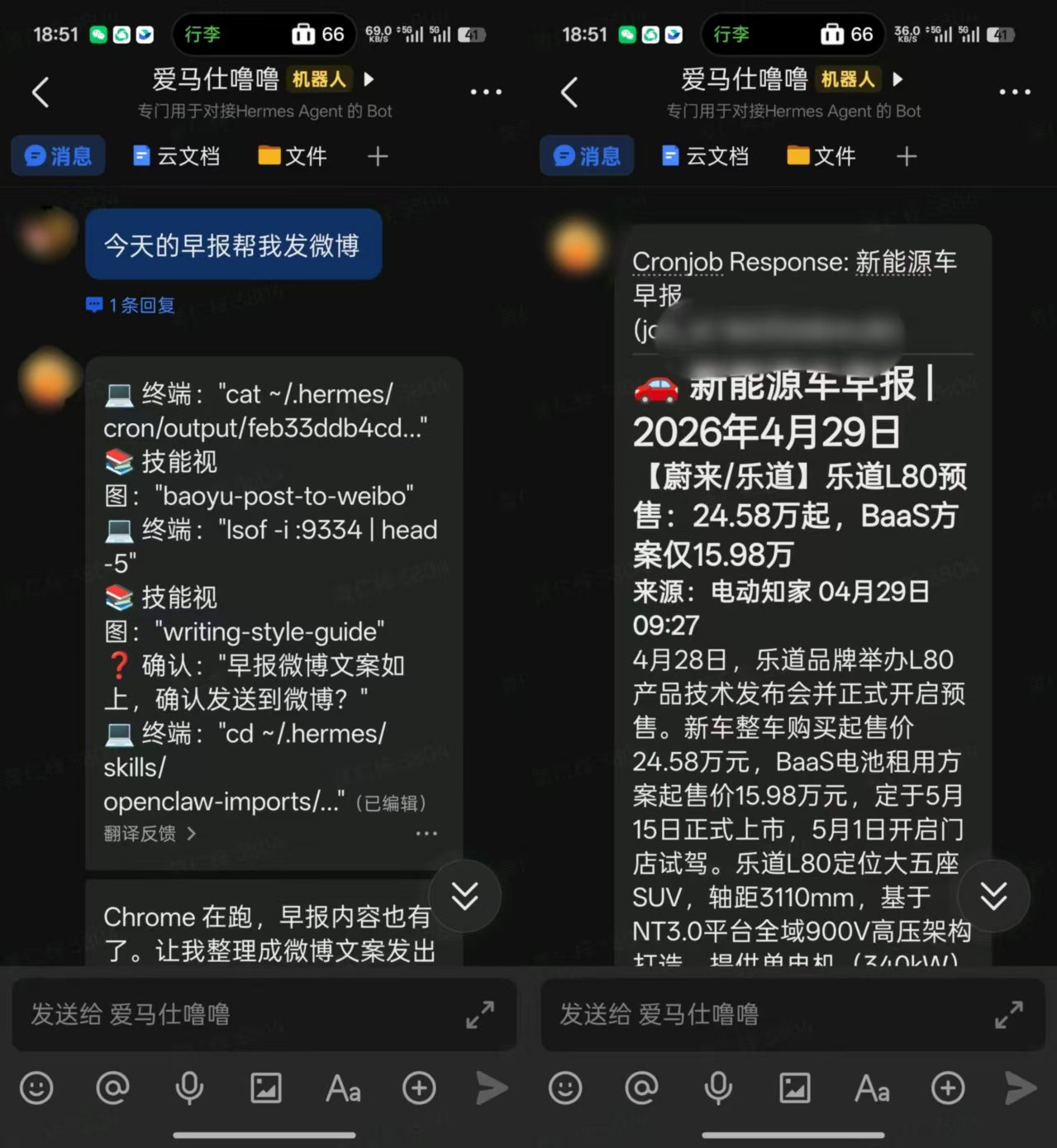
(Image Source: Leikeji)
Xiaochen said that the performance of this headless MacBook Pro is quite sufficient, and its daily use is smooth. After all, he doesn’t use it for anything else; it’s dedicated to running Hermes.
However, his initial plan to run local models didn’t succeed. While 32GB of memory seems like a lot, running large-parameter open-source models is still somewhat straining. Although it can run successfully, the memory, GPU, and CPU usage are very high, and the AI’s response speed slows down. If he chooses models with smaller parameters, the intelligence drop is noticeable. So, he ultimately chose to access online large model services.
If we only consider hardware performance and price, then there’s no doubt that the headless MacBook has purchasing value and offers better cost-effectiveness than the still-rising Mac mini. However, this type of headless MacBook is a “non-standard product” with no reliable official channels and only circulates among various vendors in the second-hand market.
Therefore, second-hand headless MacBooks inevitably come with significant risks. Before purchasing a device, you don’t know if it has hidden defects, if its parts have been replaced, or if the entire unit has been refurbished, let alone any warranty.
Therefore, for ordinary users, buying a headless MacBook is a risky behavior. So, besides the Mac series, are there other reliable options for raising lobsters? Here, we share some alternatives.
First, there are mini PCs from other brands. The Windows阵营 (Windows camp) has always had brands offering related products.
For example, Lenovo’s Kool mini PC, equipped with a 13th-gen Core i5 standard voltage chip, 16GB of memory, and a 512GB hard drive, is priced at around 3,899 yuan. Frankly, this price isn’t cheap, but the performance is quite strong, and both the memory and hard drive can be upgraded independently, giving it an advantage over Mac the mini for future upgrades.
Brands like MSI also offer barebone mini PCs, which come without memory or hard drives installed, allowing users to customize them. The advantage is high flexibility and a lower price. For instance, MSI’s CubiNUC, equipped with an AMD R7-8745HS chip (including both CPU and GPU), is priced just over 2,000 yuan.
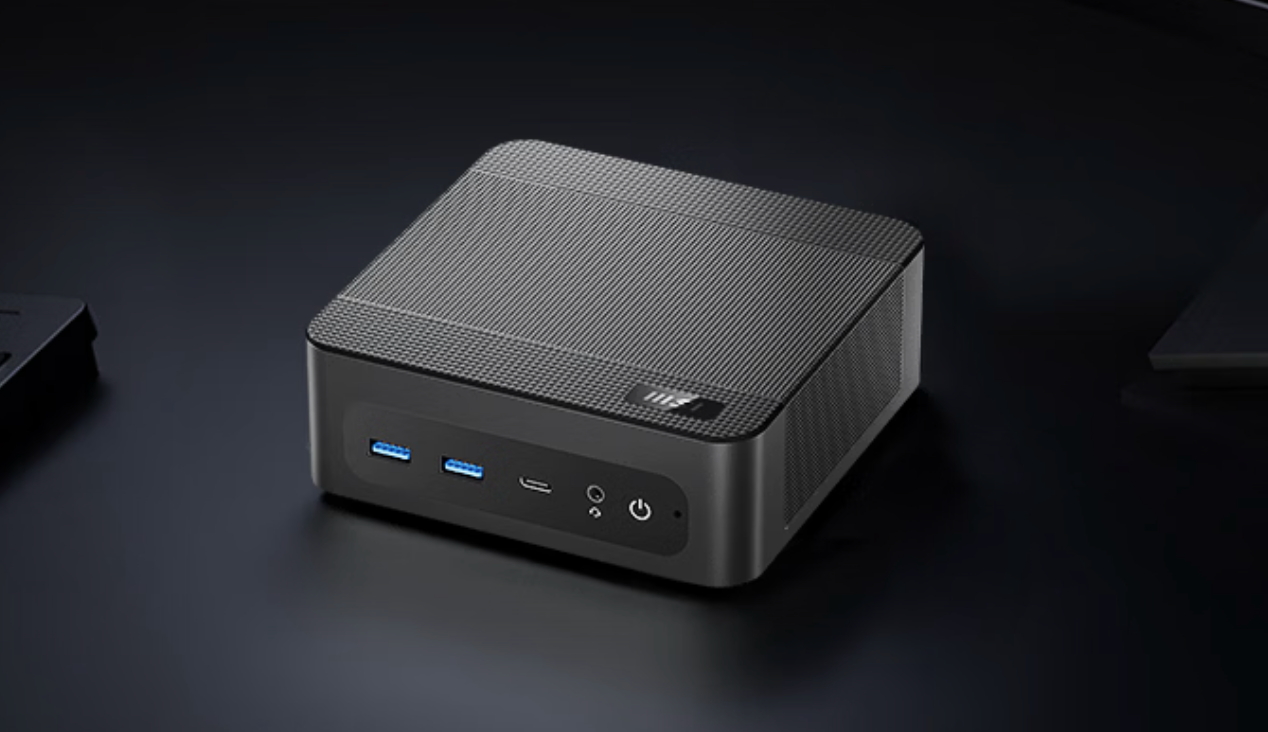
(Image Source: MSI)
It’s worth mentioning that if you use such X86 architecture hosts for raising lobsters, I personally recommend installing Linux. On the one hand, Linux has much lower memory overhead—Windows 11 can easily consume five or six gigabytes of memory, which is too extravagant given today’s soaring storage prices. On the other hand, most AI tools, Docker containers, and Python dependencies are developed and tested in a Linux environment. Overall, if you want to run AI tools stably and long-term, a Linux-based mini PC would be a better choice.
Second, you could consider a more thorough cloud solution, like cloud computers.
Companies like Alibaba and Tencent already offer cloud-based Agent services. Alibaba Cloud also provides solutions like the Wuying Cloud Computer, allowing users to deploy large models and intelligent agents directly in the cloud with one click. These solutions lower the hardware threshold for raising lobsters, eliminating the need to purchase expensive high-memory devices. Moreover, major companies usually offer better security and usability, including cloud system deployment and Token purchases.
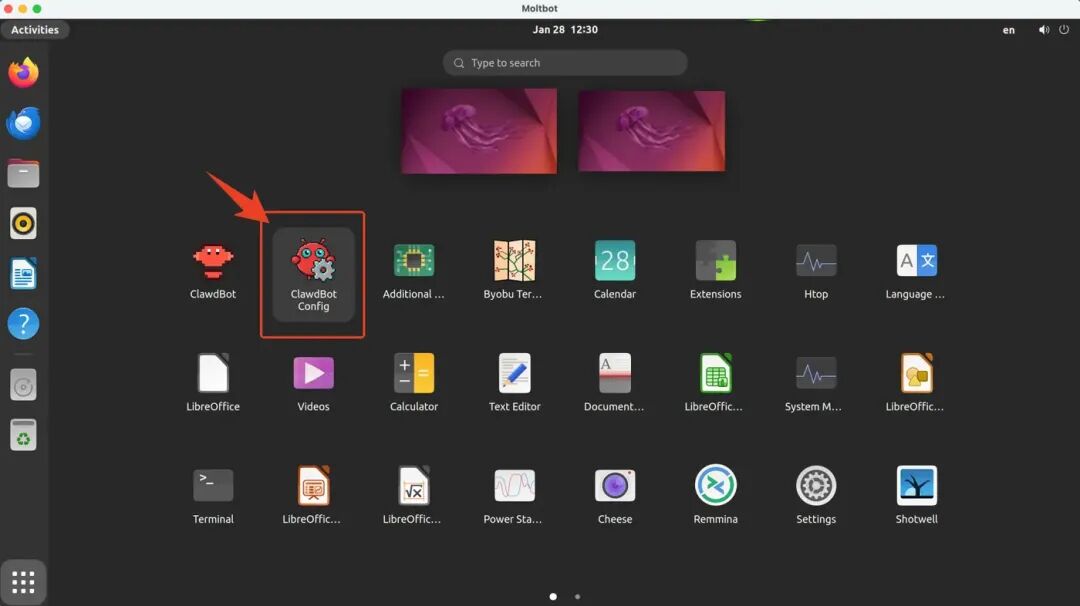
(Image Source: Alibaba Cloud)
As mentioned earlier, even if you use a Mac mini, headless MacBook, or X86 architecture mini PC for raising lobsters, local computing power still can’t run large local models, and you’ll ultimately need to purchase cloud-based large model services. If that’s the case, then going straight for a pure cloud solution is more convenient. One major advantage of cloud computers is their flexible configuration, allowing you to adjust hardware specifications at any time, which isn’t possible with local devices.
Finally, it’s worth noting that deploying tools like OpenClaw locally, especially running an AI with high operational privileges without strict supervision, poses significant security risks, such as accidental file deletion or even network security issues. The Ministry of Industry and Information Technology has previously issued relevant security warnings.
Therefore, if you’re using local devices for raising lobsters, it’s advisable to use a dedicated device to minimize risks. As for the headless MacBook, it’s still recommended to weigh the risks carefully before purchasing.
AI Lobster Craze, OpenClaw, Apple, MacBook
Source: Leikeji
The images in this article are from the 123RF Authentic Library. Source: Leikeji
-
Ofilm Teams Up with ADSensE to Propel Large-Scale Deployment of All-Solid-State LiDAR Powered by ADS6311 Chip!
-
![]()
Loss of 2.5 Billion Yet Facing Strong Demand for Shares? Another Battle for Control of Lianchuang Electronics
-
![]()
Huawei’s Enjoy Series Flies Off the Shelves, Prompting Xiaomi to Double Down on Budget Smartphones
-
![]()
Beijing Hyundai's Top Executive Criticizes Industry Disorder: Certain Brands Treat Customers as Beta Testers
-
![]()
The domestic mobile phone market has declined for five consecutive quarters! Huawei defies the trend with significant growth: maintains its top market share
-
Annual Revenue Surpasses 3 Billion: An Automotive Trim 'Little Giant' Makes Its Debut on the Beijing Stock Exchange
-
![]()
The Space Force Wants to Spend $30 Billion on Rocket Launches: Is Trump Doubling Down, and Is SpaceX the Big Winner?
-
![]()
Going Crazy! One out of Every Three Plug-in Hybrids Sold in Europe is a Chinese Vehicle