4G RAM Computers Stage a Comeback Amid AI-Driven Storage Crunch: How Many Will Feel the Pinch of Rising Storage Costs?
 06/01 2026
 462
462
Steer clear of products with reduced RAM.
When shopping for a computer, how much RAM should you aim for? Keep in mind, we're discussing Random Access Memory (RAM), not Solid State Drives (SSDs). If you posed this question a decade ago, the prevailing wisdom would have been to opt for at least 8GB, with 16GB being even more desirable.
Yet, back then, no one could have foreseen that by 2026, RAM would become somewhat of a luxury, with brands offering 8GB laptops and some even contemplating a revival of 4GB computers.
To put it bluntly, this scenario is an extreme outcome of skyrocketing storage prices. Major brands are scrambling to reduce the RAM capacity of their products, attempting to eke out a profit amidst rising costs to prevent their offerings from being swallowed by losses.
However, for the average user, reduced RAM capacity translates to a subpar experience with devices like smartphones and PCs. While there are numerous ways to cut costs, targeting RAM is clearly not the most judicious approach.
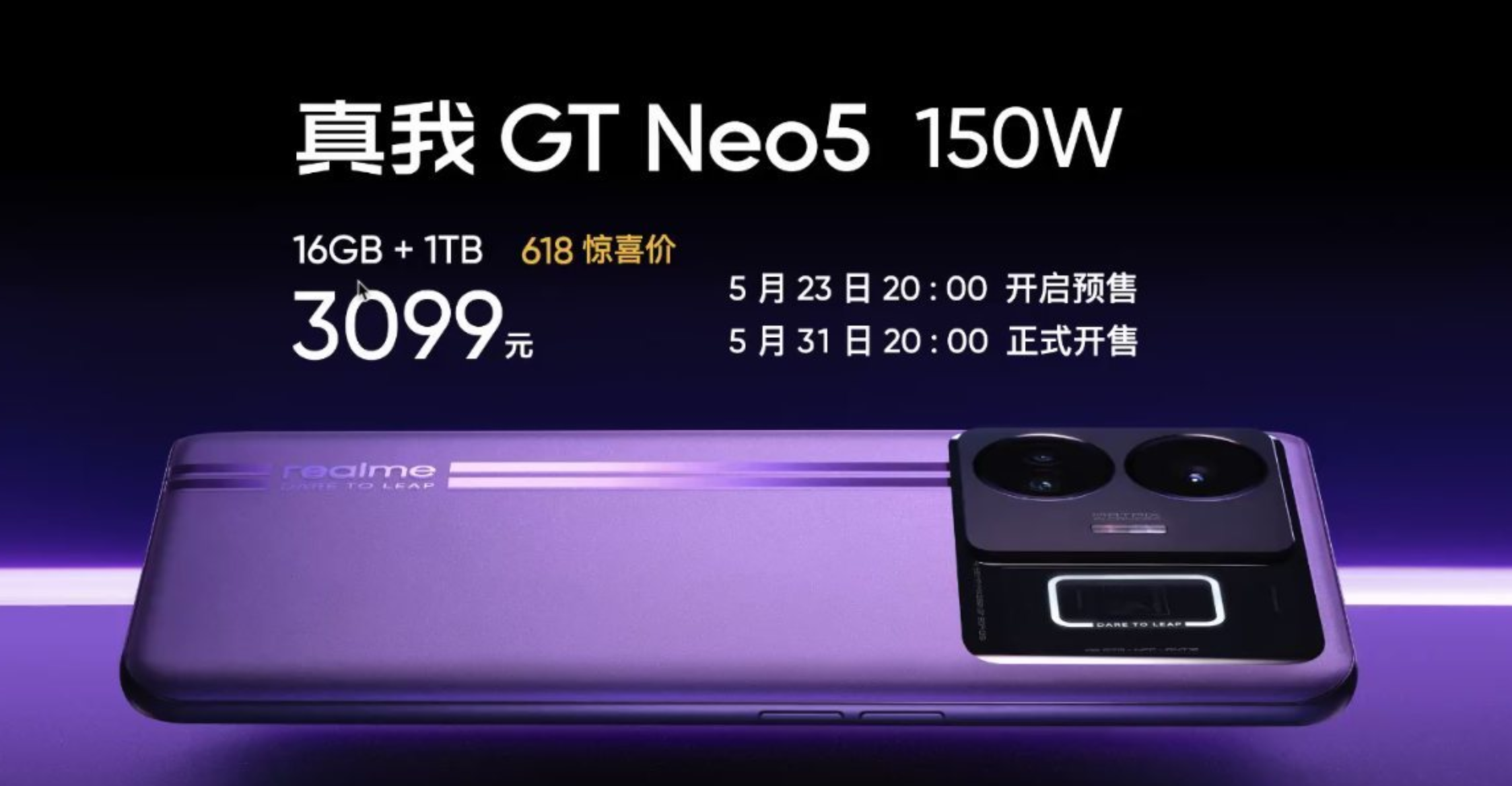
Prior to this wave of storage price hikes, RAM had enjoyed a prolonged period of low prices. During that time, smartphone manufacturers were outfitting their devices with generous amounts of RAM and storage, with combinations like 16GB+1TB becoming selling points for many popular models. I recall that back then, a mid-to-high-end smartphone with a secondary flagship chip and 16GB+1TB capacity could be priced around 3,000 yuan. For instance, the realme GT Neo5 16GB+1TB I purchased in 2023, boasting a Snapdragon 8+ chip and 150W fast charging, was priced just over 3,000 yuan—a figure that seems unimaginable today.
(Image source: realme)
However, in 2026, some smartphone products have reverted to the 8GB era. For instance, the recently released Honor 600 Vitality Edition comes with a base storage combination of 8GB+256GB; Samsung's mid-range model A57, released in March this year, offers 8GB+256GB and 12GB+256GB versions, with the latter being 400 yuan more expensive than the former.
Apple is no exception. Last year's iPhone 17 came standard with 8GB of RAM, and this year's iPhone 17e still maintains 8GB. However, iPhones have always had lower RAM capacity compared to Android models, but the storage price hikes have indeed slowed down Apple's pace in upgrading phone memory.
Of course, most new phones start with 12GB of RAM. Leaving aside flagship models, the OPPO Reno16 series, Honor 600 Super Edition, and Pro Edition all boast at least 12GB of RAM. However, correspondingly, the prices of mid-range models have also quietly increased, basically all reaching the 3,000 yuan plus range, not to mention the recent collective price adjustments by various brands.
The same trend is evident in the PC realm. Previously, Apple, in an effort to promote Apple Intelligence across all its devices, generously equipped the base models of the MacBook Air and Mac mini with 16GB of RAM. But this year, Apple released the MacBook Neo with only an 8GB RAM version, which cannot be upgraded to 16GB even with additional payment. Therefore, many people believe this laptop is merely a product to clear out the inventory of A18 Pro chips, which were originally used in the iPhone 16 Pro and come with only 8GB of integrated RAM.
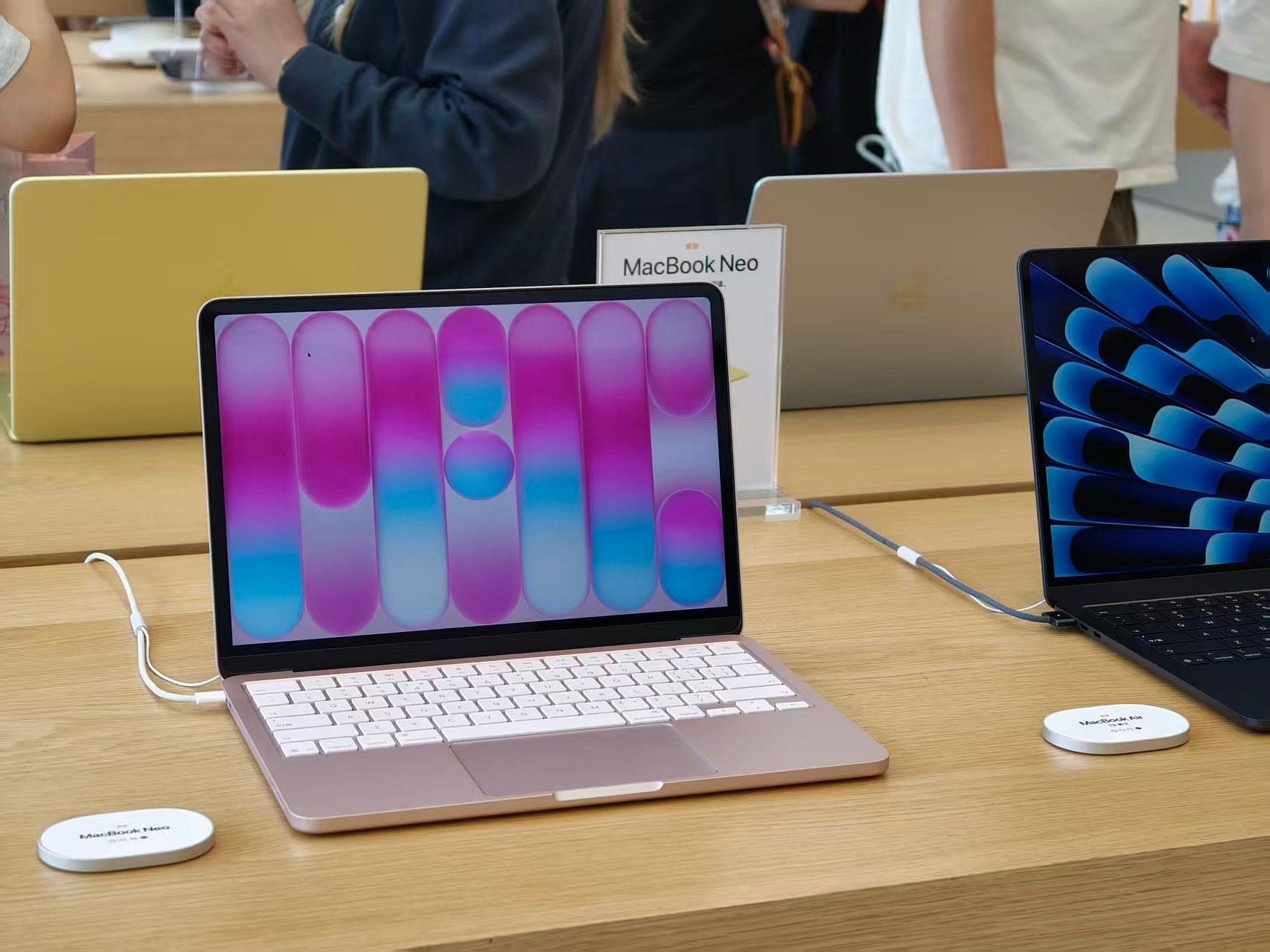
(Image source: Leikeji)
Meanwhile, brands like Microsoft, HP, Lenovo, and Honor have all released laptops with 8GB of RAM this year. There's even something more outrageous. Recently, PC brand Acer announced the Aspire Go 15, a Snapdragon laptop whose parameter list describes the RAM as "up to 8GB." This wording seems to imply that there might also be a 4GB RAM version of this laptop.
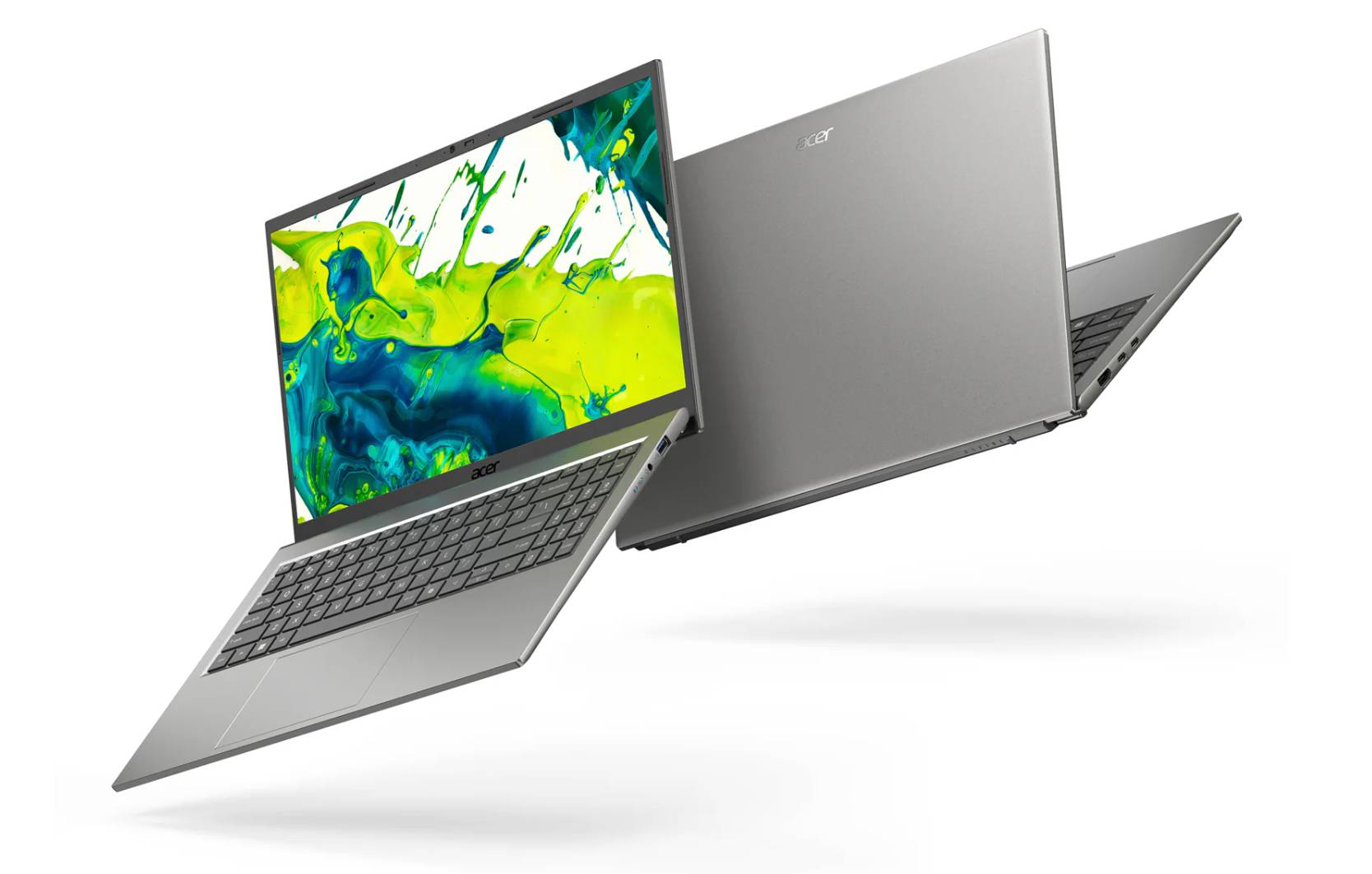
(Image source: Acer)
Acer's new laptop, the Aspire Go 15, is powered by Qualcomm's Snapdragon C chip and targets the entry-level laptop market at $300. As a result, the overall configuration of this laptop gives a strong impression of being scaled down. For example, it has a large 15.6-inch screen, but the resolution is only 1080P. Its core selling points are low power consumption and long battery life.
Even so, the release of a 4GB RAM version of an entry-level laptop in 2026 still feels surreal. After all, 4GB RAM PCs were popular more than a decade ago. My own MacBook Air, bought in 2015, started with 4GB of RAM, while the Windows camp had generally moved to 8GB as the starting point and quickly entered the 16GB era in the following years.
Naturally, ordinary users are outraged by such moves. In the comments section of IT Home, some users said that an 8GB RAM computer is barely usable, while a 4GB laptop is completely unusable. Others joked that instead of pre-installing Windows 11, they should just install Windows 7 or XP.
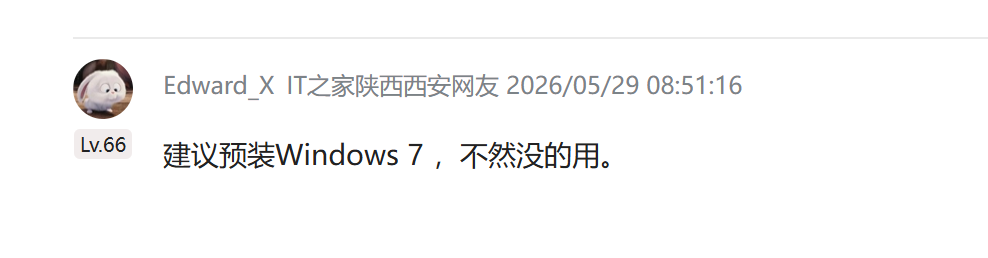
(Image source: IT Home)
On platforms like Xiaohongshu, most people believe that when buying an Android phone, the RAM should not be 8GB; it should start at 12GB, with 16GB being the best. Although large-RAM phones are expensive now, the experience is much better than that of small-RAM models.

(Image source: Xiaohongshu)
Smartphone users have long faced a pain point: apps are constantly expanding in size, and storage space is always insufficient. Nowadays, apps from major internet companies can easily reach four or five hundred megabytes in size and quickly balloon to several gigabytes after a period of use. Mobile games are even more voracious consumers of storage space, with games ranging from forty to fifty gigabytes to even 100 gigabytes becoming increasingly common.
The increasingly bloated apps are not only eating up storage space but also RAM. The super apps from major companies often integrate a multitude of complex functional modules, vying for space in users' phone memory for the sake of KPIs. Often, when users have several apps open on their phones, the RAM is quickly used up, and even with a large RAM capacity, they can easily encounter situations where apps are killed in the background.
Take my current main Android phone as an example. It has 12GB of RAM, but it's only just enough for regular use. If I open too many apps, it starts to lag and kill apps in the background. If I were still using an 8GB RAM phone today, it would be difficult to guarantee smooth daily use. In my opinion, among the hardware configurations of current smartphones, imaging and performance are somewhat excessive, while the bottleneck in experience now lies in the RAM. A phone with 8GB of RAM is like a bucket with a missing plank; the amount of water it can hold is greatly reduced.
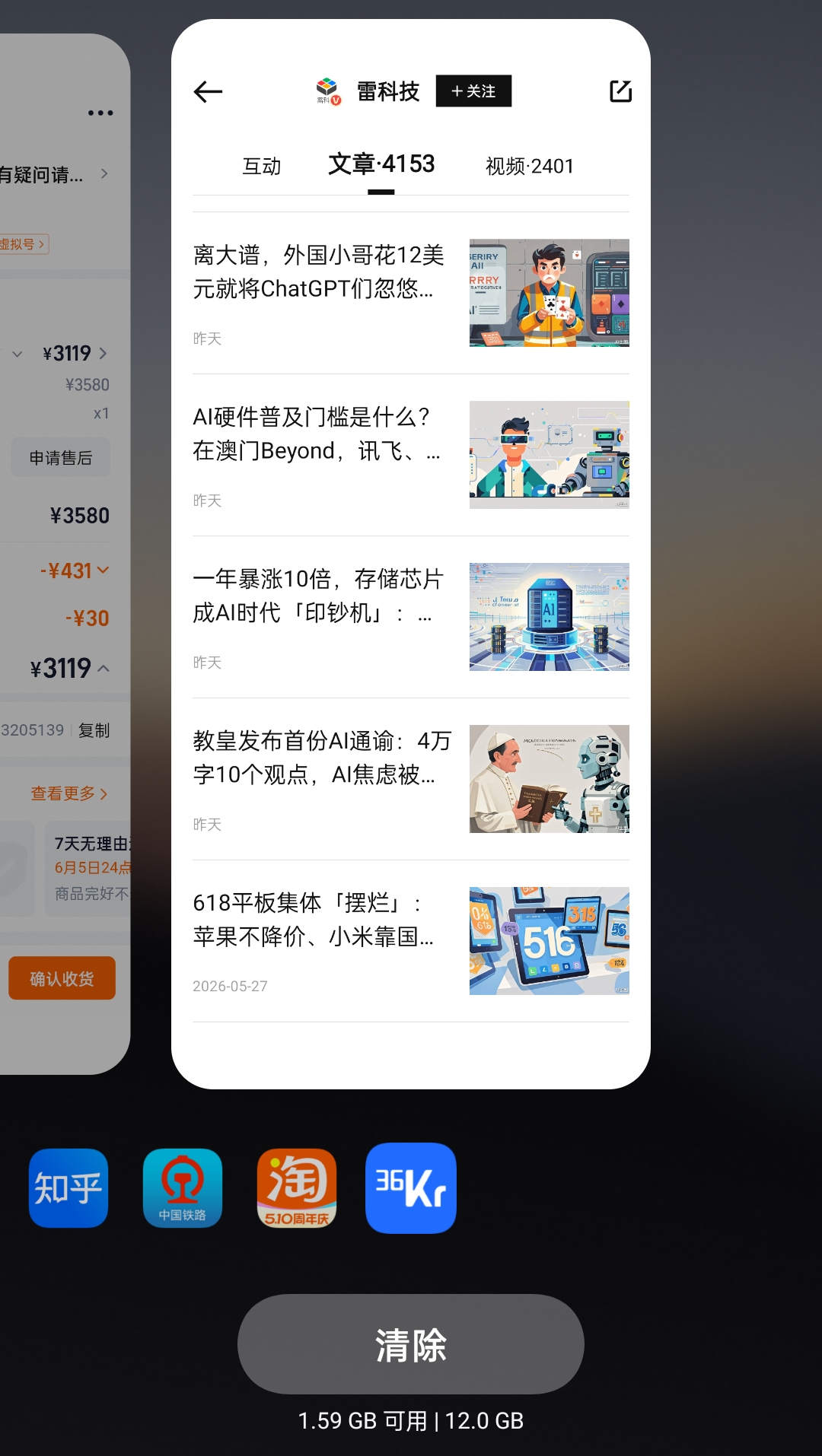
(Image source: Leikeji)
The same is true for PC products. Many people may not have noticed that compared to older system versions, Windows 11 has significantly increased its RAM requirements. Although officially, a minimum of 4GB of RAM is required to install Windows 11, Microsoft itself stated in a recent document that 16GB of RAM is the baseline for Windows 11, and 32GB is the "worry-free choice."
The increase in RAM usage by Windows 11 is largely due to Microsoft's strong promotion of WebView2 technology. A large number of built-in software in the system integrate the Chromium-based Edge browser engine (i.e., WebView2). To put it more simply, these software developed by Microsoft all have a built-in Google Chromium browser. Google's product philosophy is to "trade space for time," aggressively occupying computer RAM and hard drive cache to improve operational efficiency.
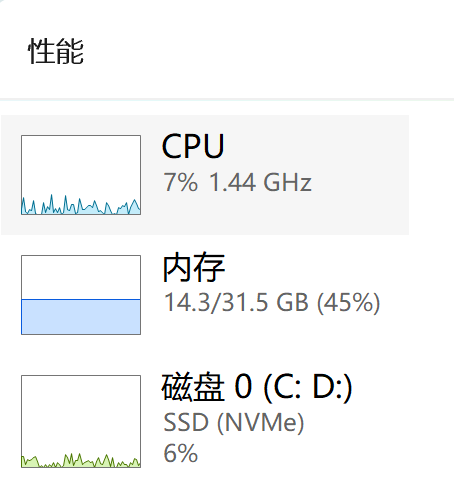
Following Microsoft's lead, many third-party software have adopted similar strategies. As a result, users clearly feel that Windows 11 consumes more RAM. Typically, a 16GB RAM PC will have Windows 11 consume 4-5GB of RAM even without opening any third-party software. Even on a 32GB large-RAM computer, RAM usage can approach half under low-load conditions.
(Image source: Leikeji)
Of course, Windows 11's RAM usage is dynamic. If a user's device only has 8GB or even 4GB of RAM, the system will use less RAM.
However, in any case, it is completely unrealistic to expect a 4GB RAM computer to run Windows 11 smoothly in 2026. That's why Acer's attempt to secretly release a 4GB RAM version of a cheap laptop has been collectively mocked and criticized by netizens.
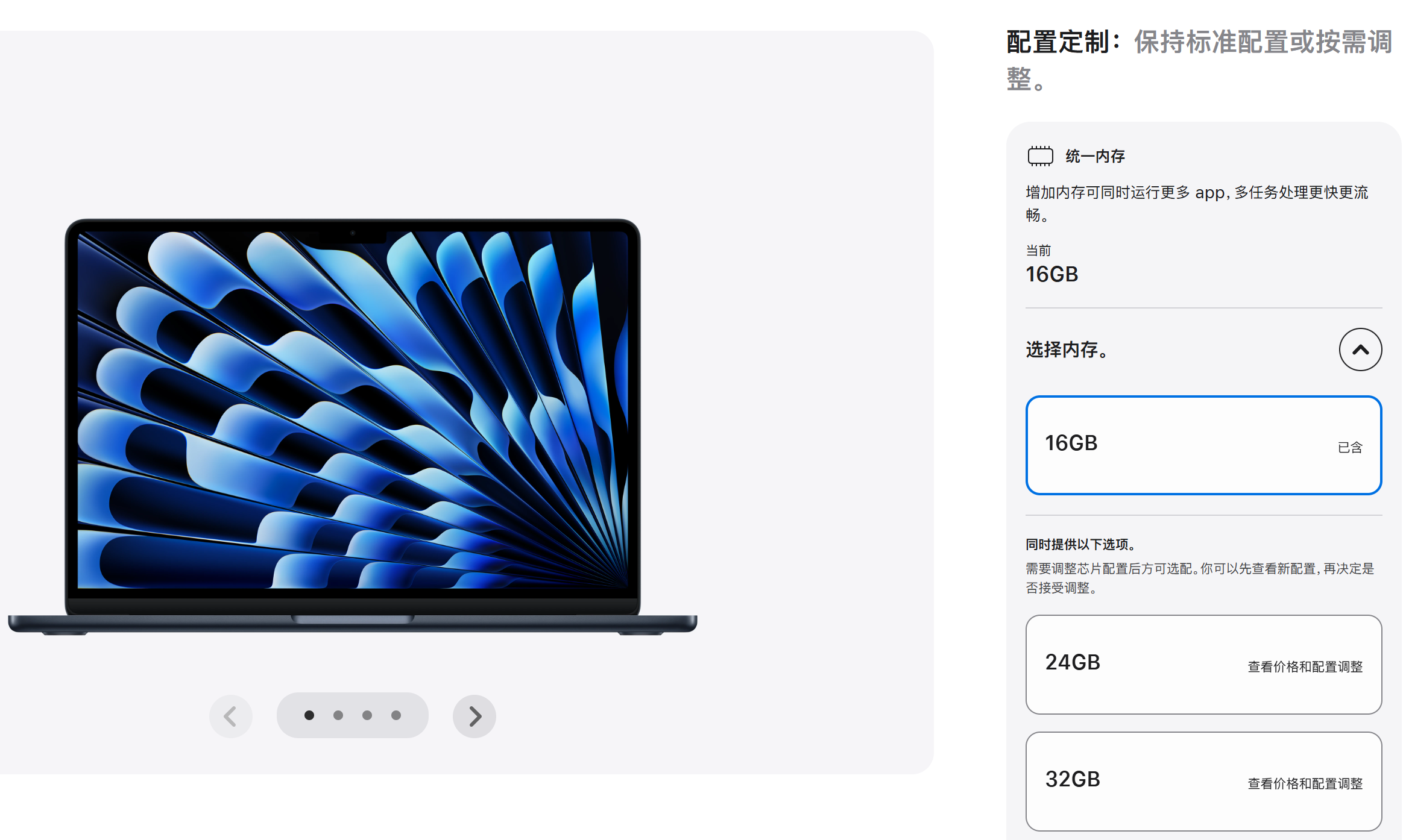
Besides smooth daily use, the deployment of edge AI will also be stifled due to insufficient RAM capacity. As we mentioned earlier, Apple increased the starting RAM of its Mac series products to 16GB in preparation for AI. At the same time, the starting RAM capacity of iPads and iPhones has also reached 8GB, with even budget models like the iPhone 16e being equipped with 8GB of RAM.
(Image source: Apple)
The RAM reserved for AI on smartphones and PCs is mainly used for two aspects: edge AI and cloud AI. Edge AI is easy to understand. To run models and AI functions using the computing power of local chips, RAM is crucial. On the PC side, the most suitable AI chips are naturally Nvidia graphics cards with built-in video memory, but they are expensive and not available on every device. Therefore, in many cases, RAM often becomes the bottleneck for local AI performance.
Of course, 16GB of RAM is still not enough for large local models, but it can handle some specific demands with lower computing power requirements. Currently, the main edge AI application scenarios on smartphones are in the field of image processing, such as photo erasure and offline translation. On PCs, some relatively small large models can be run, and edge AI is also used in gaming scenarios like AI super-resolution and frame generation.
Even if smartphones and PCs adopt a cloud AI solution, it will also increase RAM consumption. In the future, when global AI is deployed on devices, AI will inevitably become a real-time online and always-responsive presence. Such a system-level application will inevitably need to occupy a portion of RAM resources for a long time. For example, Apple's future upgrade to inject Gemini into the new version of Siri will not only make it a smarter voice assistant but also a central brain capable of retrieving massive amounts of local files and data. Its consumption of local hardware resources like RAM will inevitably increase significantly.
In short, if the RAM capacity of electronic devices like smartphones and PCs in users' hands is significantly reduced, it will inevitably lead to a significant degradation in the overall experience. As a result, fewer people will be willing to upgrade to new devices.
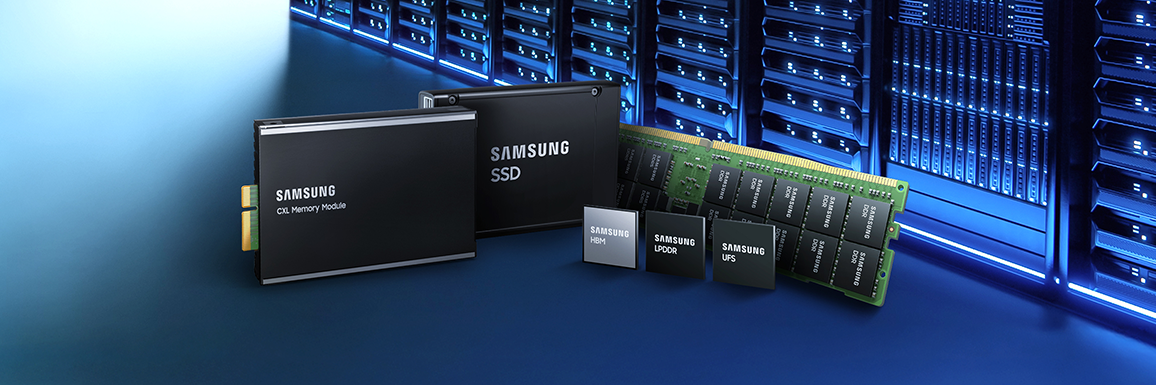
This wave of storage price hikes can be described as a mixed bag for different parties. On one hand, there's the surreal scene of SK Hynix employees receiving huge bonuses; on the other hand, terminal manufacturers and ordinary users are suffering greatly. The soaring storage prices ultimately stem from an imbalance between supply and demand. The surging storage demand mainly comes from AI giants, which are investing huge sums in AI infrastructure construction and require a continuous supply of RAM. On the supply side, storage giants like Samsung and SK Hynix cannot increase their production capacity in a short time and are naturally more willing to prioritize the production of higher-margin RAM products like HBM.
As for terminal brands, they can either use up their previously stored RAM or buy it at high prices. Apple has already used its financial muscle to sign long-term contracts with Samsung and SK Hynix at high prices and has been sweeping the storage market with its massive cash flow. Other brands, on the other hand, are streamlining their product lines and prioritizing storage resources for flagship and mid-range models that generate higher profits and are less sensitive to RAM costs.
(Image source: Samsung Semiconductor)
So, when will the storage price hike stop? The solutions to this problem lie in both the demand and supply sides. Currently, the arms race in the AI field is still ongoing. However, AI infrastructure construction cannot continue indefinitely. After all, not many AI giants are profitable nowadays. Even a powerhouse like OpenAI is still struggling to monetize. When the pace of the AI arms race slows down, storage prices will fall. However, it is still impossible to give an accurate answer as to when this moment will arrive.
On the supply side, a few giants like Samsung and SK Hynix hold the core production capacity for manufacturing storage particles. Theoretically, with the soaring storage demand, they should expand their production capacity. But in reality, expanding storage factories takes a long time. More importantly, storage has long been a cyclical industry, with prices plummeting to the bottom several times. If Samsung and SK Hynix invest huge sums to expand production capacity now, they will face the risk of falling storage prices in the future. Therefore, for them, a more prudent choice is to take advantage of the high storage prices to prioritize the production of products in high demand by AI giants like HBM and sell ordinary RAM at high prices.
For us ordinary users, there are not many choices, but we can still vote with our feet and refuse to buy products with reduced RAM.
RAM, Storage, Smartphones, PCs, Samsung
Source: Leikeji
The pictures in this article are from: 123RF royalty-free image library. Source: Leikeji
-
Ofilm Teams Up with ADSensE to Propel Large-Scale Deployment of All-Solid-State LiDAR Powered by ADS6311 Chip!
-
![]()
Loss of 2.5 Billion Yet Facing Strong Demand for Shares? Another Battle for Control of Lianchuang Electronics
-
![]()
Huawei’s Enjoy Series Flies Off the Shelves, Prompting Xiaomi to Double Down on Budget Smartphones
-
![]()
Beijing Hyundai's Top Executive Criticizes Industry Disorder: Certain Brands Treat Customers as Beta Testers
-
![]()
The domestic mobile phone market has declined for five consecutive quarters! Huawei defies the trend with significant growth: maintains its top market share
-
Annual Revenue Surpasses 3 Billion: An Automotive Trim 'Little Giant' Makes Its Debut on the Beijing Stock Exchange
-
![]()
The Space Force Wants to Spend $30 Billion on Rocket Launches: Is Trump Doubling Down, and Is SpaceX the Big Winner?
-
![]()
Going Crazy! One out of Every Three Plug-in Hybrids Sold in Europe is a Chinese Vehicle