Mobile Phone Industry at the 618 Node: Price Hikes Just a 'Superficial Injury,' while Sticking to Old Ways is the 'Internal Bleeding'?
 06/08 2026
 639
639
Editor: Liu Zhicheng
Reviewer: Xu Xu
Every June marks one of the most critical time nodes for the mobile phone industry.
This month features the 618 sales event and the period after the college entrance exams, when prospective college students are most concentrated and enthusiastic about purchasing new phones.
Following tradition, many domestic mobile phone manufacturers have recently released a series of new products.
For example, vivo launched its latest S60 series at the end of May, OPPO introduced the Reno16, Honor unveiled the 600 series, and Huawei released the new nova 16 series...
Overall, these are all mid-range phones endorsed by popular celebrities, focusing on aesthetics and photography.
However, as everyone knows, phones in this price range are facing the greatest sales pressure due to the impact of rising costs in the upstream memory chip supply chain.
So, against this backdrop, how do major mobile phone manufacturers plan to open up the 618 market?
Have domestic mobile phone manufacturers truly found a growth strategy that addresses both symptoms and root causes?
 High-End Strategies to 'Break' the Mid-Range Dilemma: Is the Mobile Phone Industry No Longer 'Taking the Old Path'?
Currently, the biggest challenge facing the mobile phone industry is that, affected by rising prices of upstream core components, downstream brand products are facing significant cost pressures and the need to raise prices. This has led to a continuous decline in consumer demand for new phones, with a strong sentiment of wait-and-see...
After all, for most people, a mobile phone is a relatively durable good. If prices are high this year, they might just keep their old phone for another year and buy a new one or choose an older model next year.
So, in response to this situation, domestic mobile phone manufacturers have taken two strategic steps in the market:
One is pre-festival price cuts to alleviate consumer wariness and rekindle interest.
This is evident in the sudden news of significant price reductions from Huawei, Xiaomi, and Apple on the eve of 618. Among them, the Xiaomi 15 Ultra saw a direct price drop of 1,500 yuan; the Huawei Mate X7 was reduced by 1,000 yuan, and the Mate X6 offered an even larger discount of 3,000 yuan.
This undoubtedly forms a sharp contrast with the previous narrative, promoted by brand manufacturers and the media, that 'price hikes in the mobile phone market are inevitable.'
Therefore, even though these price reductions are mostly concentrated on previous-generation high-end flagship products and foldable phones, they may still significantly influence the perceptions of a considerable number of consumers in the public discourse.
That is, it shifts users from a dismissive attitude of 'no plans to upgrade due to rising memory prices this year' to an interest in 'taking another look at the new 618 phone releases.'
This is a crucial step for brands to tap into the market of ordinary users who have potential demand for upgrading but lack sufficient motivation.
The second step is to further refine their 'cuts' in terms of product and pricing strategies, leveraging the 618 sales event.
Due to the limited cost flexibility of mid-to-low-end phones and their strategic role in driving volume and maintaining profits, brand manufacturers have not made many innovative moves in this area.
One approach is to increase specifications and raise prices. For example, compared to its predecessor, the OPPO Reno16 features minor upgrades in chipset and battery capacity, leading to a noticeable increase in the overall starting price. The starting price of the Reno16 standard version (12GB+256GB) rose by 500 yuan to 3,499 yuan.
However, with the 618 sales event on JD.com and national subsidies, the actual price is now close to the starting price of the previous generation, both at 2,999 yuan.
Another approach is to keep the core chipset configuration unchanged but enhance other aspects to justify a price increase.
For example, the standard version of the vivo s60 and the previous-generation s50 both use the third-generation Snapdragon 8s chipset, but the battery capacity and imaging system have been improved. Correspondingly, the starting price (12GB+256GB version) increased by 600 yuan, and the actual price on JD.com is slightly higher than the starting price of the previous generation...
Alternatively, some manufacturers reduce the core chipset specifications but balance or enhance other configurations to stabilize prices.
For example, the Honor 600's 'Vitality Edition' and 'Super Edition' both use the Snapdragon 7 Gen 4 processor, while the previous generation (Honor 500) standard version used the Snapdragon 8s Gen 4 processor. The starting price of the Vitality Edition (8GB+256GB) is 2,699 yuan, consistent with the previous generation's standard version (12GB+256GB, the lowest configuration), but the actual price has dropped to around 2,300 yuan.
From past experience in the mobile phone industry, these product pricing strategies do not significantly exceed market expectations.
The only bright spot is that many brand manufacturers have added a lower-priced model when releasing new products, such as the Vitality Edition of the vivo S60 series, the online-exclusive nova 16z in the Huawei nova 16 series, and the Vitality and Super Editions of the Honor 600.
This allows brands to attempt to establish a new price anchor in terms of market psychological expectations, appropriately reducing people's perception and feeling of phone price hikes. The core idea is consistent with pre-festival price-cutting marketing.
However, on a broader scale, these operations essentially revolve around supply chain costs and rely on the old approach of adding or subtracting hardware features. This has been a habitual way of thinking in the domestic mobile phone industry.
Whether focusing on mid-to-low-end cost-effectiveness or aiming for the high-end market, the core has been to stack features—the more features, the higher the price, and the greater the perceived value to users...
But is this the case?
While Xiaomi and OPPO can infinitely stack features, the high-end mobile phone brands that most people recognize are still Huawei and Apple.
Huawei is a typical (typical) example here. Despite being under sanctions and having limited resources, it has proven with tangible results that the standard for high-endization in the mobile phone industry is not just about stacking hardware; competition in technology and user experience can also determine a brand's success.
For example, satellite communication, StarFlash, HarmonyOS, etc.
This is not unique to Huawei. For instance, China's domestic new energy vehicles have also achieved a leapfrogging advantage by relying on battery technology and intelligent driving experience, despite limited existing resources (engines). This has even given rise to several new energy luxury car brands, such as AITO, ZEEKR, and Yangwang...
Similarly, DeepSeek, despite limited resources, has entered the top tier of global general-purpose large models through technological architectural innovation and better model experiences.
And the previously popular OpenClaw did not rely on resource stacking but quickly emerged from real demand...
Regarding this point, vivo and Honor have already realized it during their high-endization efforts in recent years.
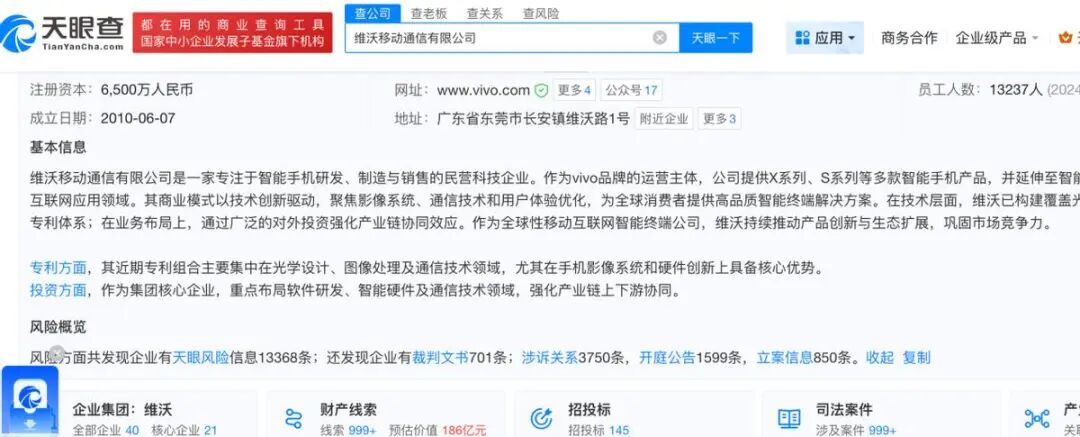
As mentioned in Tianyancha APP's recent references to vivo's X series flagship phones, except for the top-tier Ultra version using Snapdragon chipsets, the rest are equipped with Dimensity flagship chipsets that vivo and MediaTek have been deeply tuning and jointly defining, efficiently matching the self-developed OriginOS system to bring users many unique experiences.
Honor has also been focusing on AI phone experiences, aiming to open up a new high-end path...
But the problem is that when it comes to the mid-range mobile phone market now, it seems that brand manufacturers have forgotten this approach.
With uncontrollable rises in upstream hardware costs, mobile phone brand manufacturers need to meet price increase demands and achieve market breakthroughs under limited resource conditions, almost identical to the situation Huawei faced at the time.
So, besides adding or subtracting hardware features, can ov, Xiaomi, and Honor also focus on other technologies and experiences? They need to make users feel that the product price increases are justified by bringing a more matching product experience, rather than simply raising prices to digest costs.
For example, Huawei's newly released nova 16 series (excluding the 16z) not only features the Kirin 9 series chipset across the board but also further devolves configurations like periscope telephoto lenses and Red Maple imaging, originally seen in the flagship Mate series, to the mid-range market.
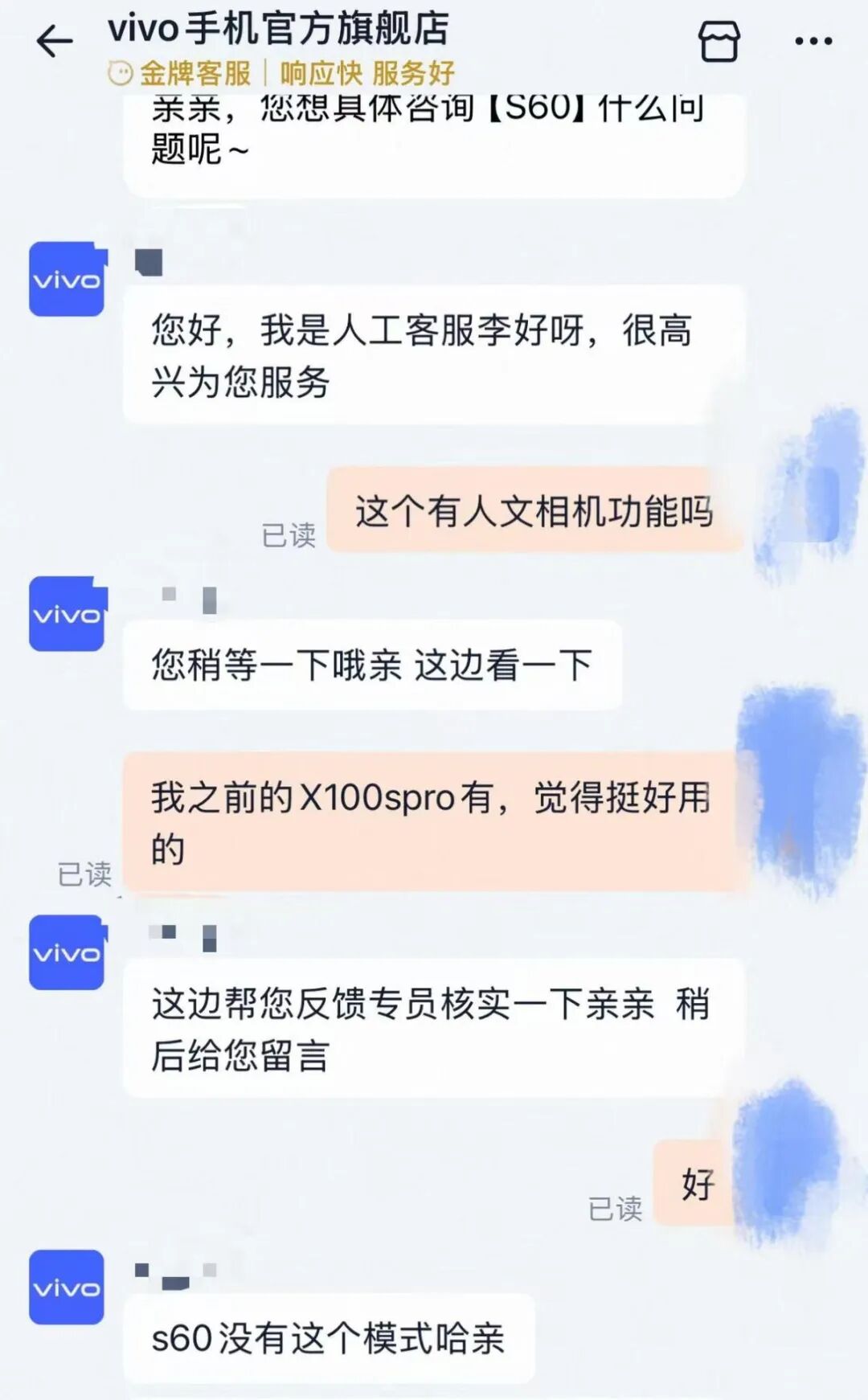
In response, could vivo also iterate and distinguish innovative features like the 'Humanistic Camera' from its X series flagship phones and devolve them to the s60 series?
Or, for example, the live dynamic images that OV have been emphasizing, making users pay for emotional value—isn't this a similar logic?
It's just that the barrier to this feature is relatively low, making it difficult to generate significant premium space currently.
But this also proves a point: Given the inevitable trend of price increases in the mobile phone industry, is it worth trying to use high-end mobile phone strategies to break through the mid-range market dilemma?
 'Superficial Glamour' and 'Substantial Thickness' Are Less Important Than a 'Solid Foundation'
In fact, the growth pressure in the current mobile phone industry is not just due to the cost impact of rising memory prices but, more critically, because it strikes at the 'Achilles' heel' of the mobile phone's core value chain.
For a long time, the domestic mobile phone industry has followed a development model of 'low-end for market share, mid-end for profits, and high-end for brand image.'
Among these, cost increases have a relatively minor impact on the high-end mobile phone market. In fact, moderate price increases for flagship products can not only effectively cover newly added (new) costs but also enhance the brand's high-end image.
Additionally, with the existence of major sales events like 618 and Double 11 in the consumer market, if necessary, the overall impact of price increases on sales can be smoothed out.
Of course, in reality, except for Huawei and Apple, the high-endization performance of other domestic brands has been relatively average.
Even if some mobile phone manufacturers have made progress, it is still challenging to obtain significant brand premiums overall.
The main reason is that without a sufficiently large differentiated advantage among ov, Xiaomi, and Honor, relying solely on feature stacking in the fierce competition for high-end status makes it difficult for any brand to consistently lead the pack.
So, for ov, Xiaomi, and Honor, the current upstream price increases will not significantly impact the 'face' of high-endization or bring unexpected market imagination. Overall, it mainly serves to 'establish a brand image.'""In contrast, the mid-to-low-end mobile phone market, the 'substance,' is suffering.
Users in this market segment are more price-sensitive and keen on pursuing cost-effectiveness, making them more susceptible to the impact of price increases and more likely to drag down brand manufacturers' annual performance.
However, the good news is that if we adopt the strategy of 'using high-end strategies to break through the mid-to-low-end market' mentioned earlier, ov, Xiaomi, and Honor can still grow and strengthen their 'substance' at this time.
Even if some market voices believe that this wave of memory price increases will continue until at least 2027 or even longer, each manufacturer has accumulated many 'ace cards' on their path to high-endization.
For example, vivo's five 'Blue Technologies' and unique innovations like the Humanistic Camera, or Honor's Alpha Strategy and self-evolving AI agents.
Many of these innovations are not reflected in hardware but in software, systems, and algorithms. The cost of devolving them is relatively low, but the improvement in user experience is significant.
Therefore, the key lies in who is more willing to devolve some innovative technologies and functional experiences exclusive to high-end phones to the mid-to-low-end market faster. Whoever does so is more likely to safeguard their future performance baseline.
Of course, a new issue may arise here: the problem of technological reserves.
If brand manufacturers only have a few tricks and fail to introduce new innovations, once their core differentiated technologies are devolved, they may lose their high-end brand narrative.
This severely tests each manufacturer's technological reserve and innovation capabilities.
At least currently, Huawei seems to be following such a path—rapidly iterating technologies from satellite communication to Red Maple imaging and StarFlash, and devolving them to the mid-range nova series.
As for how many trump cards other domestic mobile phone brands hold?
We do not know yet, but if they can control the pace of devolution and innovation speed, even if they start exerting effort now, they may still achieve a perfect relay race of iterating high-end new technologies while rapidly devolving them to the mid-range market in the future...
In short, while the growth challenges in the current mobile phone industry are undeniable, it has not completely lost its imagination.
New stories are unfolding, and new logics are taking shape.
Amidst the ebb and flow, only those brands that truly understand user needs and focus on experiential innovation can navigate through cycles and embrace their moment of glory.
-
Ofilm Teams Up with ADSensE to Propel Large-Scale Deployment of All-Solid-State LiDAR Powered by ADS6311 Chip!
-
![]()
Loss of 2.5 Billion Yet Facing Strong Demand for Shares? Another Battle for Control of Lianchuang Electronics
-
![]()
Huawei’s Enjoy Series Flies Off the Shelves, Prompting Xiaomi to Double Down on Budget Smartphones
-
![]()
Beijing Hyundai's Top Executive Criticizes Industry Disorder: Certain Brands Treat Customers as Beta Testers
-
![]()
The domestic mobile phone market has declined for five consecutive quarters! Huawei defies the trend with significant growth: maintains its top market share
-
Annual Revenue Surpasses 3 Billion: An Automotive Trim 'Little Giant' Makes Its Debut on the Beijing Stock Exchange
-
![]()
The Space Force Wants to Spend $30 Billion on Rocket Launches: Is Trump Doubling Down, and Is SpaceX the Big Winner?
-
![]()
Going Crazy! One out of Every Three Plug-in Hybrids Sold in Europe is a Chinese Vehicle