ANNTO Restarts IPO: Midea’s Dual Play in Capital Markets and AI Innovation
 06/22 2026
 377
377
Reported by Cao Anxun in Guangzhou for Sing Tao Daily
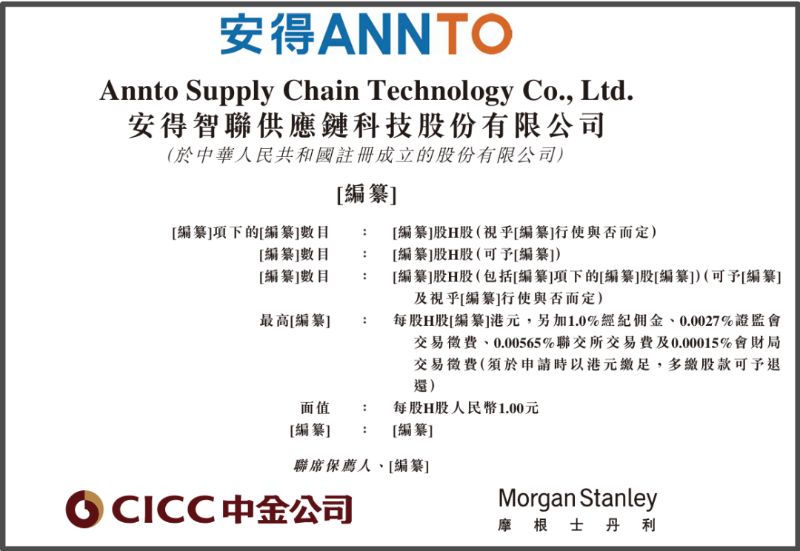
On June 16, Midea Group unveiled plans to spin off its logistics arm, ANNTO, for an independent listing on the Hong Kong Stock Exchange, following an updated prospectus submission. This move signals Midea’s strategic pivot toward expanding its B2B footprint.
ANNTO, once confined to home appliance logistics, now serves automotive parts, new energy, FMCG, home furnishings, and other sectors, positioning itself as a leading domestic provider of intelligent logistics solutions. However, beneath its impressive growth trajectory, market skepticism lingers over its ability to operate independently. Deeper still, this IPO serves as a litmus test for Midea’s ambition to evolve from a home appliance giant into a global technology conglomerate.
Inseparable from Midea
Prospectus data reveals ANNTO’s revenue climbed steadily from RMB 16.224 billion in 2023 to RMB 18.663 billion in 2024 and RMB 21.452 billion in 2025, marking a 14.9% YoY increase in 2025 and a 15% CAGR over three years.
Net profit attributable to shareholders also rose annually, from RMB 288 million in 2023 to RMB 449 million in 2025, though gross margin dipped slightly from 7.3% in 2024 to 7.1% in 2025.
Despite these figures, market caution persists, with investors questioning ANNTO’s operational autonomy. As Midea’s logistics arm, ANNTO relies heavily on its parent company: from 2023 to 2025, Midea accounted for 36.6%, 41.1%, and 39.6% of ANNTO’s total revenue, respectively. Moreover, Midea Group, through its wholly-owned subsidiary Midea Zhilian, holds a 52.94% stake in ANNTO. The He Xiangjian family, Midea’s controlling shareholders, already oversee nine listed entities; ANNTO’s IPO would mark their tenth.
Logistics, a “low-margin, high-volume” industry, thrives on economies of scale and operational efficiency. ANNTO’s competitive edge stems largely from Midea’s internal business support. The capital markets’ primary concern is whether external clients will embrace its pricing and service standards post-listing.
This isn’t Midea’s first attempt to list its logistics unit. In 2009, ANNTO Logistics aborted an IPO due to excessive related-party transactions with its majority shareholder. In July 2023, Midea revived plans to spin off ANNTO, initially targeting the Shenzhen Stock Exchange before pivoting to Hong Kong in April 2025, citing strategic alignment.
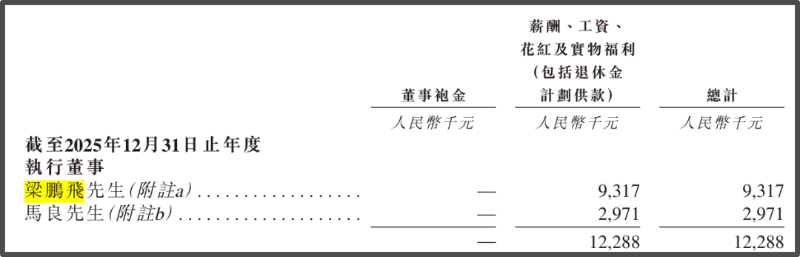
ANNTO’s leadership team also bears a strong “Midea imprint.” Executive Director, Chairman, and CEO Liang Pengfei, 48, joined ANNTO in July 2019 after nearly two decades at Midea, where he spearheaded strategic planning, business development, and management across smart home, industrial technology, and corporate reform. His compensation rose 6% YoY to RMB 9.317 million in 2025, reflecting ANNTO’s growth.
CFO and Board Secretary Ma Liang, a 10-year Midea veteran, saw his 2025 compensation jump 24.4% YoY to RMB 2.971 million. Non-executive directors Liu Xiao, Luo Wenhui, and Chen Lihong, with 8–20 years at Midea, further cement the parent company’s influence. Among ANNTO’s nine directors, five hail from Midea, fueling investor concerns over decision-making independence.
For ANNTO, proving itself as an independently competitive logistics technology provider in capital markets will be critical. Shedding the “Midea-dependent” label and navigating marketization will demand a painful transformation.
Midea Accelerates Transformation
China’s home appliance industry has entered a phase of stagnant growth, squeezed by a real estate downturn, faded subsidy policies, and intensified price competition from tech entrants like Xiaomi. Midea Group Chairman Fang Hongbo acknowledged at a recent shareholders’ meeting: “The appliance sector offers limited added value. To advance, firms must upgrade to high-value products.”
Midea has responded with aggressive capital maneuvers, spinning off vertical businesses to unlock independent valuations, reduce internal capital ties, and secure dedicated financing. Simultaneously, it has made AI a cornerstone of its transformation.
In March 2025, Midea’s shareholder letter highlighted AI as a disruptive force, announcing its shift to an “AI+” global tech conglomerate. It pledged RMB 60+ billion over three years for frontier R&D, focusing on AI applications in smart homes, manufacturing, offices, and industrial digitalization. “To survive industry cycles, Midea needs a ‘second curve,’ but exploration comes with risks,” Fang admitted.
On June 10, Midea signed a strategic pact with Alibaba to co-develop “whole-home smart + AI large models + commercial ecosystems.” Midea Chairman Fang Hongbo appeared alongside Alibaba CEO Wu Yongming, underscoring the collaboration’s significance.
WeChat’s recent AI ecosystem expansion, which Midea joined as a beta tester, further aligns with its smart home ambitions. These moves, coupled with Midea’s “Global Partner Plan” for overseas growth, industrial B2B revaluation, and shareholder returns, propelled its shares to a five-year high of RMB 85.35 on June 11.
Founded in 1968 as a plastic bottle cap workshop in Shunde, Midea has undergone four transformations: scale expansion, organizational streamlining, global M&A, and digital innovation. It has weathered industry price wars and demand shocks from real estate slumps and weak consumption.
Now, leveraging capital tools and AI investment, Midea aims to redefine itself at the intersection of traditional manufacturing and AI technology. However, rapid capital expansion risks governance complexity and brand dilution, while AI integration faces challenges like low ROI and talent shortages. Whether this dual-track strategy can sustain long-term value remains to be seen.
-
![]()
What's the Use of Having a General-Purpose Motion 'Cerebellum' for Humanoid Robots?
-
![]()
Volkswagen Starts Operating at a Production Capacity of 9 Million Vehicles
-
![]()
Interpretation of China's Auto Market in May: A Fig Leaf, Two Fault Zones, and Three Surprises
-
![]()
China's Auto Industry Accelerates Expansion in Spain: From Vehicle Sales to 'Local Manufacturing in Europe'
-
![]()
Momenta | Going Public Not for Money
-
![]()
How Much Can Doubao Make by Charging Fees?
-
Futahe Passes the Review! A Chinese Factory's 'Reverse Globalization' Journey from Shenzhen to Mexico | A-Share Financing Flash Report
-
![]()
Trancom Credit Technology’s 886 Million Yuan Acquisition of Weiyu Tiandao: Five Key Concerns in a ‘Self-Rescue’ Related M&A Deal | A Lightning Rod for Scrutiny