StepOn Stars Caught Between Two Fronts
 07/16 2026
 419
419
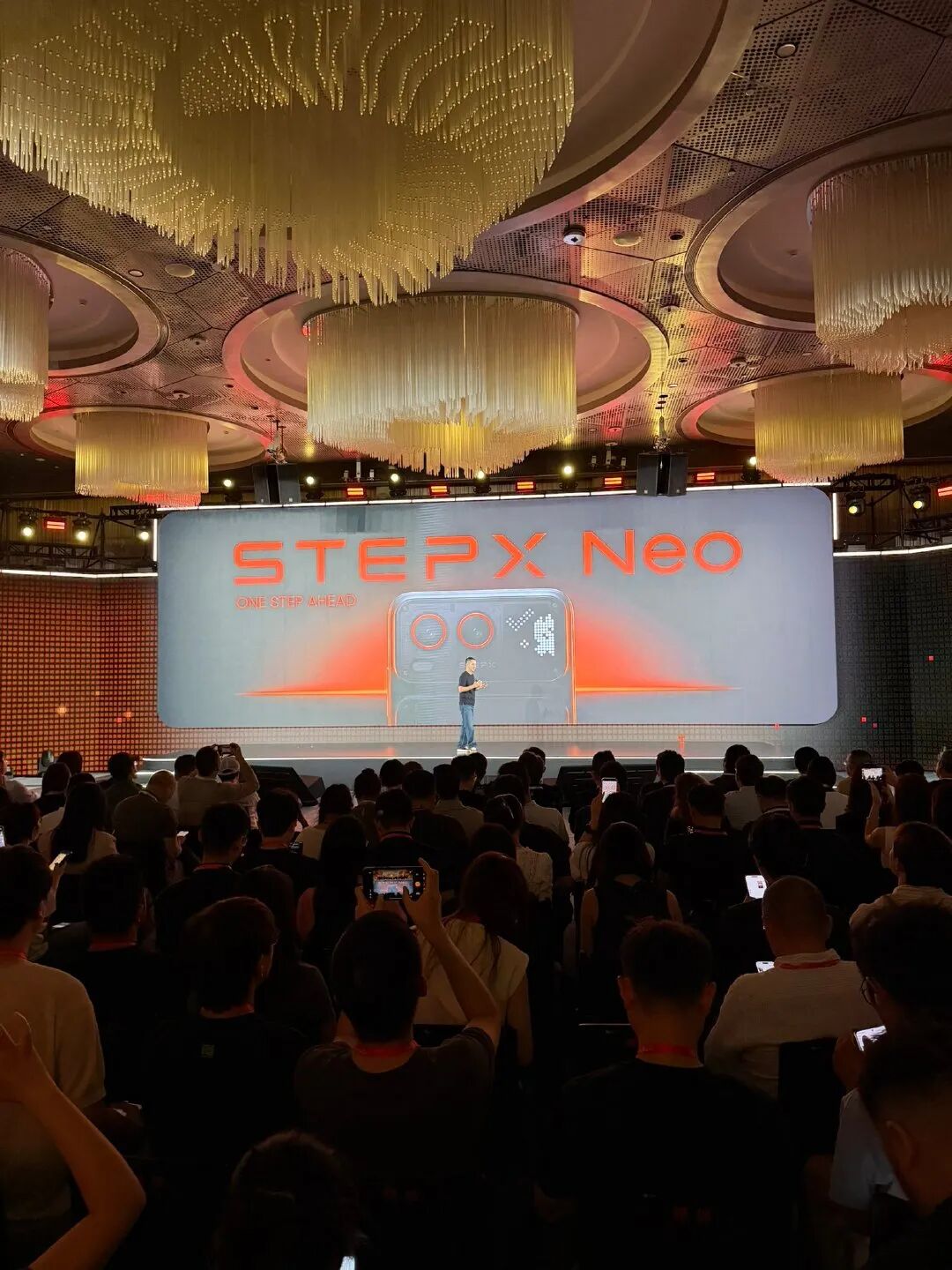
On the evening of July 13, in Shanghai, Yin Qi displayed three lines of text on the big screen at the StepOn terminal launch event:
“If we start too late, there’s no point in starting at all. If we start too early, we might end up wasting our efforts. If we don’t start, there will be nothing left for the future.”
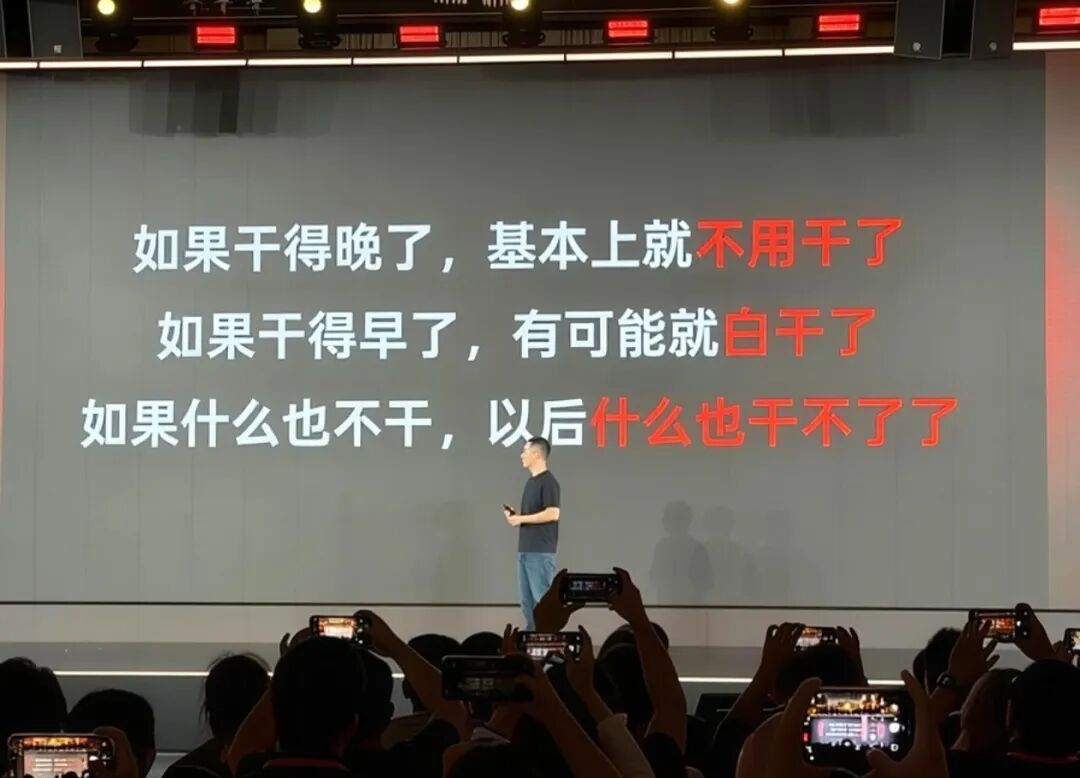
What followed was a suite of new names: the terminal brand STEPX, the intelligent agent system Step AOS, the personal intelligent agent Amoo, and the STEPX Neo, dubbed the “large model-native intelligent agent phone.”
But the audience couldn’t get their hands on the phone. There was no demo zone, no hands-on demo, and no details on pricing, specs, or release date were announced. The real device only briefly appeared on stage, with StepOn promising that the first public experience would come at the World Artificial Intelligence Conference on July 17.
Today, two pieces of bad news emerged.
In the early hours of July 15, multiple media outlets cited Bloomberg reporting that DeepSeek had initiated preparations for an A-share IPO, potentially submitting its application as soon as this year with a target to list on the capital markets by 2027. That same afternoon, China’s Cyberspace Administration published filing [filings] for seven on-device generative AI services, with “Apple Intelligence” appearing on the list. Yicai subsequently reported that the applicant was Apple Technology Development (Shanghai) Co., Ltd., targeting iPhones in China, with Alibaba listed as a partner.
Neither development has reached its conclusion. DeepSeek has only been reported to have begun preparations—not filed or listed on the same day—and the company has not publicly responded. Filings also do not mean Apple Intelligence has fully launched on iPhones in China. Apple’s official website still notes that the China launch depends on regulatory approval, with new features like Siri AI still unavailable.
But capital markets won’t wait for all products and listing procedures to be finalized before adjusting their benchmarks.
The simultaneous appearance of these two developments inadvertently struck at the two most critical expectations for StepOn Stars ahead of its listing: large models and AIOS.
DeepSeek entering the IPO queue weakens StepOn’s appeal as a “rare listed large model player”; Apple clearing the on-device filing threshold reminds the market that when competition shifts to operating systems, the most advantageous players may not be model companies but those who already own the OS.
This is StepOn’s “instant takedown.” What’s being taken down isn’t just product experience but the timing window for StepOn to secure both model and terminal premiums before listing.
Yin Qi had no choice but to act
Interpreting STEPX as merely a large model company’s crossover [crossover] impulse would underestimate Yin Qi’s seriousness.
As early as 2019, while leading Megvii, Yin Qi placed IoT OS at the center of the company’s strategy. By 2022, he had refined “algorithm-defined hardware” as Megvii’s core product philosophy: algorithms, software, and applications ultimately need to find matching hardware carriers. Years later, facial recognition has been replaced by large models, but supply chains and terminals remain his answer.
This January, Yin Qi became chairman of StepOn Stars, overseeing strategic pace and technical direction. Within six months, the phone, system, and intelligent agent debuted together. This wasn’t a spur-of-the-moment trend chase but a long-planned self-rescue.
Independent large model companies are facing an increasingly practical problem: No matter how strong their models are, if they can only enter others’ phones via APIs or pre-installed features, user demand is received by phone makers, services are distributed by apps, and data and transactions remain in others’ systems. The model company completes an inference, collects a per-call fee, and then exits the scene.
Yin Qi doesn’t want StepOn to stop there.
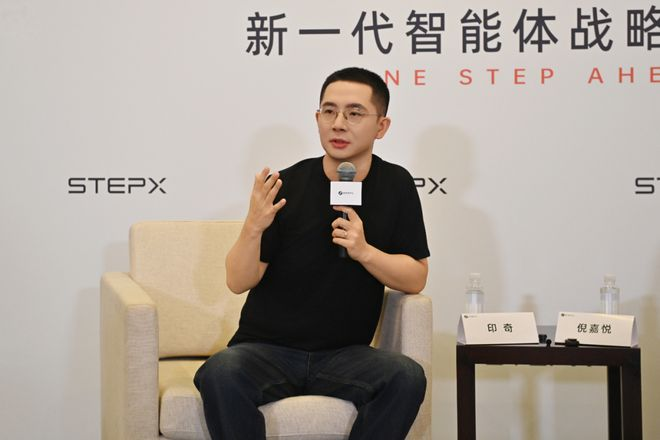
In post-launch media interviews, he said that if StepOn couldn’t pioneer innovative terminals, Step AOS would struggle to form a value loop or truly reach consumers. StepOn had already supplied on-device models to phone and car infotainment system makers, with over half of China’s smartphone manufacturers collaborating, according to the company. But models, operating systems, and intelligent agents rarely coexist seamlessly in a single existing device.
So StepOn decided to build its own prototype first.
This is also key to understanding Step AOS. It’s not a new phone OS rewritten from the kernel, detached from Android. Yin Qi defines it as “the layer atop all future on-device OSes,” backward-compatible with Android, Linux, and RTOS. Ni Jiayue, president of StepOn Terminals, put it more bluntly: This generation of phones reconstructs Android; if the next product uses Linux, they’ll reconstruct Linux.
What it aims to transform is the chain through which intelligent agents execute tasks.
When a user says, “Schedule a trip to Hangzhou for next week’s meeting,” Amoo needs to understand intent, read calendars and historical preferences, search for tickets and hotels, invoke maps and travel services, complete payment after user confirmation, and write the itinerary back to the calendar. If the task changes, it must know how far it had progressed, which actions can be undone, and which information should be forgotten.
To achieve this, Step AOS attempts to tear down three walls: Unified scheduling of CPU, GPU, and NPU to solve on-device computing; cross-file, app, and device semantic data and long-term memory; and disaggregating systems and app capabilities like communications, maps, payments, and travel into services agents can invoke.
This design isn’t empty. StepOn also announced the on-device model Step Edge, emphasizing local processing for simple tasks and cloud delegation for complex ones, while proposing on-demand permission requests, auditable, traceable, and revocable operations. It captures the truly difficult part of AI phones: not adding another chatbox but granting models persistent memory and actionable capabilities.
But as of July 15, Step AOS’s maturity remains accurately described as “system solution plus prototype validation.” StepOn hasn’t announced retail timing or a full open-source repository, license, and compatibility list. Its product roadmap calls for a first public display on July 17, co-creation with Bilibili creators on August 20, and an “Agent Playground” roughly 100 days later.
Even its business model awaits validation. Yin Qi ruled out the two most common smartphone monetization methods: not relying on hardware margins or long-tail app pre-install ads. He hopes hardware will merely serve as a container, with revenue ultimately flowing to Agent services and token consumption.
In other words, STEPX carries a far heavier mission than just selling phones. It must prove three things for StepOn: Model companies can secure system access, intelligent agents can drive high-frequency service consumption, and this closed loop [loop] can ultimately support a new company valuation.
The initiative doesn’t rest with StepOn
This is precisely where the problem lies.
Having Amoo arrange a Hangzhou trip sounds like a simple natural language interaction, but behind it lies a chain involving OS permissions, third-party service interfaces, account and payment authorizations, order status synchronization, and failure liability handling. StepOn can plan the task elegantly but cannot unilaterally decide most links in this chain.
First, system permissions.
On its own STEPX phone, StepOn can grant Amoo a system-level identity, allowing it to run in the background, read authorized data, invoke files and notifications, and manage task intermediates. But a new phone without formal sales has no user base yet.
If Step AOS is installed on Honor, OPPO, or ZTE devices, StepOn gains instant access to more users. But what phone makers must surrender is precisely the most valuable aspect of next-gen phones: default AI access points, user intent, service distribution, and partial data control.
Building its own phone gives StepOn the keys but no residents; entering others’ phones lets it reach residents but not necessarily the full set of keys.
Google’s ongoing AppFunctions project encodes this power dynamic in a single permission name. According to Android documentation, apps can register their functions as tools callable by the system and intelligent agents, but callers need the EXECUTE_APP_FUNCTIONS permission. As of May 2026, AppFunctions integration with Gemini remained limited to trusted testers.
Who becomes a trusted system agent is decided by Android platforms and device makers, not self-proclaimed by model companies.
Apple’s App Intents does something similar. Developers expose app operations to Siri, Shortcuts, and system search, which Apple then strings together with screen understanding, personal context, and cross-app execution. Apple doesn’t need to persuade iPhone makers to surrender access points—because the iPhone maker is Apple.
Now, third-party apps.
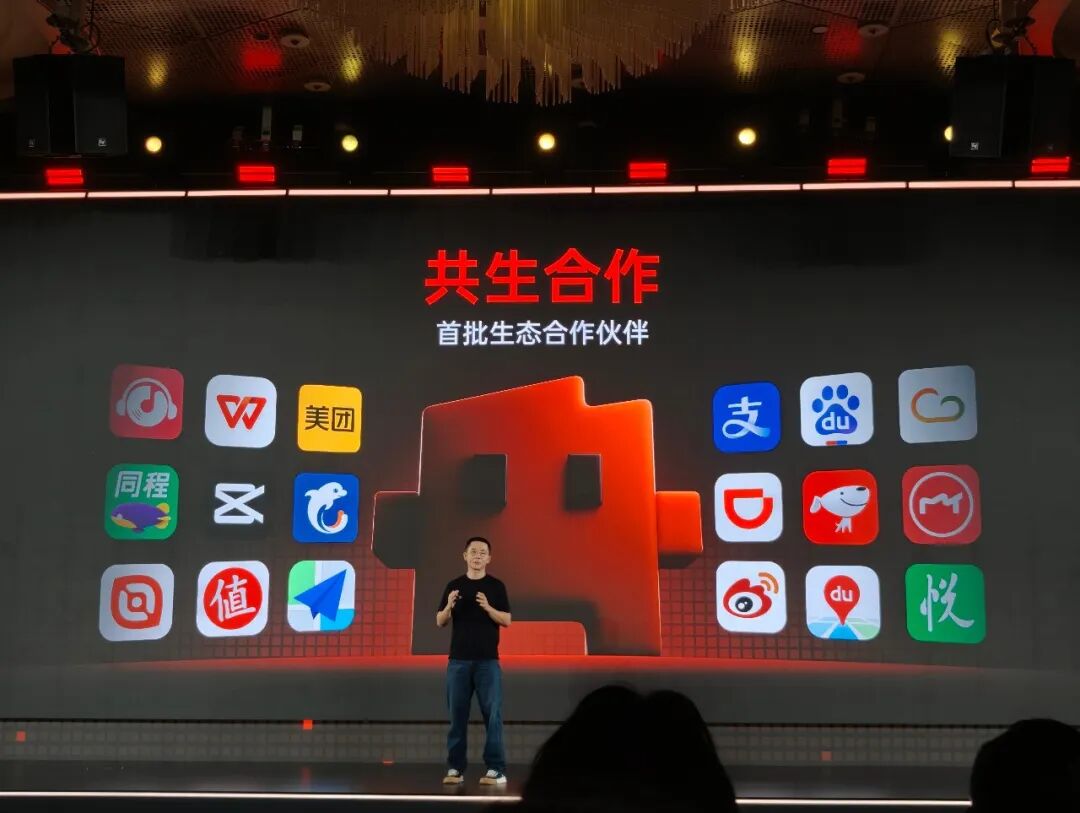
StepOn didn’t follow the GUI route of simulating finger taps. Its initial partners include Alipay, Meituan, Ctrip, AutoNavi, JD.com, Didi, WPS, CapCut, and Weibo, with capabilities accessed through bilateral interfaces. This is more stable than having AI mimic finger operations on apps and easier to manage security, account, and data boundaries.
But obstacles remain.
Is Meituan willing to let Amoo handle not just searches but also bookings and refunds? If Alipay allows payment completion, who owns pre-payment recommendations and post-payment order data? If a travel plan fails, should users hold StepOn, the phone maker, or the service-providing app responsible?
Each step forward ceases to be merely technical adaptation but becomes a matter of profit distribution.
Super apps have spent over a decade keeping users on their homepages, search bars, and recommendation feeds. If system agents directly intercept demand, apps risk fall back to [retreating] from user gateways to backend service providers. They’re happy to gain extra orders but unwilling to surrender user intent before orders and data relationships after.
Notably absent from the initial partner list are WeChat and Taobao. Though Tencent is a StepOn shareholder, and Yin Qi said they’ve held in-depth discussions, shareholder status doesn’t automatically convert to WeChat interface access. For a phone meant to handle daily life, this gap is hard to circumvent.
Finally, money.
Yin Qi’s envisioned token business model requires users to delegate enough daily tasks to Amoo. More tasks mean more model calls and service revenue shares, allowing StepOn to bypass hardware margins and build sustainable income.
But high-frequency tasks need deep app interfaces, and app openness depends on how many users StepOn can deliver. StepOn needs users to secure interfaces but needs interfaces to convince users to buy the phone.
This is a classic cold start in a nearly full market. IDC’s preliminary data shows China’s smartphone shipments at ~66 million units in Q2 2026, down 4.3% YoY and declining for five consecutive quarters. The top six vendors command ~96% market share. StepOn isn’t entering a new frontier but adding chairs to an already full table.
StepOn isn’t without opportunities.
Step AOS could open-source and become a cross-brand neutral intelligent agent system layer, with STEPX serving as a reference design to prove model-system-hardware synergy. Terminal industry capitals like Huaqin, Longcheer, OmniVision, and ZTE are already StepOn shareholders, and the company has cultivated phone maker partnerships. With Chinese phone makers competing against each other and wary of internet giants seizing access points, demand exists for an Agent system layer independent of Google and super apps.
But this lifeline requires StepOn to make a painful cut.
Phone makers must be able to adopt Step AOS without using Amoo, replace StepOn’s models, and decide how data and token revenue are allocated. STEPX also cannot be seen by partners as a competing phone for the same user base.
If StepOn insists on controlling phones, agents, models, and token deals while also positioning as neutral infrastructure, partners will struggle to believe it only wants to help.
Yin Qi might build a beautiful showhome. The challenge is persuading other phone makers to move their families in.
Both premiums are thinning
This ultimately circles back to StepOn’s listing timeline.
In February, Caijing reported that StepOn was advancing Pre-IPO funding, aiming to file with the HKEX by June 30 with a cornerstone [cornerstone] valuation around $10 billion and targeting a listing within the year. StepOn didn’t respond at the time.
Subsequently, StepOn completed Joint stock reform [joint-stock transformation] in April; in May, multiple media outlets reported it would close a ~$2.5 billion funding round and dismantle its red-chip structure. The most prominent new investors weren’t just Hong Kong Investment Management Corp. but also Huaqin, Longcheer, OmniVision, ZTE, and other phone and consumer electronics chain companies. In June, rumors emerged of a secret filing, though possible under confidential submission rules, with no complete prospectus verifiable through public channels.
By July, STEPX and Step AOS finally debuted.
Viewed together, the AI phone is hard to interpret as merely a product experiment beyond the listing narrative. It’s StepOn’s most visible incremental expectation pre-listing and the largest imagination space Yin Qi can create for the company.
The reason is pragmatic.
According to figures previously obtained by Caijing, StepOn’s 2025 revenue approached ~500 million yuan, with ~1.2 billion yuan expected in 2026. Lotus Holdings [Lianhua Holdings], an listed company, cautioned in its investment announcement that StepOn remains “heavily loss-making,” though specific financials are commercially sensitive and undisclosed.
These figures haven’t been confirmed by StepOn’s public prospectus, so precise valuation calculations are impossible. But relying solely on existing revenue and model calls, StepOn would struggle to justify a $10 billion capital expectation. It must prove to markets that it’s not just another model supplier but could become the next-gen terminal gateway and intelligent agent service platform [service platform].
STEPX is that identity upgrade card.
Model suppliers are priced based on revenue, call volume, model capabilities, and customer quality; system platforms can highlight default access points, service distribution, transaction commissions, user memory, and cross-device networking. Selling a smartphone is not just about selling hardware—it could also mark the beginning of Step's access to users, data, and Token revenue.
Before news of DeepSeek's IPO plans emerged, this upgrade card held another layer of value. Zhipu and MiniMax are already publicly listed, and Step has long been considered a candidate for the 'third major large model stock.' While there are many model companies, few basic model companies have access to public market trading—a scarcity that inherently creates a premium.
On July 14, Bloomberg, citing people familiar with the matter, reported that DeepSeek has begun planning a domestic listing, aiming to submit an application as soon as later this year and go public in 2027. At the same time, the company is seeking a new round of financing at a valuation of at least RMB 480 billion. DeepSeek did not respond to the report, and the timeline and valuation remain subject to change.
So, the accurate statement is not 'DeepSeek is going public today,' but rather that the capital markets suddenly see DeepSeek—with greater influence and a stronger open-source brand—entering the IPO queue.
This may not immediately suppress Step's valuation. If DeepSeek successfully goes public, it could further elevate attention across China's entire large model sector; moreover, the investor structures in A-shares and Hong Kong stocks are not entirely identical. However, it would diminish Step's scarcity and alter the questions investors ask during roadshows.
Previously, Step could be seen as one of the few tickets to a basic model listing after Zhipu and MiniMax. Now, investors will ask: If you want to bet on China's most influential independent model company, why not wait for DeepSeek?
Step can only push the answer further toward the terminal: because DeepSeek sells the model's future, while Step may still own smartphones, system access points, and Agent transactions.
And this very part clashed with Apple's filing on the same day.
What hurts most about Apple's filing is not that Apple is already outperforming Step today.
Apple itself has not yet completed its homework. Apple Intelligence has faced multiple delays in mainland China, with Siri AI still not officially available; the filing only proves it has cleared an important prerequisite hurdle, not that all features are approved—let alone that they will launch immediately.
But when the capital markets price expectations, they do not just look at who can demonstrate capabilities today. They also judge who is closer to scaling.
Apple's Siri AI goals, unveiled at WWDC26, highly overlap with Step's envisioned future: understanding on-screen content, leveraging personal context for cross-App searches, and completing tasks through systematic App operations. The difference is that Apple already owns the iPhone, iOS, App Intents, App Store, account systems, payment tools, and users.
IDC data shows that in the second quarter of 2026, Apple held an 18.1% share of China's smartphone market, with shipments up 24.4% year-on-year. Step's smartphone, however, still lacks a price and release date.
Step needs to simultaneously strengthen its model, edge deployment, operating system, Agent, App interfaces, supply chain, channels, users, and compliance. Apple, on the other hand, needs to focus on model partnerships, product readiness, and regulatory approval for the Chinese market.
Neither of the two announcements on July 15 directly determined the outcome, but they shifted the questions Step faces.
The old question was: Will Step be the first to create an AI-native smartphone?
The new question is: Facing DeepSeek above and Apple, Huawei, and Android smartphone makers beside it, how many devices can Step sell, how deep can its interfaces penetrate, and how many users can it prove are willing to pay continuously for Agents?
The first question rewards imagination; the second demands data.
If Step cannot produce this data before going public, the capital markets will likely reclassify it: in the model dimension, it is just another basic model company besides DeepSeek; in the terminal dimension, Step AOS is merely an Agent middleware layer atop Android, and STEPX is just a reference device. Both premiums Step hopes to secure could shrink.
Worse, the smartphone, originally used to raise expectations, might ultimately become a new business line in the prospectus that requires sustained investment without proven demand.
This is the true meaning of 'getting eliminated the moment you show your head.' DeepSeek takes away the scarcity of model targets; Apple takes away the certainty of system access points. Step originally wanted to use smartphones to elevate itself from a model company to a platform company but now faces two answers that are easier for the capital markets to understand before going public.
When Yin Qi said, 'If we don't act now, we'll never get the chance,' this anxiety was not exaggerated. If model companies forever reside in others' terminals, they will indeed struggle to secure the next round of distribution rights. Step's willingness to take the field first also deserves more serious attention than AI phones stuck in PPTs.
But being directionally correct does not equal having already qualified.
In the coming days, the outside world needs to see not whether Amoo can complete a carefully prepared demonstration but the success rate of continuous tasks, the ability to undo and refund after failures; after August 20, whether creators receive a system that allows free Agent construction or a controlled prototype; and after 100 days, whether STEPX announces a price, channels, and a real launch plan, and whether any mainstream smartphone maker fully adopts Step AOS.
If Step can answer all three questions, STEPX could become a successful reference device, and Step AOS might become a neutral system infrastructure. Step would still have a chance to prove that model companies are not destined to work for smartphone makers.
If it cannot, the greatest value STEPX leaves behind might be just a pre-IPO poster.
Yin Qi is fighting for a system key on behalf of model companies. But on the same day DeepSeek moves toward an IPO and Apple clears the filing threshold, the capital markets will first ask: What irreplaceable card does Step actually hold?
-
The Moment to Evaluate Montage Technology Has Arrived
-
![]()
StepOn Has Solved the Monetization Challenge of Large Models with Just a Smartphone
-
![]()
Is a Camera the New AI Safety Guardian? Hikvision Introduces Active Vision Operation Monitoring Gun-Ball Camera at WAIC 2026
-
The Second Half of AI: Cost-Effectiveness Takes Center Stage
-
![]()
Location, Concentration, and Trajectory Tracking: Hikvision’s TDLAS Gas Cloud Imaging Telemetry System Debuts at WAIC 2026
-
The 'AI Study Tour' Under the Original Equipment Manufacturer Model is Set to Create a New Wave of Internet-Famous Science and Innovation Cities
-
![]()
Now, There's a 'Basis' to Curb 'Price Wars': Future Reports of Automakers Setting Low Prices Will Be Probed Under New Rules
-
![]()
WAIC 2026: Farewell to Parameter Races, Full-Chain AI Commercialization