OnePlus Exits European and U.S. Markets, realme Withdraws from China: OPPO's 13-Year Global Strategy Comes Full Circle
 07/17 2026
 496
496
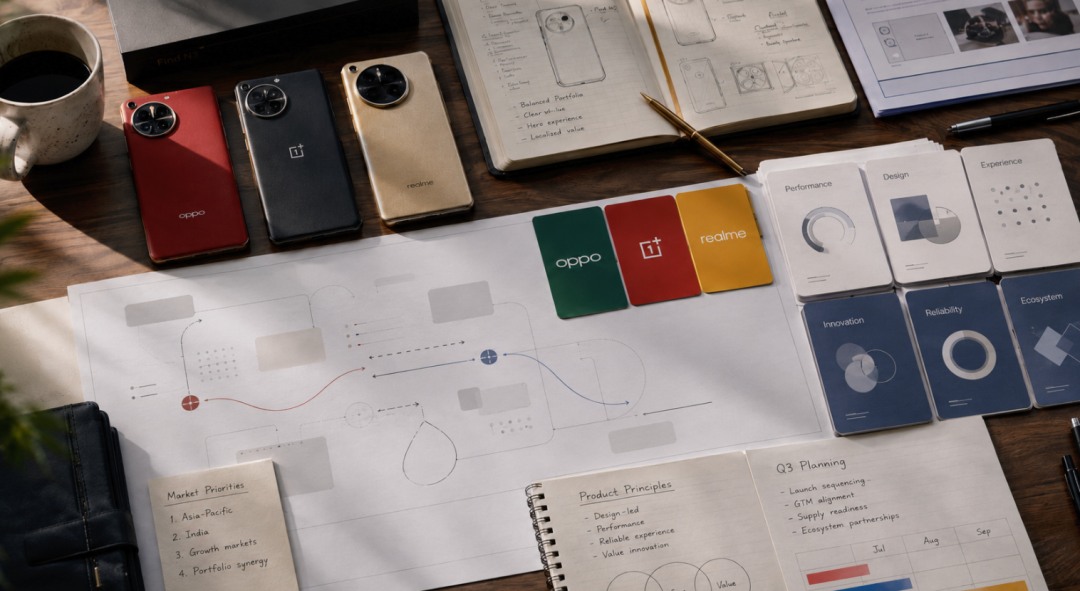
Chen Mingyong's Multi-Brand Vision Now Faces Efficiency Scrutiny from Liu Zuohu
Author|Xinjian
Editor|Xiaobai
Illustration|AI Generated
Produced by|Qiangdiao Next
Thirteen years ago, Liu Zuohu departed from OPPO to launch OnePlus in Europe and the United States. Today, he stands within OPPO's management hierarchy, overseeing OnePlus's retreat from these very markets.
On July 16, two of OPPO's subsidiary brands—OnePlus and realme—simultaneously refined their market strategies.
realme will now concentrate on overseas markets, halting new product releases in China. Meanwhile, OnePlus will cease launching new products in Europe and North America, while maintaining its product plans for the Chinese and Indian markets. OPPO will continue to provide software updates, after-sales support, and warranty services for OnePlus's existing users in Europe and the U.S.
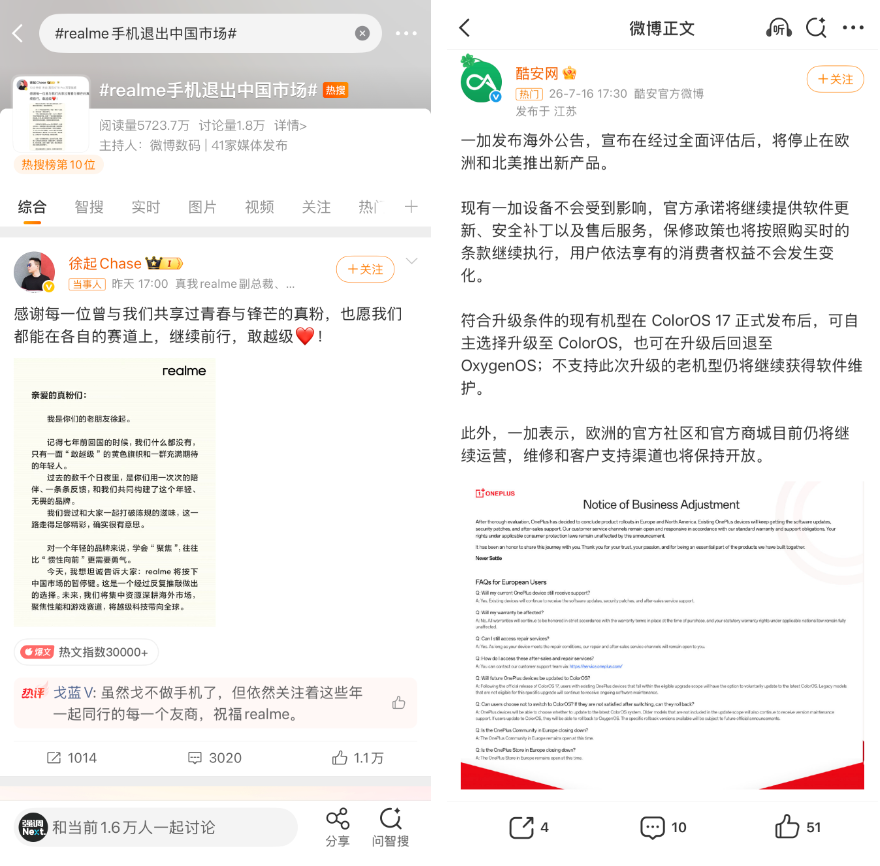
One brand exits China, the other exits Europe and the U.S.—their strategic directions are diametrically opposed.
OPPO frames this as an effort to integrate resources and enhance collaboration. Given the company's recent adjustments, this consolidation was inevitable. realme only rejoined OPPO in January of this year, while OnePlus had already completed its R&D and organizational integration with OPPO. Now, the market boundaries for both brands are being redefined.
Liu Zuohu's role is particularly noteworthy.
In 2013, he left OPPO, where he had served for years, to establish OnePlus. By 2020, he returned to OPPO as Chief Product Officer, and by 2025, he was overseeing OPPO's overseas markets. Thirteen years on, his mission has evolved from globalizing OnePlus to repositioning OPPO, OnePlus, and realme in the global marketplace.

This adjustment goes beyond merely contracting the sales regions of two brands.
OPPO's growth model, built over the past decade through multi-brand expansion, has reached a point where reevaluation is necessary.
1 · Thirteen Years After Liu Zuohu's Global Push, OnePlus Retreats to China
When OnePlus was launched, the domestic smartphone market was still expanding rapidly, but Liu Zuohu set his sights overseas from the outset.
The first-generation OnePlus One featured Qualcomm's flagship chipset, a near-stock Android system, and a restrained design at nearly half the price of mainstream flagships. This established "Flagship Killer" and "Never Settle" as OnePlus's defining labels.
Rather than replicating OPPO's strength in offline channels, OnePlus targeted the European and U.S. geek markets through its official website, community, and word-of-mouth. For Chinese smartphone companies at the time, OnePlus represented a rare experiment: a new brand without massive offline presence could still gain independent recognition in Europe and the U.S.
This strategy reached a high point in the U.S. market in 2018 when OnePlus entered the U.S. carrier channel through T-Mobile, becoming one of the few Chinese smartphone brands supported by mainstream U.S. carriers.
However, OnePlus failed to convert its niche influence into stable market scale.
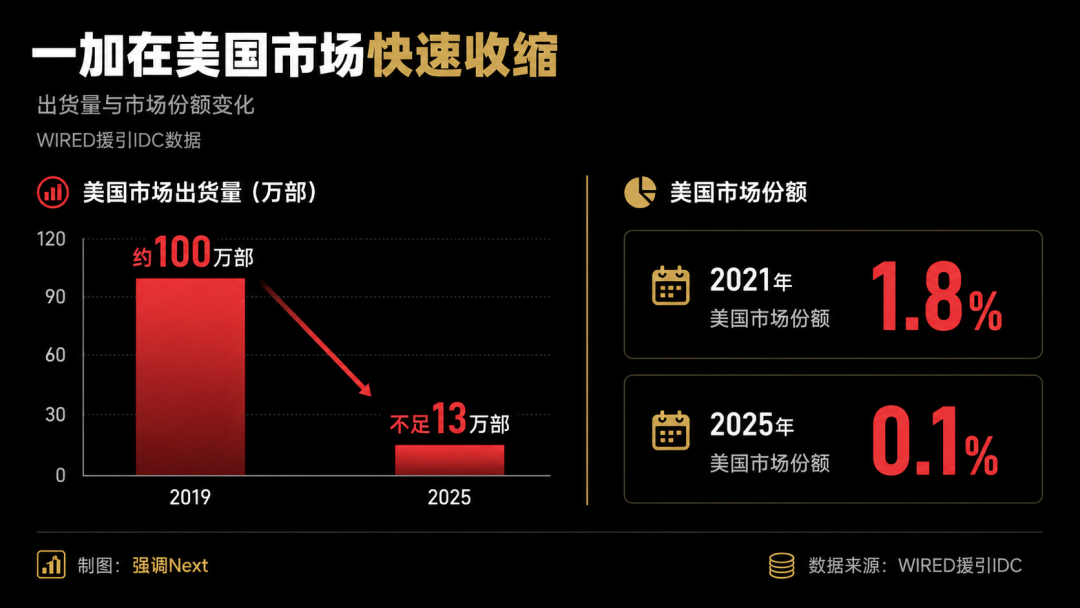
According to WIRED, OnePlus's shipments in the U.S. dropped from about 1 million units in 2019 to 130,000 units in 2025. After ending its partnership with T-Mobile in 2023, OnePlus lost its most critical gateway to the mainstream U.S. consumer market, and its online geek user base proved insufficient to sustain a complete local team.
Meanwhile, OnePlus's product positioning was evolving.
Initially, OnePlus differentiated itself from Samsung and Apple by offering low prices, high specifications, and OxygenOS, which was close to stock Android. After joining the OPPO system, OnePlus shared R&D, supply chain, and underlying systems with OPPO, strengthening product quality and after-sales capabilities but also diluting its independent brand identity.
OnePlus increasingly resembled an online performance brand within the OPPO ecosystem, making it difficult to continue operating in Europe and the U.S. as an independent challenger.
Liu Zuohu's role also transformed.
When founding OnePlus, he needed to prove that a new Chinese brand could enter developed markets. After returning to OPPO, he had to consider the entire group's R&D investment, supply chain costs, and regional returns. Whether OnePlus could remain profitable in Europe and the U.S. became more critical than the brand's "Never Settle" ethos.
From this perspective, OnePlus's exit from Europe and the U.S. was not a sudden failure but the result of years of loss mitigation.
2 · Chen Mingyong's Multi-Brand Approach Once Fueled OPPO's Growth
OPPO's current contraction cannot be viewed in isolation from past market conditions.
Under Chen Mingyong's leadership during the expansion phase, OPPO developed a clear brand division of labor: the main brand relied on offline channels, imaging, and mass-market recognition; OnePlus targeted internet users, high-performance products, and the European and U.S. markets; realme started in India and Southeast Asia, covering young users and the mid-to-low-price segment.
The three brands shared the group's supply chain and manufacturing capabilities while entering different countries, channels, and price ranges with distinct identities.
This approach was highly effective during the growth phase.
The main brand avoided frequent competition in the low-price segment, while OnePlus and realme could bypass OPPO's existing positioning to find new users. Each additional brand often opened up a new market segment.
realme was once the fastest-growing brand in this strategy.
In 2018, Li Bingzhong, former Vice President of OPPO, led realme to operate independently, first launching in India and subsequently entering Southeast Asia, Europe, and other markets. In 2019, realme officially entered China, attempting to replicate its overseas growth through online channels and cost-effective products.
The logic was clear.
OPPO's main brand dominated the offline market, OnePlus targeted geeks and high-end performance, and realme covered young users and lower price points. The three brands used similar supply chains and technology platforms but reached more consumers with different images.
When the market was growing, each additional brand often meant additional growth.
However, after the domestic smartphone market matured, the environment realme faced changed entirely. Xiaomi, Honor, OnePlus, and iQOO already dominated the online market, with products increasingly similar in price, specifications, and features. Consumers found it difficult to distinguish the essential differences between these performance brands.
realme's "gradual exit" from China was foreshadowed early on.
In January 2026, realme once again became an OPPO subsidiary, with the official reason cited as resource integration and operational efficiency. Starting April 1, realme's after-sales in China were fully integrated into OPPO's service network, and its online store subsequently stopped sales. By July, the announcement that it would no longer release new products in China merely confirmed existing adjustments.
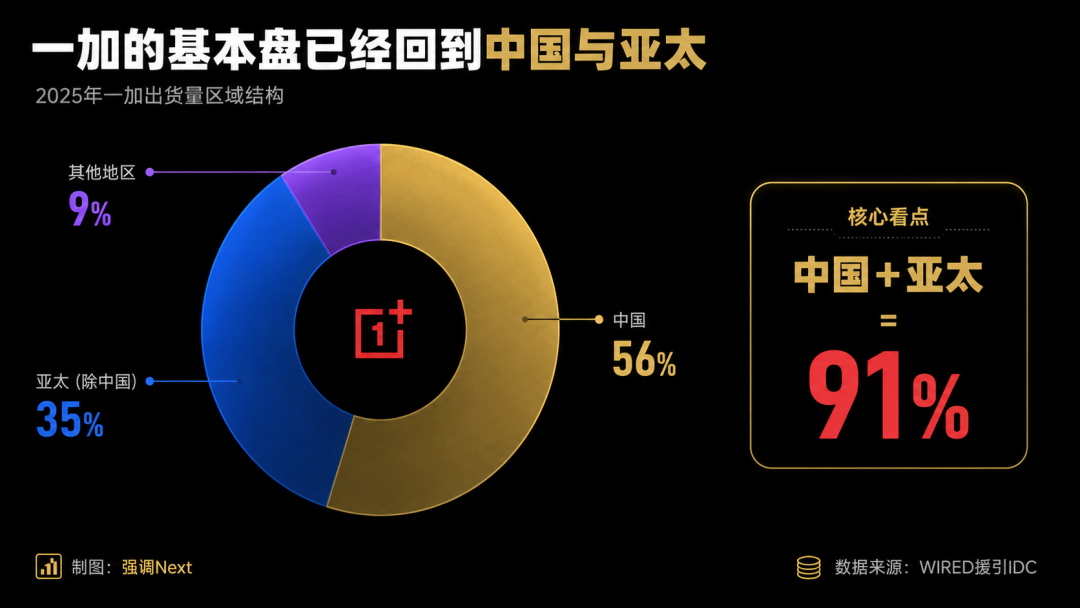
OnePlus still maintains a relatively stable user base and online presence in China for performance-oriented products, while realme's strengths lie in emerging markets like India and Southeast Asia. The two brands no longer compete simultaneously in domestic and overseas markets, and the group no longer needs to maintain multiple overlapping product, marketing, and channel teams.
Previously, the goal was to make each brand a global brand. Now, the aim is to have each brand compete only in markets where it has a higher chance of winning.
3 · Second-Quarter Data Forces OPPO to Reassess Efficiency
This adjustment comes during one of the most challenging quarters for the smartphone market.
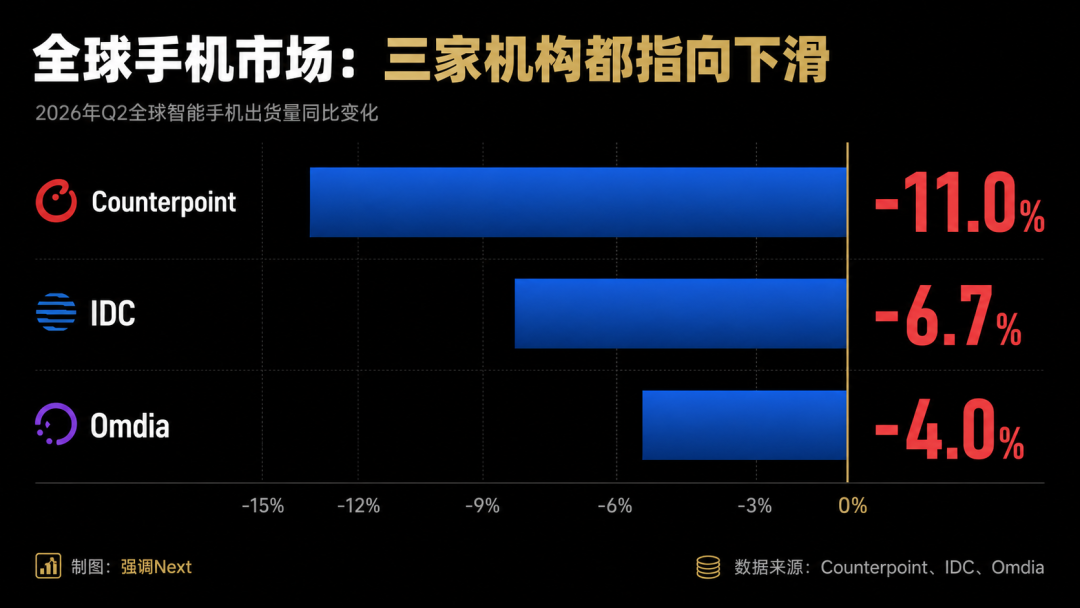
IDC data shows that global smartphone shipments in the second quarter of 2026 declined by 6.7% year-on-year to 277.5 million units. Counterpoint and Omdia reported declines of 11% and 4%, respectively. While the figures differ, the conclusion is consistent: rising memory prices are impacting the mid-to-low-end smartphone market, while Apple and Samsung are expanding their market share against the trend by relying on their high-end product structures.
OPPO finds itself in a particularly vulnerable position.
Omdia data shows that OPPO held about a 10% global market share in the second quarter, ranking fourth. In IDC's China market statistics, OPPO, OnePlus, and realme combined accounted for a 16% share, with shipments declining by 9.7% year-on-year. Notably, the OPPO data here already includes the three brands.
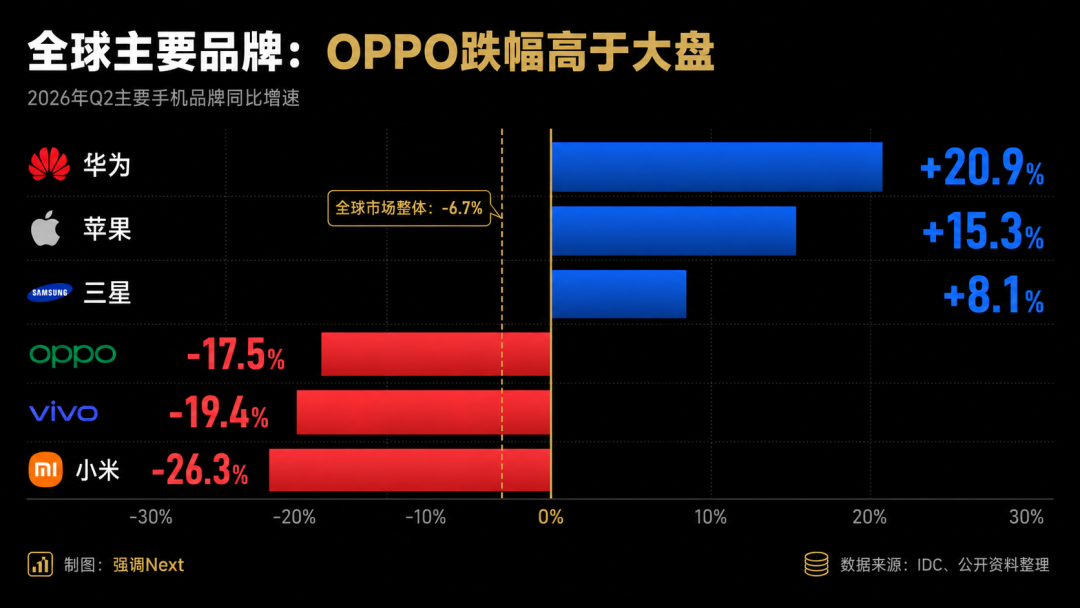
This set of data is revealing.
Even when combining OPPO, OnePlus, and realme, the three brands still declined in the Chinese market. Having an additional brand no longer translates to greater market coverage; instead, it means more product launches, marketing expenses, regional teams, and product planning.
Market space is also rapidly narrowing.
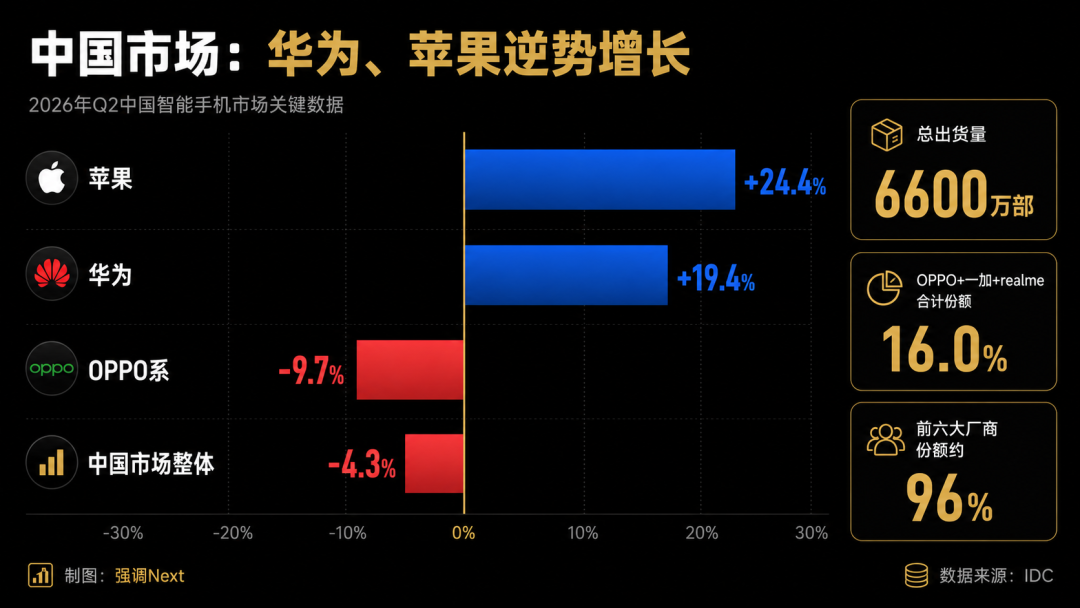
In the second quarter of 2026, smartphone shipments in China declined by 4.3% year-on-year, marking a fifth consecutive quarter of decline. The top six vendors collectively captured about 96% of the market share, with Huawei and Apple growing by 19.4% and 24.4%, respectively, while OPPO, Xiaomi, vivo, and Honor all declined.
More direct pressure comes from costs.
Omdia stated that memory accounts for over 60% of the material costs in some low-priced smartphones. These products already have thin profit margins, and with memory prices rising, manufacturers must either increase prices or reduce specifications and model offerings. Brands relying on the mid-range and mass markets face significantly higher pressure than Apple and Samsung.
The price ranges where OPPO, OnePlus, and realme most frequently overlapped are precisely the most fiercely competitive and profit-squeezed segments.
Continuing to have all three brands compete simultaneously in multiple countries makes it difficult to justify the return on investment.
4 · From Multi-Brand Expansion to a Unified Platform
Chen Mingyong's past multi-brand strategy aimed primarily at expanding coverage.
OPPO's main brand relied on offline channels and mass-market recognition, OnePlus sought high-end and overseas growth, and realme targeted young users and emerging markets. The three brands completed their tasks at different stages, helping OPPO form a product matrix covering multiple countries, channels, and price points.
After Liu Zuohu's return, OPPO's direction gradually shifted.
OnePlus shares R&D and supply chain resources with OPPO, realme's after-sales are integrated into OPPO, and future software maintenance for OnePlus devices in Europe and the U.S. will rely more on OPPO's system. While the brand names remain, the underlying product, system, and service platforms are merging.
This adjustment represents a deeper change.
OPPO no longer requires each brand to maintain full global operational capabilities; instead, it consolidates them onto a single platform: unified R&D, unified supply chain, unified services, while retaining different identities based on region and user demographics.
From an operational perspective, this reduces redundant investment and improves the efficiency of procurement and R&D resource utilization.
The risks are also evident.
After exiting Europe and the U.S., OnePlus will lose its most important chapter in brand history. It once built influence through overseas geek communities, but now, retreating to China, it could easily become just another OPPO product line emphasizing performance and gaming.
After exiting China, realme can still rely on India and Southeast Asia to maintain scale, but its product and channel overlaps with OPPO in overseas mid-to-low-end markets have not disappeared entirely.
Organizations can merge, but brand positioning is difficult to reestablish through a single adjustment.

In 2013, Liu Zuohu set out from OPPO and took OnePlus to Europe and the U.S. Thirteen years later, as OPPO's Chief Product Officer and head of overseas business, he witnesses OnePlus's departure from these markets.
This cycle cannot be simply reduced to success or failure.
It more closely resembles a milestone for China's smartphone industry: during periods of rapid market growth, a new brand could bring in new users and markets; but when market saturation and competition arrive, every brand must reevaluate how much genuine incremental value it brings to the group beyond adding another organization and budget.
This time, OPPO has chosen to retract its battle lines first.
- END -
-
The Moment to Evaluate Montage Technology Has Arrived
-
![]()
StepOn Has Solved the Monetization Challenge of Large Models with Just a Smartphone
-
![]()
Is a Camera the New AI Safety Guardian? Hikvision Introduces Active Vision Operation Monitoring Gun-Ball Camera at WAIC 2026
-
The Second Half of AI: Cost-Effectiveness Takes Center Stage
-
![]()
Location, Concentration, and Trajectory Tracking: Hikvision’s TDLAS Gas Cloud Imaging Telemetry System Debuts at WAIC 2026
-
The 'AI Study Tour' Under the Original Equipment Manufacturer Model is Set to Create a New Wave of Internet-Famous Science and Innovation Cities
-
![]()
Now, There's a 'Basis' to Curb 'Price Wars': Future Reports of Automakers Setting Low Prices Will Be Probed Under New Rules
-
![]()
WAIC 2026: Farewell to Parameter Races, Full-Chain AI Commercialization