WAIC 2026: Baidu, Huawei, and Jieyue Vie for the Right to Define AI
 07/20 2026
 473
473
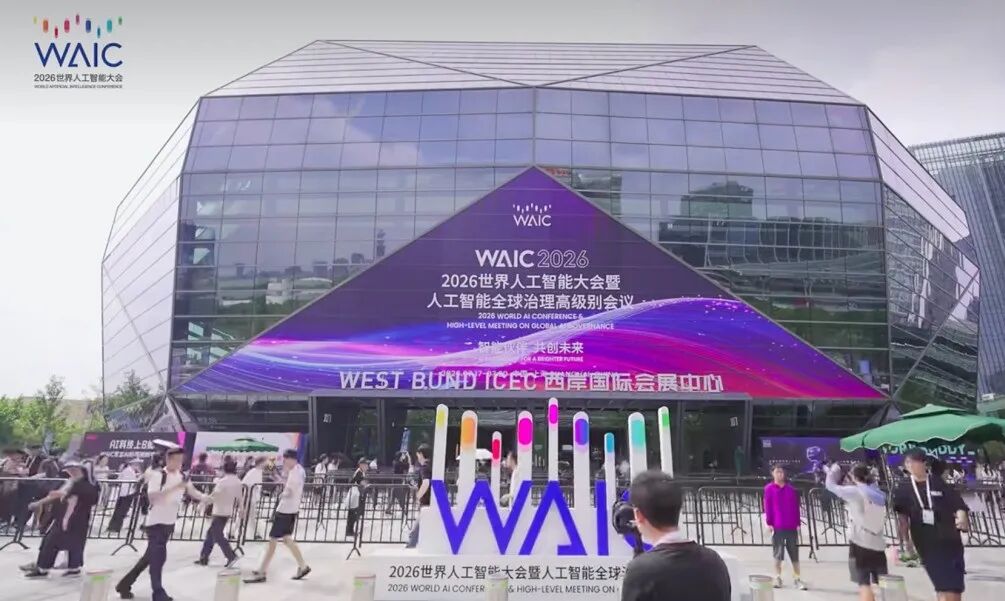
When the excitement fades, whose ruler prevails?
Author|Qingyun
Editor|Xiaobai
Produced by|Emphasis Next
An interesting phenomenon emerged at this year's WAIC: as parameters, models, and products become increasingly abundant, companies are vying for the right to define what constitutes progress.
Jieyue Xingchen and ZTE Nubia are contending for the title of “world’s first AI agent phone.” Baidu introduced DAA, hoping to replace tokens and DAU with the number of daily active agents. Huawei assembled 1024 Ascend cards into a super node, attempting to shift the competitive unit from chips to systems. Robotics companies use off-line, shipment, and factory entry numbers to demonstrate mass production. However, the products and delivery statuses counted by these numbers vary.
Each company is selecting a ruler that best highlights its strengths. The issue is that naming your product is easy, but legislating for an industry is not so simple.
01. Two “World’s Firsts” Compete to Act on Behalf of Users
Two “world’s first AI agent phones” emerged at WAIC 2026.
One is Jieyue Xingchen's STEPX Neo. It can be operated on-site, but its appearance and hardware design are not yet finalized, nor have its price or release date been announced. The other is ZTE Nubia's Navi X Ultra, equipped with the Doubao phone assistant, dubbed a “mass-producible flagship,” yet placed in a glass case without hands-on or live demonstration access.
More nuanced is the Filing progress (filing progress). Among the first seven generative AI services for mobile phones announced on July 15, the Doubao model embedded in the Navi X Ultra was listed, while Jieyue's mobile model had not yet appeared. Both companies are vying for “first place,” but one resembles a development platform, while the other is closer to a commercial product. They are not competing on the same starting line.
Jieyue initially followed a path similar to Doubao. Earlier this year at MWC, ZTE showcased both the M153 with Doubao's phone assistant and the Nubia Z80 Ultra with Jieyue's GUI Agent. A hardware manufacturer incorporating solutions from two model companies suggests that models are still interchangeable modules at this stage.
At WAIC, Jieyue was no longer satisfied with being just a module. It launched its own brand, Step AOS, and the personal agent Amoo, attempting to control the model, system layer, and terminal simultaneously.
Jieyue's overreach indicates that model companies are being forced to climb upward. Phone hardware profits are not Jieyue's core objective at this moment. What it wants is the qualification to “act on behalf of users by default,” along with the intent and transaction data behind each task.
Doubao's choice is lighter. By partnering with ZTE to enter the phone market, it avoids assuming full hardware risks while verifying whether agents can become a cross-brand system capability.
ZTE hopes to become the intermediary connecting various models and terminals: it collaborates with Doubao, integrates Jieyue, and simultaneously releases its own AIOS.
Behind the division of labor among the three parties are three different bargaining chips. Doubao has traffic and a service ecosystem, ZTE has hardware and system privileges, and Jieyue hopes to use vertical integration to ensure irreplaceability.
However, the first-generation Doubao phone already demonstrated that having system privileges does not equate to having execution rights.
After the first-generation Doubao phone (M153) was launched, the agent faced restrictions in apps like WeChat, Taobao, Alipay, and Meituan. Doubao later voluntarily tightened controls over scenarios like finance, gaming, and automatic score-brushing. The core of the conflict is not just security; when agents directly complete searches, price comparisons, orders, and payments for users, users may skip pages, ads, and recommendation streams, reducing super apps in their phones to mere conduits and collapsing their business models—something major firms find hard to accept.
Thus, two “sovereignties” exist for agent phones: the operating system determines whether it can click, while the app platform determines whether the click counts. User authorization for the agent does not equal authorization from WeChat, Taobao, or banks.
Competition for phone agents has thus entered the realm of interfaces and benefit distribution. Covert simulated clicks can only serve as a transition; a long-term viable approach is for apps to open services through APIs, MCPs, or inter-agent protocols, then renegotiate traffic, commissions, responsibilities, and data ownership. This will clearly take longer and may not even yield results, as major firms are not short of large models.
What Doubao, ZTE, and Jieyue are ultimately vying for is not just a small share of the phone market but the right to act on behalf of users and issue commands to all apps.
02. Baidu Introduces a New Ruler, but Peers Haven’t Adopted It Yet
Baidu is also vying for the right to define, but it has chosen not terminals but metrics.
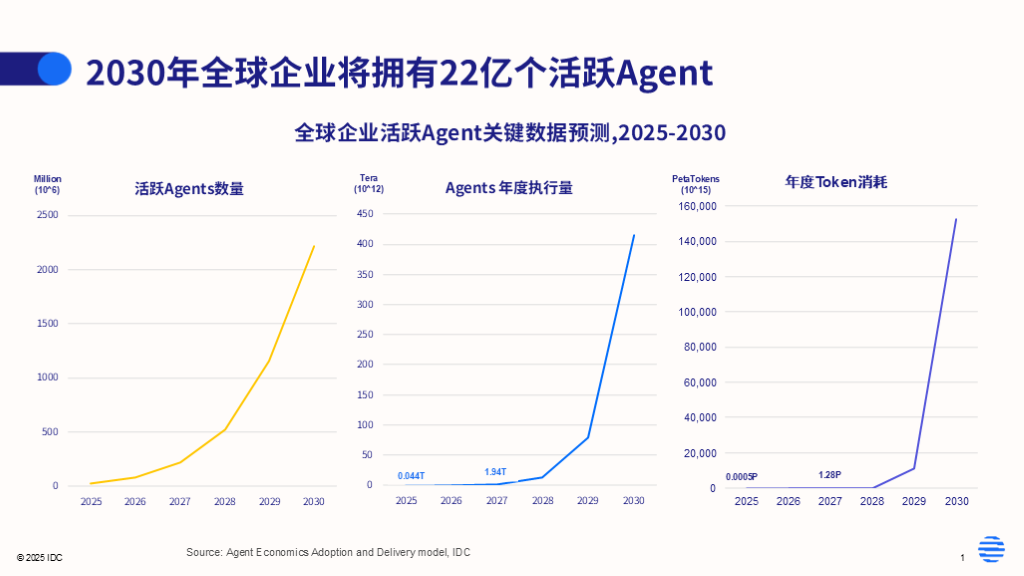
In May, Li Yanhong proposed DAA (Daily Active Agents), or the number of daily active agents. His reasoning is that tokens only reflect model calls and costs, not how much work agents accomplish. During WAIC, IDC released related research, predicting that global active agents will grow from 28.6 million in 2025 to 2.216 billion in 2030.
Using token consumption to prove AI value is akin to using factory electricity consumption to prove output—a fact most companies acknowledge.
But in reality, DAA still does not equate to output value. Agents can be quickly replicated, and one task can spawn dozens of sub-agents. Consider an extreme case: if one company uses a single powerful agent to complete work, while another splits it into 100 sub-agents, the latter has a higher DAA but is not necessarily faster, more accurate, or cheaper.
The framework released by IDC and Baidu had to continue incorporating metrics like single-agent task volume, completion quality, single-task value, and operational costs. This amounts to admitting that the number of agents is just one of many multipliers. What truly approximates business results is what tasks are completed, their quality, and how much they cost.
IDC's involvement does not directly equate to industry recognition; IDC is itself a commercial entity. IDC had already released a forecast in January this year that 2.216 billion active agents would be reached by 2030, using the term active Agent count without adopting the DAA name. The collaboration at WAIC enhanced the concept's authority but has not yet proven that other companies accept this metric.
As of July 18, Alibaba continues to emphasize cloud and AI product revenue, ByteDance and Tencent disclose token and product usage growth, and MiniMax uses metrics like revenue, subscriptions, and overseas share. Public materials do not yet show these companies adopting DAA as a core operational metric. Baidu has not disclosed its own DAA, nor is it known whether it appears in any executive's OKR.
This makes DAA more akin to a PR initiative launched by Baidu than an established industry standard. For it to become a common metric, Baidu must at least disclose its own data, the industry must standardize agent identity, deduplication methods, task success rates, and unit costs, and allow third-party audits.
Of course, Li Yanhong himself left room in his speech, stating that DAA's ultimate effectiveness “will be tested by practice over the next 12 months.” It remains to be seen which executive's OKR will include DAA metrics next.
Baidu raises a good question: what should the industry measure after tokens? DAA moves one step forward, but what the industry truly cares about is still, “how much work is reliably and economically completed.”
03. Super Nodes Grow Larger, but Computing Power Metrics Remain Ununified
Huawei's Atlas 950, showcased at WAIC, connects 1024 Ascend cards into a super node, providing 256 TB of unified memory addressing space. Huawei also disclosed that over 750 sets of the previous 384-card super nodes have been deployed.
The Atlas 950's broader intention is to promote another method of comparison: set aside single-card parameters and instead evaluate the complete system composed of chips, interconnection, memory, scheduling software, and model adaptation.
This definition favors Huawei. While its single cards still lag behind advanced GPUs, system engineering, network equipment, software stacks, and government-enterprise delivery are its strengths. As long as customers accept “super nodes as the computing power unit,” Huawei need not win on every chip parameter.
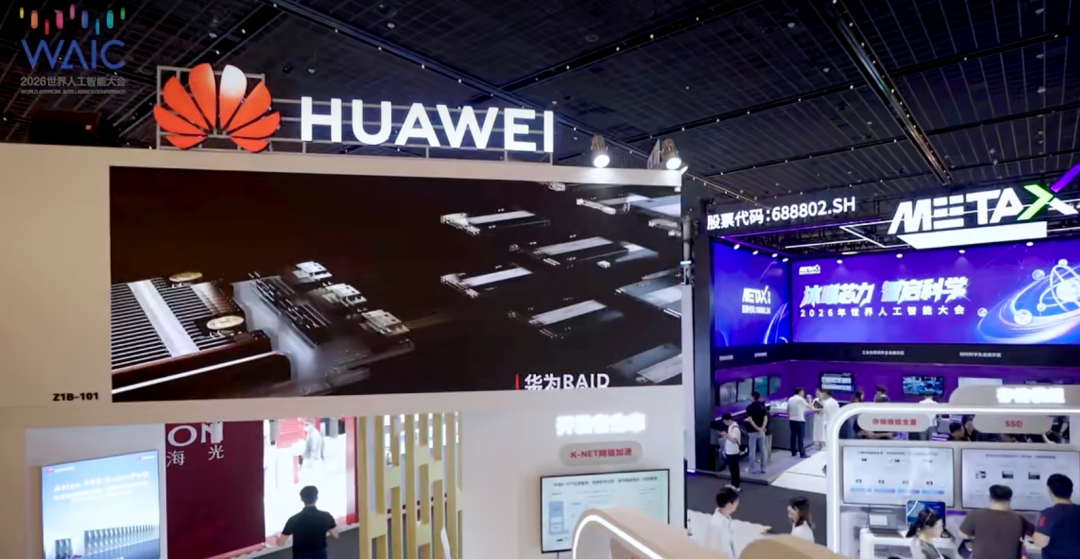
ZTE presented an alternative route at the same conference. Its OEX super node emphasizes open decoupling and compatibility with various GPUs, attempting to allow customers to combine different domestic chips without prematurely binding to a single chip and software stack.
These two routes correspond to the two sides of China's computing power market: vertical integration can reduce migration and debugging costs but risks creating new lock-in. Open heterogeneity preserves choice but leaves adaptation, scheduling, and stability complexity to system integrators and customers.
Thus, 1024 cards, 10,000 cards, or 100,000 cards are not inherently comparable achievements. What the industry lacks is data on effective token output, performance per watt, continuous operation time, fault recovery, and migration costs under the same model and task.
Without these data, “larger” first proves that a company can connect more devices, not that customers get more intelligence for the same money.
Huawei is not just vying for super node orders. It hopes the system composed of Ascend, Lingqu interconnection, and CANN will become the de facto standard for domestic computing power. Whoever defines the minimum competitive unit for computing power has the opportunity to shape the next round of software and hardware ecosystems.
04. Robot Mass Production Must First Define “Quantity”
Robotics companies are vying to define what constitutes mass production.
By 2025, China had over 140 humanoid robot manufacturers, having released over 330 products. Omdia statistics show that global general-purpose embodied robot shipments reached 13,318 units that year.
Zhiyuan announced in June this year that its 15,000th embodied robot had rolled off the production line, while Omdia recorded 5,168 units shipped by Zhiyuan in 2025. Another public dataset indicates that of Zhiyuan's roughly 5,200 units shipped in 2025, about 1,300 were full-sized humanoids.
These numbers do not contradict each other; they simply count different objects: embodied robots can include wheeled, semi-humanoid, and full-sized humanoids. Off-line does not equal shipped, shipped does not equal deployed in production environments, and factory entry does not equal continuous paid work.
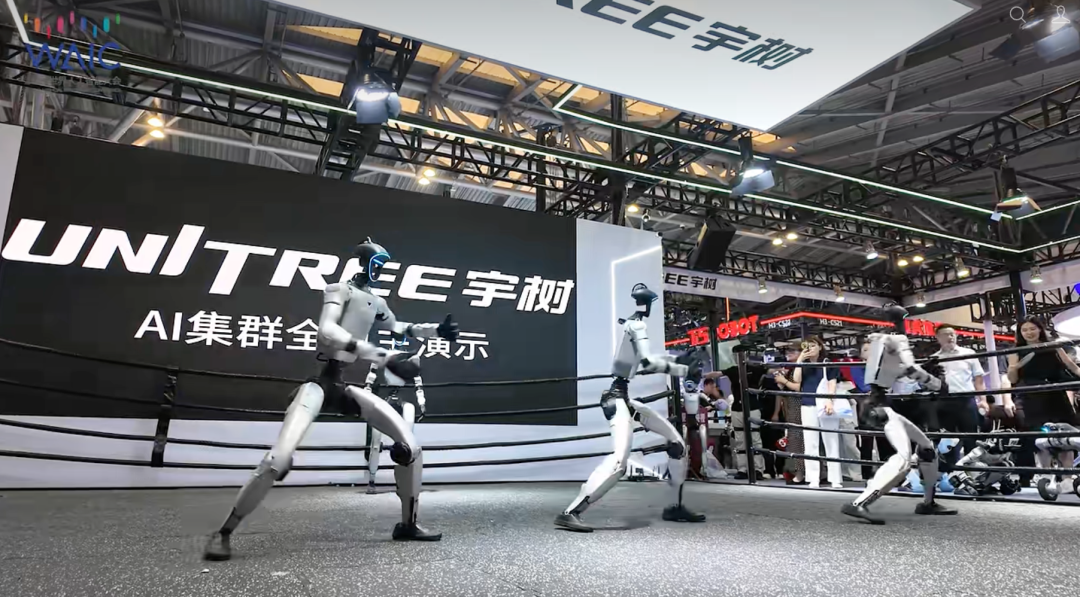
“Mass production” first proves that the supply chain can deliver, not automatically that customers' return on investment is validated. This is the embodied intelligence industry's costliest confusion of terms: treating supply-side capability as demand-side validation.
What factories truly need to compare is how many effective work hours a robot completes per month, its average failure interval, required human interventions, retooling time, and payback period relative to robotic arms, AGVs, or manual labor.
If companies do not disclose these data, off-line volumes at launches only prove production capacity, not productivity.
Chinese robotics companies have clear advantages: rapid hardware iteration, a complete parts (component) ecosystem, and engineers who can repeatedly debug in factories. Their greatest subsequent risk also stems from this: machines can be built first, but stable, paid work does not automatically emerge just because production lines are established.
05. Products Remain More Important Than Rulers
WAIC 2026 showcased more new products on the surface but was, at its core, a battle over rules.
Jieyue, Doubao, and ZTE vied to represent users in operating apps; Baidu vied for the metric to evaluate agents; Huawei vied for whether computing power should be compared by chips or systems; and robotics companies vied over what constitutes mass production.
The metrics chosen by these companies are not arbitrary. Model firms emphasize intelligence, terminal manufacturers emphasize privileges, cloud providers emphasize calls, hardware companies emphasize systems, and robotics firms emphasize off-line volumes. Each metric illuminates part of the truth while easily obscuring each company's weakest point.
True definition rights cannot be declared at press conferences; they can only be granted by others.
Agent phones gain execution rights only when app platforms open interfaces. DAA becomes an industry metric only when competitors, investors, and auditors jointly use it. System standards truly take hold only when customers procure super nodes using unified benchmarks. Mass production becomes commercialized only when factories repurchase continuously and disclose production efficiency.
After WAIC, it remains unclear who holds the “world’s first” title. The more important question is who can make developers, customers, competitors, and regulators adopt their interfaces, standards, and rulers. This requires truly industry-leading products, ideas, and standards. Throughout tech industry history, proposing standards has never been about whose idea is better but about the leading degree of the products behind different standards.
Products can be launched in a day; industry rules are not so easily invented.
- END -
-
![]()
Some New Thoughts on ModelBest
-
![]()
After Three Attempts to List on the Hong Kong Stock Exchange, Has Yonyou Finally Broken Free from Its Painful Transition?
-
![]()
Qianwen Powers Apple’s AI: Alibaba Secures Its ‘Doubao Moment’ with iPhone Integration
-
![]()
JD Marches West, Pinduoduo Ventures East: The Clandestine Struggle for China’s Supply Chain Dominance
-
![]()
GAC Honda Secures 10-Year Contract Renewal: Debunks Merger Rumors, Unites for Market Breakthrough | Mirror Pro
-
![]()
Analysis of BBA Service Reputation Index in the First Half of 2026: Terminal Services Under Pressure
-
Observation of AI Business Models: From Token-Based Payment to Outcome-Based Payment
-
Observations on AI Business Models: From Token-Based Payment to Outcome-Based Payment