Samsung's New Product Imitates Huawei's Wide Foldable? OPPO Joins the First Tier, Apple Awaits Supply Chain | Xinliu Observations
 07/22 2026
 488
488

【Abstract】On July 22, Samsung will hold its Galaxy Unpacked event in London, with the theme “A New Shape Unfolds.” This time, Samsung has chosen to move away from its familiar markets in the United States and South Korea, bringing the event to Europe and signaling a new strategic direction for its foldable screen business.
From the launch of the Galaxy Fold in 2019, which kicked off the foldable screen era, to Huawei, Vivo, and OPPO continuously driving product evolution, foldable phones are undergoing a new round of competition. The industry's focus has shifted from “whether a foldable phone can be made” to “how foldable screens should be used.”
In this exploration of future phone forms, different manufacturers are choosing different paths: some are trying to preempt (seize) new product directions, some are seeking balance among multiple approaches, and others are waiting for opportunities when technology and ecosystems mature. The next phase of competition for foldable screens may ultimately point to a battle for the next generation of mobile terminal entry points.
Here is the main text:

Why Has Samsung Started “Hedging Its Bets” After Seven Years?
When Samsung released the first-generation Galaxy Fold in 2019, foldable screens were still a controversial new innovation.
At the time, the industry's concern was simple: Could phone screens break free from fixed sizes? Samsung's answer was to use a foldable form factor to allow a single device to offer both portability and a large-screen experience. With the Galaxy Fold series, Samsung pioneered the foldable screen market and became a key early driver in this track ( track , “track” or “field”).
But seven years on, foldable phones are entering a new competitive phase. Samsung still possesses strong technical accumulation and brand influence, but new divisions are emerging in the industry over what the next generation of foldable screens should look like.
On July 22, Samsung will host its Galaxy Unpacked event in London. This marks the first time in recent years that Samsung has chosen London as the venue for its summer foldable screen launch. The event's theme, “A New Shape Unfolds,” signals not just a product update but a response to industry changes: foldable screen competition is entering a new stage.
At the event, Samsung is expected to continue updating its Galaxy Z Fold and Galaxy Z Flip product lines. The Fold series will continue to position itself as a large-screen productivity device, while the Flip series will target a broader consumer market.
Supply chain data shows that Samsung has shifted its 2026 production capacity focus toward wide foldables: the Z Fold 8 is planned to ship approximately 2.8 million units, far exceeding the 2 million units of the Ultra version and 1.5 million units of the Flip 8. This indicates that “wide foldables” are not a trial run but Samsung's core annual product bet.
From a strategic perspective, Samsung is advancing two foldable directions simultaneously: exploring usage scenarios for large-screen devices through the Fold series while lowering the consumption barrier for foldable screens with the Flip series. Behind these two product lines lies Samsung's coverage strategy for different user needs.
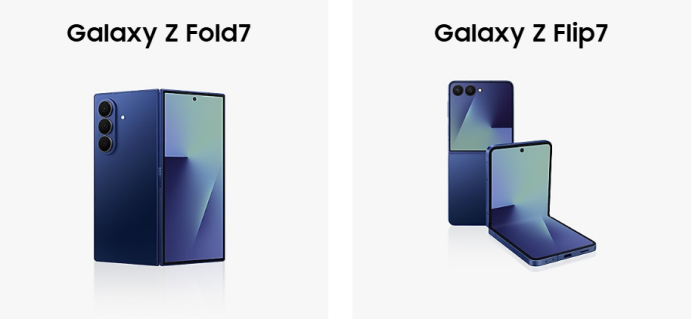
Image Source: Samsung Official Website
But this strategy also reflects Samsung's caution in choosing future form factors.
Over the past few years, Samsung's Fold series has maintained a relatively narrow external screen ratio. This design helps preserve one-handed usability and continues traditional phone habits, but discussions about the external screen experience persist. Especially in the Chinese market, where Huawei, Vivo, and OPPO have promoted wider-ratio foldable products, consumer expectations for foldable screens have shifted—they now demand more screen space when unfolded and a near-flagship experience when folded.
For Samsung, the current challenge is no longer just optimizing foldable technology but redefining a more critical question: What will be the mainstream form of future foldable screens?
Thus, Samsung's retention of both the Fold and Flip lines does not imply a lack of direction but rather a balanced strategy for a mature company operating in a rapidly changing market. For a company already enjoying first-mover advantage, abruptly altering a mature product line carries costs, while exploring multiple directions simultaneously allows for further market validation.
Xinliu believes that Samsung's “hedging its bets” exposes the anxiety of an industry pioneer: it wants to protect its seven-year-accumulated Fold user base while not missing out on the new window defined by wide foldables. But production data doesn't lie—the 2.8 million-unit shipment plan for the Z Fold 8 means Samsung has internally bet on “wide foldables as the mainstream.” The Ultra version's retention of the traditional tall and narrow form isn't a “strategic balance” but a “safety rope.” The real question is: With Huawei proving the market viability of wide foldables through 1.5 million Pura X shipments, can Samsung's 2.8 million units replicate Huawei's experience advantage amid the fragmentation of Android ecosystem adaptations?
Market competition is intensifying. Huawei is exploring new space between phones and tablets with its wide foldables, while Vivo and OPPO continue to advance in terms of thinness and experience optimization. Samsung once drove the foldable screen era's beginning, but in the next phase, it needs to regain influence over the industry's direction.

From “Large-Screen Phones” to Mobile Tools: Huawei Drives Foldable Screens to a New Stage
The nature of foldable screen competition is changing, and consumer focus is shifting.
Initially, foldable screens addressed whether phones could have larger screens. But as products continue to iterate, users are now asking: What different experiences can this screen bring after unfolding?
Huawei's answer is to bring foldable screens closer to mobile productivity tools. Products like the Mate X series, with their tablet-like unfolded proportions, offer stronger practical value in web browsing, document processing, and multitasking.
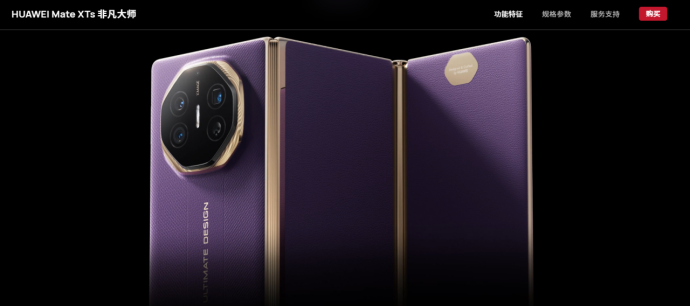
Image Source: Huawei Official Website
The significance of this shift is not just larger screen sizes but changing user expectations for foldable screens.
In the past, many consumers bought foldable screens to experience a novel product form. While unfolded screens were larger, daily use remained similar to ordinary phones. Wide foldables aim to change this: the folded state satisfies daily communication, while the unfolded state handles more tablet-like tasks. Since its release in April 2026, Huawei's Pura X series has shipped over 1.5 million units, with weekly sales nearing 484,200 units, validating market acceptance of wide foldables.
From this perspective, Huawei is not just driving screen form changes but attempting to redefine the relationship between foldable screens and daily user experiences.
Market performance also reflects recognition of this direction. In the first quarter of 2026, China's foldable phone sales reached 2.8 million units, a sharp 65% year-on-year increase, with market penetration exceeding 8%. Huawei leads the Chinese market with its foldable products; in recent years, Huawei has consistently bet on large-screen foldables, from the traditional book-style Mate X series to the triple-folding Mate XT and the latest wide-folding Pura X Max, continuously pushing the boundaries of foldable screen forms. By adopting proportions closer to tablets or even PCs, Huawei strengthens the mobile productivity attributes of foldable screens.
Counterpoint Research data from 2025 shows Samsung leading the global foldable screen market with a 35.4% share, followed by Huawei at 22.7%, together accounting for 58.1%—a clear head (head, or leading) advantage.
This also presents Samsung with a practical challenge: the changes consumers have long expected have already been explored by competitors.
Samsung's Fold series has long adhered to a book-style fold with a narrow external screen, emphasizing one-handed usability in folded mode, but the external screen's daily usability remains controversial. Huawei has taken a different path: by widening the internal and external screen proportions with wide foldables, the folded external screen more closely resembles a conventional candybar phone, while the unfolded state offers a tablet-like experience, aiming to make both states primary usage scenarios.
The strong sales of wide foldables have validated the market value of balanced large-screen experiences, but industry exploration doesn't stop there. Vivo, OPPO, and other manufacturers have pursued a different popularization route.
Vivo's X Fold series focuses more on integrating flagship experiences, balancing imaging, performance, and thinness; OPPO's initial Find N series made its core selling point a gold-standard folding proportion close to traditional phones, lowering the barrier to entry for foldable screen users. If Huawei is answering “what foldable screens should look like in the future,” Vivo and OPPO are more focused on solving “why consumers would choose foldable screens.”
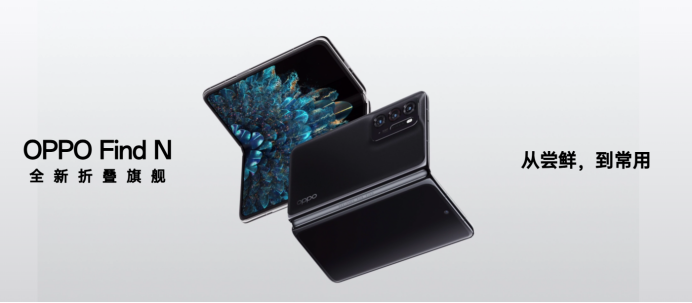
Image Source: OPPO Official Website
Chinese manufacturers are driving market maturity through different paths. While Samsung and Huawei explore the boundaries of foldable screen forms, Vivo and OPPO are promoting category popularization within mature forms. Vivo's X Fold series emphasizes balanced imaging, performance, and thinness, giving foldable screens a flagship-like comprehensive experience; OPPO's Find N series lowers the entry barrier with a gold-standard folding proportion, pushing foldable screens from niche early adopter products to broader consumer tools. They avoid disruptive form innovations and instead use experience optimization and price reductions to transition foldable screens from “toys for a few” to “tools for many.”

The Crocodile in the Corner: Why Is Apple Waiting?
In the foldable screen market's development so far, Apple remains the player yet to enter.
From the first-generation Galaxy Fold kicking off the foldable screen era to Huawei, Vivo, and OPPO continuously driving product iterations, Apple has not yet released a foldable iPhone. However, this rhythm is not unfamiliar to Apple in the smartphone industry.
From the iPod to the iPhone and then the Apple Watch, Apple rarely becomes the first to attempt new product forms but often enters after the market matures, establishing new experience standards through hardware-software integration. Foldable screens may follow a similar logic.
According to multiple industry chain institutions and media reports, the market widely expects Apple to release its first foldable iPhone in September 2026, potentially adopting a book-style large fold design. While Apple has not officially confirmed this, its entry has become a significant variable in the foldable screen market.
What Apple may be waiting for is not just foldable screen technology itself but a more mature experience ecosystem.
For foldable phones, screen form is just the beginning; software ecosystems equally determine product value. Currently, Android foldables face a major challenge of adaptation differences across brands and screen sizes, requiring developers to optimize for multiple hardware forms.
In contrast, Apple has long maintained a relatively unified hardware and software ecosystem. If it releases a foldable iPhone in the future, developers can adapt based on the iOS ecosystem, reducing the fragmentation problems seen in the Android camp with multiple brands and proportions. This ecological advantage may help Apple faster (faster) unlock the application value of foldable screens' large displays.
Beyond software ecosystems, hardware reliability is also key to foldable screen competition.
Foldable screens have long needed to address screen durability and structural stability, with UTG (ultra-thin flexible glass) and hinge technology being particularly important. Android manufacturers have continuously advanced these technologies, while Apple's long-standing capabilities in materials, structural design, and supply chain management may help it optimize foldable screen reliability in the future. However, this advantage remains to be validated after product launches.
Compared to single hardware parameters, Apple's greater potential advantage may come from ecological synergy.
The future foldable iPhone will face competition not just from Samsung's Galaxy Z Fold and Huawei's Mate X series but also from the entire mobile device ecosystem. Data flow and device synergy among phones, Macs, iPads, and Apple Watches may make foldable screens an important entry point for Apple to further strengthen cross-device experiences.
But waiting also means pressure.
Today, the foldable screen market is no longer a blank slate. Huawei is cultivating new usage habits through wide foldables, Samsung relies on its global supply chain to maintain competitiveness, and Vivo and OPPO are driving product popularization. When Apple enters this market, it will face not just technical challenges but also how to reestablish influence in a market where competitive patterns have already formed.
For Apple, waiting is a strategy, but ultimately, what determines success or failure is whether it can transform foldable screens from a mere bendable display into a new gateway for mobile computing.

Three Approaches, Three Philosophies: The Foldable Screen Market Enters a Phase of Strategic Competition
The development of foldable screens has shifted the industry competition from "who can make a foldable phone" to "who can define the next generation of mobile device form factors."
Samsung, Huawei, and Apple are all making moves in the foldable screen space, but each has chosen a distinct path. Behind these choices lie three different market strategies: some aim to seize the window of opportunity, others prefer continuous exploration, and some wait for the right moment to enter.
Huawei has adopted a "cheetah-like" approach—rather than sticking to a single form factor, it rapidly deploys a multi-tier product matrix to dominate the core foldable screen track ("sài dào," meaning "track" or "arena").
The Pura X series focuses on lightweight, wide-fold designs for the premium mass market, serving as the primary driver of overall shipments. The Mate X series targets all-round business flagships, delving deep into mobile productivity scenarios. The latest Mate XTs Ultimate Master breaks the boundaries of dual-folding with a triple-fold design, exploring the ultimate form of mobile terminals. From conventional wide folds to pioneering triple folds, Huawei continuously iterates around large-screen experiences, striving to shed the "expensive novelty" label and position foldables as a new device category bridging phones and tablets.
The core advantage of this approach is speed: by rapidly covering diverse user groups with multi-tier products before the industry standardizes, Huawei aims to establish "foldable screen = Huawei" in user perception.
Samsung leans toward an "octopus-like" strategy—as the pioneer of foldable screens, it avoids single-point breakthroughs and instead uses multi-form-factor products to achieve full-market coverage. Leveraging its advantages in self-developed screens, hinges, supply chain, and global distribution, Samsung maintains its industry foothold.
The new foldable lineup debuting on July 22 embodies this strategy: the all-new Galaxy Z Fold 8 enters the wide-fold arena with a 4:3 aspect ratio inner screen and widened outer screen, directly competing with Huawei's dominant wide-screen foldables and addressing past shortcomings in outer-screen usability. The Z Fold 8 Ultra retains the traditional large-fold form factor, emphasizing premium all-round experiences with S Pen support and top-tier specs, targeting business flagship users. The Galaxy Z Flip 8 continues to deep cultivation ("gēng shēn," meaning "deeply cultivate") the vertical-fold fashion segment, driving mass-market adoption through differentiated form factors. These three product lines cover all user needs, from mass-market fashion to high-end business, and from traditional forms to innovative wide folds.
This strategy represents a defensive offense by a mature giant: during a phase of evolving form factors, full-scenario coverage minimizes the risk of betting on the wrong direction, while economies of scale ensure sustained global market harvesting. TrendForce 2025 data shows Samsung still leads the global foldable market with a 35.4% share. However, facing Huawei's rapid leadership in wide folds, Samsung has accelerated form-factor iterations, personally joining the wide-screen competition to reclaim definition rights over the next generation of foldables.
Apple employs a "crocodile-like" waiting game.
It avoids early competition, instead biding its time until the market, technology, and ecosystem mature.
When Apple enters new markets, it typically leverages refined integrated experiences to establish advantages. For foldables, Apple likely prioritizes seamless integration into its ecosystem over rushing product launches.
If a foldable iPhone debuts, its competition will extend beyond hardware to include software ecosystems, device synergy, and user habits. Apple aims to use its long-accumulated ecosystem strengths to make foldables a new gateway connecting iPhones, Macs, iPads, and other devices.
No company holds an absolute lead; each pursues competitive strategies across different time horizons. Huawei bets on form-factor innovation to secure first-mover advantages, Samsung balances multiple directions through scale and experience, while Apple waits for industry maturity to redefine experiences through ecosystem capabilities.
Meanwhile, vendors like vivo and OPPO, increasingly closing the gap to the top tier, focus on refining niche experiences and driving price accessibility within mature form factors. They serve as vital complements to mainstream industry routes, collectively accelerating foldables' transition from novelty to everyday use.
For instance, crease control remains a traditional strength of OPPO foldables. Its latest model achieves near-imperceptible creases through Celestial Memory Glass and 3D-printed precision hinges. It also passes TÜV Rheinland's 600,000-fold durability certification, ensuring no crease deepening over time—a top-tier performance among peers.
The next foldable competition may not hinge on a single form factor; the answer lies in which approach convinces consumers to adopt foldables long-term and ultimately reshapes mobile device usage patterns.

Xinliu Perspective: Wide Folds Are a Transition, Not an Endpoint—From "Toy" to "Tool"
Foldable development is shifting from "technological showcase" to "experience redefinition." Samsung proved phones could break traditional forms, while Huawei, vivo, and OPPO advanced Thinning and thinning ("qīng báo huà," meaning "thinness and lightness") and productivity scenarios. Apple waits to redefine the category through ecosystem maturity.
Samsung's full-category coverage, Huawei's aggressive form exploration, and Apple's ecosystem-driven latecomer strategy will ultimately hinge not on screen size but on who first makes foldables indispensable productivity tools.
Xinliu argues that screens and hinges aren't decisive; the focus should be on creating new usage habits. Foldables once fulfilled consumer fantasies about future devices; now, they must answer why users open them daily. Only when users habitually unfold phones for work, creation, and information processing will foldables truly evolve from "toys" to "tools."
Xinliu believes wide folds mark not the endpoint but a crucial transition phase for mobile devices evolving from phones to next-gen computing gateways. The true watershed lies not in screen ratios but in whether foldables can redefine mobile office scenarios. Whoever first cultivates "unfold-and-use" habits will gain the upper hand in this three-way contest.
*Header image generated by AI
- XINLIU -
-
![]()
Baidu Dazi's Ambitious Overtaking with 'Product-Centric' Upgrades
-
![]()
AI PC Is Becoming Obsolete! The Rise of AC: Do Agents Really Need Their Own Computer?
-
![]()
Times Are Changing: Domestic New Energy Vehicles Are Driving Traditional Luxury Brands to the Wall, Prompting BBA to Slash Prices En Masse for Survival
-
![]()
The Myth of Musk
-
![]()
Which Type of Talents Do Automakers Prefer to Promote: Science or Liberal Arts Graduates?
-
![]()
Why has OPPO's strategy been readjusted in less than three months?
-
![]()
New Models Falter: Over 700 New Cars in the First Half of the Year Struggle, Only 4 New Models Surpass 10,000 Units in Sales, Achieving Hot Sales | Mingjing Pro
-
![]()
22 Billion Yuan in Subsidies Rolled Out! 117,000 New Energy Heavy Trucks Sold in H1, Penetration Rate Tops 33%