AI PC Is Becoming Obsolete! The Rise of AC: Do Agents Really Need Their Own Computer?
 07/22 2026
 388
388
The Agent Computer, or AC for short, is making waves.
The PC industry is truly facing tough times.
In the past, when consumers didn't upgrade their computers, manufacturers could blame it on insufficient marketing efforts. Now, despite their best attempts—akin to squeezing a nearly empty tube of toothpaste until it's like using a water gun—the prices of memory, hard drives, and graphics cards have soared unreasonably. At new product launches, although performance has indeed improved, even ultrabooks are now priced like high-end workstations.
Consumers think, "My old computer still works, so why bother upgrading? I'll just keep using it for another three years."
Manufacturers are understandably anxious. Over the past two years, every PC has started to incorporate AI features. Processors now come with NPUs, keyboards have AI keys, and systems include assistants capable of summarizing meetings and editing photos. Yet, when consumers buy computers, they still prioritize performance, battery life, and price. Few seriously say, "I'm buying this specifically for its AI features."
Ultimately, a PC is called a Personal Computer because it's designed for individuals.
This gave AMD a fresh idea: If adding AI capabilities to PCs doesn't resonate with consumers, why not introduce a new term—Agent Computer? How would you react to that?
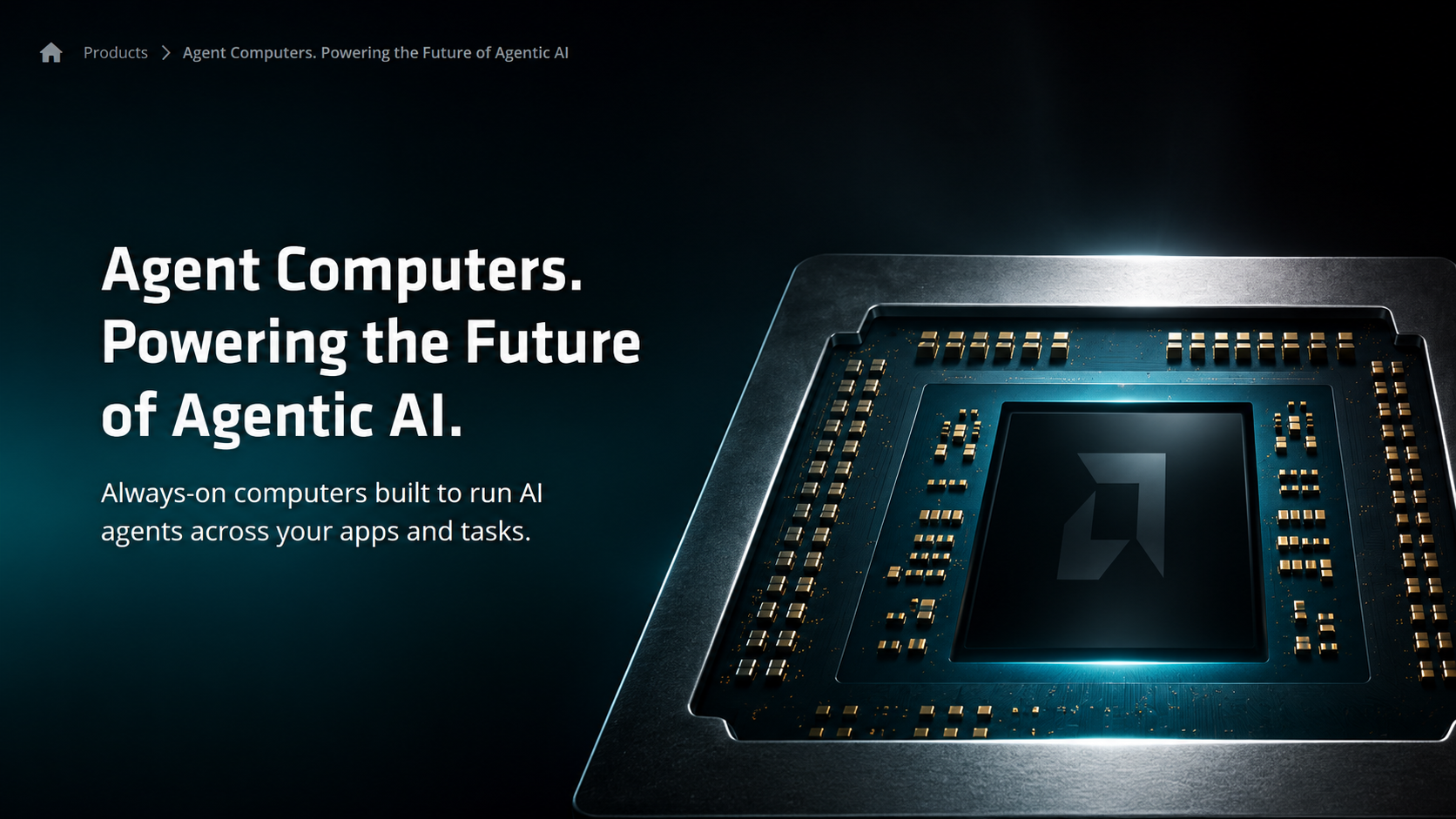
(Image Source: AMD)
Wow, AI hasn't even started paying me a salary, and it's already demanding its own computer?
First, let me clarify what an Agent Computer (AC) is.
According to AMD, an AC is a device specifically designed for AI Agents to operate continuously, emphasizing always-on, always-available, and always-working capabilities.
If an AI PC is like hiring an assistant for your computer, and an Agent PC is like that assistant operating your computer, then an AC is like giving your assistant their own personal computer. Users don't need to sit in front of it clicking a mouse; they can assign tasks via a phone, chat software, or another computer, and the Agent can access models, files, and tools in the background, working continuously for hours or even days.
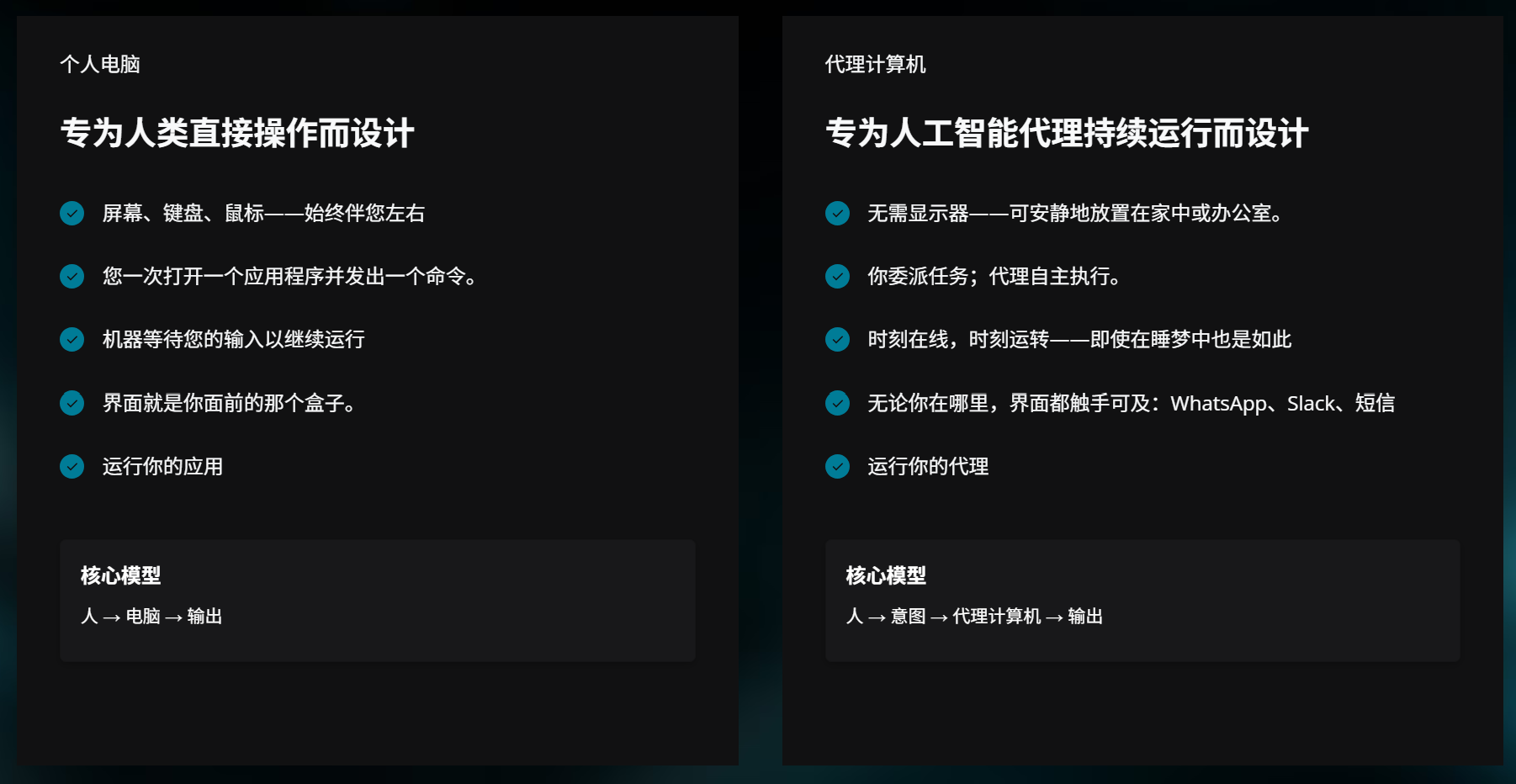
(Image Source: AMD)
Therefore, an AC doesn't necessarily need its own screen, keyboard, or mouse.
To promote its products, AMD has provided a series of recommended products on its introduction page. Most products defined as ACs are compact hosts packed with large memory and AI computing power, focusing on silent operation, low standby power consumption, and relatively high performance.
Yes, just like the wildly popular Mac mini earlier this year.
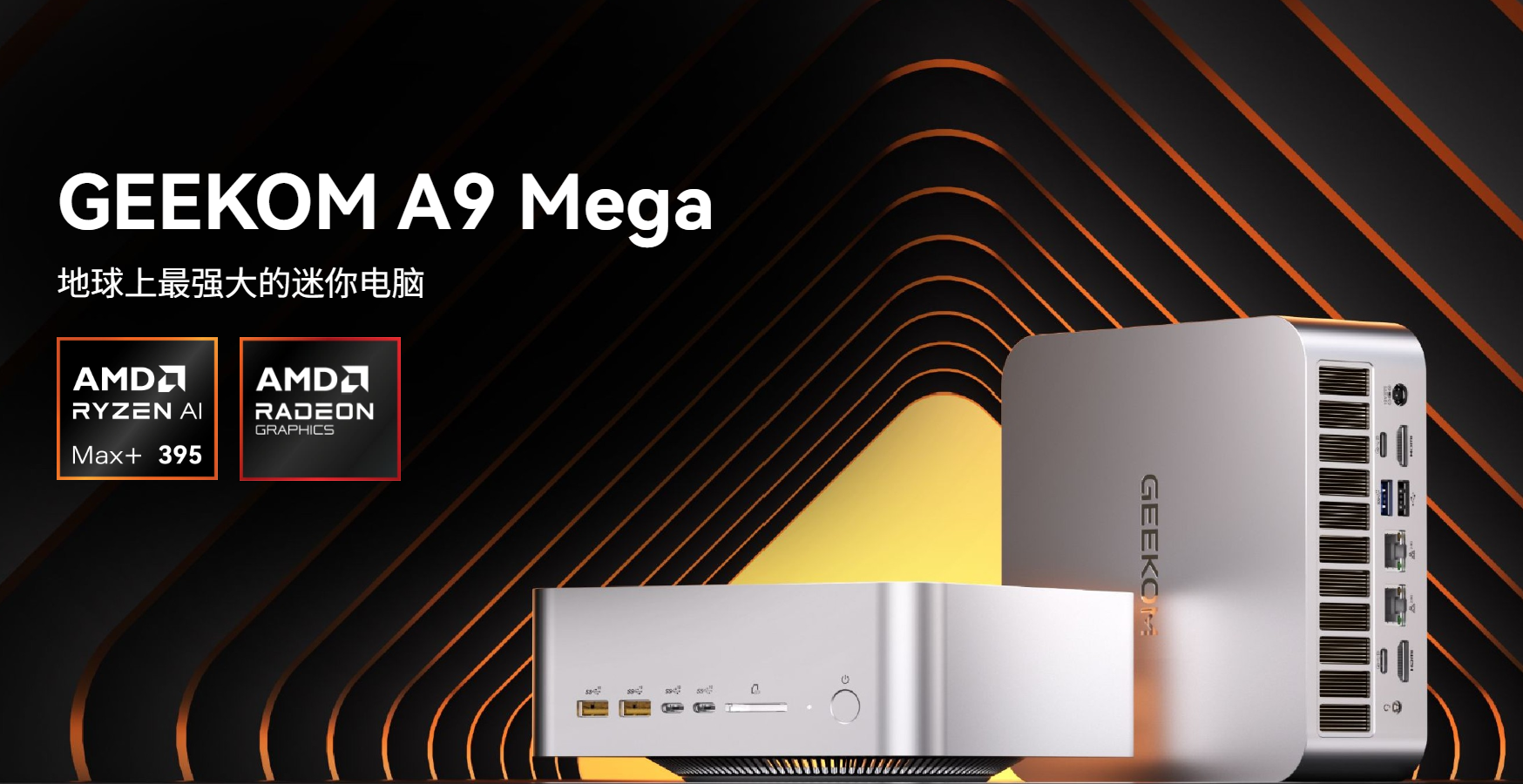
(Image Source: AMD)
At this point, you can probably see where this concept is heading.
Interestingly, at this year's WAIC, despite varying promotional messages from different companies, we did see many products that fit this concept.
Take Lenovo, for example. They brought their newly released Lenovo AI Host MINI to the exhibition this year.
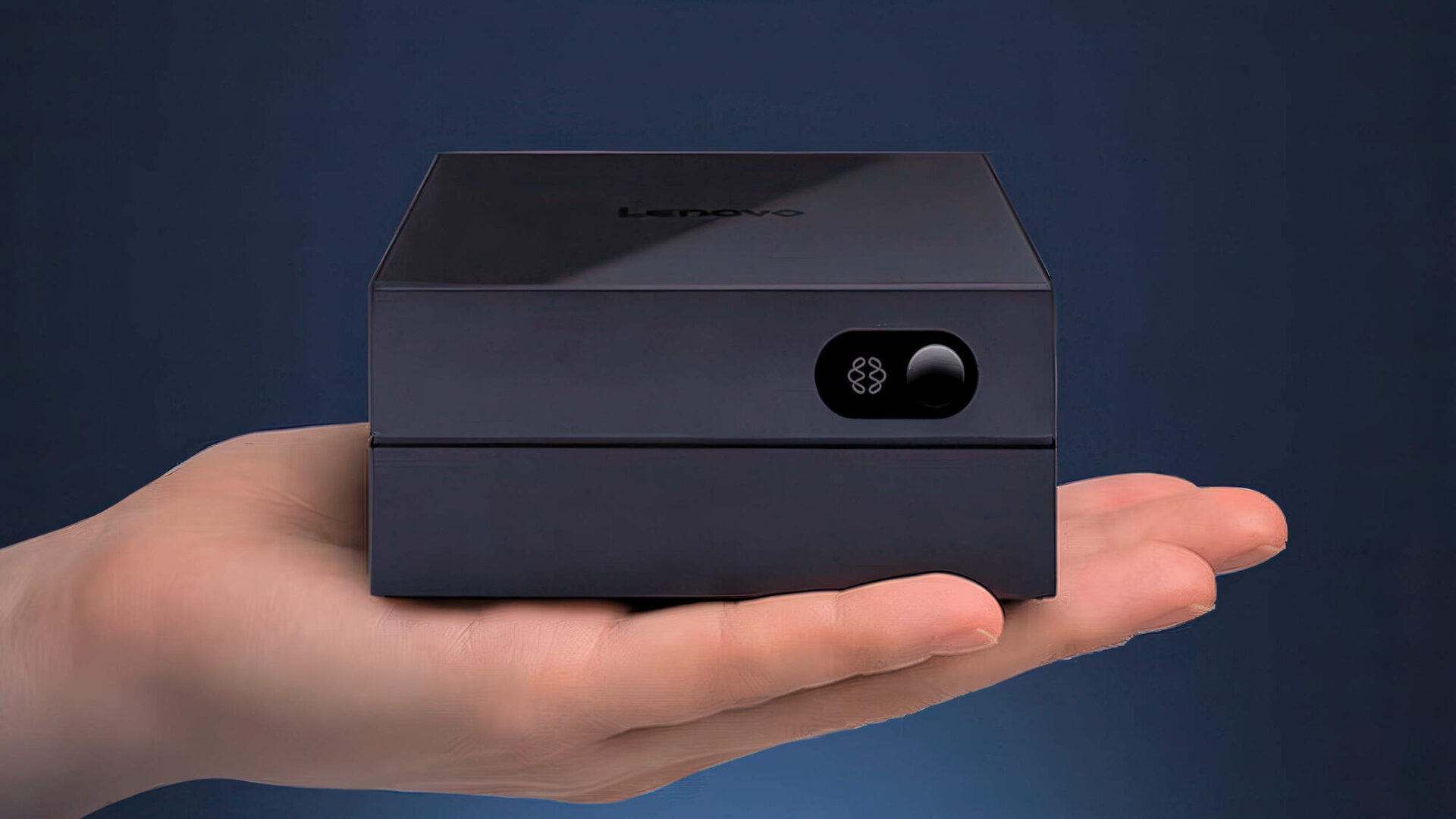
(Image Source: Lenovo)
It is reported that this product comes pre-installed with the Ubuntu system, and users need to scan a QR code via their phone to complete device configuration.
Its biggest feature is that it is equipped with a domestic computing power platform—the Cixin P1 processor. This processor uses a 6nm process and an Arm architecture, equipped with a 12-core CPU and a G720 MC10 GPU. Additionally, it is equipped with a dedicated NPU, enabling Lenovo to claim a total computing power of 45TOPS.
This device's local computing power is indeed average; its main selling point is allowing the whole family or team to access the same Tianxi Agent, enabling task sharing among multiple members. Lenovo defines it as a locally running AI hub that operates year-round.
Of course, if you want sufficient local computing power, Lenovo can provide that too. For example, this Lenovo AI Host P7, jointly launched by Homo and Lenovo, weighs only about 300 grams and boasts 190TOPS of local computing power, supporting the deployment of models with up to hundreds of billions of parameters.
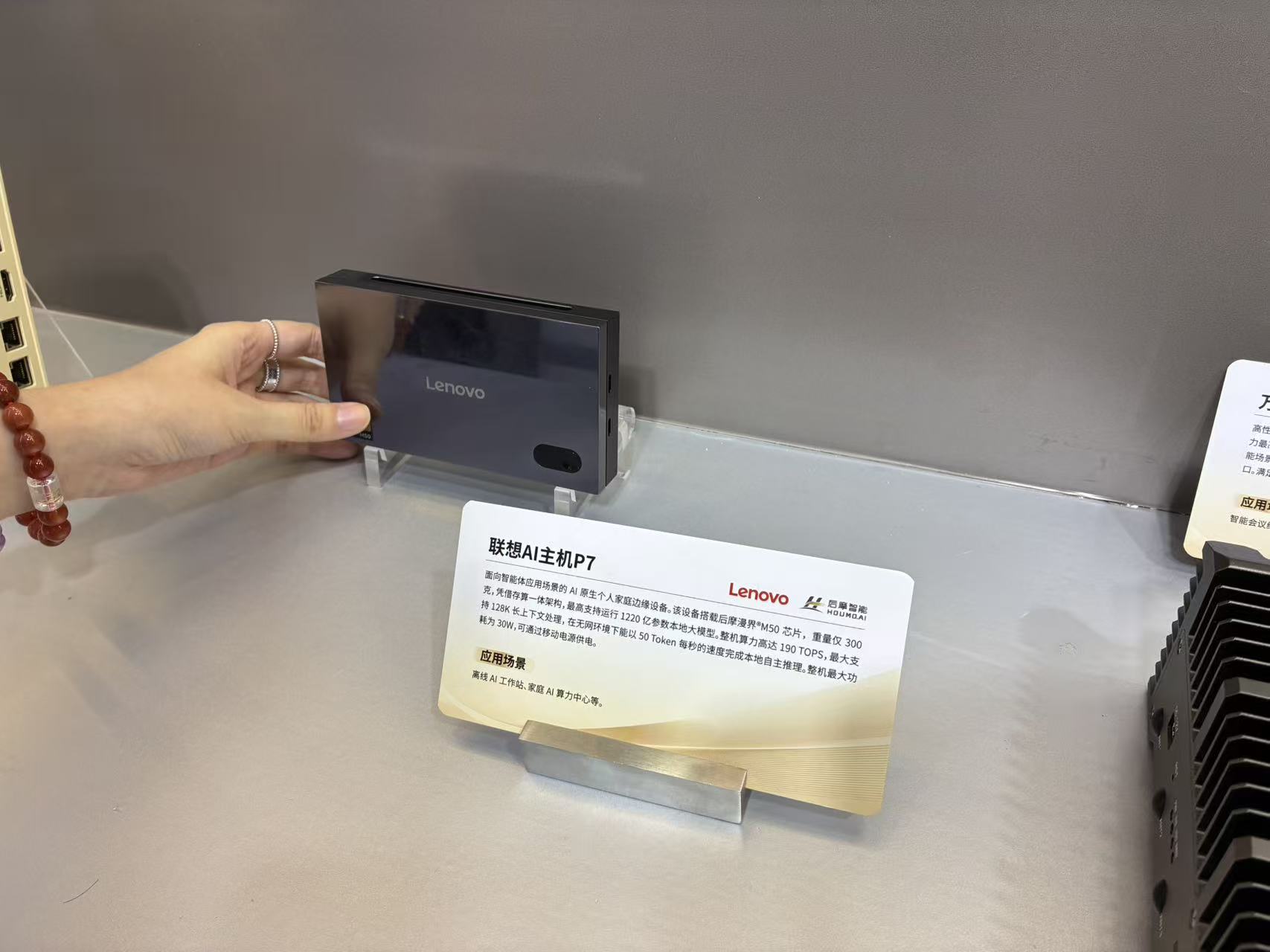
(Image Source: Lei Technology)
Most importantly, this product can work with a power bank and run models with or without an internet connection. You can truly see it as a personal AI server that fits in your pocket.
It's just that the price of 6,999 yuan is, to say the least, not cheap.
Additionally, there were Agent desktop devices like the AI WorkMate on-site, equipped with cameras, voice interaction, and projections. Their appearance has already shifted from traditional computers toward desktop robots.
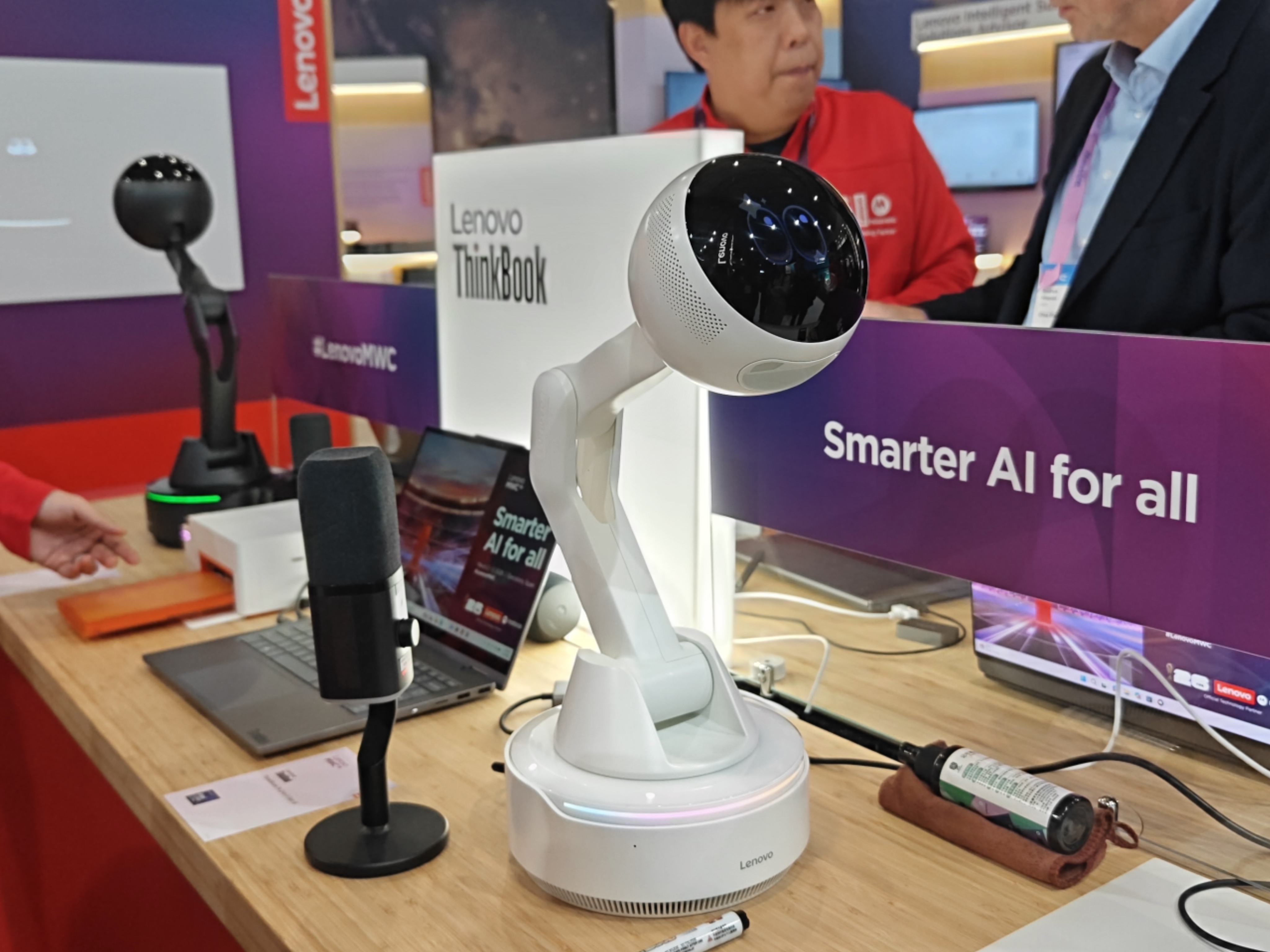
(Image Source: Lei Technology)
As for SenseTime and Chuangyingxin, they also showcased a 'Shrimp Box' at this WAIC.
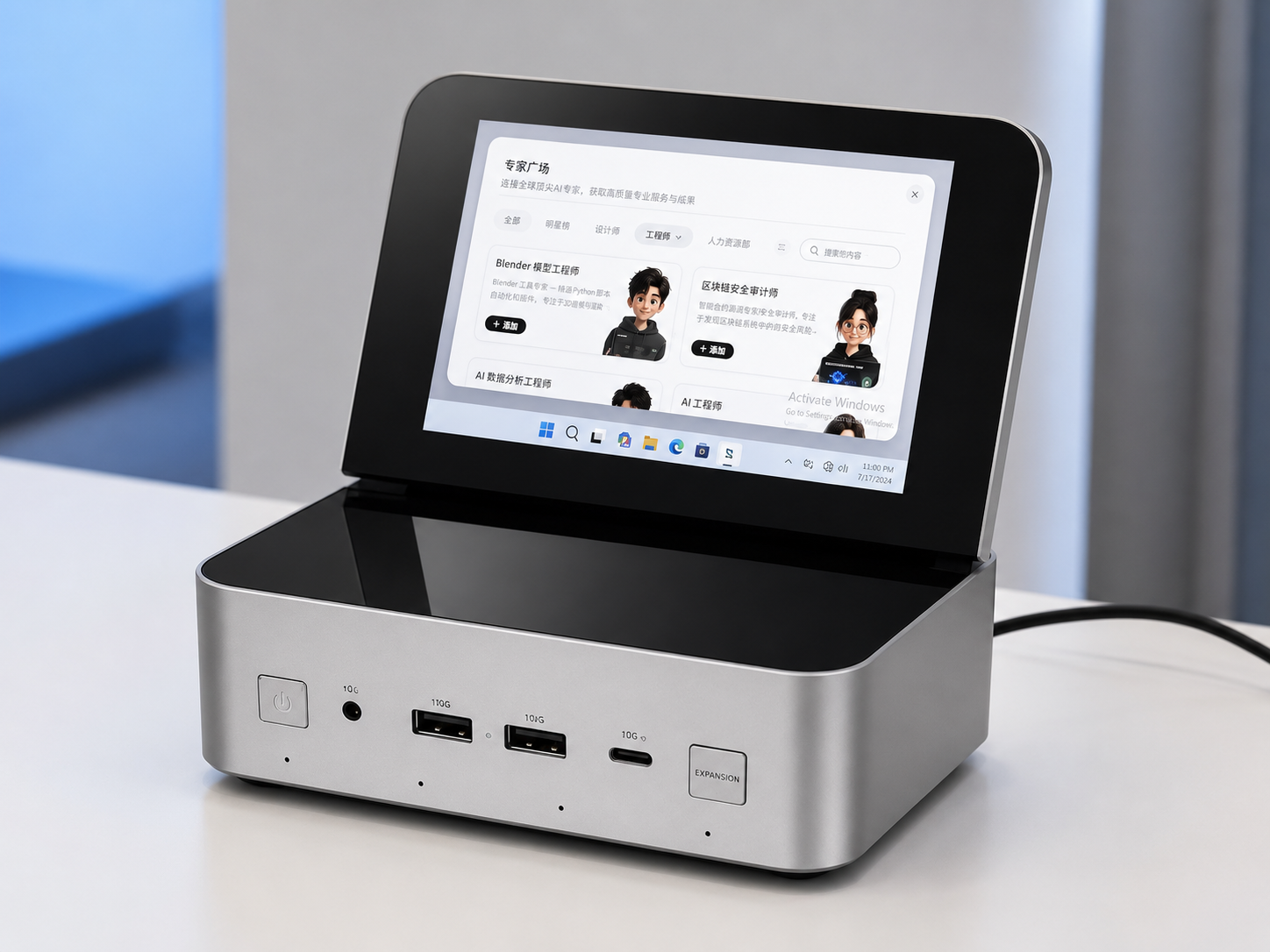
(Image Source: Lei Technology)
It's clear that from hardware manufacturers, chip companies, to model developers, many enterprises are beginning to focus on integrating software and hardware. They are all working toward the definition of Agent Computer, attempting to achieve deep collaboration between hardware and intelligent agents.
At this point, someone might ask: Is it really necessary to have a dedicated computer for Agents?
Well... let's just say AMD thinks so. To put it more dramatically, they believe humans and Agents shouldn't always share the same computer.
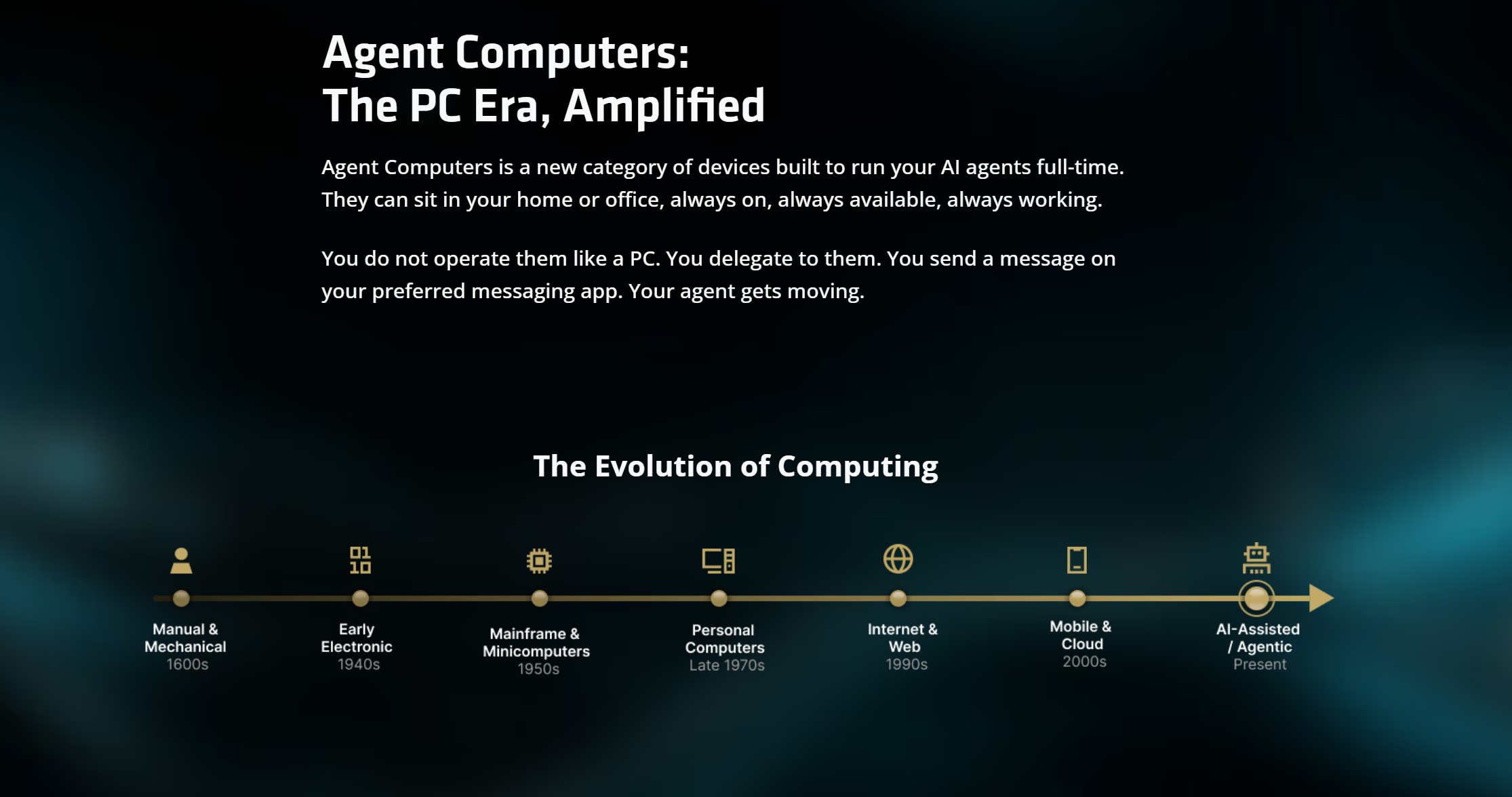
(Image Source: AMD)
The reasoning is simple: human computer usage is intermittent. We write drafts, edit photos, play games, and then turn off the computer when done. An Agent's ideal state is closer to that of a server; it needs to continuously wait for tasks, advance projects simultaneously, retry after failures, and possibly keep working while you sleep.
Especially for applications like Codex, which focus on multi-Agent parallelism and long-duration tasks, if you turn off its computer, how can it continue running?
As for performance issues... personally, I think it's manageable.
To give you an idea of my setup, my current PC has an i5-13600KF + RTX 4070 Ti, with a whopping 10TB SSD + 64GB of memory. While this configuration can't run large-parameter local models, running Codex daily doesn't cause noticeable lag, resource explosions, or situations where the Agent takes over the mouse.
Keep in mind that many Agent computations are already done in the cloud, with the local system mainly responsible for reading files, calling tools, and displaying results. Plus, I rarely perform batch operations or scheduled tasks, so there's no urgent need to buy a separate computer for it.
But this is partly due to my high-end configuration shouldering the burden. In reality, there are plenty of online complaints about Agents consuming resources, not releasing memory, or crashing during long tasks.
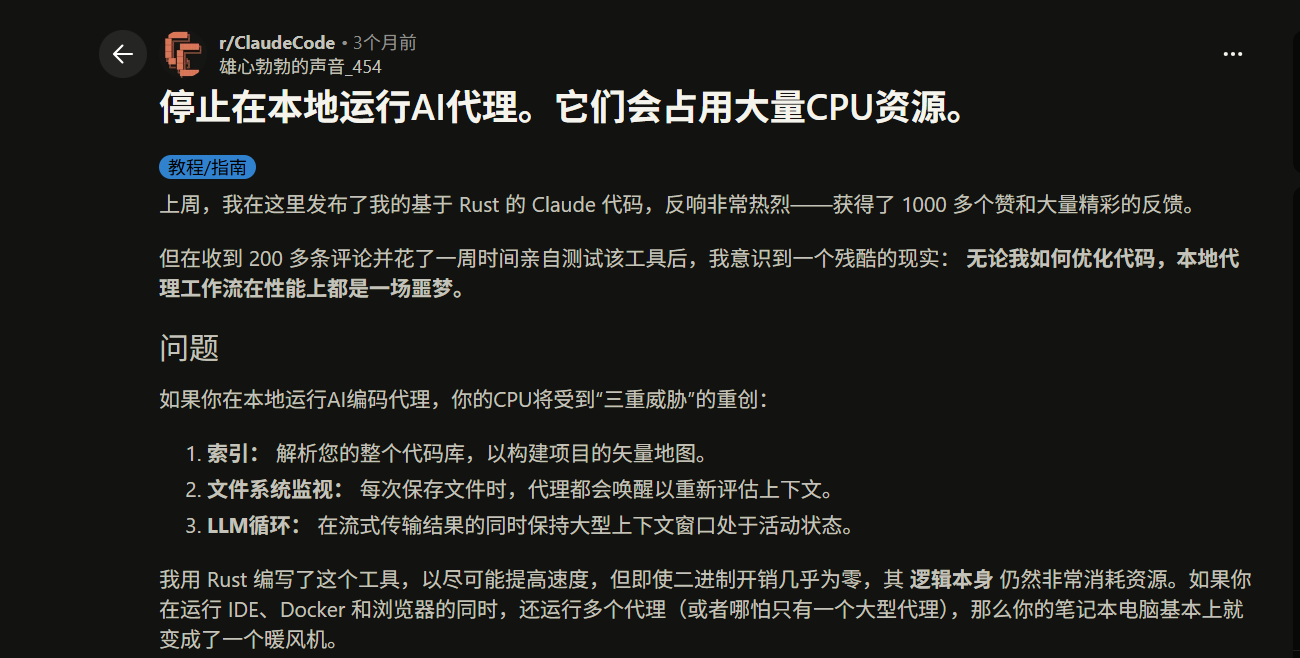
(Image Source: reddit)
Many college students now use ultrabooks with starting memory of mostly 16GB. If they have web pages, WeChat, documents, and editing software open while running several Agents in parallel, the experience can be quite frustrating.
Humans dislike Agents for consuming memory, while Agents dislike humans for frequently shutting down the computer—it's a mutual dislike.
Of course, compared to performance losses and minor usability issues, permissions might be the real reason humans and Agents should be separated.
For an Agent to work on your behalf, it needs access to files, email, browsers, code repositories, and even your company's internal systems. However, the more capable it is, the greater its destructive potential when things go wrong. We've seen more than one case of elite programmers on X encountering database-level disasters.
That's why AMD suggests placing highly autonomous Agents in separate devices. Don't immediately hand over your main account, personal information, and company secrets to it, letting it gamble away your digital life.
I believe ACs will continue to exist in the future and will be very useful for certain groups.
For example, developers, researchers, and content teams often have numerous long-running tasks. Having an Agent permanently stationed on a dedicated device to process data, run code, and organize databases, without being interrupted when an employee closes their laptop, makes perfect sense.
It's a bit like a NAS—meaningless to many, but life-changing for those who need to build media libraries, back up materials, or manage photos.

(Image Source: Lei Technology)
But if you think ACs will replace PCs, I think that's absurd.
For ordinary people, using AI to summarize documents, edit images, or look up information is already sufficient with existing PCs and cloud-based large models. Most people would find even Doubao (a lightweight AI model) more than adequate. Expecting everyone to abandon current interaction methods and fully switch to command-based interaction is somewhat wishful thinking.
Moreover, given the soaring market prices, expecting people to buy a high-performance compact host specifically for Agents is somewhat unrealistic.
Perhaps one day, when the crazy prices of storage and memory drop, we can finally afford new computers. By then, the ideal scenario would be for PCs and ACs to coexist, so humans don't have to fight with Agents for screen time, and Agents won't be forced offline when humans shut down their computers.
PCAMDACAgentAIPC
Source: Lei Technology
Images in this article are from: 123RF Licensed Image Library. Source: Lei Technology
-
![]()
Observation of German Auto Market: Electric Vehicle Market Maturity Ranks 12th in Europe, Chinese Brand Share Rises to 3.7%
-
![]()
Vivo's Strategic Retreat in India: From Market Dominance to Forced 'Partnership' in a No-Alternative Scenario
-
![]()
Following the Explosive Success of Kimi k3, Moonshot AI is Reportedly in Final IPO Financing Discussions
-
![]()
Baidu Dazi's Ambitious Overtaking with 'Product-Centric' Upgrades
-
![]()
AI PC Is Becoming Obsolete! The Rise of AC: Do Agents Really Need Their Own Computer?
-
![]()
Times Are Changing: Domestic New Energy Vehicles Are Driving Traditional Luxury Brands to the Wall, Prompting BBA to Slash Prices En Masse for Survival
-
![]()
The Myth of Musk
-
![]()
Which Type of Talents Do Automakers Prefer to Promote: Science or Liberal Arts Graduates?