The Myth of Musk
 07/22 2026
 332
332
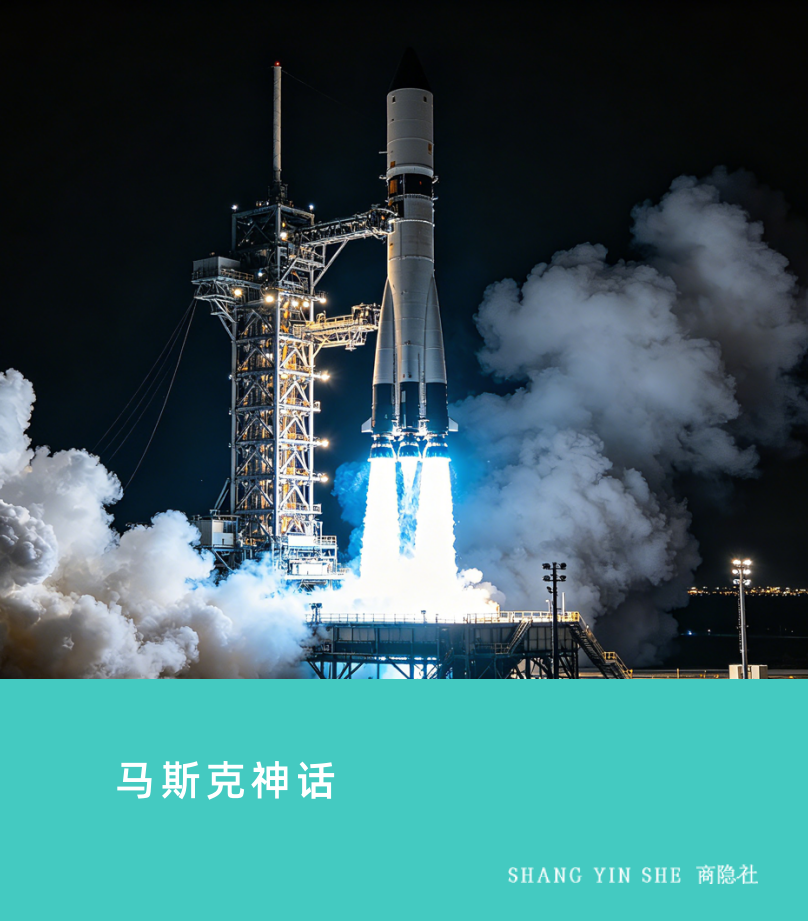
The creation of the 'Musk myth' can be seen as the result of a conspiracy among multiple parties: the media gains traffic; believers gain spiritual motivation; capital gains higher valuations; the U.S. government achieves strategic goals with minimal investment; Musk becomes a 'super individual' capable of exerting significant influence on technology, business, politics, and public opinion.
It may seem like 'everyone gets what they want,' but does it have any drawbacks?
Text by | Haoran This article is an original piece by Shangyin Society. For reprints, please contact the background.

$1 Trillion in Market Value Evaporates
More than a month after Musk's space exploration company, SpaceX, went public, its stock price experienced roller-coaster-like fluctuations.
On its debut on June 12, SpaceX closed at $160.9, up over 19% from its offering price of $150. On June 16, it reached an all-time high of $225.6, corresponding to a total market value of $2.66 trillion, once surpassing Amazon to rank among the top five globally by market capitalization.
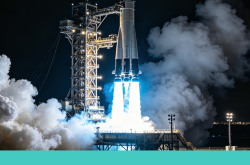
However, SpaceX's stock price began to retreat afterward. Coupled with the forced termination of the 'Starship' launch due to engine failure on July 16 and the emergency abort of the Falcon 9 rocket launch after ignition on July 21, SpaceX's stock price fell below $120, with its market value evaporating by over $1 trillion compared to its peak.
Behind the dramatic stock price swings lies the immense controversy that has always surrounded SpaceX.
SpaceX is currently composed of three main segments: space business, Starlink satellite communications, and AI and computing power business. Last year, its total revenue was $18.67 billion, but it incurred a loss of $4.94 billion, with a price-to-sales ratio (total market value divided by main business revenue) exceeding 100, representing an extremely extreme valuation with expectations pushed to the ultimate.
Starlink is currently SpaceX's only profitable business, contributing over 60% of the company's total revenue. As of March this year, it has operated 9,600 low-Earth orbit satellites, accounting for more than half of the global in-orbit low-Earth orbit satellites, primarily used to solve communication challenges in areas not covered by ground networks.
However, the market ceiling for Starlink is also evident. The physical characteristics of low-Earth orbit satellites determine that they cannot replace ground broadband and can only be applied in regions with low population density.
Now, let's look at SpaceX's space business, which involves rocket launches and space transportation using launch vehicles such as the Falcon 9, Falcon Heavy, and Starship. Through reusable technology, SpaceX has reduced rocket launch costs by over 70% compared to traditional disposable rockets.
The core customers for SpaceX's space business are NASA and the U.S. Department of Defense. In 2025, revenue was $4.08 billion, with a net loss of $450 million, mainly due to the high cost of developing the Starship, which burned $3 billion alone in 2025.
Additionally, there is the AI and computing power business. In February this year, Musk merged his AI company, xAI, into SpaceX. However, AI is currently in a period of high-intensity investment. In 2025, this segment generated $3.2 billion in revenue but incurred a net loss of $6.35 billion.
If AI were not merged into SpaceX, SpaceX would actually have been profitable in 2024. The merger resulted in losses instead. Why did Musk do this?
By incorporating xAI into SpaceX, Musk attempts to create 'space-based AI,' which is precisely the core grand narrative supporting SpaceX's valuation of over $2 trillion. If we only consider the relatively mature Starlink and rocket launch businesses, SpaceX would fall far short of such a high valuation.
Musk believes that as AI models expand rapidly, electricity, cooling, and land will become insurmountable obstacles, while space provides the ultimate solution—space offers inexhaustible solar energy; a vacuum environment is an excellent cooling site; space has vast expanses to deploy data centers.
Musk once predicted that within the next 30 to 36 months, the cheapest place to deploy AI computing power will no longer be Earth but space.
Therefore, despite the Grok series models from xAI having already fallen out of the first tier of global mainstream large models, SpaceX, compared to other AI-related companies, has both an AI business and rockets and Starships capable of sending things into space, as well as Starlink connecting Earth and space.
If you believe that data centers will move to orbit in the future and that SpaceX's technological capabilities can make it happen, then SpaceX is a ticket to the future AI infrastructure and is difficult to replicate. Otherwise, it has significant bubbles.
It is evident that the narrative of 'space AI infrastructure' is the core part of SpaceX's valuation and also the part with extremely high uncertainty, which is the source of continuous controversy surrounding SpaceX.
However, from another perspective, being able to use a grand narrative filled with extremely high uncertainty to value a company losing nearly $5 billion at nearly $2 trillion seems to be something only Musk can achieve in today's business circle. Many people invest in SpaceX because they invest in Musk's 'genius ability.'
As Nobel laureate in economics Paul Krugman said, to justify such an almost astronomical valuation, one of the premises of this IPO is that retail investors will buy SpaceX stocks not because they have made a rational business assessment of the company but because they believe they are buying a part of 'Elon Musk's genius.'

How the 'Musk Myth' Was Built
Good business models resemble religions; top brands sell faith, not products; correspondingly, great entrepreneurs resemble cult leaders.
When mentioning these, many people first think of Steve Jobs. After Jobs, the most sought-after entrepreneur with the most followers is undoubtedly Musk.
Compared to Jobs, Musk clearly has greater ambitions:
He has been portrayed as a dual savior of humanity. On Earth, he aims to create a cleaner and greener world through Tesla and SolarCity. When he believes that 'AI is more dangerous than nuclear weapons,' he founded xAI to ensure AI remains under human control and is safe for humanity;
In the vast expanse of space, he plans to colonize Mars, transforming humanity into a 'multi-planetary species' to save it from extinction. When he sees that humanity might deplete resources due to AI development, he proposes the idea of 'space data centers.'
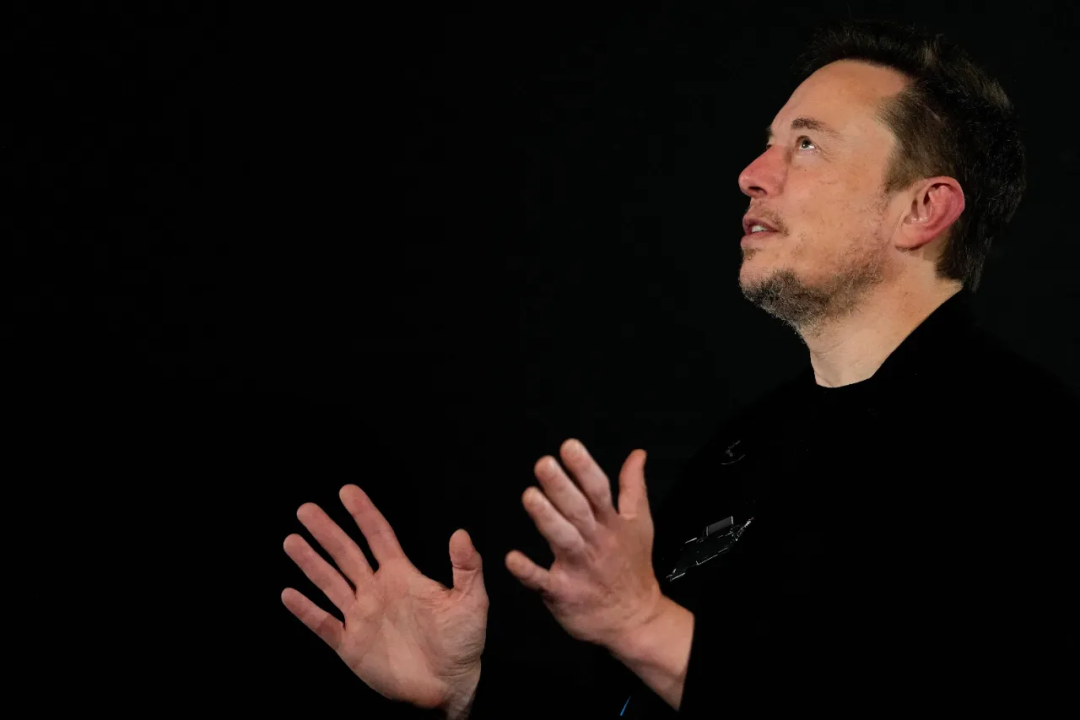
However, no matter how far Musk's grand visions are from reality or how incredible they may seem, he has a considerable number of followers.
It cannot be denied that Musk is an outstanding entrepreneur, but too many people have 'deified' him, treating him as a prophet. This makes it easy to understand why capital and retail investors were initially bullish on SpaceX.
Technology needs religion, capital needs prophets, and the media and public opinion have always enjoyed 'deifying' individuals.
Common sense tells us that successful entrepreneurship and class mobility depend not only on personal ability but also on the macro forces acting on individuals, which constitute the opportunities a person may seize in a lifetime.
However, to 'deify' someone, this common sense must be downplayed, attributing a person's success as much as possible to excellent qualities such as personal talent, decisiveness, and hard work.
This has formed a standardized narrative template.
First, successful entrepreneurs are often depicted as having very ordinary or even marginal backgrounds, but they exhibit unusual skepticism from a young age, foreshadowing their 'exceptional talent.'
For example, in Walter Isaacson's famous biography, 'Elon Musk,' at age 10, Musk read a book describing great inventions of the future and began contemplating human landing on other planets.
Similarly, at age 13, Jobs saw a photo of starving children in the Republic of Biafra in Life magazine and went to church to question the pastor. After hearing the pastor's response, 'God knows about it,' he announced on the spot that he would never set foot in church again.
Although children in their early teens often have brilliant ideas (qí miào sī xiǎng, whimsical ideas) and fantasize about doing various earth-shattering things in the future, when it comes to Musk and Jobs, these become essential prerequisites for their success.
In their biographies and media reports, there are also many descriptions of their character, with narrators attempting to guide us to interpret these as one of the reasons for their commercial success, dismissing rational and background analyses of personal success.
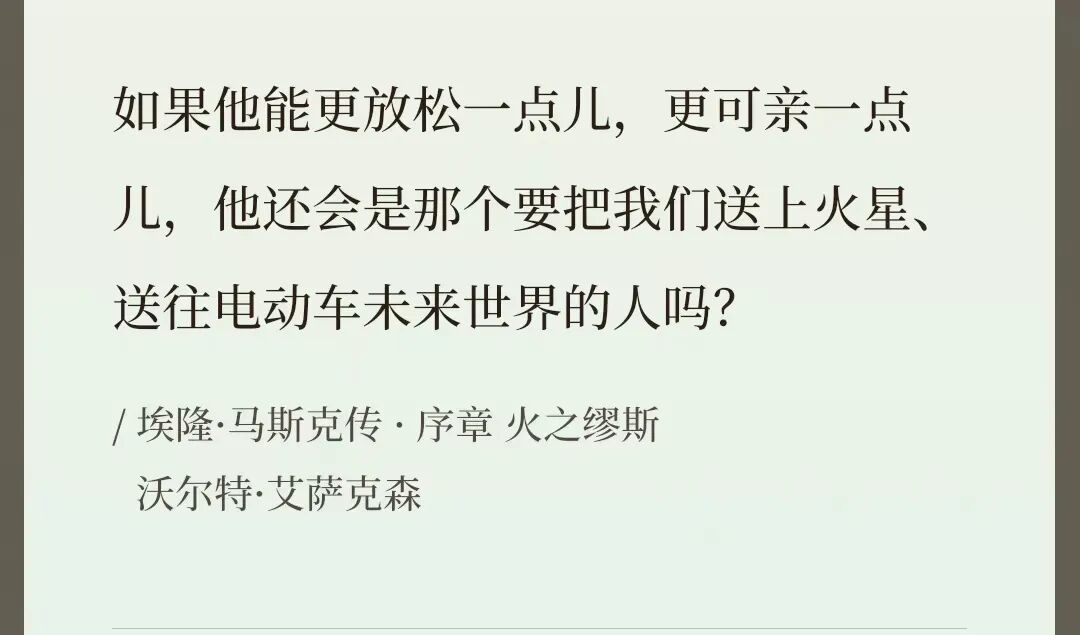
Even Musk's and Jobs' bad tempers are explained as necessary conditions for success. Isaacson asks in Musk's biography:
If he could be more relaxed and amiable, would he still be the one sending us to Mars and the future world of electric vehicles?
Second, they shape their image as disruptors and innovators by choosing and exposing opponents.
This needs no elaboration; many entrepreneurs also occupy the moral high ground by criticizing their competitors' products as expensive, outdated, poor quality, or bloated organizations.
Third, when narrating their entrepreneurial journeys, their creativity and achievements are generally portrayed as stemming entirely from their individual inspiration, vision, and abilities, guiding the market and creating a new world through their actions, minimizing narratives about era factors and external help, thereby transforming them into the 'source of value creation.'
We can see that companies with strong personal narratives about their entrepreneurs generally lack a 'second-in-command.'
At Tesla and SpaceX, apart from Musk, few people know who else plays a significant role;
Similarly, during Jobs' era at Apple, all major product launches, strategic announcements, and external communications were basically handled by Jobs.
French sociologist Anthony Galluzzo, in his book 'The Entrepreneur Myth: Breaking the Silicon Valley Imagination,' argues that enterprises are driven by countless micro-decisions made by countless participants. For observers, fully understanding this system is too difficult and not easily disseminated. The simplest method is to erase the collective and let the entrepreneur himself represent countless collective decisions, becoming the absolute center of the narrative.
For SpaceX, media reports mostly revolve around the 'hero narrative' of Musk driving the organization forward with his ambition, dreams, and methodology. However, no matter how grand the vision, it must ultimately confront physical boundaries and engineering realities, which requires the fervent engineers at SpaceX to accomplish.
For example, Tom Mueller, former Chief Technology Officer of SpaceX (retired in November 2020) and the first employee, led the development of the Merlin and Raptor series engines, the 'heart' of SpaceX;
Las Blackmore, the key innovator who turned reusable rockets from ideal to reality;
Gwynne Shotwell, with strong operational and negotiation skills, who sold SpaceX's rockets and made SpaceX commercially viable;
...
These individuals work over 80 hours a week, solving one tricky (jí shǒu, thorny) problem after another under extreme pressure. How thorny are these problems?
The book 'Musk: Return to Space' tells a story: In 2014, the SpaceX team prepared to attempt landing a rocket at sea. Benjamin Kelly was responsible for transforming a barge into a recovery vessel for rocket landings within eight weeks. Kelly unfolded the design drawings, with many areas still marked 'to be determined.'
After completing the transformation in the barge under the scorching sun, Kelly suddenly realized there was no place to store the rocket after reception. The first-stage rocket was enormous and couldn't be placed just anywhere. At this point, only a few hours remained before the rocket landed.
Kelly immediately emailed headquarters, and over 40 SpaceX engineers enthusiastically discussed solutions. However, the areas involved in the plan had not been inspected in person. Kelly and another engineer went to investigate, determine the bracket installation location, and arrange for contractors to excavate the foundation pit for the concrete base...
This state of 'crossing the river by feeling the stones' is the norm in SpaceX's work, requiring employees to have strong professionalism and problem-solving abilities. It can be said that engineer culture and organizational system capabilities are the fundamental driving forces behind SpaceX's development.
Notably, most SpaceX engineers come from NASA and its suppliers, bringing not only technology but also the systems engineering capabilities accumulated by the U.S. aerospace industry through years of 'burning money.'
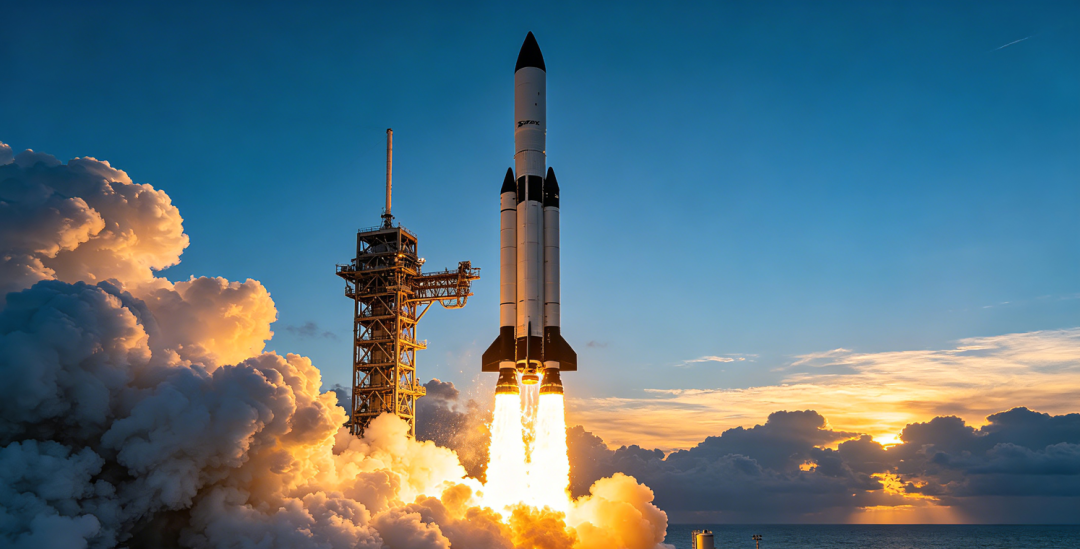
For example, although Tom Mueller came from automotive parts company TRW, TRW was the supplier of the landing power system for the 'Apollo' lunar landing spacecraft; Las Blackmore participated in the research and development of precision landing technology for spacecraft at NASA.
By screening and 'squeezing' these top aerospace talents, Musk enabled SpaceX to quickly achieve breakthroughs from 0 to 1 and from 1 to 100.
Therefore, SpaceX grew out of a mature aerospace ecosystem, just as Tesla's rise depended on the maturity of the automotive upstream and downstream industrial chain, talent, policies, and many other conditions.
For example, reusable rockets were not a product of Musk's 'flash of inspiration.' The concept and theory had long been proposed. By the 1990s, the U.S. Department of Defense had commissioned McDonnell Douglas to manufacture a vertical takeoff and landing vehicle named 'Delta Clipper' (DC-X for short), which successfully flew to an altitude of 2 miles and was recovered in 1996, proving the technical feasibility of vertical recovery.
Although the "DC-X" project was eventually cancelled due to funding and other issues, its design philosophy profoundly influenced SpaceX.
By 2009, NASA had organized a lunar lander challenge. A small company based in California, Masten Space Systems, won the competition with a small rocket. Their rocket could actively shut down its engines after ascending hundreds of feet, reignite in mid-air a few seconds later, and ultimately land smoothly.
This represented a step further than DC-X's vertical takeoff and landing technology. The key point was that they had only five full-time employees plus a few interns at the time, which inspired Musk: SpaceX could achieve retro-propulsive landing on its own without spending as much money as DC-X did.
Therefore, technological development has never been driven by "prophets" but rather by a relay race propelled by systems, demands, and collective trial and error.
Moreover, in the "hero narrative," another important participant often overlooked is state power.
State power is a necessary condition for technological innovation and the emergence of new industries. Basic research in the early stages of innovation is often funded by the state, a period marked by the highest uncertainty, with private investment entering only in the later stages of the innovation chain.
Even Silicon Valley is a product of massive U.S. military investment. In its early days, Silicon Valley was known as the "Defense Valley" due to the concentration of defense contractor companies, with the U.S. military being the primary customer for the semiconductor industry; the internet was also originally developed as a communication network by the U.S. military to withstand nuclear strikes.
U.S. government agencies also strongly supported the rise of SpaceX.
As early as August 2006, shortly after the first failed launch of the "Falcon 1" rocket, SpaceX secured a $278 million Commercial Orbital Transportation Services contract from NASA, along with other technical support.
After the Falcon 1's failed launches, it experienced two more launch failures before finally succeeding on its fourth attempt in September 2008. However, it still faced the risk of bankruptcy, with Musk exhausting all available loans until two days before Christmas that year when NASA awarded SpaceX a $1.6 billion space station transportation contract, pulling it back from the brink.
Later, NASA also provided substantial support for SpaceX's rocket and spacecraft development, granting access to some technologies from the Apollo program.
Starting in 2016, SpaceX collaborated with the U.S. Air Force, securing numerous contracts and grants, with the "Raptor" rocket engine for the "Starship" being developed with $61 million in funding from the U.S. Air Force.
A 2025 statistic by The Washington Post revealed that Musk's companies have cumulatively received at least $38 billion in government contracts, low-interest loans, subsidies, and tax breaks, with most support arriving at critical junctures when the companies were on the verge of bankruptcy or technological breakthroughs.
In the "hero narrative," collective wisdom, ecological maturity, and state support are rarely mentioned; instead, the focus is on the star entrepreneur's arduous journey and all-in bets.
Ultimately, they tie their personal destinies to world progress and human civilization, claiming to "live to change the world" and "save humanity."
In 2013, Musk announced that fully autonomous driving cars would be launched within three years;
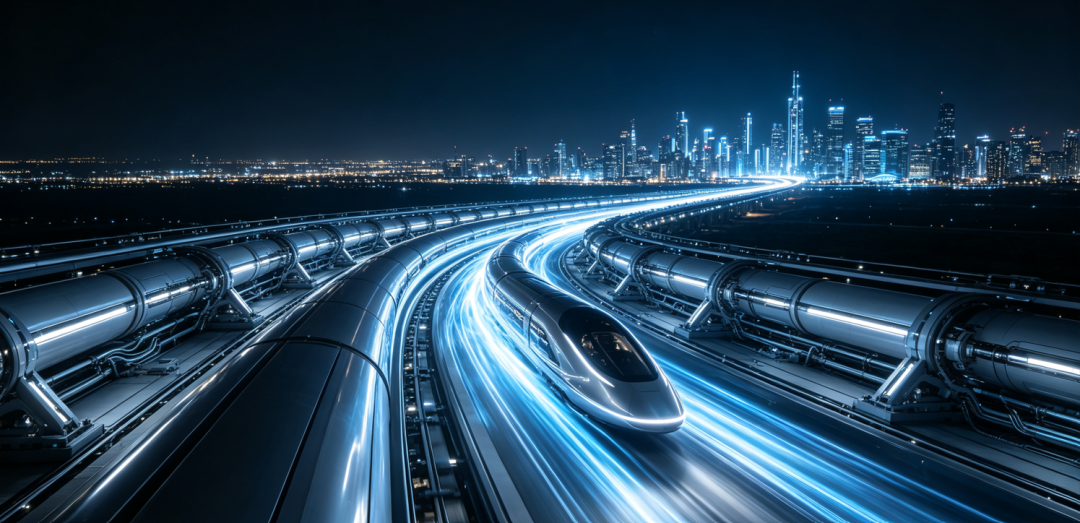
In 2015, he proposed inventing a revolutionary new mode of transportation, the "Hyperloop," a solar-powered, trackless train traveling at 1,000 km/h;
In 2016, Musk revealed to the media his plan to launch a rocket to Mars before 2018 and achieve human landing and colonization by 2024;
In 2019, he announced the launch of 1 million "robotaxis" the following year, autonomous vehicles It is said (allegedly) capable of generating $30,000 in annual income for owners;
That same year, he stated that his company Neuralink was developing brain-implant devices, which would enable human-computer interaction within months and eventually "cure" diseases like Alzheimer's, spinal cord injuries, and memory loss;
...
Musk's followers see no reason to doubt these grand visions, believing that even if Musk doesn't meet the deadlines, they will eventually be realized because he has already accomplished Tesla and SpaceX against overwhelming odds, under extreme pressure, and with visionary insight and capability.
However, as our previous analysis shows, behind Tesla and SpaceX lies not just Musk's "individual heroism" but also an entire system serving as a massive backdrop and driving force.
Nevertheless, the "Musk myth" has taken hold and is difficult to erase in many people's minds. When Time magazine named Musk Person of the Year in 2021, the article stated:
Musk symbolizes infinite possibility, leading us toward a reshaped world—a world free from conventions, where the unprecedented becomes commonplace, and there is still hope for saving Earth and humanity.

The Unquestionable "Musk Myth"
The creation of the "Musk myth" can be seen as the result of a collective conspiracy: the media gains traffic; followers gain spiritual motivation; capital gains higher valuations; the U.S. government achieves strategic goals with minimal investment; and Musk becomes a "super-individual" capable of exerting significant influence on technology, business, politics, and public opinion.
It seems like "everyone gets what they want," but does it have any drawbacks?
The book *The Entrepreneur Myth: Breaking the Silicon Valley Imagination* lists two discussions that I find interesting.
A: "The wealth of Musk and Bezos exceeds the combined wealth of the poorest 40% of this country's population. Such levels of greed and inequality are not only morally indefensible but also unsustainable."
B: "The word 'greed' is inappropriate when applied to Musk. I see no evidence that his wealth comes from greed. He passionately pursues grand goals through the companies he founded, driven by inspiration from the goals themselves, not profit."
Musk can influence the Russia-Ukraine war by opening Starlink to Ukraine; manipulate the value of Dogecoin (a cryptocurrency) through public opinion, causing some investors to lose everything; deeply intervene (intervene) in U.S. politics, intertwining commercial interests with politics; create the largest IPO in human history, becoming the "world's first trillionaire"...
Objectively, this "oligarchic power" has already caused significant inequality, but due to his powerful narrative-building ability, many people hold view B, making it inappropriate to question Musk's greed or the inequality he causes.
This is the terrifying aspect of the "Musk myth."
Welcome to exchange and discuss with the author~

-
![]()
Following the Explosive Success of Kimi k3, Moonshot AI is Reportedly in Final IPO Financing Discussions
-
![]()
Baidu Dazi's Ambitious Overtaking with 'Product-Centric' Upgrades
-
![]()
AI PC Is Becoming Obsolete! The Rise of AC: Do Agents Really Need Their Own Computer?
-
![]()
Times Are Changing: Domestic New Energy Vehicles Are Driving Traditional Luxury Brands to the Wall, Prompting BBA to Slash Prices En Masse for Survival
-
![]()
The Myth of Musk
-
![]()
Which Type of Talents Do Automakers Prefer to Promote: Science or Liberal Arts Graduates?
-
![]()
Why has OPPO's strategy been readjusted in less than three months?
-
![]()
New Models Falter: Over 700 New Cars in the First Half of the Year Struggle, Only 4 New Models Surpass 10,000 Units in Sales, Achieving Hot Sales | Mingjing Pro