ChinaJoy 2026 Preview Roundup: AI Smartphones, AI PCs, and Robots Take Center Stage, Far Beyond Gaming!
 07/24 2026
 552
552
From July 31 to August 3, 2026, the annual ChinaJoy will be held at the Shanghai New International Expo Center. This year's theme, "Journey with AI," highlights the accelerating integration of AI and entertainment gaming. However, Leitech believes a more accurate description would be "Surrounded by AI": according to official data, nearly 900 exhibitors will participate this year, with an exhibition area exceeding 140,000 square meters, setting new records in both scale and AI content.

(Image source: Official ChinaJoy)
At this year's ChinaJoy (referred to as CJ), Leitech (ID: leitech), a long-time focus on AI hardware technology, will once again send a reporting team to Shanghai after completing its WAIC coverage to bring you in-depth, professional content. Now, let's take an early look at the most noteworthy exhibitors and new products at this CJ, and see what this "Journey with AI" has in store.
Many brands now showcase their AI devices at exhibitions, often just displaying a few AI smartphones, AI PCs, and some products labeled with AI capabilities—lacking innovation and synergy.
(Image source: Leitech)
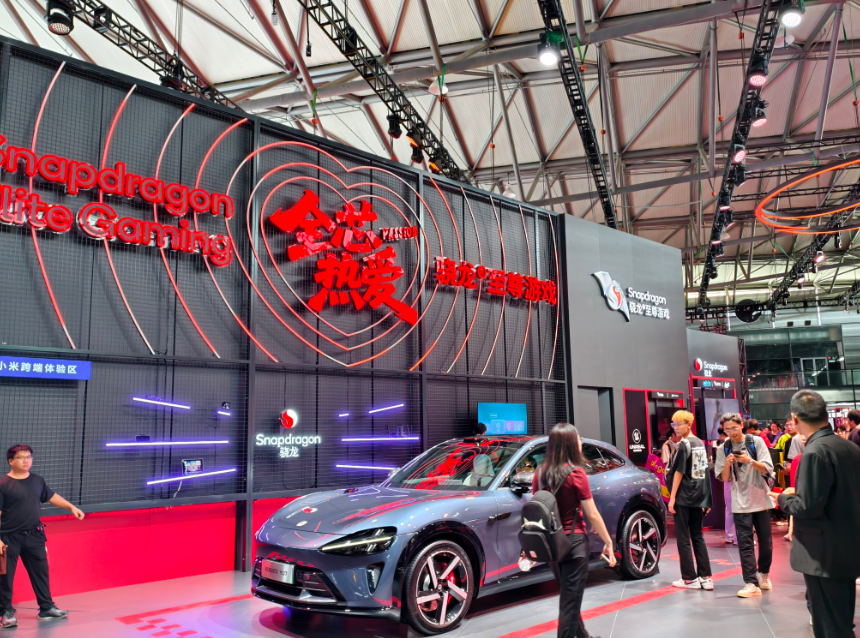
Based on past CJ experiences, this year's Snapdragon Pavilion is likely to feature AI smartphones, AI PCs, AI headphones, smart wearables, AI glasses, and even robots. In fact, Qualcomm's participation in these exhibitions always aims to demonstrate that Snapdragon is evolving from a mobile chip to a comprehensive AI computing platform powering smartphones, computers, cars, and XR devices.
Visitors can expect to experience AI's practical performance across different devices at Qualcomm's booth, such as conversing with an AI smartphone, running on-device large models on an AI PC, and interacting with new robots. Qualcomm aims to showcase at CJ that when AI fully integrates into smart devices, why should users think of Snapdragon first?
At the content level, the Snapdragon Pavilion will also feature a series of AI-driven gaming interactions—smart character interactions, audio-visual content generation, AI coaching, and companionship. With celebrity esports players and tech KOLs interacting on-site, along with check-in benefits, Qualcomm Snapdragon is expected to once again become one of the most popular pavilions at CJ.
If the Qualcomm Snapdragon Pavilion represents a concentrated display of AI terminals in the consumer market, then Liulian Intelligence's Agent PC showcases another approach to terminal interaction.
The name Liulian Intelligence may be unfamiliar to many readers. However, it is a major ODM player in the B2B market, with a product line covering notebooks, tablets, Mini PCs, all-in-ones, NAS, servers, and other full-scene smart terminals. It employs nearly 3,000 people, with over 60% being R&D personnel.
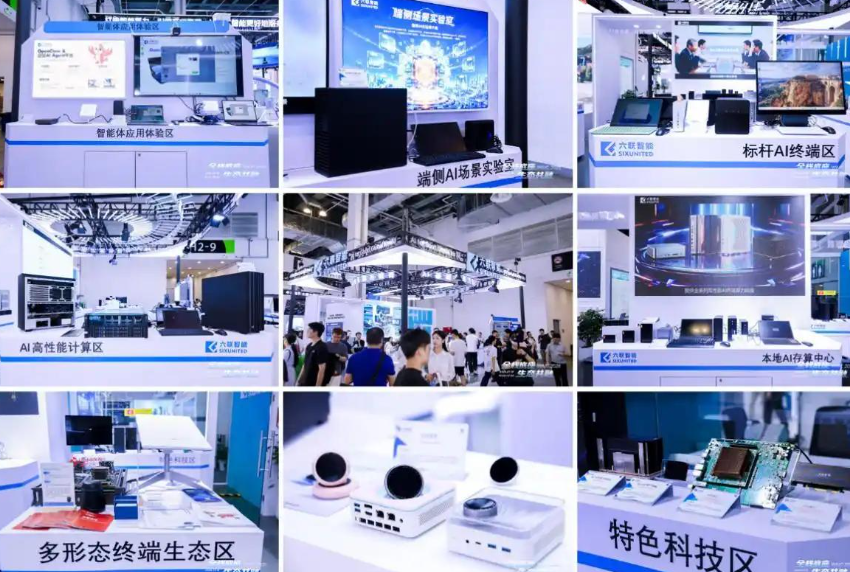
According to official information, Liulian's Agent PC products feature the latest AI chips from brands like Intel and AMD at the hardware level, emphasizing memory, VRAM performance, and AI computing power over traditional processors. At the software level, they provide Agent tools like SixClaw, allowing users to delegate tasks to AI for understanding, decomposition, and execution. Its product philosophy differs entirely from traditional PCs: with traditional PCs, you install software and operate them yourself; with Agent PCs, you set goals, and the PC handles decomposition and execution.
(Image source: Official Liulian Intelligence)
At this CJ, Liulian is expected to showcase its latest Agent PC products and demonstrate more AI solutions for government and enterprise clients. While Liulian primarily targets B2B users, ordinary consumers can at least witness the implementation of integrated hardware-software AI terminal solutions, which is a positive development.
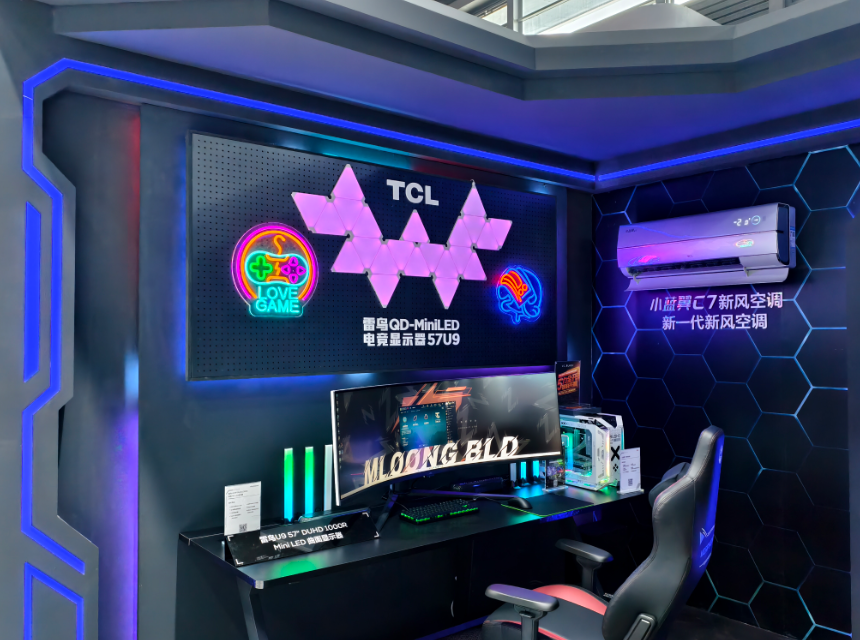
TCL CSOT is arguably the most "unique" exhibitor at CJ. As a screen panel supplier, it does not sell directly to consumers—meaning all products on display at TCL CSOT's booth come from other manufacturers. Some readers may wonder: what does a screen have to do with AI? As the primary interface for human-computer interaction, screens become increasingly important as AI terminals proliferate.
(Image source: Leitech)
According to official information, TCL CSOT will use its APEX display technology to collaborate with over a dozen terminal brand partners, including Lenovo, AGON, EVNIA, ASUS, LG, MSI, Acer, BenQ, TCL, Sony, and Thunderbird, to create a "gaming ecosystem display extravaganza." The product lineup will include smartphones, notebooks, monitors, TVs, and more. Personally, I'm most curious about PC monitors—whether technologies once exclusive to high-end displays have now trickled down to mid-range or entry-level products.
Additionally, Thunderbird's AI glasses lineup is worth watching. Who knows? Thunderbird might reveal new AI glasses developments at CJ.
This year, Mychoice is brimming with confidence. Over the past year, Mychoice, certified by Frost & Sullivan, has achieved the market position of "China's #1 mechanical keyboard seller in 2025." Moreover, it has produced million-selling products in four categories: magnetic-axis keyboards, custom keyboards, gaming mice, and gaming headsets—a true peripheral powerhouse.
At this CJ, Mychoice will land in Hall E7, Booth S201, under the theme "Mychoice Ultimate Gaming Moments," showcasing its entire lineup of popular products. The highlight will be the God 60 x Mortal Animation collaboration magnetic-axis keyboard, making its public debut and available for trial play at CJ.
(Image source: Official Mychoice)
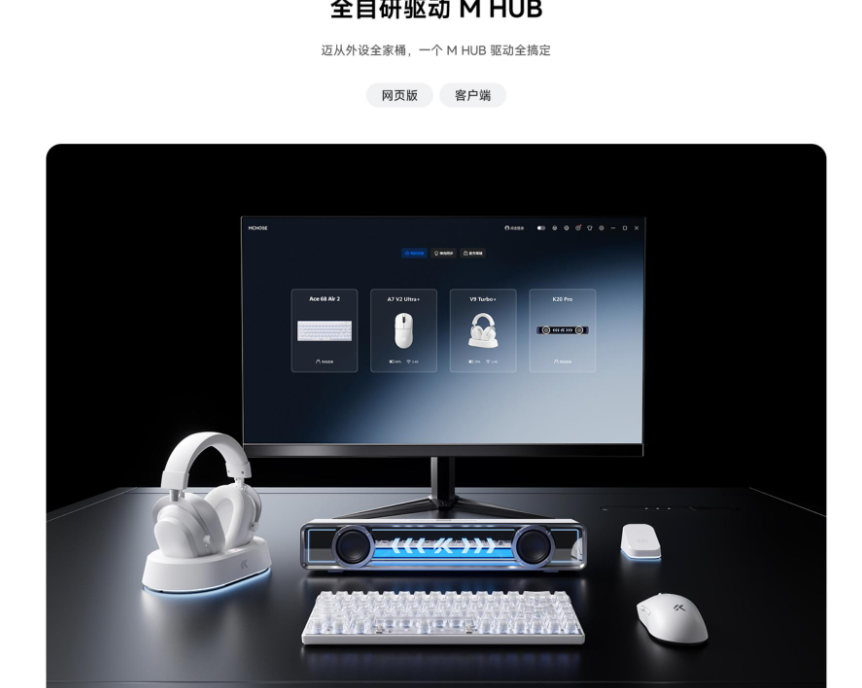
To be honest, the connection between AI and peripherals is not as tight as between chips and terminals. However, in an era where everyone is pivoting to AI, Mychoice has not remained stagnant. It has proven itself more than a rebranding factory through self-developed capabilities: M HUB driver registrations exceed 1 million, with three self-developed solutions—"Tianwen," "Xingdou," and "Lieying"—covering magnetic-axis keyboards, custom keyboards, and gaming mice, respectively. Tuning trigger precision and response latency for magnetic-axis keyboards requires extensive data accumulation and algorithmic optimization—technical accumulations far more valuable than slapping an "AI" sticker on products.
In other words, competition in the peripherals industry is shifting from "who is cheaper" to "who has self-developed capabilities." At this year's CJ, we should see many relevant manufacturers unveil new strategies.
So far, we've discussed how AI transforms terminal experiences. OBSBOT, however, will showcase at CJ how AI revolutionizes "filming."
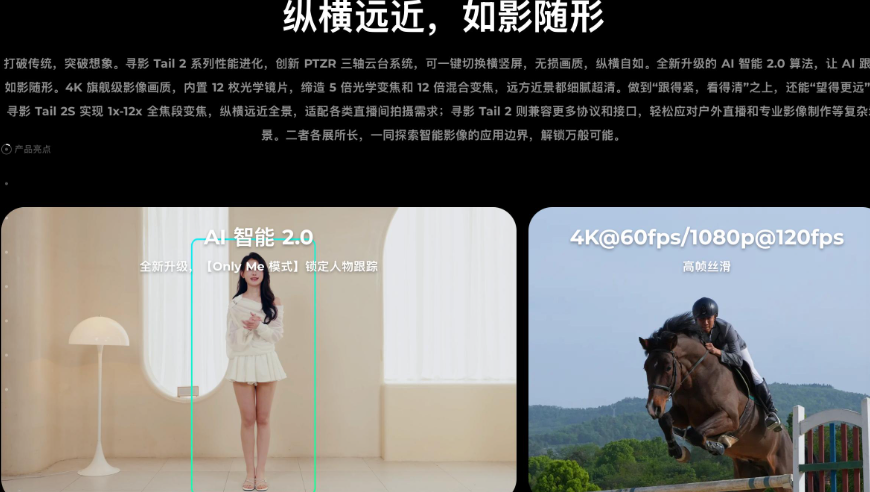
Traditional imaging devices compete on image quality parameters—pixel count, aperture size, focal range coverage. However, OBSBOT Tail 2 demonstrated something else at the 2026 Esports World Cup (EWC): AI cameras transform "filming" from labor-intensive to technology-intensive. At EWC, a few technicians used OBSBOT Master and the Obsbot Start APP to manage multiple Tail 2 cameras for synchronized shooting. AI Smart Tracking 2.0 reliably locked onto players in multi-person occlusion, complex lighting, and high-speed movement scenarios, outputting 4K HDR footage. Traditional setups require one photographer per camera, significantly reducing labor costs in such scenarios.
(Image source: Official OBSBOT)
Beyond the arena, OBSBOT has established official partnerships with professional teams like AG.AL Club, AL League of Legends division, AG Valorant, and XLG Valorant, integrating OBSBOT products into daily training and match review workflows for players and coaches.
At this year's OBSBOT CJ booth, we'll likely see a complete AI imaging solution tailored for esports and live streaming. We can also sense that the popularity of AI cameras may reshape the entire imaging production process: from shooting to post-production, requiring less human labor and lower time costs.
At this year's CJ, the proportion of exhibitors in smart mobility and robotics is significantly higher than in previous years. For example, BYD will exhibit all its brands, showcasing IP-themed cars paired with new intelligent cockpit entertainment spaces for audiences to game in. Shouqu Technology will debut its self-developed Skymotor central AI brain and 360° radar protection system; Magic Atom will bring its MagicBot Gen1.
While these three manufacturers target entirely different groups, their underlying trend is identical. In an era where AI dominates, "proving technological implementability" matters more than anything.

(Image source: Official Magic Atom)
Take BYD as an example: they believe young car buyers and gamers overlap. Instead of using traditional 4S store sales tactics, they let audiences game inside cars—only through firsthand experience can one appreciate new energy vehicles' charm. Shouqu binds "esports + smart mobility" to find the highest user overlap scene at CJ. Magic Atom needs no explanation—demonstrating robots in CJ's crowded environment is far more convincing than any launch video.
Of course, beyond these three, numerous competitor booths will appear at CJ. Whether these three can stand out in their respective fields depends on user adoption.
Kuaishou remains one of CJ's top-tier booths this year. Besides hosting top KOL livestreams and cosplayer challenges, it may also share updates on Kling AI. After all, the new "Short Drama Innovation Forum" at this CJ aligns perfectly with Kling AI's capabilities. Today's video AI models have evolved from "generating images" to "handling narrative and cinematography in one go"—a boon for content creators. If Kuaishou showcases AI-generated gaming shorts or interactive content, it will surely attract crowds.
Kingsoft Office's CJ logic mirrors Kuaishou's. It just launched Lingxi Pro and WPS Comate, two AI office agents, at WAIC. Lingxi Pro operates independently rather than embedding into WPS, aiming for AI-native office workflows: users set goals, and AI retrieves data, analyzes, and generates documents. WPS Comate targets enterprises, upgrading WPS 365 into a one-stop AI office platform. Over 100 enterprises piloted it before release, covering manufacturing and legal scenarios. Kingsoft's CJ goal is simple: content creators and digital entertainment professionals are potential AI office tool users. With strong product offerings, they'll naturally attract users.
This year's CJ exhibitor list includes some seemingly unrelated brands. For example, Baidu AI Cloud appears behind the scenes as an AI infrastructure provider, supplying cloud and computing power to most CJ exhibitors. Familiar stationery brand Deli appears in the Trendy Play Cultural and Creative Zone (trendy toy and cultural innovation zone), as it has heavily invested in cultural innovation and trendy toys in recent years—and CJ's audience aligns perfectly with its core consumers.
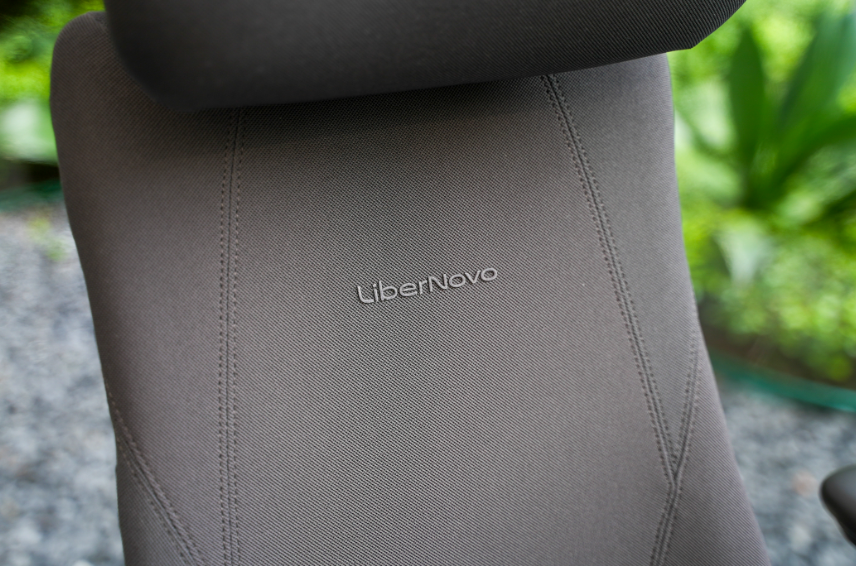
Qingxian Intelligence might be the most surprising exhibitor. It sells dynamic ergonomic chairs—seemingly unrelated to digital entertainment. However, its core technology—the Holographic Motion System—uses four linkages to synchronize 60 joints across the neck pillow, backrest, seat, and armrests, automatically adjusting support as the body moves. This addresses the "prolonged sitting discomfort" issue for CJ's audience, who often sit for extended periods at computers or game consoles. A good chair can significantly enhance their experience.
(Image source: Leitech)
These brands share a commonality: they lack direct ties to CJ's traditional DNA (gaming, anime, otaku culture). Yet their simultaneous presence indicates CJ's evolution from a "niche industry exhibition" to a "user gateway"—a grand party for all.
Limited by article length, I cannot cover all 900 exhibitors. However, from the above, we see that while people once came to CJ for gaming, they now come to see what else AI can do.
AI is no longer just a slogan on exhibitors' banners—it's a tool transforming products across industries. Qualcomm connects smartphones, PCs, headphones, glasses, and robots with AI, creating a complete ecosystem within one pavilion. Liulian Intelligence brings Agent PCs to users. Mychoice, without emphasizing AI content, demonstrates deeper data accumulation and algorithmic optimization.
Moreover, CJ itself is changing. Previously, saying "I'm going to CJ" evoked "gaming" in others' minds. Now, at CJ, you can see AI smartphones conversing with NPCs, experience on-device large models on AI PCs, game inside intelligent cockpits, watch robots work, and even test dynamic ergonomic chairs. CJ remains CJ, but what we experience has fundamentally changed.
One final reminder: On July 31st, ChinaJoy 2026 will officially kick off at the Shanghai New International Expo Center. The Leitech reporting team will be stationed on-site throughout the event, delivering firsthand, in-depth coverage via our WeChat official account matrix with 3 million genuine followers and our TOP-tier tech and finance IP matrices on video channels/Douyin/Xiaohongshu. See you in Shanghai!
On July 31st, ChinaJoy 2026, themed "Exploring with AI," will make a grand debut.
A total of 900 pan-entertainment exhibitors, including Tencent, NetEase, Sony, Qualcomm, MC, and Qingxian, will jointly present a global entertainment extravaganza.
With AI empowerment, how will hard tech brands in terminals, peripherals, robots, displays, and chips collaborate with the gaming content industry to deliver new entertainment experiences?
Led by founder and editor-in-chief Luo Chao, the Leitech ChinaJoy 2026 reporting team is about to make a grand appearance in Shanghai. Stay tuned!
-
![]()
Why Did Tesla’s Profits Drop and Cash Flow Go Negative?
-
![]()
AI Titans Are All in the Red: Time for Intelligent Driving Car Buyers to Reassess?
-
![]()
In the Next Decade of Joint Ventures, Honda Should Move Away from 'Stubbornness'
-
![]()
Operating Profit Plummets by 57%! What Caused Tesla’s Profitability to Decline in Q2?
-
![]()
Starting at 12,999 Yuan! Samsung’s Pioneering Wide Foldable Phone Unveiled: Sleek, Lightweight, and Ushering in a New Era for Android Foldables
-
![]()
Seven Bankruptcies Fail to Topple It! Aston Martin Raises £550 Million to Keep Afloat
-
![]()
Weichai's 'Triple Leap': From Diesel Engine Manufacturer to a 400 Billion Yuan Powerhouse
-
![]()
Tesla’s Financial Acumen Outshines Even Huawei’s