Starting at 12,999 Yuan! Samsung’s Pioneering Wide Foldable Phone Unveiled: Sleek, Lightweight, and Ushering in a New Era for Android Foldables
 07/24 2026
 529
529
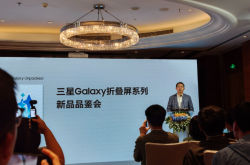
On the evening of July 22, Samsung hosted the global launch event for its Galaxy Z8 series of foldable smartphones, unveiling three distinct models: the Galaxy Z Fold8 Ultra, Galaxy Z Fold8, and Galaxy Z Flip8.
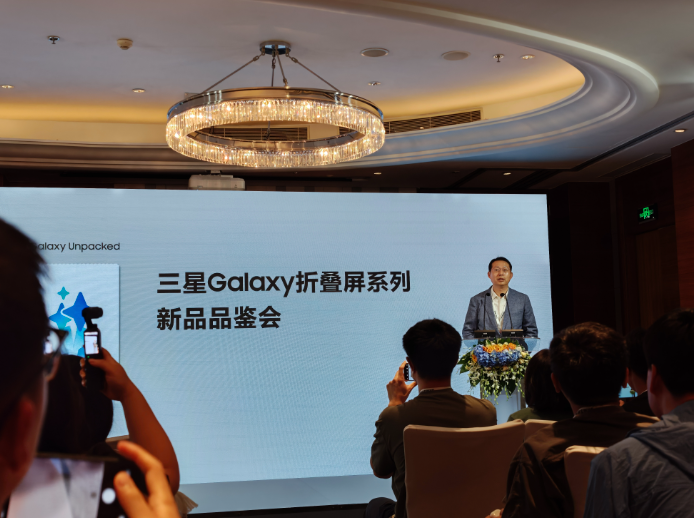
(Image source: On-site photography by Leitech)
Today, Samsung organized a foldable smartphone tasting event in Shanghai. Leitech (ID: leitech) was privileged to attend and was among the first to experience the new devices firsthand. Before delving into the experience, let's address the aspect that piques everyone's curiosity—pricing for the Chinese market: The Galaxy Z Fold8 starts at 12,999 yuan (12+256GB), the Galaxy Z Fold8 Ultra at 14,999 yuan (12+256GB), and the Galaxy Z Flip8 at 8,999 yuan (12+256GB). Pre-orders for all three models commence today, with priority shipping slated to begin on August 3.
As the inaugural Android wide foldable phone on the market, the Galaxy Z Fold8 left a lasting impression on Xiaolei. When folded, it's roughly the size of a sticky note, boasting a 5.5-inch external screen with a 10:16 aspect ratio and a slightly curved metal frame that offers an exceptional grip. Typing with one hand, the thumb can effortlessly reach most key areas—a feat challenging to accomplish with previous Fold models.
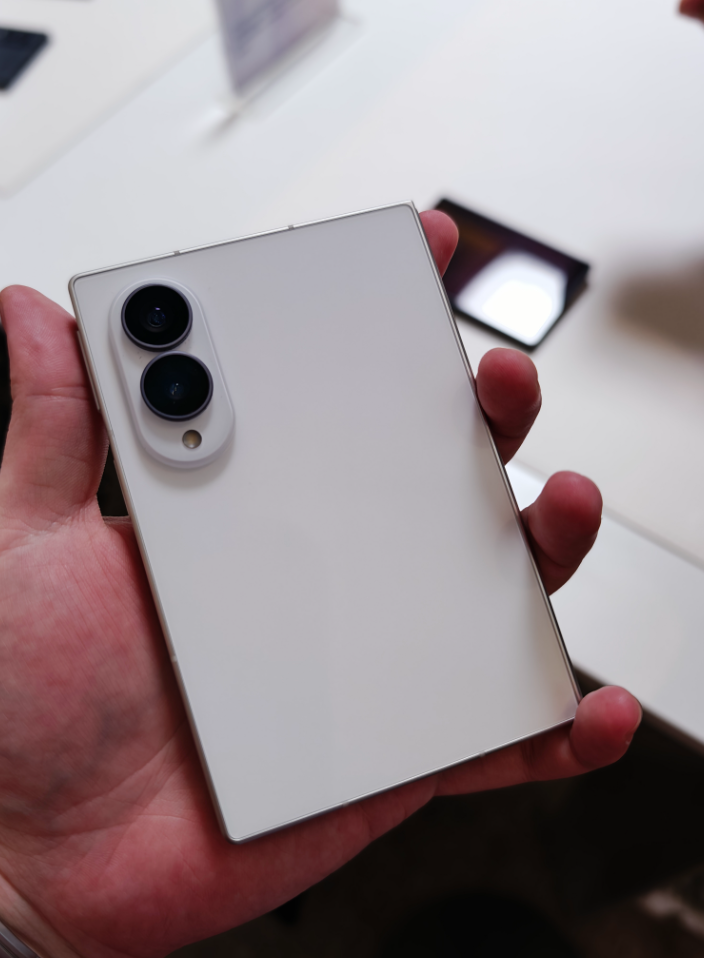
(Image source: Photography by Leitech)
Upon unfolding, it reveals a spacious 7.6-inch internal screen with a 4:3 aspect ratio. When watching videos, the top and bottom bezels are noticeably slimmer than those of larger foldable screens, displaying more content. When reading articles vertically, each line displays significantly more text, reducing the need for constant scrolling—one of the reasons Xiaolei favors wide foldable phones.
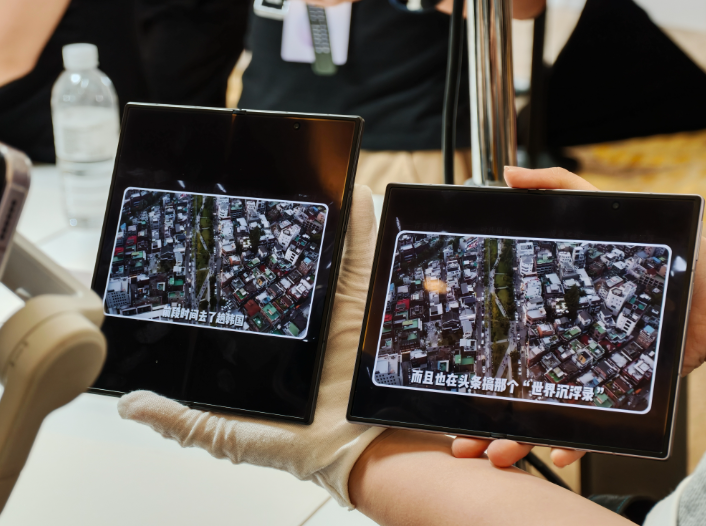
(Image source: Photography by Leitech, left: large foldable screen, right: wide foldable screen)
However, the 4:3 aspect ratio also poses some challenges. When viewing most 16:9 videos, the bezels remain larger than those of mainstream straight-screen phones. Additionally, many apps on the market are still optimized for narrow and long screens, resulting in noticeable bezels when opening certain apps on the Galaxy Z Fold8.
In terms of weight, the Galaxy Z Fold8 tips the scales at just 201g, lighter than 90% of straight-screen phones on the market, which is why Xiaolei finds its grip exceptional. Regarding thickness, when folded, it's only marginally thicker than the iPhone Air, making it an excellent choice for those who prioritize lightweight phones, like Xiaolei.
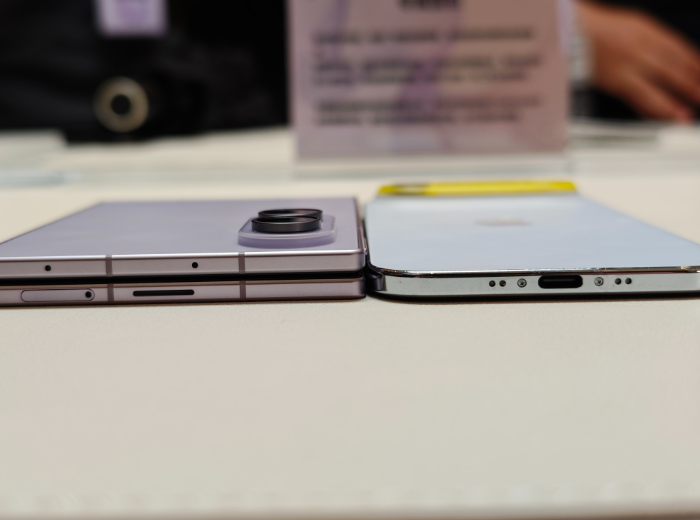
(Image source: Photography by Leitech)
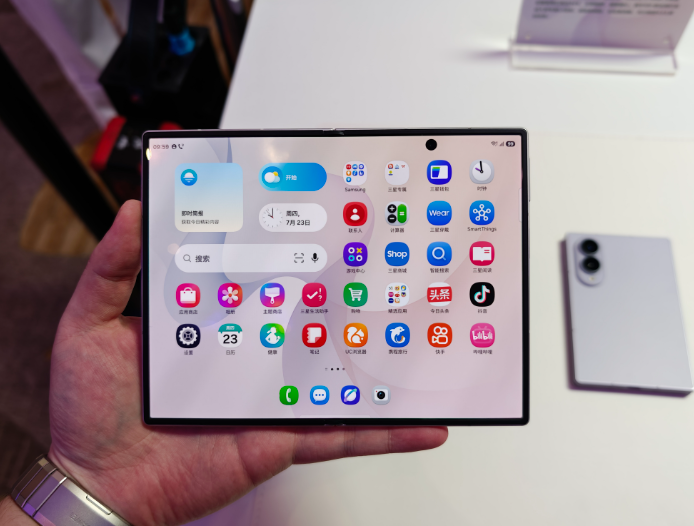
Addressing the most pressing concern—the crease—Samsung officially states that it has implemented a new dual-rail structure, making the crease shallower than before. Xiaolei's firsthand experience confirms this; only from an extremely sharp angle (which is practically impossible during daily use) can two faint creases in the middle of the screen be barely discerned. During regular use, their presence is imperceptible. Of course, touching the screen still reveals the two indentations.
Regarding the screen, the Galaxy Z Fold8 features a peak brightness of 3000 nits, coupled with a special anti-reflective coating, ensuring no reflections and clear visibility of most displayed content in bright light environments.
(Image source: Photography by Leitech)
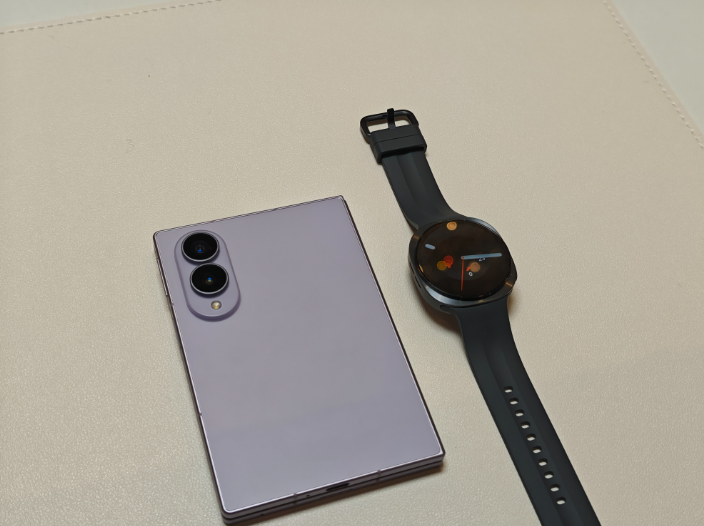
However, the camera might give some readers pause, as no phone at this price point has subpar imaging capabilities. The Fold8's rear camera setup includes a 50MP primary lens and a 50MP ultra-wide lens but lacks a telephoto lens. A foldable phone priced at 13,000 yuan without a telephoto lens seems somewhat unacceptable.
(Image source: Photography by Leitech)
Samsung's rationale is likely that the "Fold8 is designed for content consumption, not emphasizing photography." However, why should users compromise on the camera when investing this much? At the same price point, which straight-screen phone doesn't come with a complete triple-camera setup?
In terms of other configurations, the Galaxy Z Fold8 is equipped with a 4800mAh silicon-carbon battery, 45W wired fast charging, and 15W wireless fast charging, capable of reaching 62% charge in 30 minutes. It is powered by the Snapdragon 8 Elite Gen 5 processor, so there's no need to worry excessively about performance.
If we consider cost-effectiveness alone, the Samsung Galaxy Z Fold8 doesn't boast significant competitiveness. However, as the first wide foldable phone in the Android market, its form factor is worth considering for enthusiasts who enjoy trying new things.
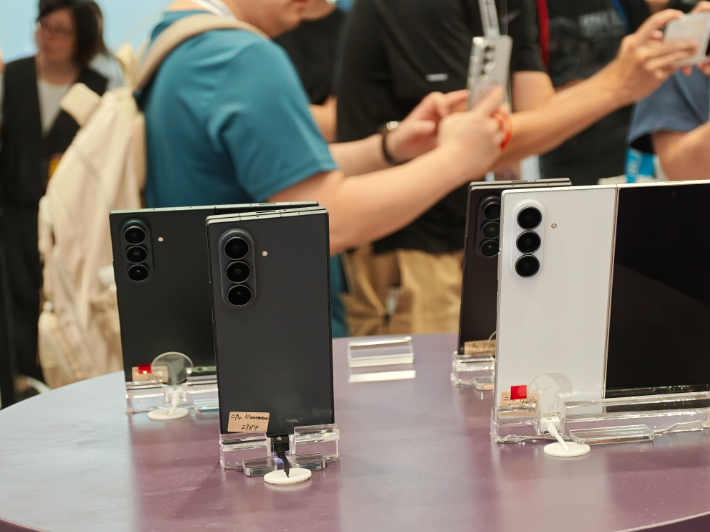
Unlike the Z Fold8, the Samsung Galaxy Z Fold8 Ultra represents the pinnacle of Samsung's foldable screen technology. When Xiaolei picked up the Fold8 Ultra, the initial reaction was that it was even thinner than the previous wide foldable model. In its unfolded state, it's only 4.1mm thick and weighs just 215g, still lighter and thinner than many mainstream flagship straight-screen phones. Samsung officially attributes this to the dual-layer structure of a new titanium alloy film and titanium plate beneath the screen, which Samsung calls the "titanium shock-absorbing layer."
(Image source: Photography by Leitech)
In Xiaolei's firsthand experience, this structure not only makes the screen flatter—no matter from which angle you look, the body is very flat, and the crease is even shallower than that of the previous wide foldable model.
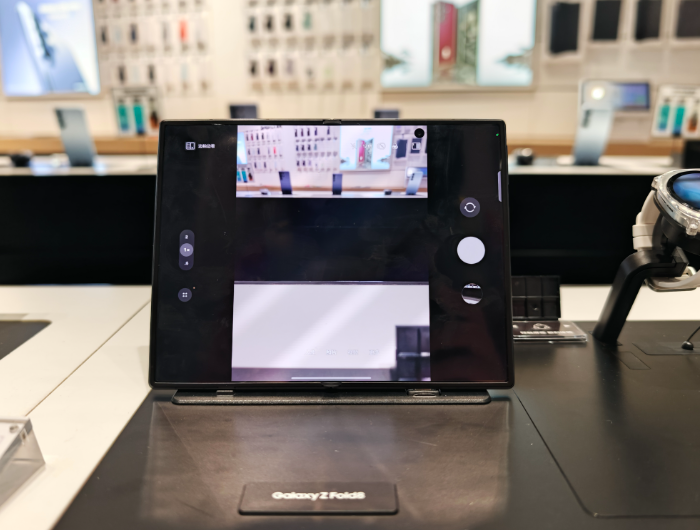
Interestingly, the Samsung Galaxy Z Fold8 Ultra is the first foldable screen phone on the market with the "Ultra" suffix, and its biggest differentiator lies in the camera. It features a rear triple-camera setup with a 200MP primary lens, a 50MP ultra-wide lens, and a 10MP 3x telephoto lens. This specification is currently unique in the foldable screen category. Xiaolei took a few photos on-site, and the image details were well-preserved, with decent control over highlights.
(Image source: Photography by Leitech)
However, Xiaolei also noticed an issue during the experience: in the 200MP mode, it takes about a second to complete the shot after pressing the shutter, rather than an instant capture experience. Additionally, the telephoto lens only offers 3x optical zoom, a noticeable gap compared to the 5x and 10x optical zooms on Samsung's own S series Ultra models. Of course, this is understandable, as the limited internal space of foldable screens makes it difficult to accommodate larger lens modules, a physical limitation.
In terms of battery life, the Fold8 Ultra has a built-in 5000mAh silicon-carbon battery, officially claimed to support up to 27 hours of continuous video playback. Fast charging remains at 45W, which seems somewhat outdated in 2026 when domestic flagships commonly feature over 100W charging.
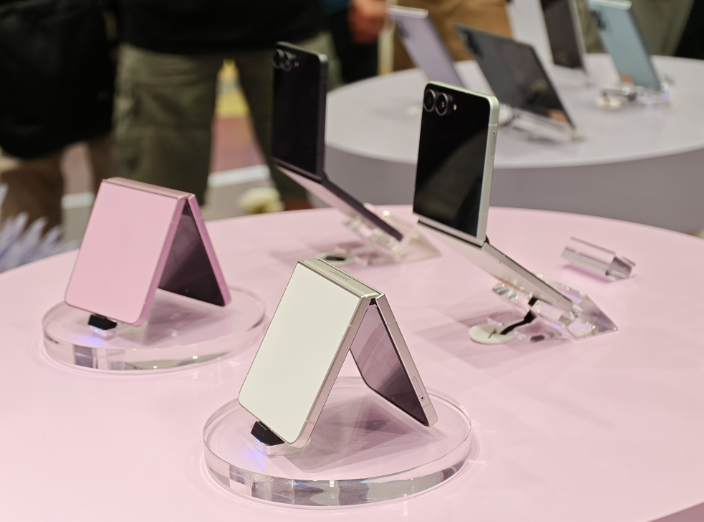
Compared to the fierce competition in the large foldable market, the small foldable segment has cooled down significantly in recent years, with many brands quietly exiting. However, as the pioneer of foldable phones, Samsung continues to innovate in this space.
(Image source: Photography by Leitech)
As a small foldable phone, its grip is naturally the best among the three, weighing 180 grams and measuring 6.1mm thick when unfolded, feeling similar to the iPhone Air in hand.
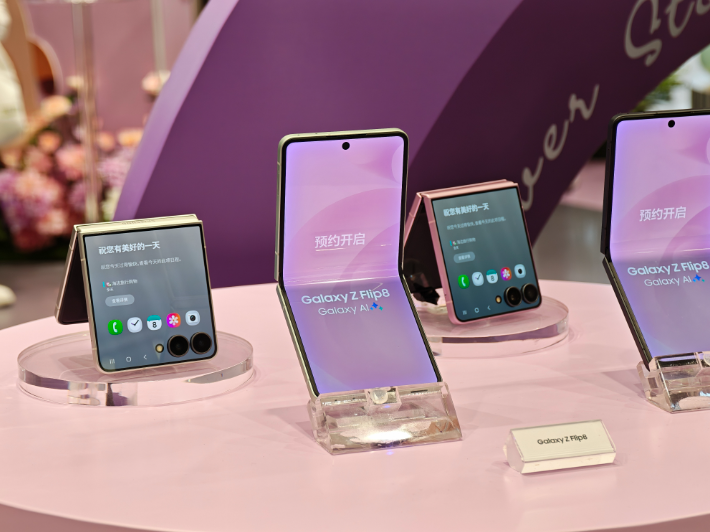
The biggest upgrade of the Flip8 is not its lightweight design but rather its external screen, which was once dubbed a "beautiful but useless" feature. On past small foldable phones, the external screen could only display basic information, and replying to messages required unfolding the screen. The Flip 8's 4.1-inch external screen is designed to allow users to handle most information processing without unfolding the phone.
(Image source: Photography by Leitech)
Staff demonstrated the "Instant Recommendations" feature on-site—when time and location information appears in a chat box, the external screen automatically pops up a quick calendar entry, allowing users to create an event with a single tap. Xiaolei tested it several times and found the recognition accuracy to be good, although the response was occasionally slightly slow. Nevertheless, the interaction direction is correct.
Additionally, the Flip8 introduces a new "DV Recording Mode." When shooting videos horizontally, the interface transforms into a layout similar to a handheld camera. Combined with the freestyle standing mode, the phone can be placed on a table half-folded for hands-free recording. These small design improvements may not be particularly eye-catching but significantly enhance the practical value of small foldable phones.
Unfortunately, the fast charging speed is a letdown. The Flip8 only supports 25W wired charging, paired with a 4300mAh battery, resulting in average charging speeds.
In addition to hardware upgrades, all three new models are equipped with the new generation of Galaxy AI based on One UI 9. Compared to the previous version, the new Galaxy AI has shifted from "passive response" to "proactive assistance." Taking "Instant Recommendations" as an example, the system actively identifies key content in chat information, such as flight details, event times, and addresses, and automatically pops up corresponding quick actions on the screen. This compresses the three steps of "search—open App—copy and paste" into a single tap, significantly improving efficiency.
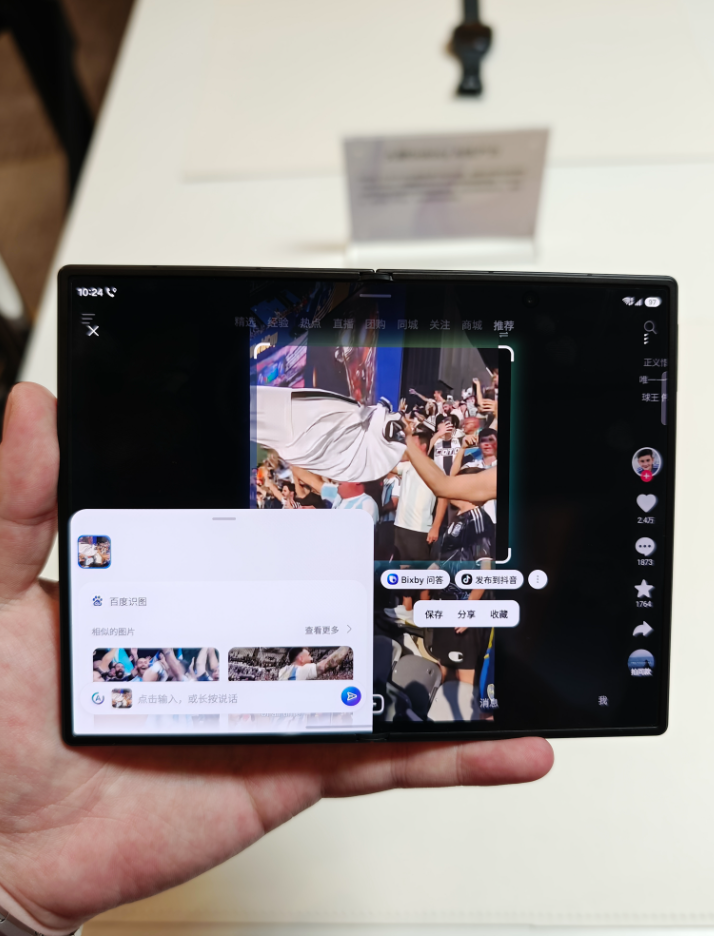
The "Circle to Search" feature becomes even more practical on foldable screens. By long-pressing the navigation key or Home key, users can activate the function and then circle any text or image on the screen to directly obtain search results, eliminating the need for copying, pasting, and switching to a browser.
(Image source: Photography by Leitech)
The multi-window mode on the Fold8 Ultra, combined with AI, leverages the advantages of the large screen. Users can take meeting notes while generating summaries, reply to emails in a split-screen window, and open a separate window to query information simultaneously. Of course, such "extreme multitasking" scenarios are relatively rare in daily work, but it aligns with the saying, "I may not use it, but you can't not have it."
The external screen of the Flip8 also benefits significantly from AI. Without unfolding the phone, AI displays key information—such as package delivery status, flight changes, and schedule reminders—concisely on the external screen, greatly improving its utility.

(Image source: Photography by Leitech)
After firsthand on-site experience, this version of Galaxy AI proves to be more polished than expected. Response speed, recognition accuracy, and the logical connection between functions are all more mature than previous generations. It's evident that Samsung has invested significant effort into this iteration, rather than simply slapping on an AI label.
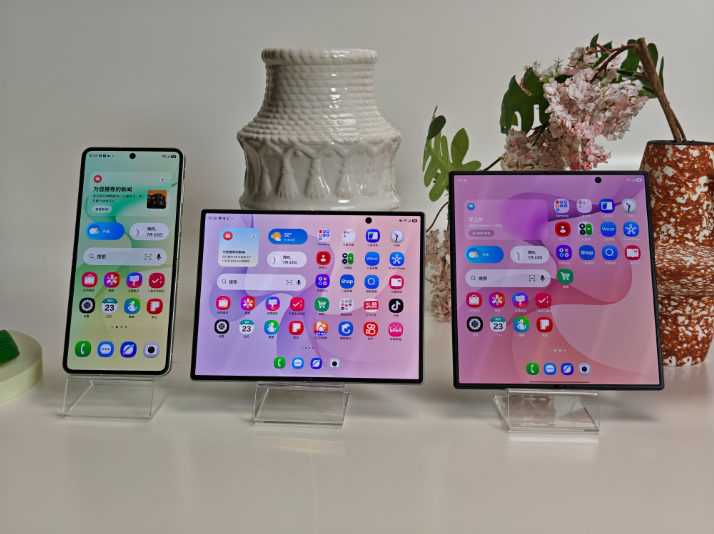
From the first-generation Galaxy Fold to today's Z8 series, foldable phones have come a long way over eight years. The most significant changes in Samsung's three new products are not necessarily in imaging or performance improvements but rather in realizing that the biggest advantage of foldable phones has never been just a large screen. Instead, it's about providing the most suitable form factor for different scenarios.
The wide foldable design of the Galaxy Z Fold8 opens up a new development path for foldable phones, while the Galaxy Z Fold8 Ultra has become a true foldable flagship. The Galaxy Z Flip8, enhanced by AI, transforms from a fashionable "toy" into a genuine productivity tool. Each model has a clear positioning, complementing one another.
(Image source: Photography by Leitech)
Of course, this generation of products also has some issues, such as fast charging speeds lagging behind domestic competitors by one or two generations and the pricing being slightly high.
However, on the whole, Samsung is heading in the right direction, and its products are attractive enough. Whether it's worth spending the money depends on whether you care more about the novelty of the foldable form or those few shortcomings.
On July 31, ChinaJoy 2026, themed "Exploring with AI," kicked off with a bang.
A total of 900 pan-entertainment exhibitors, including Tencent, NetEase, Sony, Qualcomm, Maison, Qingxian, and others, joined forces to present a grand feast for the global entertainment industry.
With the support of AI, how will hard-tech brands in terminals, peripherals, robots, displays, chips, and other fields collaborate with the gaming content industry to deliver new entertainment experiences?
Led by founder and editor-in-chief Luo Chao, the Leitech ChinaJoy 2026 reporting team is about to make a grand appearance in Shanghai. Stay tuned!
-
![]()
Why Did Tesla’s Profits Drop and Cash Flow Go Negative?
-
![]()
AI Titans Are All in the Red: Time for Intelligent Driving Car Buyers to Reassess?
-
![]()
In the Next Decade of Joint Ventures, Honda Should Move Away from 'Stubbornness'
-
![]()
Operating Profit Plummets by 57%! What Caused Tesla’s Profitability to Decline in Q2?
-
![]()
Starting at 12,999 Yuan! Samsung’s Pioneering Wide Foldable Phone Unveiled: Sleek, Lightweight, and Ushering in a New Era for Android Foldables
-
![]()
Seven Bankruptcies Fail to Topple It! Aston Martin Raises £550 Million to Keep Afloat
-
![]()
Weichai's 'Triple Leap': From Diesel Engine Manufacturer to a 400 Billion Yuan Powerhouse
-
![]()
Tesla’s Financial Acumen Outshines Even Huawei’s