Weichai's 'Triple Leap': From Diesel Engine Manufacturer to a 400 Billion Yuan Powerhouse
 07/24 2026
 494
494
Author/Qingfu
Editor/Jiajia
Recently, Weichai Group declared that its total revenue had, for the first time in its history, surpassed 200 billion yuan, marking a 22% year-on-year increase. The company is "striving to hit the annual development target of 400 billion yuan and to lead in the high-end equipment sector." Ma Changhai, Party Secretary and Chairman of Weichai Group, exudes confidence in this growth trajectory.
This confidence stems from Weichai's robust performance. In traditional domains such as diesel engines and heavy-duty trucks, Weichai has bolstered its market share through globalization. In burgeoning fields like new energy and data centers, its performance has skyrocketed, with revenue from data center products alone surging by 140% year-on-year.
With steady growth in its traditional strengths and rapid expansion in emerging sectors, Weichai has become a formidable force. However, this success is underpinned by the realization that Weichai did not passively await opportunities—over the past two decades, it has proactively transformed and capitalized on them, achieving 200 billion yuan in revenue in just half a year.
【1】Vertical Integration: Venturing into Complete Vehicle Business
In 2004, as Weichai celebrated annual sales exceeding 10 billion yuan, its management, led by then-Party Secretary Tan Xuguang, confronted a stark reality:
"If we confine ourselves to diesel engines without industrial diversification, Weichai will face market challenges within five years," cautioned a "health check" report by consulting firm Roland Berger, which bluntly stated that Weichai was at a crossroads.
The rationale was straightforward: domestic truck manufacturers, driven by cost and supply chain efficiencies, would eventually establish their own engine plants once they reached a certain scale. This meant Weichai had to either remain a diesel engine supplier or transition into a truck manufacturer.
Easier said than done. Firstly, Weichai lacked experience in complete vehicle manufacturing, starting from scratch. Secondly, openly producing heavy-duty trucks would place it in direct competition with former clients, risking significant order losses.
The dilemma was whether to endure short-term pain by competing with truck manufacturers or face the longer-term agony of being sidelined by them. At the time, it seemed like an insurmountable choice.
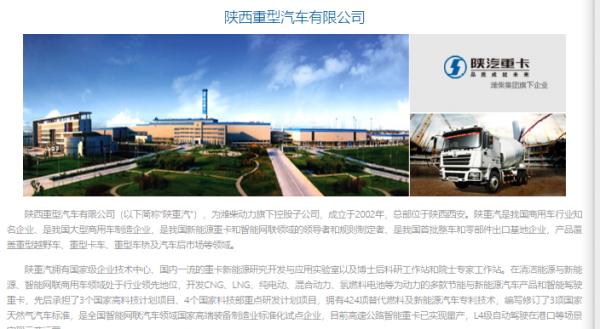
Fortunately, Weichai discovered a new path. In 2005, the "Delong Group" collapsed, and its assets, including Shaanxi Heavy Truck (vehicle manufacturing), Fast Gear (transmissions), and Hande Axle (axles), were put up for sale.
 (Source: Weichai Official Website)
"The moment Delong collapsed, our first thought was that an opportunity had presented itself," Tan Xuguang decided promptly. Acquiring these assets would enable Weichai to enter complete vehicle manufacturing without conflicting with existing clients.
Determined, Weichai acquired the assets for 1.02 billion yuan in cash in August 2005—a bold move, considering its 2001 revenue was just 1.6 billion yuan. It was akin to a high-stakes gamble.
But Weichai emerged victorious. By inheriting Shaanxi Heavy Truck, Fast Gear, Hande Axle, and Torch Spark Plugs, it constructed an "engine + transmission + axle" industrial chain.
For truck manufacturers, Weichai was no longer merely a diesel engine supplier but a comprehensive solution provider. This integrated industrial logic helped Weichai avoid being marginalized by truck enterprises.
Currently, Weichai engines dominate the heavy-duty truck market with a 34% market share by 2025. Its indirectly controlled Shaanxi Heavy Truck sold 195,000 heavy-duty trucks in 2025, ranking third in the industry.
【2】Declining Performance: Embracing Globalization for Survival
If the 2005 acquisition of Delong's assets allowed Weichai to establish a foothold in heavy-duty trucks and diesel engines, addressing its survival concerns, then a decade later, in 2015, Weichai encountered a new crisis—its industrial chain for powertrain and complete vehicles was teetering on the brink of collapse.
In 2015, the domestic heavy-duty truck industry was severely impacted by a decline in real estate investment, with annual sales plummeting to just 551,000 units, down 25.98% year-on-year.
As the industry leader, Weichai bore the brunt:
In engines, Weichai Power's annual production and sales plummeted to 229,400 units, a 49.29% year-on-year decline, including 27,000 units of 5-ton loader engines, down 49.3%.
In core components, Fast Gear's transmission sales dropped to 407,000 units, a 34.4% decline from 2014.
In complete vehicles, Shaanxi Heavy Truck, indirectly controlled by Weichai, sold 56,000 heavy-duty trucks in 2015, down 39.1%.
The across-the-board declines signaled that Weichai's "engine + transmission + axle" golden industrial chain had been disrupted.
While Tan Xuguang recognized growth bottlenecks domestically, he also saw potential overseas. "Weichai is not content with being a Chinese company; our ambition is to be a global one."
 (Source: Weichai Official Website)
Take heavy-duty trucks as an example. In 2015, domestic medium and heavy-duty truck sales reached 751,100 units, while overseas sales soared to a staggering 2.85 million units—3.8 times the domestic market.
Globalization was imperative, but Weichai's internationalization faced hurdles as it competed with overseas giants like Cummins, Caterpillar, and MTU in engines, and Daimler Trucks, Volvo Trucks, and Scania in complete vehicles.
To break through, Weichai adopted a differentiated strategy:
Firstly, it focused on pricing, targeting emerging markets under the "Belt and Road" initiative, Africa, and Latin America, offering cost-effective alternatives. According to Zhongtai Securities, Shaanxi Heavy Truck's heavy-duty trucks were priced at about half of Western products.
Secondly, it strengthened its technical offerings. For instance, Weichai's diesel engines now achieve 53% thermal efficiency—a global record for commercialized diesel engines, compared to the typical 45-46% efficiency of overseas competitors.
Through emerging market development and high-end product breakthroughs, Weichai transformed from a domestic player into a global contender. In the first three quarters of 2025, Weichai's engine exports grew by over 30%, and heavy-duty truck exports reached 111,000 units, up 24.5% year-on-year.
"Overseas business now accounts for about 46% of Weichai's total revenue, with a high degree of internationalization. Our internationalization index has reached 40.93%," Ma Changhai said, noting that international business now supports half of Weichai's revenue.
【3】Proactive Transformation: Capitalizing on the AI Opportunity
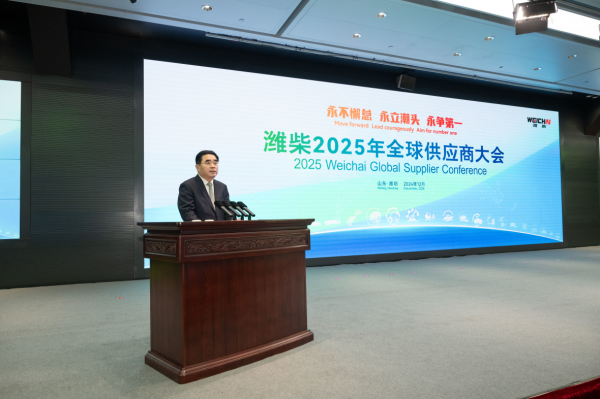
"Weichai must seize the new energy wave and cannot afford to lag behind," Ma Changhai declared boldly at the "Shandong Heavy Industry·Weichai Power Global Partners Conference" in 2025. Weichai would transition from traditional diesel engines to emerging industries, elevating it to an independent business segment.
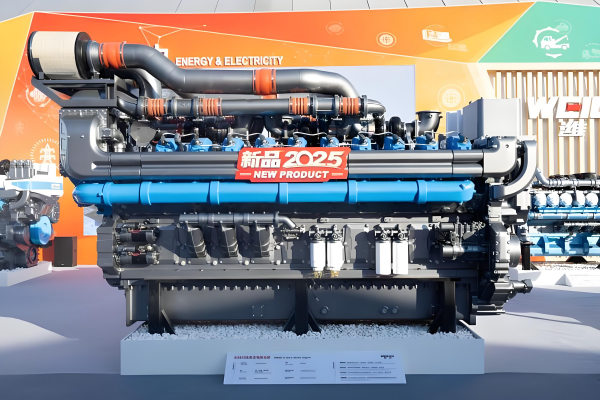
Ma's "new energy business" primarily refers to supplying diesel generators for AI data centers.
In 2023, as data center numbers surged, so did their electricity demand. Gartner predicts that by 2027, electricity demand for running AI-optimized servers will reach 500 terawatt-hours per year—2.6 times the 2023 level.
Contrary to the common misconception that data centers rely solely on the grid, they actually adopt a hybrid approach with grid power and diesel generators. If the grid fails, diesel generators immediately provide backup power. By 2027, the diesel generator market is expected to reach $22 billion.
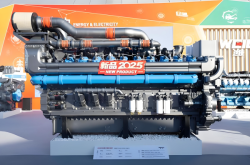
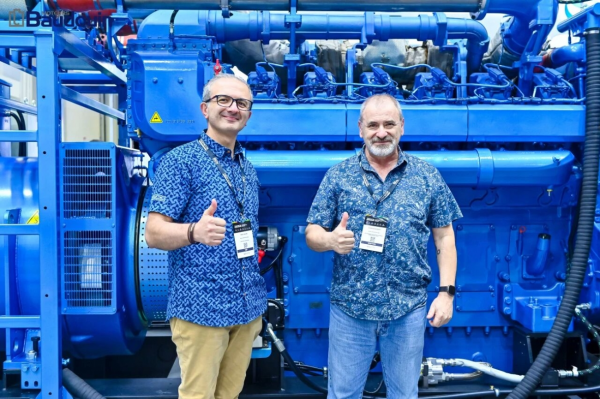
"Downtime costs for data centers are calculated in milliseconds. Our engines must respond instantaneously," Tan Xuguang said. To meet extreme reliability and stability demands, Weichai redesigned its M-series large-bore diesel engines. Compared to foreign products, the M-series now leads in power density (25% higher than the industry average), takes just 8 seconds to reach full load from a blackout (vs. the national standard of 15 seconds), and can operate continuously for 2,000 hours without failure. In terms of delivery, international competitors typically require over 100 weeks, while Weichai needs only 30-60 weeks.
 (Source: Weichai Official Website)
These technical and delivery advantages enabled Weichai to capitalize on the AI data center boom. In 2023, it sold just dozens of M-series diesel generators; this surged to hundreds in 2024, then jumped 259% to 1,400 units in 2025. By the first half of 2026, sales grew another 140% year-on-year.
This showcases Weichai's ability to proactively transform and seize opportunities—it is no longer just an engine supplier for trucks but an essential infrastructure provider for AI data centers.
Weichai's ambition to achieve 400 billion yuan in revenue by 2026 is bold, but it is underpinned by a pattern of transformation every decade: In 2005, amid booming diesel engine sales, Weichai proactively entered the medium and heavy-duty truck sector through acquisitions, sparking a decade of growth.
In 2015, affected by the real estate downturn, Weichai avoided internal competition and went global, competing with foreign giants like Scania, Caterpillar, and MTU. Through technological upgrades and market positioning, it turned overseas markets into a new pillar.
Around 2025, Weichai recognized the energy demand from AI data centers and bet on more reliable and stable diesel generators, allowing this erstwhile diesel engine manufacturer to reap the rewards of the AI boom.
From these three transformations, it is evident that Weichai did not passively await opportunities—it seized them, evolving from a provincial enterprise in Shandong into a high-end manufacturing company striving for 400 billion yuan in annual revenue.
END
-
![]()
Why Did Tesla’s Profits Drop and Cash Flow Go Negative?
-
![]()
AI Titans Are All in the Red: Time for Intelligent Driving Car Buyers to Reassess?
-
![]()
In the Next Decade of Joint Ventures, Honda Should Move Away from 'Stubbornness'
-
![]()
Operating Profit Plummets by 57%! What Caused Tesla’s Profitability to Decline in Q2?
-
![]()
Starting at 12,999 Yuan! Samsung’s Pioneering Wide Foldable Phone Unveiled: Sleek, Lightweight, and Ushering in a New Era for Android Foldables
-
![]()
Seven Bankruptcies Fail to Topple It! Aston Martin Raises £550 Million to Keep Afloat
-
![]()
Weichai's 'Triple Leap': From Diesel Engine Manufacturer to a 400 Billion Yuan Powerhouse
-
![]()
Tesla’s Financial Acumen Outshines Even Huawei’s