Operating Profit Plummets by 57%! What Caused Tesla’s Profitability to Decline in Q2?
 07/24 2026
 379
379
Author | Guanchejun
Given the surge in vehicle sales, why did Tesla experience a decline in profitability?
On July 23, 2026, Tesla unveiled its latest Q2 financial report, causing a stir in the market.
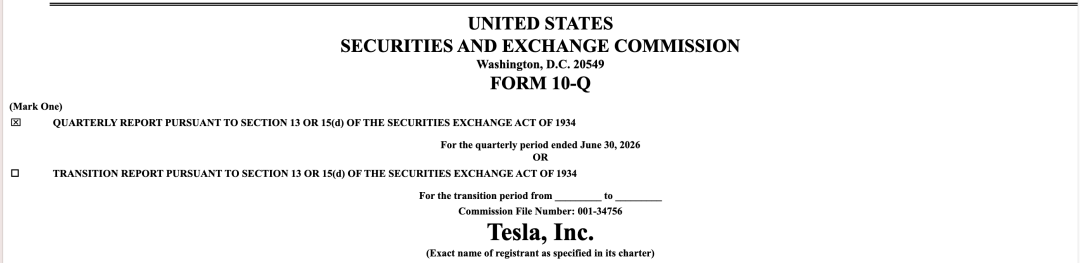
Let's start with the positive aspects: In Q2, Tesla delivered 480,000 vehicles, marking a 25% increase year-on-year and setting a new Q2 record. Total revenue soared to $28.24 billion, up 26% year-on-year, surpassing the $100 billion mark for the first time in the past 12 months.
Moreover, the number of paid subscribers for FSD reached 1.48 million, up 56% year-on-year, with over 55% of new vehicle deliveries in North America activating FSD subscriptions.
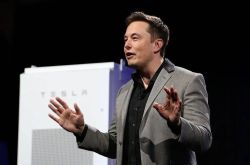
During the earnings call, Musk even quipped, “Many consumers visit our stores primarily to purchase FSD and, incidentally, buy a car.”
Now, let's delve into the less encouraging figures.
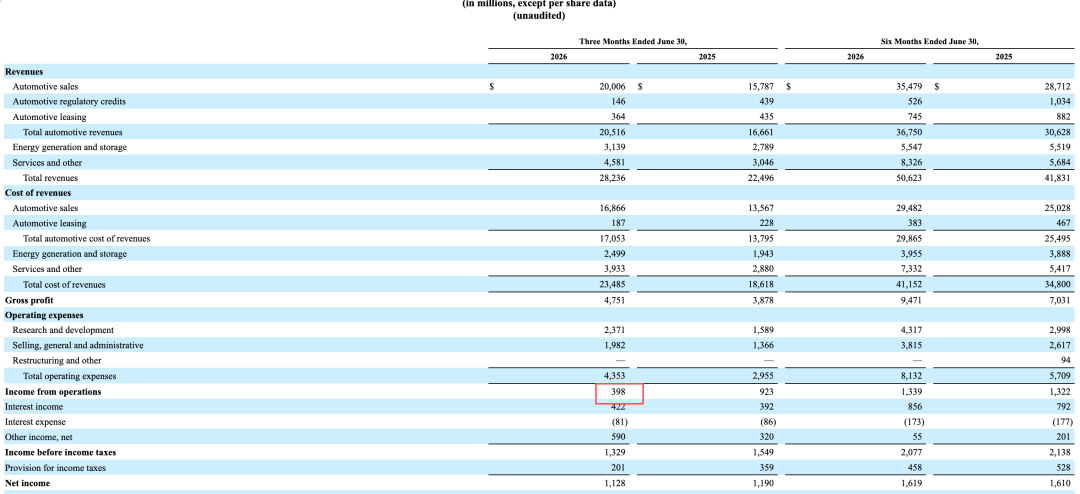
In Q2, Tesla’s operating profit stood at just $398 million, a 57% decrease year-on-year, with the operating profit margin plummeting from 4.1% in the same period last year to 1.4%.
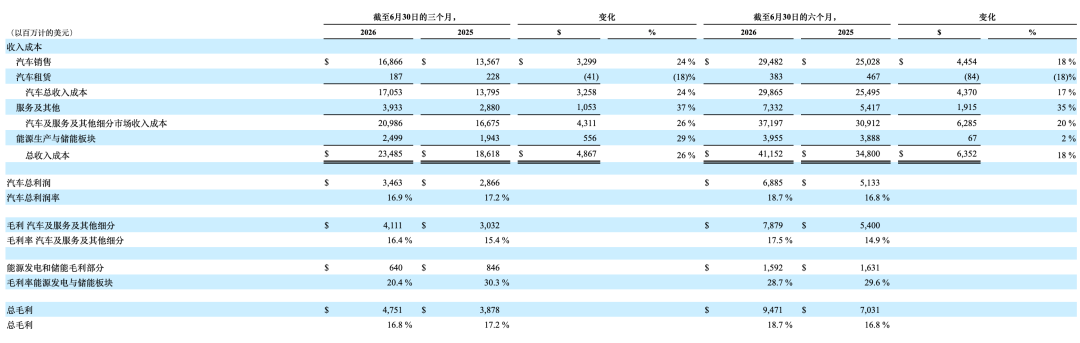
The automotive gross margin sequentially fell by 4.2 percentage points to 16.9%. Non-GAAP earnings per share were $0.33, significantly below market expectations of $0.51.
As expected, Tesla’s stock price plummeted in after-hours trading following the release of the earnings report.
So, where did Tesla’s profits go?
Upon analyzing the data, Guanchejun identified four major factors that simultaneously drained Tesla's profits.
First: Lower vehicle selling prices.
Tesla’s average selling price per vehicle continued to decline in Q2, cited in the earnings report as a negative factor affecting revenue and profit.
Particularly in the Chinese market, amidst a persistent price war, domestic models are closely targeting Tesla, compelling Tesla to maintain stable prices and even offer various incentives.
Furthermore, the discontinuation of high-priced Model S and Model X production, along with changes in the model mix, further dragged down the average selling price.

Second: The disappearance of “easy money” from regulatory credits.
In Q2, Tesla’s revenue from regulatory credits dropped to $146 million from $439 million year-on-year, a 67% decline. As other automakers accelerate their electrification efforts, the supply-demand balance in the credit market has shifted, making it increasingly difficult to cash in on this “free profit coupon.”
Third: Surging expenses.
This was the most critical factor. In Q2, Tesla’s operating expenses reached $4.35 billion, a 47% increase year-on-year.
Research and development costs were also substantial: $2.37 billion in a single quarter, with AI, Semi trucks, Optimus robots, and Cybercab autonomous taxis all in full development.

Additionally, stock-based compensation expenses, including the 2025 CEO performance award, reached $1.15 billion in a single quarter. The CFO explicitly stated that operating expenses will continue to rise in 2026 and beyond.
The earnings report revealed that Tesla’s gross profit in Q2 was $4.751 billion, with operating expenses at $4.353 billion, nearly consuming the entire gross profit.
Fourth: Halved gross margins for energy storage.
In Q2, Tesla’s energy storage deployments reached 13.5 GWh, a 41% increase year-on-year, the second-highest on record.
However, its gross margin plummeted from 39.5% to 20.4%, nearly halving, due to $240 million in warranty provisions (for early-project battery cell issues) and declining average prices for industrial and commercial energy storage.
Musk added that data centers will replace utility companies as the primary growth driver for energy storage over the next two years, indicating that energy storage will also pursue a “scale-for-market” strategy.
Another point of concern: Tesla’s Q2 net profit was also “inflated.”
The earnings report showed a net profit attributable to shareholders of about $1.11 billion, a mere 5% decrease, which appears decent at first glance. However, a breakdown reveals that $1 billion in gains came from the mark-to-market valuation of SpaceX equity (after-tax: $763 million), plus a one-time tax benefit of $274 million. Excluding these two items, Tesla’s net profit from core operations was less than $100 million.
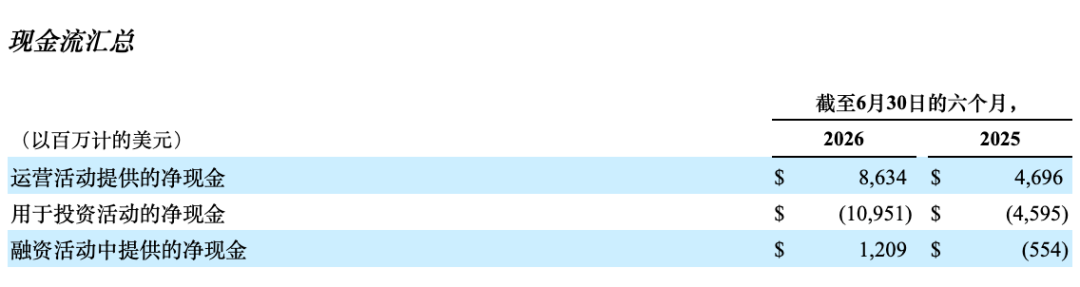
Notably, in Q2, Tesla’s capital expenditures reached $5.79 billion, a 142% increase year-on-year and a doubling sequentially. Free cash flow turned negative, with an outflow of $1.092 billion, the first negative figure in over two years.
For the full year, Tesla anticipates capital expenditures to exceed $25 billion. Musk stated during the earnings call that Tesla is undergoing “the fastest industrial-scale expansion in the U.S. since World War II.”
The Fremont Model S/X production line is being dismantled and repurposed for Optimus production; Cybercab production has commenced in Texas; the location of the self-built wafer fab, Terafab, will soon be announced; Texas lithium refining and cathode material production lines are ramping up; AI training compute capacity in Texas doubled in the first half of the year; energy storage capacity continues to expand...
All these endeavors require substantial funding.
Thus, Tesla’s profits haven't vanished—they've been invested. In Guanchejun’s view, this investment was inevitable. Tesla now faces a classic transition dilemma: While the old engine (vehicle sales) is becoming less profitable, the new engines (AI, robots, autonomous driving) are consuming cash at an unprecedented rate and have yet to start generating profits.
Based on this, Tesla’s CFO even revealed that free cash flow is not expected to turn positive until 2029.
In summary, behind record-high volumes and plummeting profits, Tesla is transforming from an automaker into a financing platform that leverages its balance sheet to support Musk’s business empire.
Whether this strategy pays off in the long run hinges on whether time is on Musk’s side.
All charts in this article, unless otherwise noted, are sourced from corporate disclosures. Special thanks and acknowledgment are hereby given! The views expressed herein are for reference only and do not constitute investment advice.
-
![]()
Focus | CCCC’s Takeover of Greentown Comes to Fruition: Why Did the 11-Year ‘Control Without Authority’ Era End?
-
![]()
Final Verdict: The 2026 China Auto Forum Shines with Unique Characteristics at a Pivotal Moment
-
![]()
Tencent Maintains Matrix Approach, Alibaba Merges Entry Points: Tech Titans Initiate AI Agent Consolidation
-
![]()
Geely Secures Portion of Ford’s Spanish Production Capacity
-
![]()
Tesla Stalls This Second
-
![]()
Elon Musk's 'Money-Burning' Spree: All Car Sales Profits Poured into AI
-
![]()
Why Did Tesla’s Profits Drop and Cash Flow Go Negative?
-
![]()
AI Titans Are All in the Red: Time for Intelligent Driving Car Buyers to Reassess?