Can VIVO's Four-Pronged Approach Ease Competitive 'Anxiety'?
 08/11 2026
 415
415

By Xiaofeng
Source: Bowang Finance
Smartphone companies are now facing head-on competition in a new arena, with domestic players doubling down on the action camera market.
Market reports suggest that vivo Pocket, a handheld gimbal camera, is expected to launch in Q4 with an anticipated production run of one million units. Previously, OPPO was rumored to have initiated a project for a handheld smart imaging device. Going further back, reports indicated that Honor had also entered the Pocket (handheld smart imaging device) market through its ecosystem platform, Honor Choice.
It's clear that players already locked in a life-and-death struggle in the smartphone arena are now opening up a new front. This shift stems from the stagnant state of the smartphone industry, where annual growth has plummeted to 1%–2%. At the same time, imaging capabilities have become the core differentiator for phone makers, making an expansion into professional imaging hardware an inevitable choice.
However, the handheld gimbal market has long been dominated by DJI and Insta360, whose technological and ecological barriers are not easily overcome. Can the collective entry of smartphone manufacturers disrupt the existing balance?
Regardless of the outcome, one clear trend is emerging: Smartphone companies are attempting to use physical devices and ecosystem hardware as their second growth engine.
But this path is bound to be fraught with challenges.
01 The Third Player Overlooked by Insta360 and DJI
For a long time, the handheld smart imaging sector has been seen as a duopoly between DJI and Insta360, with the two companies engaged in repeated public disputes over patents, talent, technology, products, and markets in the past year.
From an industry perspective, the market's potential is the driving force behind their intense competition. Recent data from Qianyan Consulting shows that the global market for handheld smart imaging devices reached RMB 7.2 billion in Q1 2026, surging 86% year-on-year. IDC data indicates that global shipments of handheld smart cameras hit 16.65 million units in 2025, up 83% year-on-year, with gimbal cameras leading growth across all categories. In Q1 this year, IDC also reported that DJI and Insta360 accounted for over 80% of the handheld smart camera market.
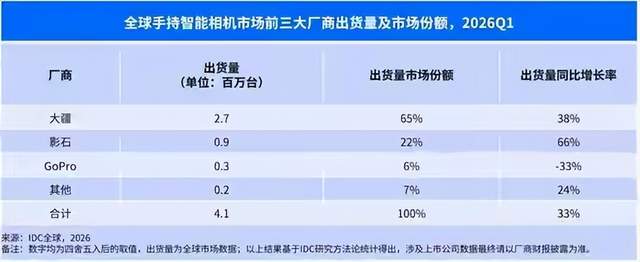
The entry of smartphone makers like vivo is also based on the industry's strong growth potential, as they seek to disrupt the existing competitive balance in the handheld smart imaging market.
Historically, this market has been dominated by professional imaging equipment manufacturers such as DJI, Insta360, and GoPro, with smartphone makers limited to launching simple gimbal accessories for phones. Now, rumors suggest that vivo and OPPO are planning similar products, which, if scaled, would put them in direct competition with DJI and Insta360.
Delving deeper, this shift reflects smartphone makers' relentless pursuit of imaging capabilities. While the competition around action cameras essentially remains an extension of smartphone specs, its impact extends beyond the phone industry itself.
Because there will never be just two players in any market. When an industry experiences rapid growth but remains highly concentrated, new challengers are bound to emerge. DJI and Insta360, focused on their rivalry in recent years, must now contend with potential disruptions from the smartphone sector.
With the upcoming release of new products, the era of a “duopoly” in the handheld smart imaging market is ending, giving way to a more complex and fiercely competitive “multi-polar” era.
02 Unlikely to Fuel Growth for Smartphone Makers
However, while smartphone makers' collective push into the handheld gimbal market may seem like a blue ocean opportunity, it is not without challenges. Although handheld gimbal cameras are growing rapidly, their market size remains minuscule compared to smartphones.
IDC predicts that global shipments of handheld smart cameras could exceed 40 million units by 2030, with a compound annual growth rate of nearly 20% over the next five years. In contrast, global smartphone shipments have stabilized at around 1.2 billion units annually. Even under the most optimistic estimates, the handheld smart camera market will remain less than one-tenth the size of the smartphone market.
For smartphone makers with annual revenues in the hundreds of billions, revenue growth from handheld gimbal cameras will be negligible. Take vivo as an example: its global smartphone shipments exceeded 100 million units in 2025. Even if vivo Pocket achieves annual sales of one million units, it would account for less than 1% of its phone sales. This suggests that handheld gimbal cameras are unlikely to become a true second growth engine for smartphone makers—instead, they will serve as a complement to their core phone business.
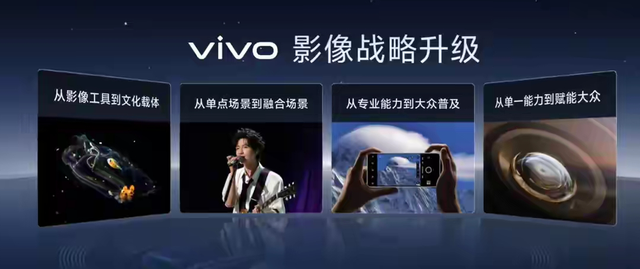
It is widely believed that smartphone makers' strengths lie in their imaging technology expertise and ecosystem synergies. Over the past few years, domestic smartphone manufacturers have invested heavily in imaging R&D, achieving significant technological breakthroughs. For instance, vivo’s micro-gimbal stabilization technology and self-developed imaging chips could benefit the development of handheld gimbal cameras. Additionally, vivo boasts a massive user base and a well-established sales network, enabling rapid market penetration.
However, their weaknesses are equally apparent.
In areas such as gimbal mechanical design, motion stabilization algorithms, and outdoor scene optimization, DJI and Insta360 possess over a decade of technological accumulation and patent barriers. DJI holds thousands of patents in gimbal technology, covering mechanical structures, control algorithms, image processing, and more. Breaking through these patent barriers will be no easy feat for vivo and others.
Moreover, the usage scenarios for handheld gimbal cameras differ significantly from smartphones, requiring robust durability, waterproofing, and battery life to handle complex outdoor environments—areas where smartphone makers are relatively inexperienced.
Most importantly, a strong brand identity has already formed in the handheld gimbal camera market.
When consumers think of gimbal cameras, DJI and Insta360 come to mind first. This brand perception cannot be changed overnight. DJI has built a “professional and reliable” image through years of market presence, with a loyal global user base. Insta360, meanwhile, has attracted a younger audience with its “innovative and fun” branding.
For vivo, OPPO, and Honor to carve out a share of this market, they will need not only competitive products but also substantial marketing investments to build brand recognition—since they are neither leaders nor pioneers in this space, but latecomers.
Of course, pricing strategies might seem like an obvious competitive tactic for smartphone makers, but this is no easy task either. DJI’s Pocket 3, priced at RMB 3,499, went two years without a price drop, and while subsequent adjustments were made due to promotions and industry competition, it still demonstrates DJI’s strong pricing power and profitability.
In contrast, smartphones often see price reductions within months of launch. If smartphone makers attempt to capture market share through aggressive pricing, they will face significant margin pressure. Furthermore, a low-price strategy could damage their brand image, leading consumers to perceive their products as less professional than those from specialized manufacturers.
From a supply chain perspective, smartphone makers are also at a disadvantage compared to DJI and Insta360. Traditional industry giants procure far larger volumes of gimbal motors, sensors, and other components annually, securing lower prices and priority access to supplies.
Thus, while vivo, OPPO, and others are making bold moves, they are unlikely to displace DJI and Insta360 anytime soon. Handheld gimbal cameras are more of a “nice-to-have” addition for smartphone makers than a “must-have” growth driver. They do not address the fundamental issue of stagnating growth in the smartphone industry, nor can they serve as a true second growth engine.
For smartphone makers, entering the handheld gimbal market is more about strategic ecosystem enrichment, user engagement, and brand enhancement than about generating profits from this product alone. While the market structure may shift from a “one superpower, one strong player” dynamic to a “one superpower, one strong player, multiple poles” scenario, dominance will remain with DJI and Insta360.
If we dig deeper, action cameras represent just one of many new ventures smartphone makers have explored in recent years. Today’s smartphone manufacturers can no longer rely on traditional businesses to sustain easy growth.
03 The New Generation of Action Camera Makers Has More Edge Than Smartphone Players
When you zoom out and look at products like action cameras, drones, and smartphones, you can even sense subtle differences in the mindset of their industry leaders.
Entrepreneurs in the action camera and drone sectors exude a wildness, obsessiveness, and geeky intensity that traditional smartphone industry founders often lack.
For example, the founders of DJI and Insta360 built their global standing through technical passion and hard innovation, rather than competing in mature markets by focusing on channels, specs, or market share.
DJI’s Frank Wang is low-key and somewhat aloof, yet fiercely obsessed with flight control and gimbal technology. Starting from a warehouse workshop, he spent over a decade perfecting mechanical structures and algorithms, building thousands of patents and achieving global dominance with an uncompromising, truth-seeking hardcore ethos.
Insta360’s JK Liu, meanwhile, is a quintessential post-90s geek—daring, unconventional, and embedding “fun and boldness” into the brand’s DNA. Through rapid iteration and surprise innovations, he captured significant global market share right under the noses of industry giants.

In contrast, smartphone industry pioneers are more like scaling experts in mature markets: skilled at supply chain management, channel expansion, marketing hype, and specs competition. Their style tends to be steady, restrained, and systematized, with personalities flattened by commercial rules and organizational processes, lacking the reckless creativity and rebellious edge of their counterparts in other sectors.
vivo’s Shen Wei and OPPO’s Tony Chen are even known for their “integrity and low-key” cultures—values that differ somewhat from those of China’s newer generation of young entrepreneurs.
Looking back, drone and action camera pioneers were driven first by passion and technological belief, then by business. In contrast, some traditional industries prioritize commercial goals first, using technology and resources to achieve them. The former carry the spirit of adventurers; the latter resemble meticulous chess players. These fundamental differences in mindset cannot be quickly bridged by capital, channels, or ecosystems alone.
04 As Traditional Dividends Fade, VIVO and Peers Open Multiple Fronts
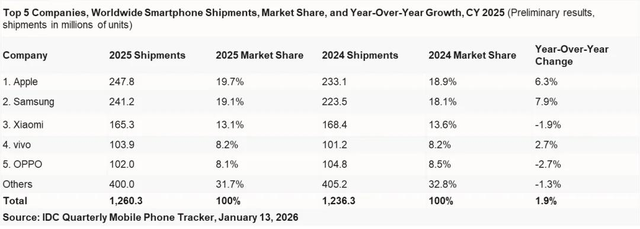
The smartphone industry’s heyday is fading, with memory cost hikes and a nearly 10% market decline this year adding pressure. Yet competition remains as fierce as ever. IDC’s 2025 data shows Huawei, Apple, vivo, Xiaomi, and OPPO ranking in the top five.
Notably, the top five players remain closely bunched, with market shares all above 15% and less than 3 million units separating first and fourth place in shipments.
Clearly, the smartphone market has fully entered a zero-sum era. As hardware innovation slows, phone makers are scrambling to find new growth areas, expanding into fields like smart glasses, new energy vehicles, robots, and action cameras.
Take vivo as an example: the company has already ventured into smartphones, gimbal cameras, XR, and embodied AI. Recently, vivo announced internal organizational restructuring affecting its Smart Terminals Business Unit, Hardware Platform Technology Department, and multiple development divisions. Two key changes emerged: foldable phone R&D functions were consolidated into Development Division 1, while XR-related businesses were integrated into Development Division 3. Last August, vivo launched the vivo Vision Explorer MR headset, powered by the second-gen Snapdragon XR2+ platform, with select stores offering demo experiences.
Embodied AI is another focus for vivo. In late March last year, during the Boao Forum for Asia, vivo announced plans to enter the robotics sector, establishing a Robotics Lab.
Frankly, this expansion of industrial boundaries is essentially a proactive layout (layout) by smartphone makers for the “post-smartphone era.” Smartphones, the most successful consumer electronics product of the past decade, have become indispensable. But as technology evolves and user needs shift, smartphones’ central role is gradually diminishing.
Future personal smart devices will be diversification (diversified) and distributed, no longer limited to phones. Smart glasses, smartwatches, handheld cameras, and robots will all become important smart terminals, working alongside phones to deliver more comprehensive and natural smart experiences.
However, gaps between Xiaomi, Honor, vivo, and OPPO in the smartphone race remain relatively small. In Q2 this year, IDC data placed vivo third in China’s market share, with shipments down over 11% year-on-year.
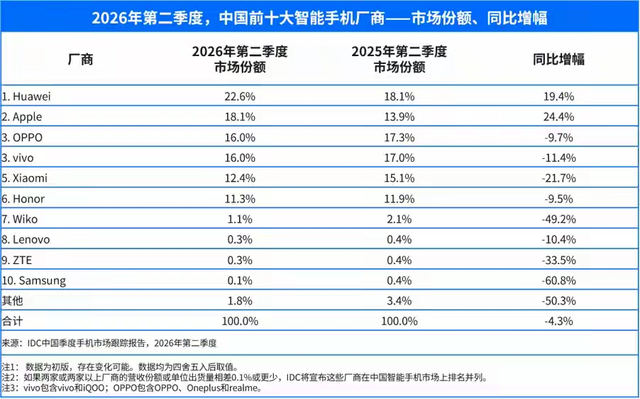
For other players, except Huawei’s growing dominance, most still face intense competitive pressures. It remains unclear who will be the first to reap significant rewards in new businesses. Moreover, expanding into more new areas could expose marginal smartphone players to even harsher competition, increasing pressure on their core businesses.
This is one reason why smartphone makers’ entry is unlikely to shake DJI and Insta360’s market position at a fundamental, cultural level.
-
![]()
High-End Scientific Instrument Leader Surges 400% on Debut, Lists on STAR Market, Supplies BYD/CATL
-
![]()
Valuation Surges 80x in Two Years, ARR Exceeds $2 Billion: Why Mercor Has Become One of the Most Profitable Platforms in the AI Era?
-
![]()
Can Fuel-Driven Cars Also Embrace NOA? The 2027 Arrizo 8PRO Makes Intelligent Driving More Affordable
-
![]()
Array Waveguide Heats Up, SRG Expands Production, VHG Launches: The Competition for Optical Waveguides Enters a New Phase in 2026
-
![]()
ByteDance's AI Ambitions: 12% Tax, No Distillation, Betting on 5 Trillion Parameters
-
![]()
Can VIVO's Four-Pronged Strategy Ease Competitive 'Pressure'?
-
![]()
Can VIVO's Four-Pronged Approach Ease Competitive 'Anxiety'?
-
![]()
Reversal! Apple's Major iPhone Redesign for 20th Anniversary Not Cancelled: New Glass Design to Debut in 2027