Array Waveguide Heats Up, SRG Expands Production, VHG Launches: The Competition for Optical Waveguides Enters a New Phase in 2026
 08/11 2026
 441
441
An Optical Waveguide Revolution is Underway
By Wickey, VR Gyroscope
As core optical devices connecting micro-displays with the human eye's visual system, optical waveguides represent a key technological pathway—distinct from Birdbath and hybrid waveguide solutions—that enables lightweight and everyday wearability for AR glasses. Their primary function is to efficiently transmit and project light from micro-displays into the user's field of view.
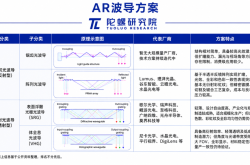
Based on coupling elements and optical principles, optical waveguides can be broadly categorized into geometric and diffractive types. Geometric waveguides include sawtooth and array waveguide solutions, relying on geometric reflection for light propagation and pupil expansion, offering advantages in full-color display, color consistency, and light efficiency.
Diffractive waveguides utilize gratings for light coupling, pupil expansion, and extraction, encompassing technologies such as Surface Relief Gratings (SRG) and Volume Holographic Gratings (VHG). SRG, with its thin profile, high design flexibility, and relatively mature manufacturing ecosystem, has become one of the most widely adopted waveguide solutions for consumer-grade AR devices. VHG, meanwhile, is gaining increasing attention due to its high diffraction efficiency, thin and transparent form factor, and potential for low-cost manufacturing.
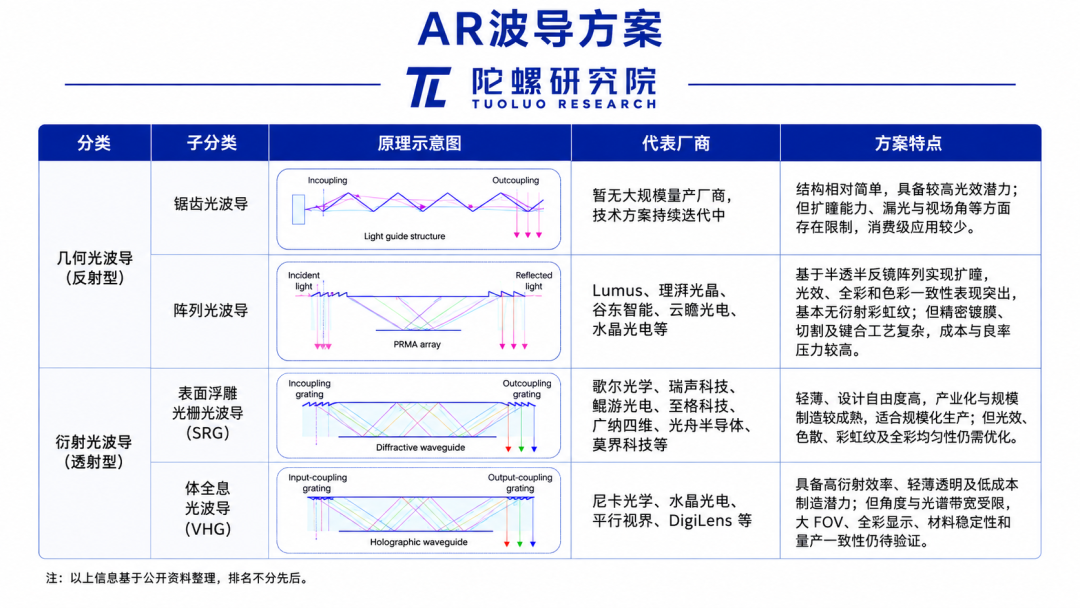
Image Source: Gyroscope Research Institute
With the accelerated commercialization of AI glasses featuring displays, the optical waveguide industry is entering a new phase of technological iteration and capacity expansion. Since 2026, optical manufacturers such as ZEGA Technology and Guangna Siwei have completed new rounds of financing, while companies like Nika Optics and Yunzhan Optoelectronics have brought their new waveguide production lines online. Meanwhile, competition among different technical approaches has extended to dimensions including full-color display, light efficiency, thinness, manufacturing yield, and mass delivery capabilities.
01
Array Waveguides Heat Up Again as Domestic Supply Chains Expand Production
The launch of Meta Ray-Ban Display last year has once again made array waveguides a focal point of market attention, representing one of the more mature waveguide solutions for industrialization.
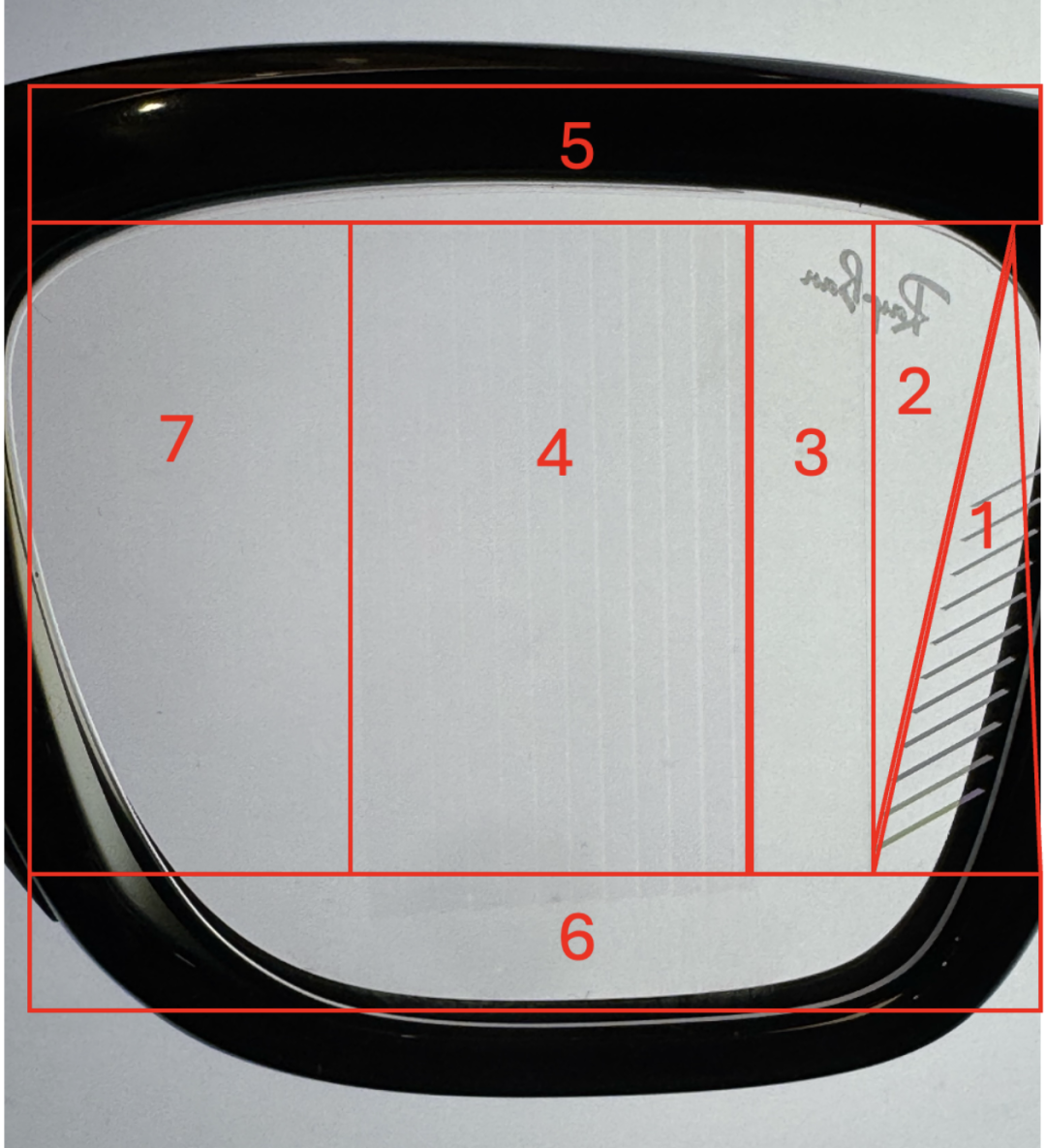
Image Source: Optical Display Observer
By examining the disassembled lens diagram of Meta Ray-Ban Display from Optical Display Observer, the working principle of array waveguides becomes clear. Light from the LCoS micro-display enters the waveguide and propagates via total internal reflection within the glass. It first passes through the mixing element zone (Zone 3) for uniform light blending, then reaches the extraction zone (Zone 4), where it is reflected and coupled out step-by-step through a mirror array. Finally, the expanded pupil zone (Zone 1) contains a multi-layer semi-transparent mirror array to enlarge the eyebox, achieving a large field of view and high uniformity for near-eye display.
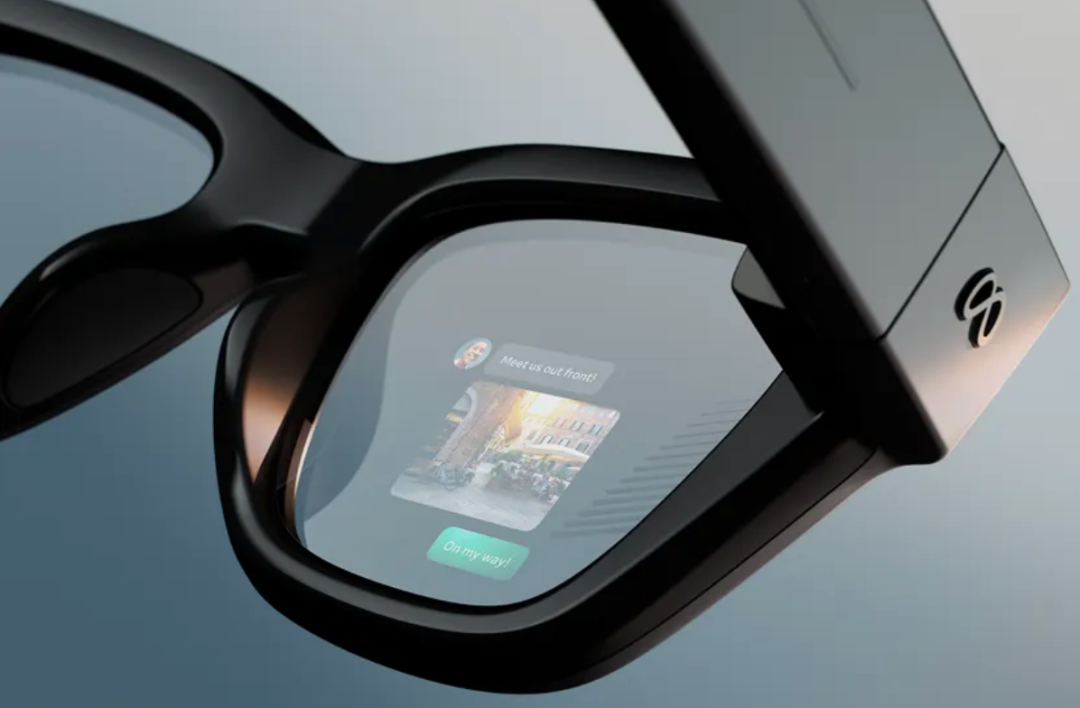
Image Source: Meta
Meta Ray-Ban Display employs a two-dimensional array waveguide solution, with an optical architecture similar to Lumus Z-Lens and other two-dimensional geometric waveguide approaches. By using a mixing element and mirror array, it achieves bidirectional pupil expansion, creating a larger rectangular eyebox that maintains image visibility even with significant eye movement. This contrasts with one-dimensional solutions that rely on a single mirror array for unidirectional expansion, resulting in a narrow, elongated eyebox.
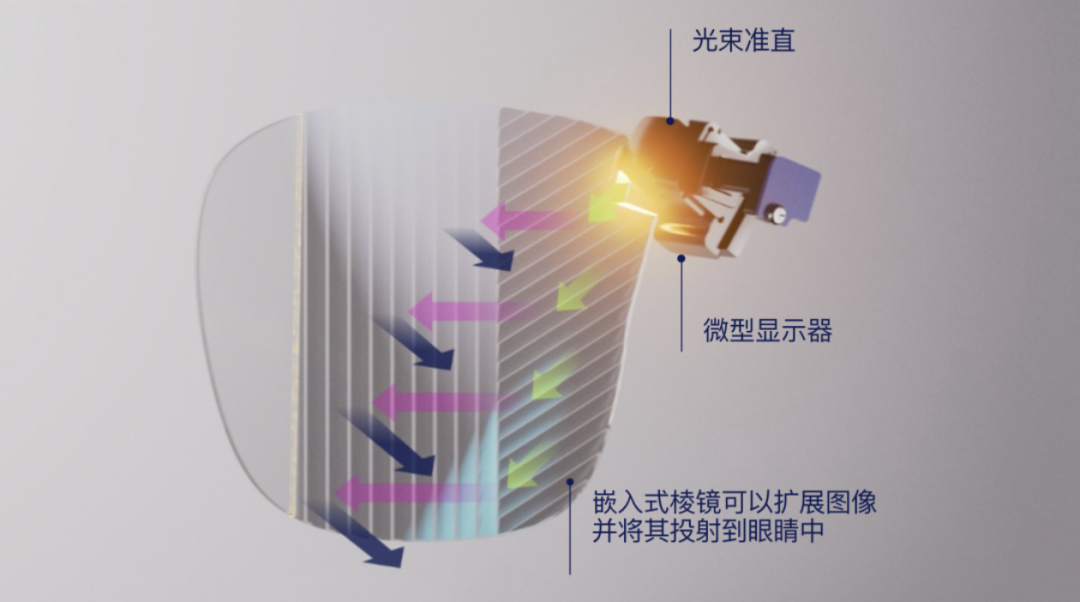
Image Source: Lumus
Based on the principle of light reflection, array waveguides do not rely on nano-gratings, fundamentally eliminating diffraction-induced chromatic dispersion. This makes full-color display easier to achieve, with superior color difference control compared to diffractive solutions, which still exhibit a color difference (ΔE) of 0.02 after optimization. Additionally, the rainbow effect commonly seen in diffractive waveguides is virtually absent in array waveguides. Due to their simpler optical path, array waveguides offer higher light efficiency—leaking less than 5% of light, with one-dimensional array waveguides achieving 5–10% efficiency and two-dimensional versions around 5%. High light efficiency helps reduce device power consumption and extend battery life.
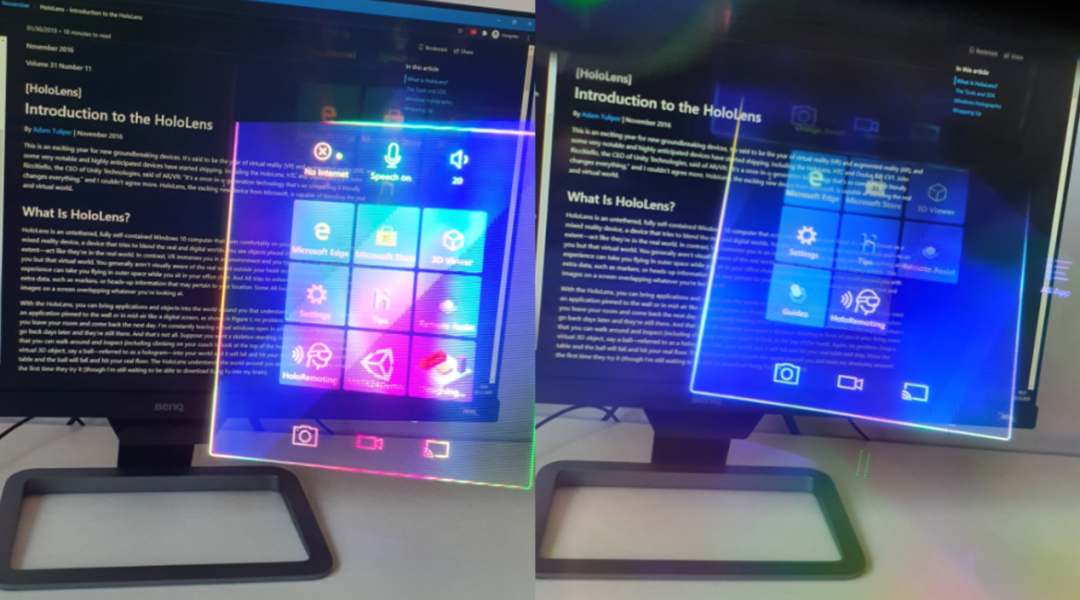
Left: Diffractive waveguide 'rainbow effect'. Right: Array waveguide.
Specifically, array waveguides are based on traditional geometric optics and utilize relatively mature cold processing techniques, including coating, bonding, cutting/grinding, injection molding, and inspection. Coating is critical for forming the semi-transparent mirror array, directly determining light splitting ratios and eyebox uniformity. Additionally, due to glass structural limitations, the lenses exhibit visible striations at certain angles.

Image Source: Huaxi Securities Research Institute
Currently, array waveguides have achieved mass production but remain concentrated in industrial AR and high-end products. In the consumer market, aside from Meta Ray-Ban Display, INMO Air3 employs Lipai Optics' array waveguide solution with binocular full Micro-OLED displays. Most other mass-produced array waveguide devices target B2B scenarios, including Rokid Glass 2, Shixiang G510, and Shoujing MG1 (all using Lipai Optics' array waveguides), as well as Lenovo ThinkReality A6 (featuring Lumus optics).
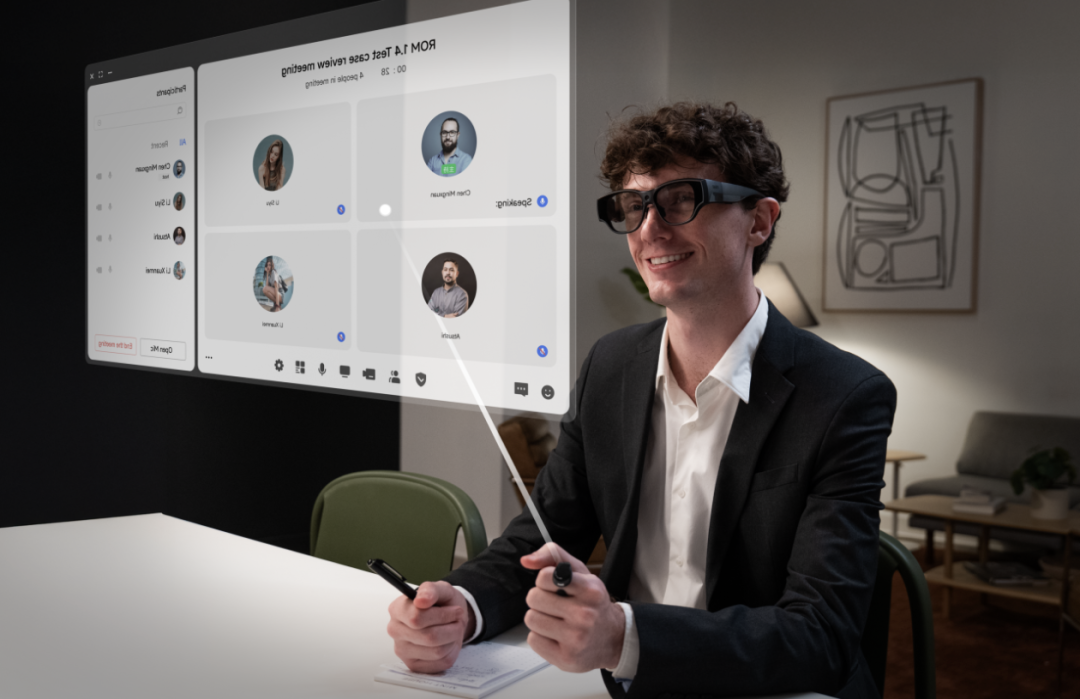
Image Source: INMO
Turning to the domestic supply chain, Lipai Optics announced in June 2026 the completion of its B+++ round of financing. Its new headquarters and production base in Kunshan are expected to commence operations in September 2026, with an annual production capacity exceeding one million units. Meanwhile, Gudong Intelligence revealed that its self-developed W2D30 two-dimensional array waveguide has entered mass production, featuring a waveguide thickness of approximately 0.8mm, a single-lens weight of about 4g, and an average light transmittance exceeding 95%.
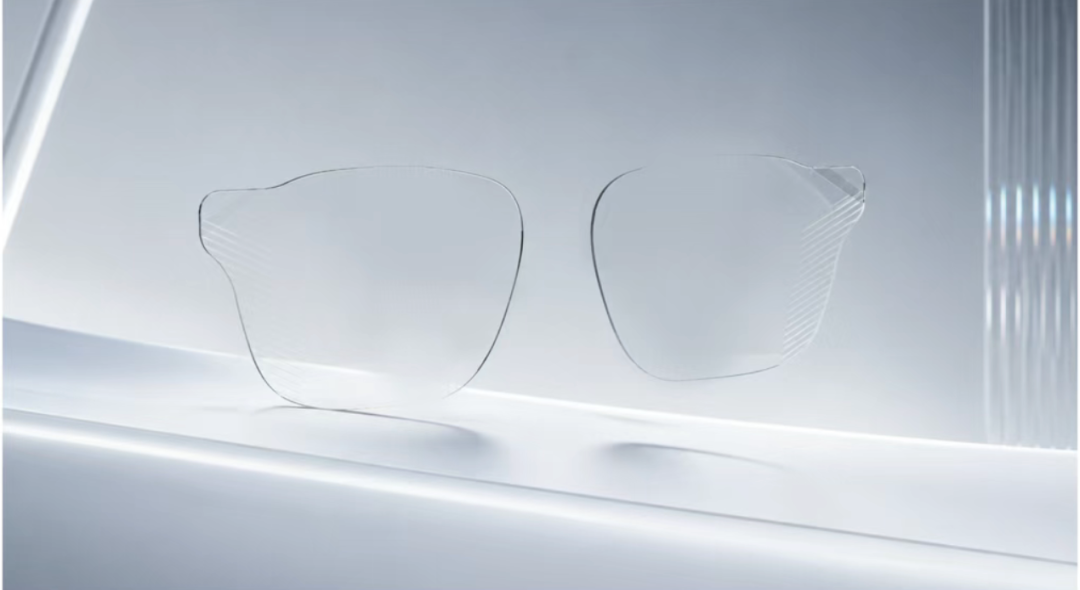
Image Source: Gudong Intelligence
In addition to these companies, Yunzhan Optoelectronics, founded in 2024, announced in July 2026 that its full-process array waveguide production line had officially commenced operations, with a designed annual capacity of 200,000 units. Its "Cicada Wing" series array waveguides measure approximately 0.8–1mm in thickness and 3–4g in weight, suitable for AR glasses and automotive HUD applications. The entry of new players has introduced fresh market dynamics to this long-dormant optical sector.
Overall, array waveguides offer distinct advantages in full-color display, color consistency, light efficiency, and stray light control. Meta's commercialization has reignited imagination for their entry into the consumer market. However, manufacturing complexity and yield requirements remain high due to precision coating, bonding, and two-dimensional pupil expansion.
02
SRG Continues to Expand Production, with Etching Processes and SiC Emerging as New Variables
Unlike array waveguides, which rely on mirror reflections for pupil expansion, SRG achieves light modulation through surface micro-nano gratings, making it more suitable for thin-film and wafer-level manufacturing. Consequently, SRG has become one of the most widely adopted waveguide solutions for consumer-grade AR glasses.
While array waveguides require multi-layer semi-transparent structures within the glass, SRG achieves light modulation through surface micro-nano gratings, offering a simpler structure, greater potential for thinness, and easier adaptation to conventional eyeglass forms. As a result, SRG has emerged as a key technological route for consumer AR glasses. According to Gyroscope Research Institute data, of the 31 AR glasses released in the first half of 2026 using waveguide solutions, approximately 18 employed SRG diffractive waveguides.
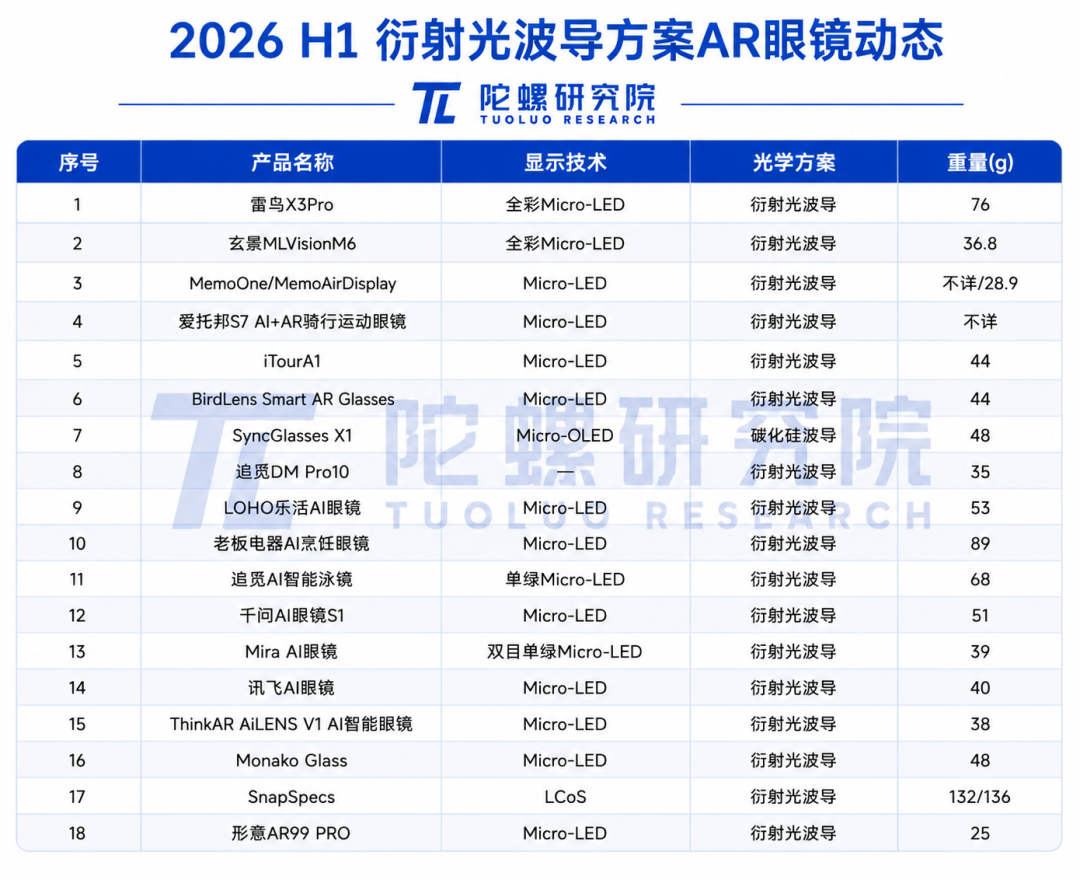
Image Source: Gyroscope Research Institute
Technologically, SRG involves fabricating periodic micro-nano grating structures on glass, resin, or silicon carbide (SiC) substrates using processes like nanoimprint lithography (NIL) or photolithography. When light from a micro-display enters the waveguide, the input grating couples the light into the substrate, where it propagates via total internal reflection. The output grating then couples the light out while expanding the user's visible area through pupil expansion structures.
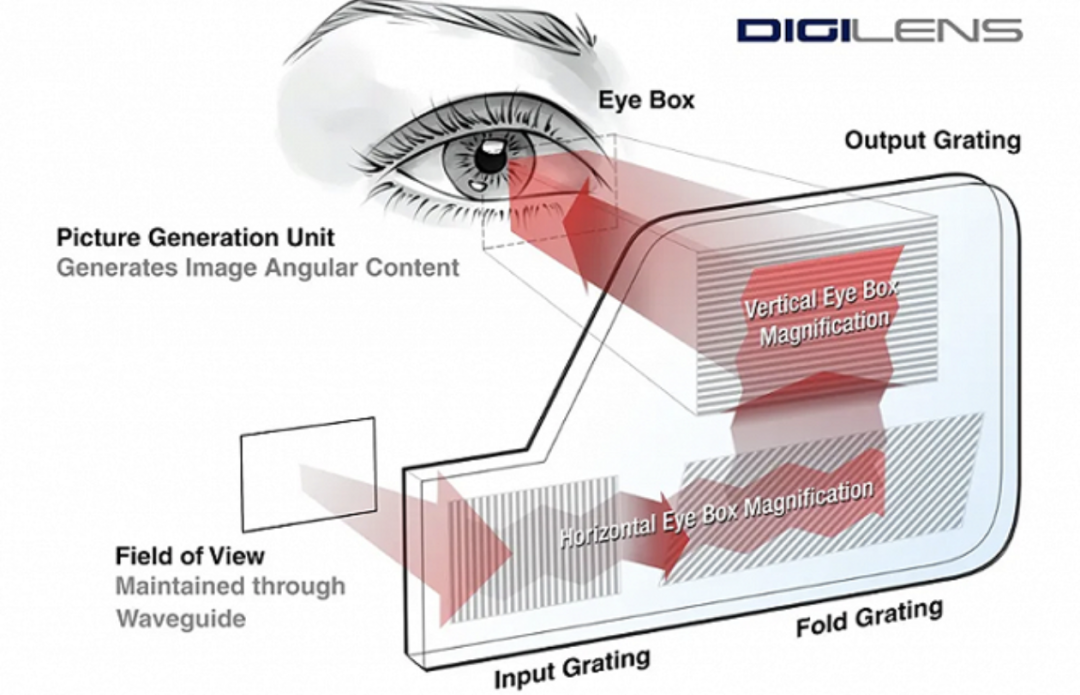
Image Source: Digilens
In practical engineering applications, grating structures are not uniform; their microscopic geometries directly influence diffraction efficiency, field of view (FOV), and eyebox size. Using NIL, various grating structures—such as rectangular, trapezoidal, or sine-like profiles—can be fabricated, with parameters like sidewall angle, duty cycle, and etching depth critically affecting optical performance.
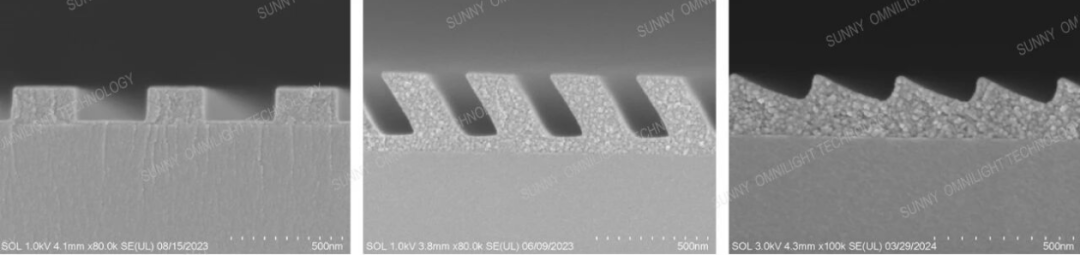
Image Source: Sunny Optical Tech (Typical grating structures fabricated via NIL)
Since SRG diffractive waveguides rely on grating structures to diffract and control light of different wavelengths, varying degrees of offset occur during propagation, leading to rainbow effects and color uniformity issues. Thus, achieving high-quality full-color display remains a core challenge for SRG solutions.
Currently, many lightweight display glasses still use monochrome green Micro-LEDs. On one hand, the human eye is highly sensitive to the green wavelength, enabling lower power consumption for equivalent perceived brightness. On the other, monochrome displays avoid the complexity of calibrating RGB wavelengths and grating matching in diffractive waveguides, striking a balance between display quality, cost, and manufacturability.
However, as grating design and fabrication processes mature, some manufacturers are attempting to break through SRG's full-color display bottleneck. For example, RayNeo X3 Pro features a full-color "Firefly Light Engine" using a single-layer etched diffractive waveguide developed jointly with Applied Materials. Combining nano-lithography etching, it achieves a peak brightness of 6,000 nits and claims 95% rainbow effect suppression, making it one of the few AR glasses with binocular full-color SRG diffractive waveguides.

Image Source: RayNeo
Beyond new processes, new materials are also gaining attention. Recently, Nimbo X1 debuted, featuring Guangna Siwei's SiC full-color diffractive waveguide combined with Micro-LED. The optical engine measures approximately 0.40cc, delivers a maximum brightness of 1,500 nits, and operates at 60Hz, with mass production slated for October. Both end products and core supply chains continue to explore full-color solutions.
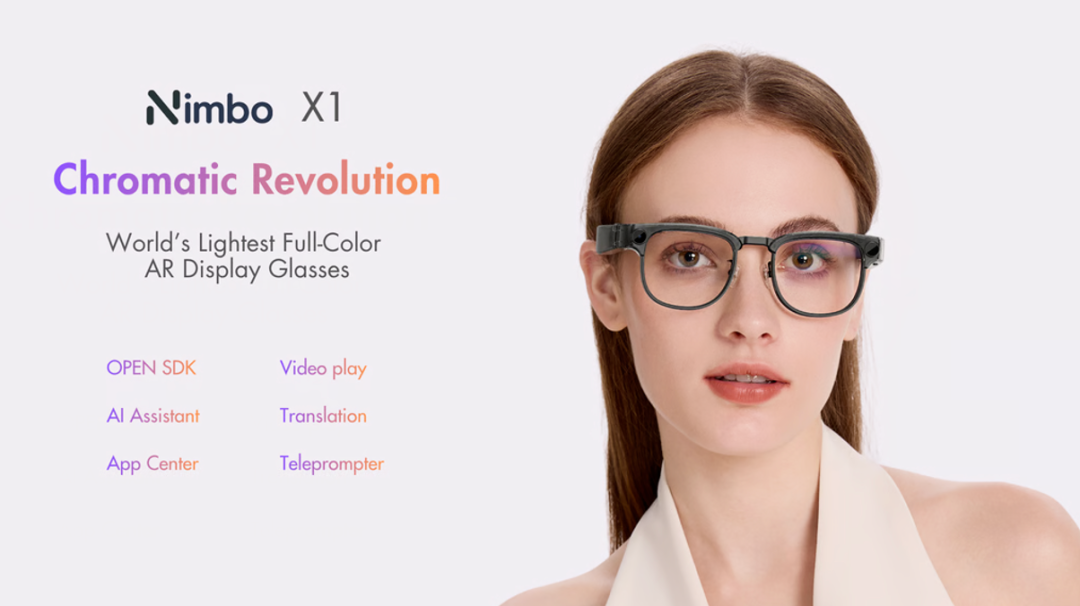
Image Source: Nimbo
Compared to traditional optical glass, SiC has a refractive index of 2.6–2.7—nearly double that of ordinary glass—offering greater design freedom for grating structures and enabling larger FOVs. Its superior thermal conductivity also helps manage heat in high-brightness display systems, providing a material foundation for future high-luminance AR displays.
Of course, SiC comes with trade-offs. Its material costs, wafer processing difficulty, and etching precision requirements are significantly higher than traditional glass, while its hardness further complicates manufacturing. For instance, the initial price of Coray Air2, the first full-color AR glasses using a silicon carbide waveguide, reached 4,999 yuan.
The growing demand for SiC is driving supply chain upgrades. In June 2026, Lante Optics raised over 500 million yuan for its AR optics industrialization project, expected to add 50,000 units of 12-inch silicon carbide wafer capacity upon completion. That same month, AAC Technologies announced its SRG diffractive waveguide production yield had stabilized above 80%, with existing facilities planning an annual capacity of 1 million units. Its SiC-based high-end solutions achieve a 52° ultra-wide FOV, with some projects entering mass production ramp-up and Large scale shipment (scaled delivery) expected in the second half of 2026.
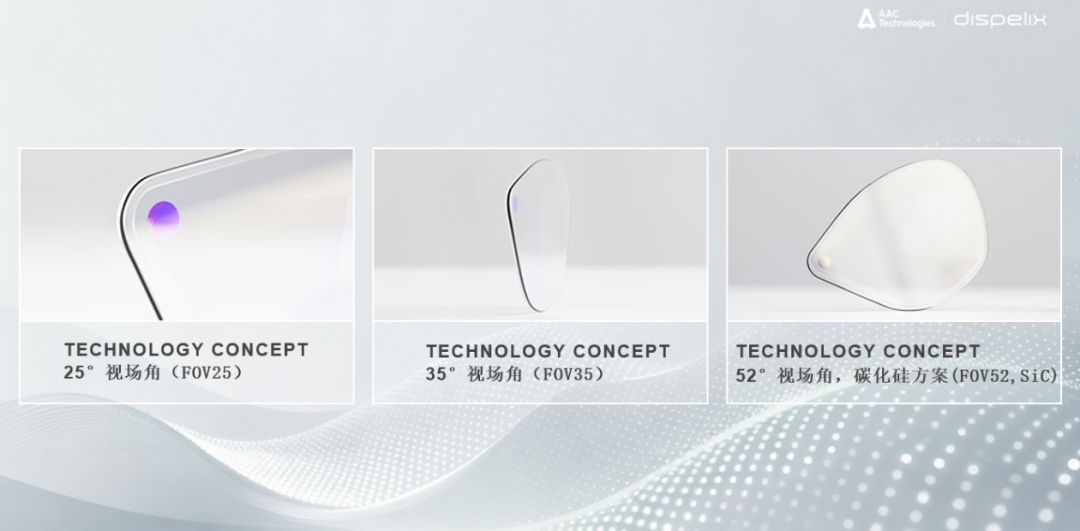
Image source: AAC Technologies
Meanwhile, the 12-inch transparent substrate wafer project with a total investment of 3.28 billion yuan under Goertek Optics' subsidiary Goertek Auraray Optics has commenced production in Shanghai Lingang, with its SiC optical waveguide module achieving a 50° FOV. Additionally, Guangna Siwei recently secured 200 million yuan in financing and is deploying SiC full-color optical waveguides. Its C45C product has already entered mass production in Coray Air2 by Guangyu Gaowei. With the advancement of new production lines, the annual delivery capacity is expected to reach 1 million to 1.5 million units by 2026. According to industry chain sources, the first-phase production line of Murde Micro-Nano already has a monthly capacity of 5,000 8-inch wafer imprinting and etching waveguides and will proceed with the second-phase construction. In January this year, the company launched full-color 30° and 50° silicon carbide waveguide samples, accelerating the mass production of SiC waveguide solutions.
From these expansion efforts, it is evident that SRG competition is further extending into the manufacturing sector. While grating design remains crucial, once entering the scaling (mass production) stage, substrate materials, wafer size, etching precision, mass production yield, and customer delivery capabilities have become another set of indicators determining suppliers' positions.
However, despite the accelerating industrialization of SRG diffractive optical waveguides, technical challenges remain unresolved. Currently, the optical efficiency of most SRG solutions is still at a single-digit percentage level, imposing higher brightness requirements on microdisplays such as Micro-LED and LCoS. Additionally, diffractive optical waveguides suffer from forward and backward grating leakage issues, causing bystanders to see colored reflections on the lenses in bright environments, affecting privacy display and necessitating further process optimization.
03
Mass production lines in place: Volume holographic waveguides gain entry
Compared to array waveguides, which have already been adopted by major manufacturers, and diffractive waveguides (SRG), which are widely used in the consumer market, volume holographic waveguides (VHG) are also beginning to make small-scale attempts.
VHG forms a three-dimensional periodic grating structure inside a holographic photosensitive polymer medium through laser interference. Unlike SRG, which etches gratings on the lens surface, VHG's grating structure is hidden within the material, achieving light coupling, propagation, and decoupling through volume holograms. Currently, VHG mainly includes monochromatic VHG, multi-layer full-color VHG, and PVG (Polarization Volume Grating) based on polarization volume holography technology.
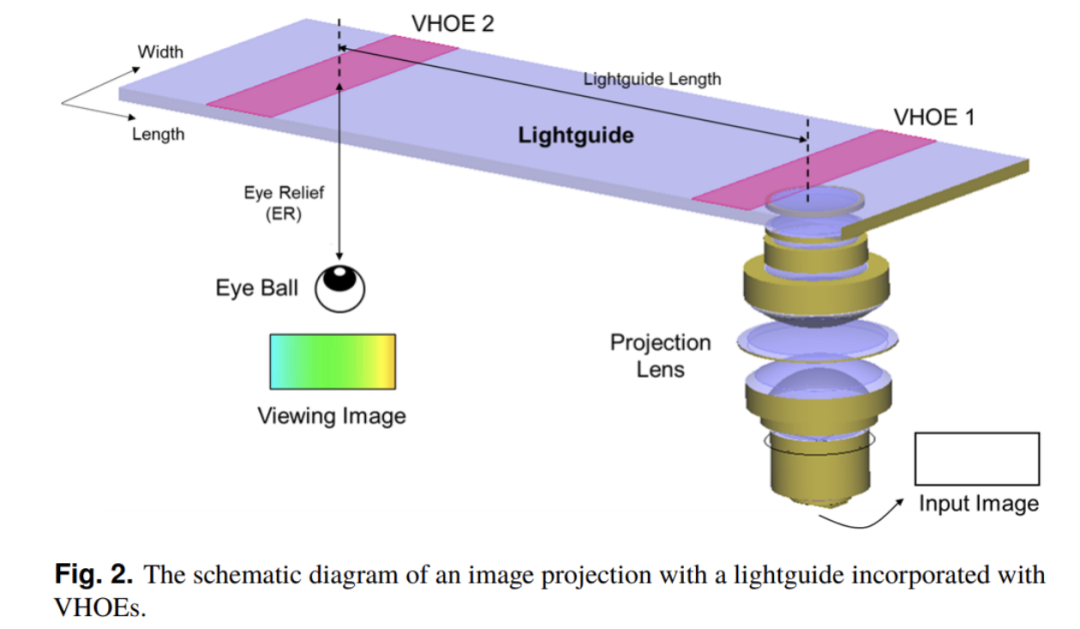
The core difference between VHG and SRG lies in their action on "internal structure" versus "surface structure." SRG creates micro-nano concave-convex structures on the waveguide surface to diffract light. In contrast, VHG writes periodic refractive index stripes inside the glass through processes like laser holographic exposure, forming a three-dimensional hologram-like structure. Utilizing Bragg's law, only light matching specific wavelengths, incident angles, and grating periods can be efficiently diffracted, selectively controlling specific wavelengths and angles.
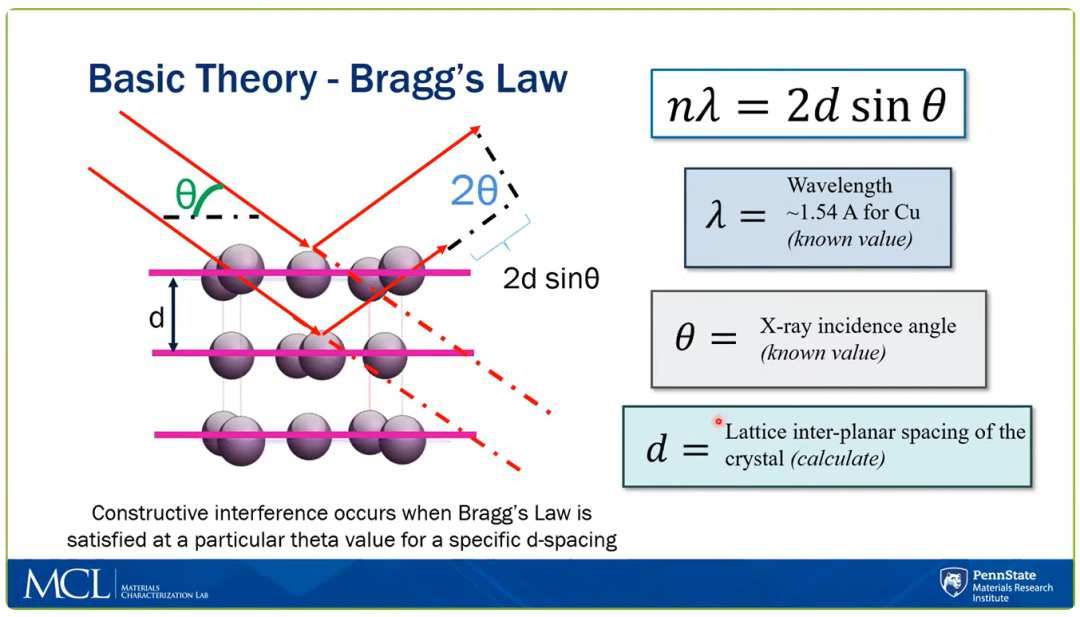
Image source: MCL
Specifically, in terms of optical performance, since the grating is located inside the material, its front surface shows almost no visible patterns, reducing the rainbow artifact issue common in traditional diffractive waveguides. Meanwhile, VHG theoretically offers high diffraction efficiency, reducing the display system's reliance on Micro-LED and Micro-OLED brightness.
Additionally, VHG adopts a holographic polymer system, providing greater material flexibility compared to glass-based waveguides. In the future, it is expected to achieve larger-area, lower-cost manufacturing through resin-based materials while further reducing weight. Therefore, besides AR glasses, VHG is also considered suitable for large-display scenarios such as automotive AR-HUDs.

However, compared to SRG, VHG currently faces challenges in large-scale manufacturing. Consistency of holographic materials, exposure process control, and large-scale mass production yield all limit its commercialization speed. As a result, few consumer-grade AR products using VHG solutions have truly entered the market, with most remaining at the technical verification stage.
This situation is changing with the progress of industrialization. Nika Optics' global first million-unit-scale automated production line for volume holographic waveguides in Tianjin Binhai High-Tech Zone officially commenced production in June 2026, with an annual capacity of 1 million units. Combined with its Guangzhou base, the company's total capacity will increase to 1.3 million units.
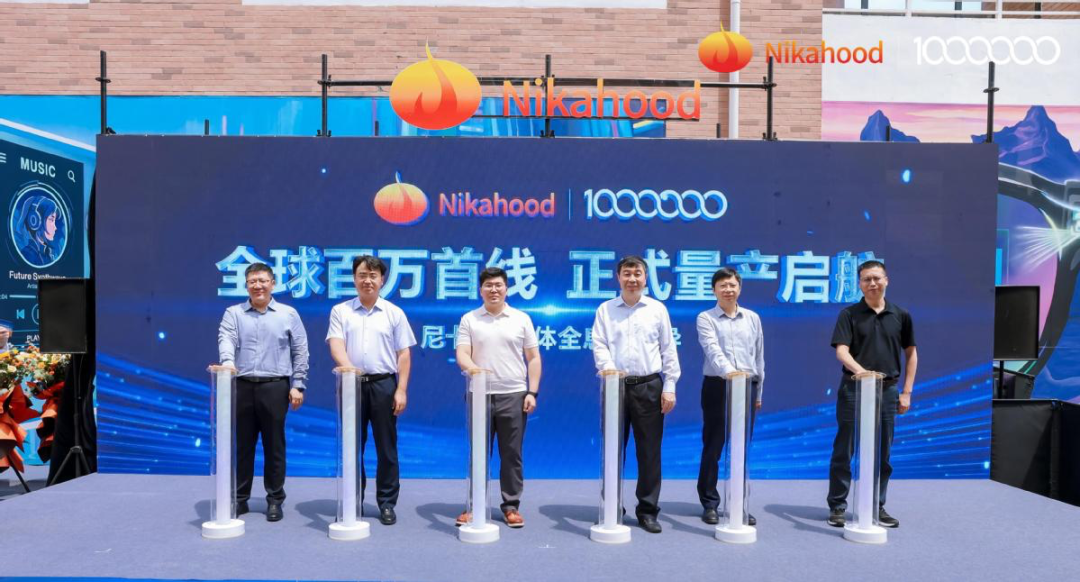
Image source: Nika Optics
The consumer-grade AR glasses Mimosa AR99 released by ODM/OEM manufacturer Xingyi Intelligence early this year incorporate Nika Optics' volume holographic waveguide technology, achieving monocular monochromatic green light display with front leakage controlled below 1:140. The entire device weighs only 28g, with a starting price of 999 yuan.
The NIMO AI glasses released in April also adopt Nika Optics' two-dimensional pupil expansion VHG solution. Its "Starburst" waveguide lens weighs only 3.1 grams, with a thickness of 0.6mm, over 95% light transmittance, and a leakage ratio also below 1:140, achieving 1400 nits/lm optical efficiency. With this ultra-light optical solution, the NIMO AI glasses weigh approximately 29 grams, achieving lightweight design at a price of only 2499 yuan.
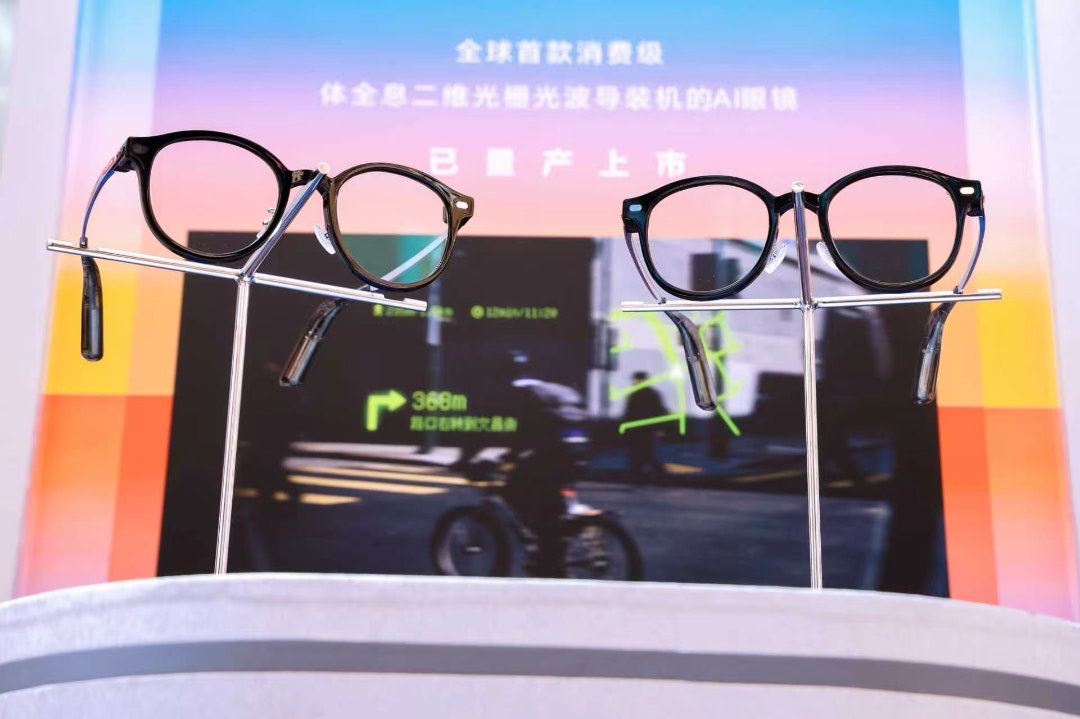
Image source: NIMO
Besides Nika Optics, representative companies in the domestic and international volume holographic waveguide field include Crystal-Optech, Parallel Vision, and U.S.-based DigiLens. Among them, Crystal-Optech adopts a dual-route layout of reflective and diffractive waveguides and collaborates deeply with DigiLens. As its exclusive authorized manufacturer in China, it has completed technical upgrades for 30° full-color volume holographic waveguide sheets, achieving small-batch commercial shipments primarily for the To B market.
Parallel Vision focuses on its self-developed polarization volume holography (PVG/PVH) technology route. In 2024, it jointly launched the world's first PVG waveguide AR glasses, "Lark," with Luxshare Precision and established the world's first PVG waveguide pilot production line in 2025, continuing to advance (advance) large-scale mass production.
From a technological perspective, although volume holographic waveguides have not yet seen widespread product adoption at this stage, they have emerged with cost advantages, attracting significant industry attention. Whether they can achieve further large-scale commercialization in the future depends on their subsequent optical performance reaching a level comparable to surface relief grating-based diffractive waveguides.
04
Final thoughts
In 2026, no single technical route for AR waveguides has rapidly replaced others; instead, the three routes have shown clearer industrial division. SRG continues to dominate the consumer market with its mature supply chain and lightweight advantages; array waveguides have reopened consumer market space with benchmark (benchmark) terminals like Meta, and domestic production capacity is also increasing; VHG has crossed a threshold in large-scale manufacturing, entering terminal and mass production yield verification stages.
What deserves more attention than the technical routes themselves is the increasing competition dimensions. In the past, comparisons focused more on FOV, optical efficiency, rainbow artifacts, and lens thickness. Now, with genuine consumer-end adoption demands rising, wafer size, material costs, manufacturing yield, full-color capabilities, myopia adaptation, and million-unit delivery stability are all influencing terminal manufacturers' choices.
-
![]()
High-End Scientific Instrument Leader Surges 400% on Debut, Lists on STAR Market, Supplies BYD/CATL
-
![]()
Valuation Surges 80x in Two Years, ARR Exceeds $2 Billion: Why Mercor Has Become One of the Most Profitable Platforms in the AI Era?
-
![]()
Can Fuel-Driven Cars Also Embrace NOA? The 2027 Arrizo 8PRO Makes Intelligent Driving More Affordable
-
![]()
Array Waveguide Heats Up, SRG Expands Production, VHG Launches: The Competition for Optical Waveguides Enters a New Phase in 2026
-
![]()
ByteDance's AI Ambitions: 12% Tax, No Distillation, Betting on 5 Trillion Parameters
-
![]()
Can VIVO's Four-Pronged Strategy Ease Competitive 'Pressure'?
-
![]()
Can VIVO's Four-Pronged Approach Ease Competitive 'Anxiety'?
-
![]()
Reversal! Apple's Major iPhone Redesign for 20th Anniversary Not Cancelled: New Glass Design to Debut in 2027