AI Smartphone Competition: Some 'Add Icing on the Cake,' Others 'Determine Survival'
 08/17 2026
 539
539
Author | Hengxin
Source | Bowang Finance
In 2025, China's smartphone market is poised to break the RMB 1 trillion mark, driven by a new round of trade-in policies.
However, beneath the aggregate growth lies a profound structural shift—IDC projects that AI smartphone shipments in China will exceed 118 million units in 2025, accounting for 40.7% of the total market. By 2026, next-gen AI smartphone shipments are expected to reach 147 million units, up 31.6% year-on-year, with penetration surpassing 53% for the first time.
Meanwhile, the market is entering an adjustment phase marked by 'overall pressure and structural divergence.'
Guo Tianxiang, Research Manager at IDC China, notes that rising costs for core components like memory chips will likely depress overall smartphone shipments in China. However, the premium segment is expanding due to innovation and differentiation, while the low-end market contracts amid price sensitivity.
Q1 2026 data reveals that Huawei and Apple achieved growth against the trend in China, while Android vendors faced widespread pressure—signaling that AI smartphones represent not just a technological upgrade but a pivotal battle among leading manufacturers to reorder market positions in a saturated environment.
01 How AI Smartphones Evolved from 'Concept' to 'Mainstream'
The adoption rate of AI smartphones has surged beyond expectations. Counterpoint predicts that global generative AI smartphone shipments will account for 45% of the market by 2026 and 52% by 2027.
In China, the penetration path exhibits three key characteristics:
First, the premium market has become the primary arena for AI capabilities.
IDC forecasts that the 600+ USD segment in China will capture 35.9% of the market by 2026, up 5.4 percentage points year-on-year. AI's stringent requirements for computing power, storage, and cooling are accelerating the industry's shift toward high-end models.
Second, a nuanced divide emerges: consumers 'care but won't pay.'
Over 80% of Chinese consumers now prioritize AI experience when considering their next phone, yet AI features remain a secondary driver for upgrades. The global replacement cycle has extended to 36–40+ months.
Third, supply-side AI adoption far outpaces demand-side pull.
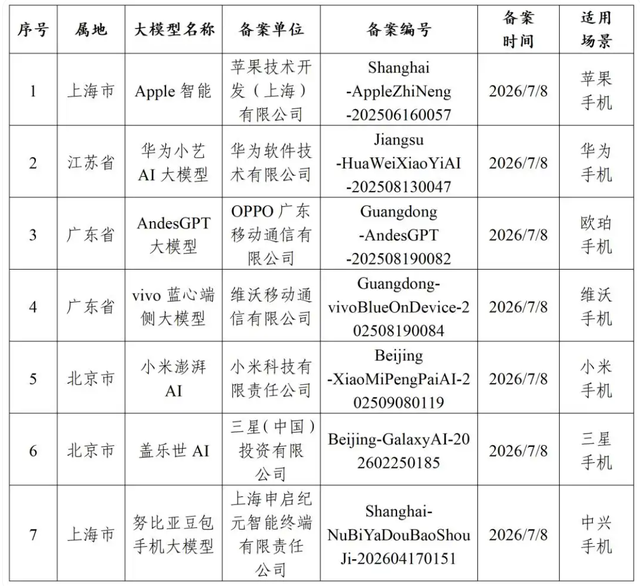
Most AI functions remain limited to lightweight scenarios like photo editing, text summarization, and real-time translation, with no killer apps yet. In July 2026, China's Cyberspace Administration disclosed Record Filing Information (filing information) for on-device generative AI services from seven vendors—Apple, Huawei, vivo, OPPO, Xiaomi, Samsung, and Nubia—marking the formal start of compliant, large-scale AI deployment.
When a category achieves rapid supply-side penetration without forming rigid demand, its growth curve often follows a 'fast start, slow finish' pattern.
Whether 2026's high growth marks a new beginning or a temporary peak hinges on whether true killer apps emerge in the second half of the year.
02 Leading Manufacturers' Strategies: Five Paths, Five Fates
In Q2 2026, mainland China's smartphone market shipped 66.1 million units, down 2% year-on-year. However, leading manufacturers diverged sharply:
Huawei extended its lead through new product launches and stable pricing, capturing 23% market share to rank first. Apple placed second with 12.4 million units shipped, setting records for Q2 volume and share in mainland China at 19%. OPPO (including OnePlus and realme) ranked third with 10.6 million units (16% share), vivo fourth with 10.5 million units, and Xiaomi fifth with 8.2 million units (12% share).
Amid this red ocean, leading players have forged distinct AI strategies:
Huawei: A 'hardcore closed loop' of full-stack autonomy.
Huawei exemplifies systematic innovation in AI smartphones. From foundational computing chips to AI applications, it is building an ecosystem barrier (moat) through a fully autonomous technology stack.
At HDC 2026, Huawei unveiled openPangu 2.0, a large model supporting 512K long contexts, with plans to open-source seven core components. On-device, its 'Kirin chip affinity' technology enables a native 30B-parameter model (including 2B active parameters) to reside in standard memory. Through quantization pruning and expert prediction algorithms, it achieves low-latency responses for frequent small tasks while avoiding overheating and power issues.
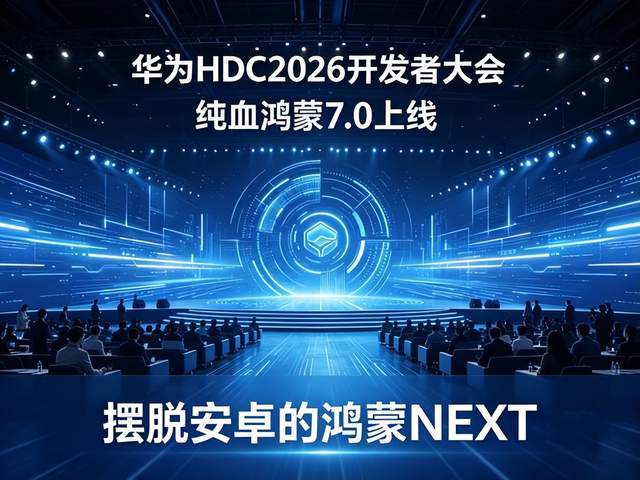
HarmonyOS 7 centers on an 'Agent-friendly system architecture,' with Xiaoyi (Huawei's AI assistant) now handling 3 billion daily interactions. It boasts 2,100+ system-level capabilities and 500+ Selected (curated) Skills from partners. Huawei's strength lies in unifying chips, systems, ecosystems, and AI into a closed loop.
Apple: A master of systemic integration, but late to China.
Apple's approach mirrors Huawei's logic—'iOS + proprietary large models + external partnerships + self-developed chips'—but with a more cautious execution.
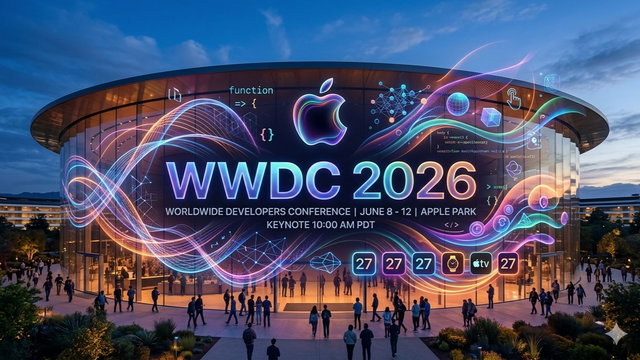
WWDC 2026 showcased Apple Intelligence and the new Siri AI, though Chinese users still await access: Apple's core AFM model is essentially a privatized adaptation of Google's Gemini framework. However, Apple has deepened its focus on interaction and system permissions—Siri AI features independent interaction history, multimodal screen awareness, and can split bills, search private emails across apps, and plan multi-day itineraries directly on-screen.
In July 2026, 'Apple Intelligence' completed filing for on-device generative AI services in China. Alibaba's QianWen will integrate AI capabilities into Apple Intelligence, while Baidu collaborates on AI functions—granting Apple a 'ticket' to the Chinese market, though a launch date remains undisclosed.
Xiaomi: A 'heavy bet' on on-device computing power.
Xiaomi leads in on-device AI computing investment, allocating over RMB 16 billion in 2026. Its newly launched Xiaomi MiMo-V2.5-Pro flagship base model activates 42B parameters on-device. To Adaptation (adapt) this massive model across devices, Xiaomi specializes in FP4 (4-bit floating-point) quantization.
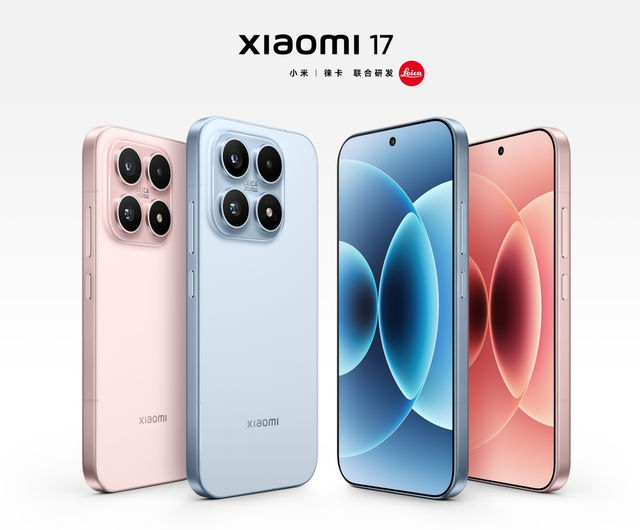
Product-wise, the Xiaomi 17 series solidified its high-end position, while Redmi maintained its low-end dominance, forming a 'dual engine' of 'over 600 USD growth + under 200 USD leadership.' However, concerns linger: Xiaomi's Q2 2026 shipments fell 21% year-on-year to 8.2 million units—the steepest decline among top brands. Whether its 'parameter arms race' translates to market share remains unproven.
OPPO and vivo: Advocates for imaging AI and on-device lightweighting.
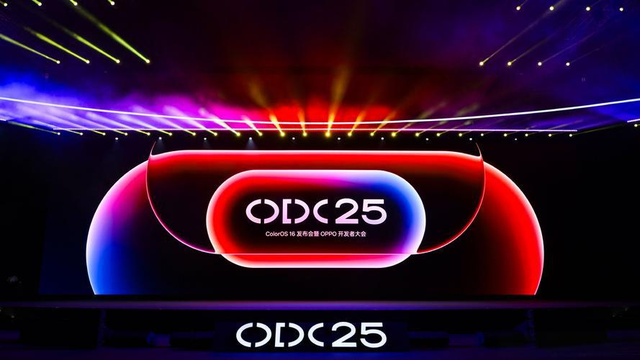
OPPO pursues a pragmatic approach—'AI that works, not showcases.' At ODC25 and ColorOS 16, it rebuilt its system around AI, with features like 'AI One-Click Flash Note' that automatically records screen content (including camera settings). Its AndesGPT large model also completed on-device generative AI filing on the same day.
Vivo has long focused on self-developed large model matrices. Since launching BlueLM in 2023, it has prioritized on-device lightweighting—through XiaoV Memory 2.0, it built a fully offline knowledge graph directly on phones, enabling AI functionality even without internet access. BlueLM excels in AI rankings, particularly for offline AI.
Honor: An interaction-first disruptor.
Honor largely avoids discussing model parameters in 2026, instead focusing on redefining interactions and hardware. The Magic8 series introduced YOYO, an AI agent capable of booking hotels, ordering food, and more with a single command. It covers 3,000+ scenarios, enabling automated shopping and personalized memory features.
The manufacturer with the most parameters (Xiaomi) has the weakest ecosystem influence, while Huawei, with the most complete system, commands pricing power in the premium market.
Chinese vendors' 'parameter arms race' essentially uses 'visible numbers' to bridge 'invisible ecosystem gaps.' How far this strategy can go depends on whether on-device experiences match the hype of spec sheets.
03 Industry Chain Restructuring and Monetization Dilemmas: A Triangular Struggle in Value Migration
AI smartphones impact the industry chain far beyond 'adding an NPU.'
On-device large models demand sustained high-load computing, forcing upgrades across hardware components. This creates five core value sectors: computing chips, storage, optical imaging, cooling, and precision structural parts.
Storage chips face the tightest supply.
AI servers have crowded out storage production, with LPDDR4/5 prices tripling in Q2 2026 versus Q4 2025. Storage and cooling costs per device have risen, becoming a key driver of the 2026 global smartphone market decline and forcing low-end models out.
Computing chip duopoly dominates.
Qualcomm and MediaTek hold the vast majority of market share, with Qualcomm's Snapdragon 8 Gen 4 leading China's flagship segment. Huawei's Kirin chips, leveraging self-developed NPU architectures, outpace rivals in on-device large model inference speed, offering a unique domestic option for premium markets.
However, value chain upgrades don't guarantee business viability. Manufacturers face three unresolved challenges:
First, will consumers pay a premium for AI? Rising BOM costs from storage and cooling upgrades clash with prolonged replacement cycles, making 'spending thousands for AI' economically questionable.
Second, technical ceilings versus real-world experience. On-device AI's limitations are tied to chip NPU performance, memory bandwidth, system scheduling, and thermal design. Lightweight tasks like photo editing and translation are insufficient to drive mass upgrades.
Third, profit distribution battles. When AI agents execute commands and bypass app traffic, they disrupt the decade-old profit-sharing model of the mobile internet era.
The fiercest battles in the next 3–5 years will center on who controls agent distribution and monetization rights: smartphone vendors, internet platforms, or large model providers.
04 AI Smartphones: A Certain Trend, But Non-Linear Growth
The AI smartphone race embodies 'long-term certainty, short-term doubt,' with leading manufacturers' positions far from settled.
What is certain is the irreversible shift toward on-device intelligence.
Huawei, leading with its 'Kirin + Pangu + HarmonyOS' closed loop, has achieved both volume and price gains in China. Apple, leveraging iOS and privacy frameworks, could form a second pole post-compliance. Xiaomi, OPPO, and vivo excel in on-device models, imaging AI, and agent interactions, respectively.
What remains uncertain is the extent to which this penetration can stimulate replacement demand.
No killer apps have emerged, and replacement cycles still exceed 36 months. If 'must-have' AI scenarios fail to materialize by H2 2026–H1 2027, AI smartphone growth could quickly collapse into the broader market downturn. Current valuations and shares propped up by 'AI hype' will then face rigorous profit tests.
The AI smartphone story has just begun its first chapter.
This chapter's title isn't 'explosion' but 'divergence'—among manufacturers, pricing, and industry chain value.
Only players who defend premium markets and monetize AI effectively in this round will write the next chapter.
-
![]()
The "Happiness" of Xpeng
-
![]()
China Mobile: Coping with Tax Hikes and Fee Reductions, Are High Dividends the Sole Pillar?
-
![]()
Wei Brand V8X Unveiled: Can Great Wall Overcome the High-End Market Challenge?
-
![]()
Why Did Musk Set His Sights on Space Computing After Starlink?
-
Major Adjustment! Nokia Plans to Close R&D Center in China, Lay Off 1,600 Employees
-
![]()
Co-Lead Optoelectronics Pours 1.7 Billion Yuan into Investment, Triggering a 20% Surge to Limit-Up!
-
![]()
AI Smartphone Competition: Some 'Add Icing on the Cake,' Others 'Determine Survival'
-
The Irresistible Allure of Extreme Sports vs. The Limited Appeal to the Masses: Why Panoramic Cameras Remain a Niche Product