China Mobile: Coping with Tax Hikes and Fee Reductions, Are High Dividends the Sole Pillar?
 08/17 2026
 562
562
On August 13, 2026 (Beijing Time), following the close of the Hong Kong market, China Mobile unveiled its financial report for the second quarter of 2026, which concluded in June. Key highlights are as follows:
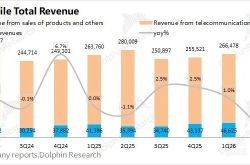
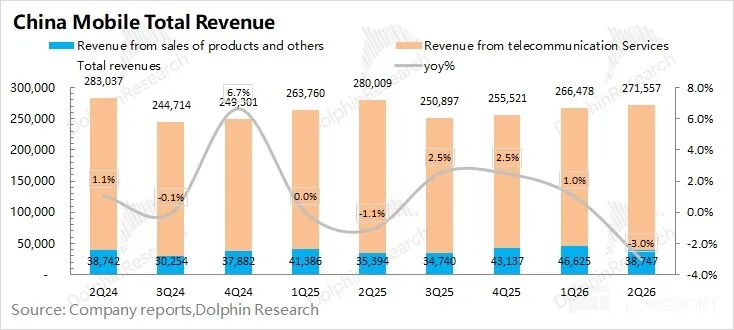
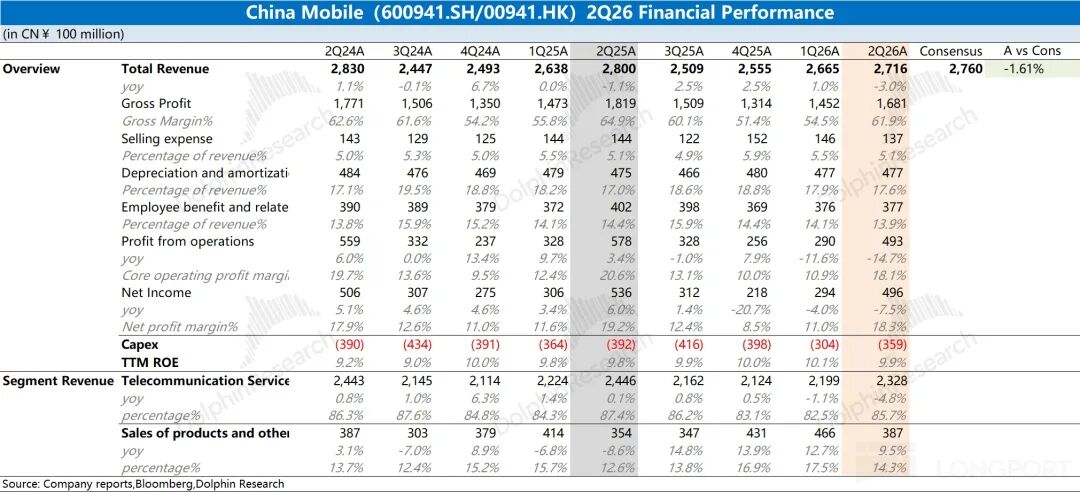
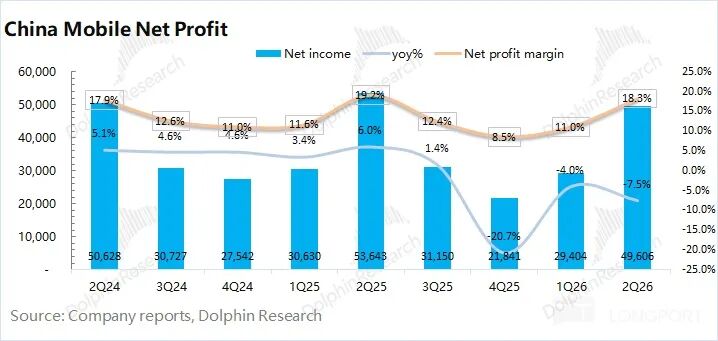
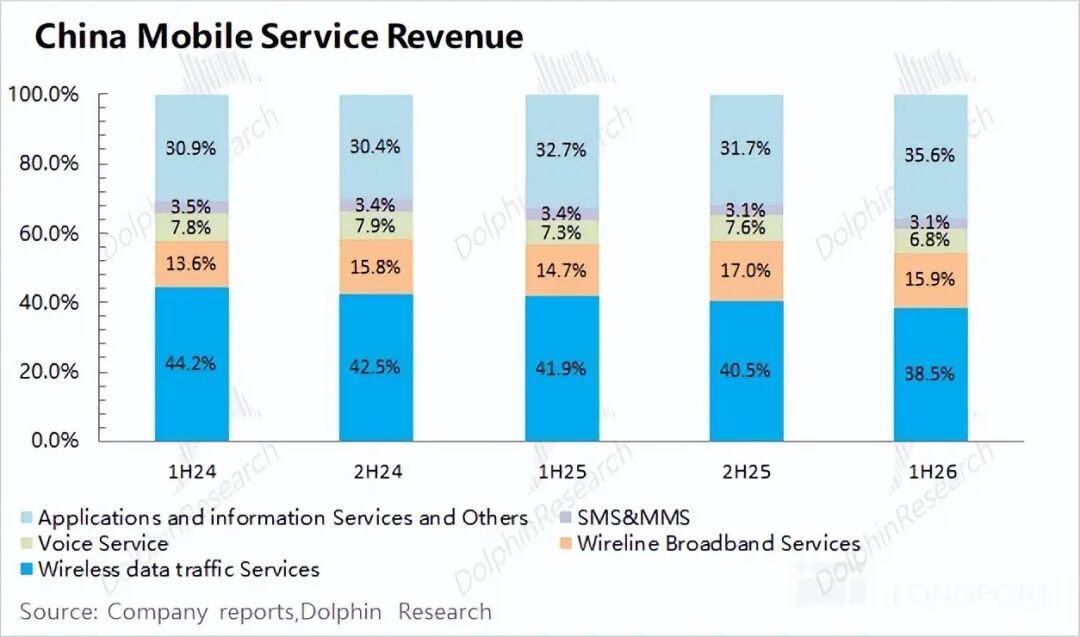
1. Operating Data: China Mobile's total revenue for the second quarter of 2026 stood at RMB 271.6 billion, marking a 3% year-on-year decrease. This decline was primarily driven by a downturn in its communication business, which was adversely affected by a rise in value-added tax (VAT) from 6% to 9% and a drop in the Average Revenue Per User (ARPU) for communication services.
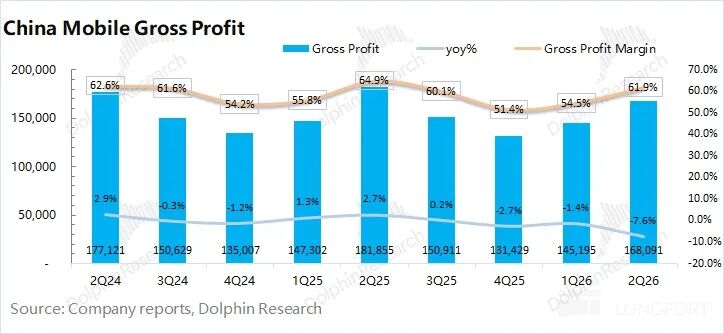
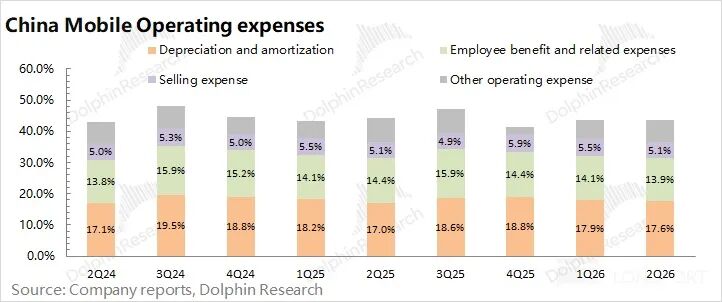
The company's operating profit for the same period was RMB 49.3 billion, reflecting a 15% year-on-year decrease, mainly attributable to reductions in both revenue and gross profit margin.
2. Core Business Performance: Steady User Growth Amidst Declining Fees
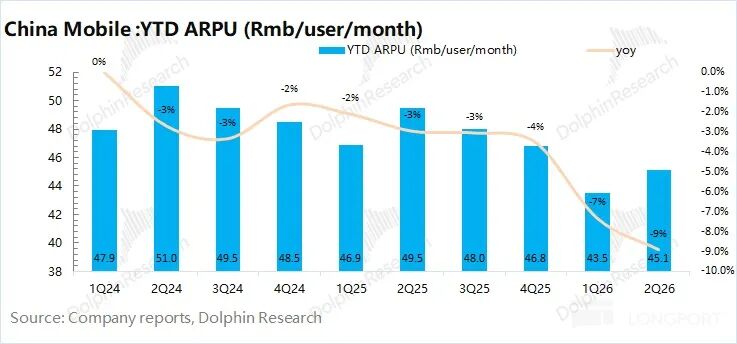
a) Mobile Business: China Mobile (600941.SH) witnessed a rebound in its mobile user base to 1.011 billion in this quarter, representing a quarter-on-quarter increase of approximately 2.12 million. However, the average monthly ARPU per user for the first half of the year declined to RMB 45.1, a 9% year-on-year decrease.
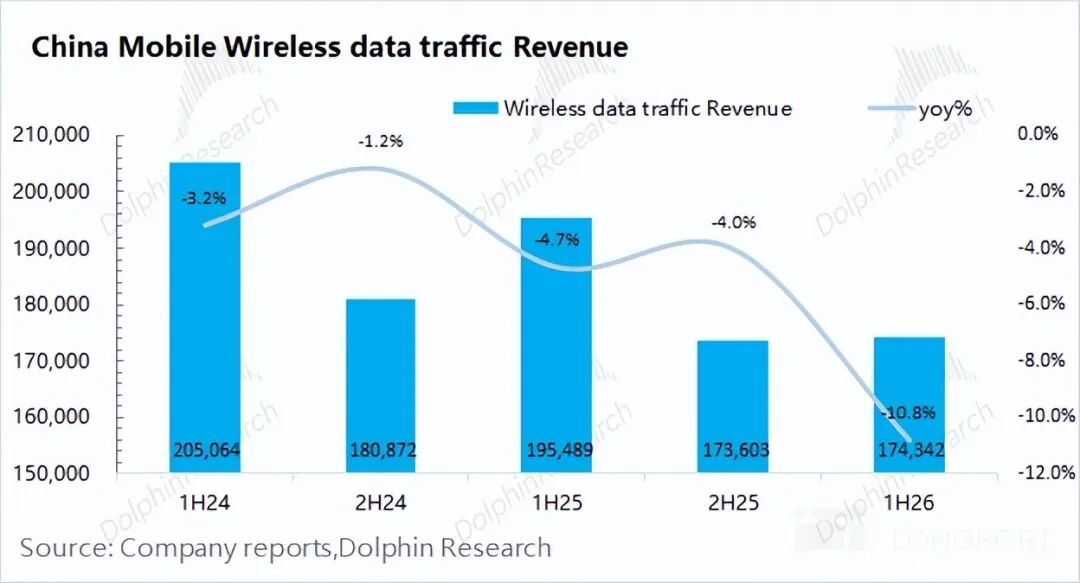
Since January 1, 2026, the company's communication business has been impacted by an approximate 2% increase in VAT. Even without considering the VAT effect, the average mobile fee per user still dropped by about 6% in the first half of the year, directly affecting revenue and gross profit margin.
Notably, the company has ceased to disclose quarterly average monthly fees per user since the beginning of this year. According to Dolphin Research, the VAT impact on fees is around 3%. Even excluding this, it is clear that the decline in mobile user fees is accelerating.
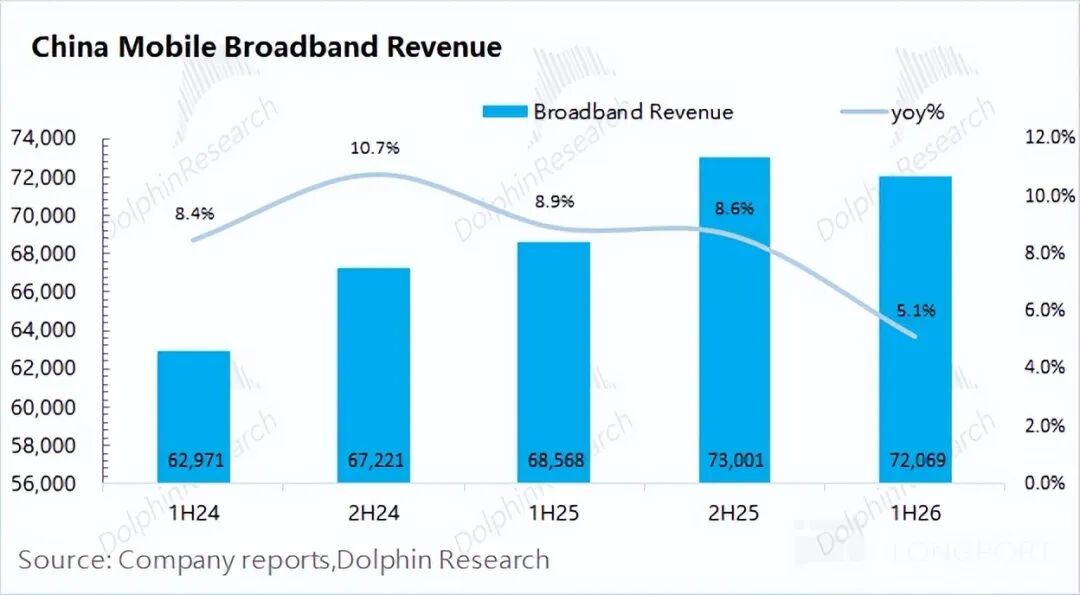
b) Broadband Business: The broadband business remained relatively stable, continuing to grow. The company reported 337 million broadband connections this quarter, a quarter-on-quarter increase of 3.9 million households.
Starting from the previous quarter, the company has revised its disclosure metrics, shifting from 'wired broadband numbers' to 'broadband connections,' which now encompass home broadband, enterprise broadband, internet dedicated lines, and data dedicated lines.
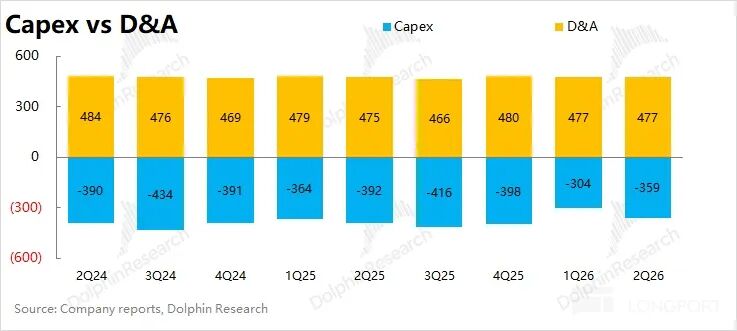
3. Capital Expenditure: China Mobile's capital expenditure for the second quarter of 2026 was approximately RMB 35.9 billion, a year-on-year decrease of RMB 3.3 billion. The company did not update its full-year outlook; previously, it anticipated capital expenditure for 2026 to be RMB 136.6 billion, a year-on-year decrease of RMB 15-20 billion. The company plans to reduce capital expenditure on communication networks while increasing investments in computing networks.
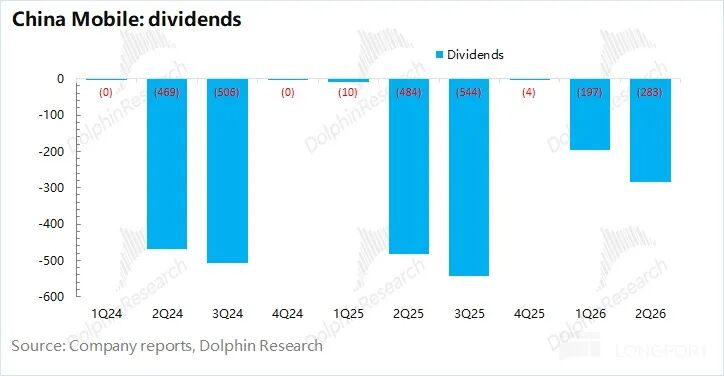
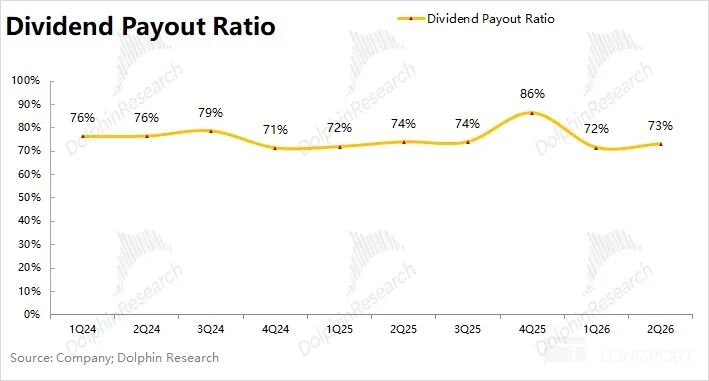
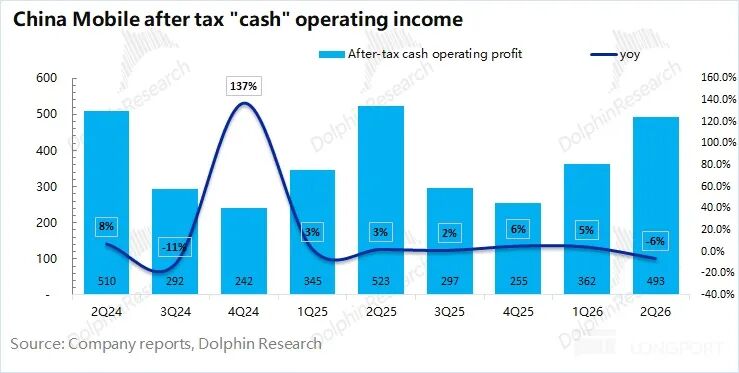
4. ROE and Dividend Conditions: The company's Trailing Twelve Months (TTM) Return on Equity (ROE) for this quarter was 9.9%, a slight year-on-year increase of 0.1 percentage points. It distributed RMB 48 billion in dividends in the first half of the year. Combined with the dividend plan announced in its interim report, the company expects to pay an additional RMB 54.4 billion in dividends. Thus, the current dividend payout ratio (dividends/after-tax cash profits, TTM) stands at around 73%, remaining relatively stable.
The calculations for ROE and dividend conditions are based on after-tax cash operating profits, which amounted to approximately RMB 49.3 billion this quarter. [After-tax cash operating profit = (company operating profit + depreciation and amortization - capital expenditure) * (1 - tax rate)]
Dolphin Research's Overall View: Tax Hikes and Fee Reductions Leave Dividends as the Sole Support
China Mobile experienced year-on-year declines in both revenue and gross profit margin this quarter, primarily due to the VAT increase and the decline in mobile fees.
It is important to note that this 'decline' cannot be entirely attributed to VAT. The VAT impact on the communication business should be around 2%, yet the business saw a nearly 5% decline this quarter, with the remaining 3% mainly due to the decline in average monthly fees per mobile user.
[New VAT Policy: Starting January 1, 2026, data traffic, SMS, and MMS services were reclassified from 'value-added telecommunication services' to 'basic telecommunication services,' with the corresponding VAT increasing from 6% to 9%.]
Given the decline in operating performance, the market is focusing more on the company's dividend conditions. According to the financial statements, the company paid RMB 28.3 billion in dividends in the second quarter and announced subsequent dividends of RMB 54.4 billion, estimating the company's dividend payout ratio (dividends/after-tax cash profits) to be around 73%.
Overall, China Mobile is currently under dual pressure from VAT increases and declining user fees, leading to a sustained decline in company performance. Based on the current situation, the company's full-year profits are expected to decline, pushing the Price-to-Earnings (PE) ratio above 10x.
From a PE perspective, the company's current valuation is not low, with market attention primarily focused on dividends. Considering the impact of VAT and declining fees, Dolphin Research estimates the company's full-year Earnings Before Interest, Taxes, Depreciation, and Amortization (EBITDA) for 2026 to be RMB 319.2 billion, a year-on-year decrease of 6%. Assuming full-year capital expenditure of RMB 145 billion (CS table), the company's after-tax cash profits are estimated to be RMB 136 billion.
Combined with the company's dividend payout ratio (70-80%), full-year dividends are expected to reach RMB 95-108 billion. Under the current Hong Kong stock market capitalization (RMB 1.53 trillion), this corresponds to a dividend yield of approximately 6.2-7%.
For growth-oriented investors, China Mobile may lack appeal. Investment in China Mobile primarily stems from market demand for high-dividend allocation and risk aversion. During previous corrections in the tech growth sector, the company attracted some funds seeking risk aversion.
Even under current performance pressures, the company (Hong Kong stocks) will still provide a dividend yield of over 6%. If performance further declines, the company can still pay higher dividends by increasing the dividend payout ratio (a passive move to enhance stock attractiveness).
Below is detailed data from Dolphin Research on China Mobile's financial report:
- END -
// Reprint Authorization
This article is an original piece by Dolphin Research. Reprinting is only allowed with authorization.
// Disclaimer and General Disclosure
This report is intended solely for general informational purposes and is meant for the general reading and data reference of users of Dolphin Research and its affiliated institutions. It does not take into account the specific investment objectives, investment product preferences, risk tolerance, financial status, or special needs of any individual receiving this report. Investors must consult with independent professional advisors before making investment decisions based on this report. Any person making investment decisions using or referring to the content or information in this report does so at their own risk. Dolphin Research shall not be liable for any direct or indirect responsibilities or losses that may arise from the use of the data contained in this report. The information and data in this report are based on publicly available sources and are for reference purposes only. Dolphin Research strives to ensure but does not guarantee the reliability, accuracy, and completeness of the information and data.
The information or opinions mentioned in this report shall not, under any jurisdiction, be regarded or construed as an offer to sell securities or an invitation to buy or sell securities, nor shall they constitute recommendations, inquiries, or endorsements of relevant securities or related financial instruments. The information, tools, and data contained in this report are not intended for or intended to be distributed to jurisdictions where distribution, publication, provision, or use of such information, tools, and data conflicts with applicable laws or regulations, or where Dolphin Research and/or its subsidiaries or affiliated companies are required to comply with any registration or licensing requirements in such jurisdictions, to citizens or residents of those jurisdictions.
This report only reflects the personal views, insights, and analytical methods of the relevant creators and does not represent the stance of Dolphin Research and/or its affiliated institutions.
This report is produced by Dolphin Research, with copyright solely owned by Dolphin Research. No institution or individual may, without the prior written consent of Dolphin Research, (i) make, copy, reproduce, duplicate, forward, or create any form of copies or reproductions in any way, and/or (ii) directly or indirectly redistribute or transfer to other unauthorized persons. Dolphin Research reserves all related rights.
-
![]()
The "Happiness" of Xpeng
-
![]()
China Mobile: Coping with Tax Hikes and Fee Reductions, Are High Dividends the Sole Pillar?
-
![]()
Wei Brand V8X Unveiled: Can Great Wall Overcome the High-End Market Challenge?
-
![]()
Why Did Musk Set His Sights on Space Computing After Starlink?
-
Major Adjustment! Nokia Plans to Close R&D Center in China, Lay Off 1,600 Employees
-
![]()
Co-Lead Optoelectronics Pours 1.7 Billion Yuan into Investment, Triggering a 20% Surge to Limit-Up!
-
![]()
AI Smartphone Competition: Some 'Add Icing on the Cake,' Others 'Determine Survival'
-
The Irresistible Allure of Extreme Sports vs. The Limited Appeal to the Masses: Why Panoramic Cameras Remain a Niche Product