From Market Leader to Outside the Top Five: Can Honor Revive Its Fortunes with a 9,999-Yuan 'Robot Phone'?
 08/18 2026
 431
431
Is the 9,999-Yuan 'Robot Phone' a Game-Changer or a Financial Strain for Honor?
/
By He Lanyi | Edited by Yang Xiaoruo
On the evening of August 12, at the Guangzhou Greater Bay Area Cultural and Sports Center, Honor CEO Li Jian took center stage at a product launch event, with a large screen behind him prominently displaying a price tag: 9,999 yuan.
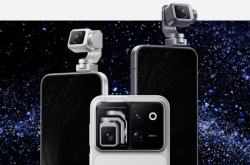
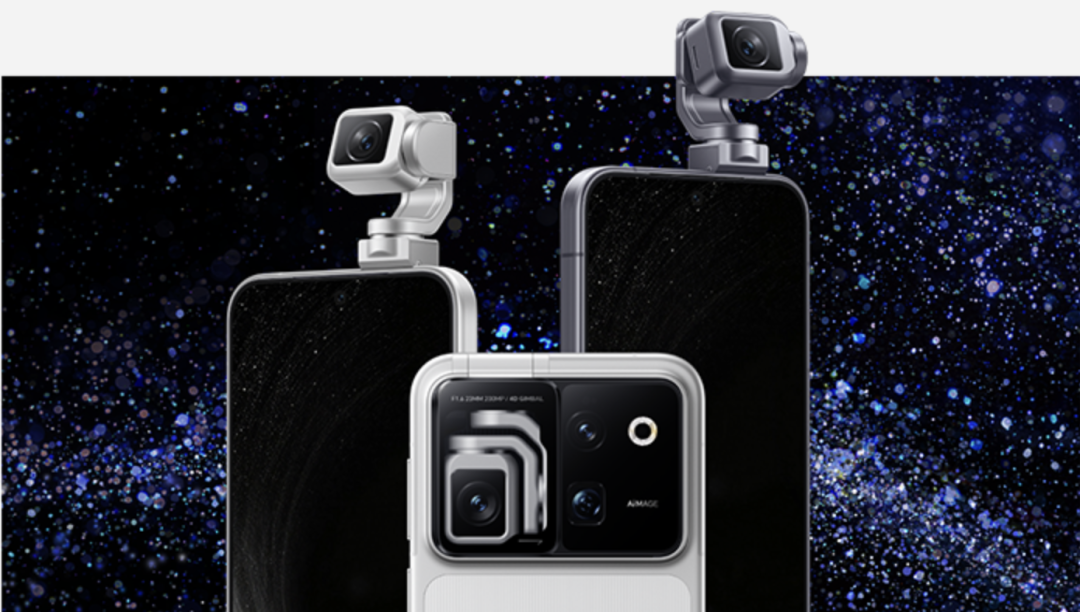
This marks the starting price of Honor's Robot Phone, which the company proudly touts as the world's first robotic smartphone. The device integrates a four-degree-of-freedom titanium alloy mechanical gimbal into a sleek body just 9.59 millimeters thick, and is powered by a companion-type multimodal intelligent operating system named Agentic OS. It also features an imaging system co-developed with the renowned century-old film industry brand ARRI. The top-tier 16GB+1TB version is priced at 12,999 yuan, with an official release set for the following day (August 18).
The launch event was anything but subdued. According to reports from media outlets such as the Kechuang Ban Daily, pre-orders for the Robot Phone have already exceeded 200,000 units across all channels. Some foreign media reviews have even compared it to having an 'Osmo Pocket in your pocket,' recognizing its engineering prowess.
As a phone that can 'shake its head' and is being compared to professional film equipment, a pertinent question arises: For Honor, which is on the verge of an IPO and has witnessed a decline in its domestic market share, is this device a fresh narrative for the capital markets or an expensive new liability?
01 The Core Components of This 'Robot Phone': Hardware and Software
Peeling away the marketing veneer, the essence of the Robot Phone lies in its integration of a smartphone, a stabilized gimbal, and an AI agent—a combination that no one has dared to mass-produce before.
In terms of hardware, it does possess genuine competitive advantages.
According to Honor's disclosed specifications, the four-degree-of-freedom titanium alloy gimbal incorporates four micro-motors with a diameter of just 6 millimeters, boasting over 100 patents and more than 60 assembly processes. This sets it apart from all other imaging flagships as a tangible competitive edge. The accompanying self-developed Yuguang H1 imaging chip and ARRI color science licensing further enhance its prowess in the video shooting arena.
From an engineering standpoint, compressing a three-axis mechanical gimbal into a 9.59mm body represents a significant structural innovation, not just a marketing gimmick.
However, with these advantages come inherent risks.
The long-term reliability of the mechanical structure is the biggest unknown for this phone. Multiple tech reviews have highlighted widespread concerns online about its susceptibility to damage, dust ingress, and exorbitant repair costs. Many influencers have expressed doubts about its durability under frequent use. Honor's claim of 100,000 cycles, equating to approximately 13 years of lifespan, has also been met with skepticism.
Although Honor has responded with a worry-free gimbal replacement service, whether the cost of replacements will ultimately be reflected in the pricing remains to be seen. A phone starting at 9,999 yuan that relies on precise mechanics could face significant backlash if reliability issues emerge en masse among users, dampening not just this product but the entire industry's enthusiasm for mechanical innovation.
In terms of user experience, it is precise but niche. According to the launch event, the Robot Phone is a small-screen model (6.31-inch OLED, 2640×1216 resolution, 120Hz refresh rate, peak brightness of 6800nit, and a 7060mAh battery), clearly targeting professional content creators rather than everyday consumers. Agentic OS advocates for proactive scene perception and solution provision, but currently remains more in the realm of demonstrations and concepts. Its true everyday usability will only become clear after large-scale feedback post-August 18 launch.
As for the target users? 'Business Show' believes they are likely two groups: creators who value the three-in-one value proposition of 'phone + professional gimbal + ARRI film camera,' and tech enthusiasts and curiosity seekers who are drawn to the 'world's first' label.
Of course, the former group is limited in size, while the latter may not exhibit long-term loyalty.
Thus, the hard truth becomes evident. The 10,000-yuan price tag keeps the masses at bay, mechanical reliability remains unproven, and the practical value of the AI agent has yet to be daily-verified. It more closely resembles a technological manifesto product than a high-volume cash cow.
And such a niche technological manifesto arrives precisely at the moment when Honor most needs to tell a new story.
02 Why Does Honor Need a 'Robot' Phone?
Honor's recent predicament, characterized by a decline in market share, may also be the backdrop for the Robot Phone product line.
According to data from IDC and observers such as Guancha.cn, in the first quarter of 2024, Honor topped the Chinese smartphone rankings with a 17.1% market share, nearly on par with Huawei. By the full year of 2024, it stood at around 14.9%. The situation took a sharp turn in 2025, with Honor falling out of the top five for the full year, its share squeezed to about 13.4%.
By the first half of 2025, its share had further dwindled to 12.6%, ranking sixth. In the first eight weeks of the third quarter, sales fell 9% year-on-year, the largest drop among major manufacturers. During the same period, Huawei reclaimed the top spot with a 16%-18% share. By the second quarter of 2026, Honor's market share stood at just around 11.3%.
This is a classic tale of 'success because of Huawei, failure because of Huawei.' Honor emerged from Huawei and initially reaped the benefits of being a 'Huawei alternative.' However, as Huawei returned with self-developed chips and a replenished product lineup, Honor's most comfortable market segment was directly taken away.
The Robot Phone may represent Honor's desperate attempt to rediscover differentiation after the 'Huawei alternative' identity lost its luster.
The broad strategic choice fell to Li Jian, who succeeded as CEO in 2025. Zhao Ming stepped down as CEO in January 2025 due to health reasons, replaced by Li Jian, a former Huawei executive known for his toughness.
Li's first move was not to launch a new phone but to change the narrative.
At MWC 2025, he unveiled the Alpha Strategy (HONOR ALPHA PLAN), announcing Honor's transition from a smartphone manufacturer to an AI terminal ecosystem company. Over the next five years, Honor plans to invest $10 billion in building an AI terminal ecosystem and venturing into the robotics sector.
In March 2026, the Robot Phone concept prototype made its debut at MWC. By July's WAIC, pre-orders across all channels were announced, along with the simultaneous release of a humanoid robot product. The Robot Phone officially entered mass production and went on sale on August 12.
The logic behind this strategy is clear. As a smartphone manufacturer, the capital markets value a company based on shipment volumes and average selling prices. As an AI terminal ecosystem company, they value it based on its potential for innovation and growth.
Amid declining market share and a crowded main track, Li has chosen to rewrite Honor's narrative from just another phone manufacturer to a terminal gateway in the era of embodied intelligence. The Robot Phone serves as the first physical cornerstone of this new narrative. It may not save sales, but it certainly generates buzz and elevates the brand's image.
And this rewritten narrative ultimately serves an IPO that has been in the works for nearly six years but has yet to cross the finish line.
03 Can This 'Robot' Phone Help at the IPO Gate?
Honor's path to going public has not been smooth.
According to CITIC Securities' counseling reports and the CSRC's IPO counseling disclosure system, Honor became independent from Huawei in November 2020, with an estimated valuation of around $40 billion (approximately 260 billion yuan). It completed its shareholding reform in 2024. In June 2025, it completed Listing guidance filing (IPO counseling registration) with the Shenzhen Securities Regulatory Bureau, with CITIC Securities serving as the counseling agency, officially kicking off its A-share IPO process.
The originally scheduled counseling period was set to end by March 2026 but has been continuously extended due to pending fundraising projects. On July 30, 2026, CITIC Securities disclosed its fourth-phase counseling report (covering April 1 to June 30), confirming that the IPO is still progressing and that rumors of its termination are false.
However, the valuation has fallen from the previous estimate of around 260 billion yuan to 180 billion yuan, as listed in Hurun Research Institute's '2026 Global Unicorn Index,' aligning with the trend of declining market share.
More subtly, in May 2026, according to multiple media reports, Honor held an internal employee shareholding meeting due to failing to complete the IPO within a year of the shareholding reform. The company opened a channel for employees to reduce their holdings and exit, clarifying rumors of an 'IPO termination' but ultimately failing to provide a specific listing timeline.
When even its own employees need an exit option, outside perceptions of the process are understandable.
On the macro level, IDC data shows that China's smartphone shipments in the second quarter of 2026 fell 4.3% year-on-year, marking a fifth consecutive quarter of decline. The overall market is under pressure.
So, does the Robot Phone truly help with the IPO progress?
Firstly, the Robot Phone precisely hits two of the capital markets' current favorite buzzwords: embodied intelligence and AI terminals.
In 2026, as robotics companies like Unitree Robotics gain high valuations and access the STAR Market, a global first robot phone, coupled with a CEO who simultaneously unveiled a humanoid robot at WAIC, is enough to shift Honor's IPO narrative from the crowded smartphone red ocean to an AI and robotics story.
The 200,000 pre-orders also provide tangible evidence of market interest. For a pre-IPO company in need of a new story, this phone arrives at just the right time.
However, IPOs ultimately hinge on sustained profitability and a verifiable business model, not just flashy product forms at launch events. With its 10,000-yuan price tag and niche positioning, the Robot Phone is unlikely to become a significant revenue pillar. The potential risks associated with mechanical reliability could even become recurring concerns during listing review (listing reviews) and roadshows.
More critically, Honor's true valuation anchor remains its core smartphone business, a segment that Huawei reclaimed in 2025. A single Robot Phone is unlikely to fill the gap in the main track's market share.
Returning to the initial question: Is the Robot Phone a new story or a new burden for Honor?
The answer may be that it is an expensive but necessary new story. With the 'Huawei alternative' dividend exhausted, market share slipping out of the top five, and the IPO stalled at the fundraising stage, Honor needs not just another cost-effective phone but a reason for the capital markets to reimagine its potential.
Li has used a $10 billion strategy, a phone that shakes its head, and a foray into robotics to rewrite Honor's story from shipments to innovation. This move makes sense for valuation narratives but raises doubts about short-term performance.
What truly determines whether Honor can tell this new story well is not whether the titanium alloy gimbal remains stable but whether, after the buzz around the Robot Phone fades, Honor's core business can sustain real growth worthy of an 180 billion yuan valuation.
Otherwise, no matter how dazzling the mechanical arm, it cannot support the weight of a company. This is a question Honor itself is likely still trying to answer. 'The End'
-
The More Users, The More Money Lost: AI Transforms C-End SaaS into a Gym-Style Business
-
![]()
Unitree Technology Unveils 'Superman,' Igniting a Robotics Boom!
-
![]()
Regulators Put the Brakes on the Once-Popular 'Little Blue Light'
-
![]()
Major Leadership Shift at Geely Auto: Li Shufu Steps Down!
-
![]()
Porsche 'Steps Out of Group to Secure Carbon Credits,' Facing Fresh Electrification Challenges
-
![]()
Xiaomi Increases Stake in Xiangbin Electronics' IPO, Executives Face Financial Setbacks Selling Shares for Home Purchases
-
![]()
"The More a Car Resembles European Models, the Tougher It Is to Outcompete Them in Europe"; "Chinese Automakers in the European Market: Small Cars, Competitive Strategies, and the Leapmotor A05"; "Chi
-
![]()
From Market Leader to Outside the Top Five: Can Honor Revive Its Fortunes with a 9,999-Yuan 'Robot Phone'?