"The More a Car Resembles European Models, the Tougher It Is to Outcompete Them in Europe"; "Chinese Automakers in the European Market: Small Cars, Competitive Strategies, and the Leapmotor A05"; "Chi
 08/18 2026
 426
426
On the evening of August 11, Leapmotor positioned the A05 alongside the A10.
The differences between these two models are subtle. They share the same 2605mm wheelbase, batteries, motors, cockpits, and numerous components. One is a hatchback sedan, and the other is an SUV—essentially two body styles built upon the same technological foundation.
The A0 segment offers slim profit margins, prompting domestic automakers to typically streamline their product offerings to concentrate resources on creating blockbuster models. Leapmotor's decision to develop two models was largely influenced by the European market.
From the outset, the A05 was designed as a global model. Leapmotor executives observed that Europe's small car market is substantial and characterized by more segmented demands compared to China. SUVs and hatchbacks coexist harmoniously over the long term, enabling a single platform to support both body styles, each attracting a sufficient user base.
This makes the A05's mission more intriguing than merely focusing on domestic sales.
Over the past few years, Chinese automakers have intensified their preparations for entering the European market. From the Ora Good Cat and Lynk & Co 02 to NIO's Firefly, design, chassis, and even vehicle definitions have increasingly mirrored European trends.
Yet, the outcomes have been counterintuitive. Meticulously crafting cars to European standards has not enhanced sales. Instead, products that retain more of China's original market logic, such as the BYD Dolphin Surf, have achieved initial success.
The A05 stands at the crossroads of these two strategies.
As China has evolved into one of the most fiercely competitive global auto markets, do Chinese cars still need to transform themselves into European counterparts before entering Europe?
01 Chinese Cars with a Strong European Flavor Don’t Necessarily Sell Well
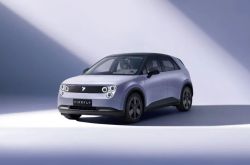
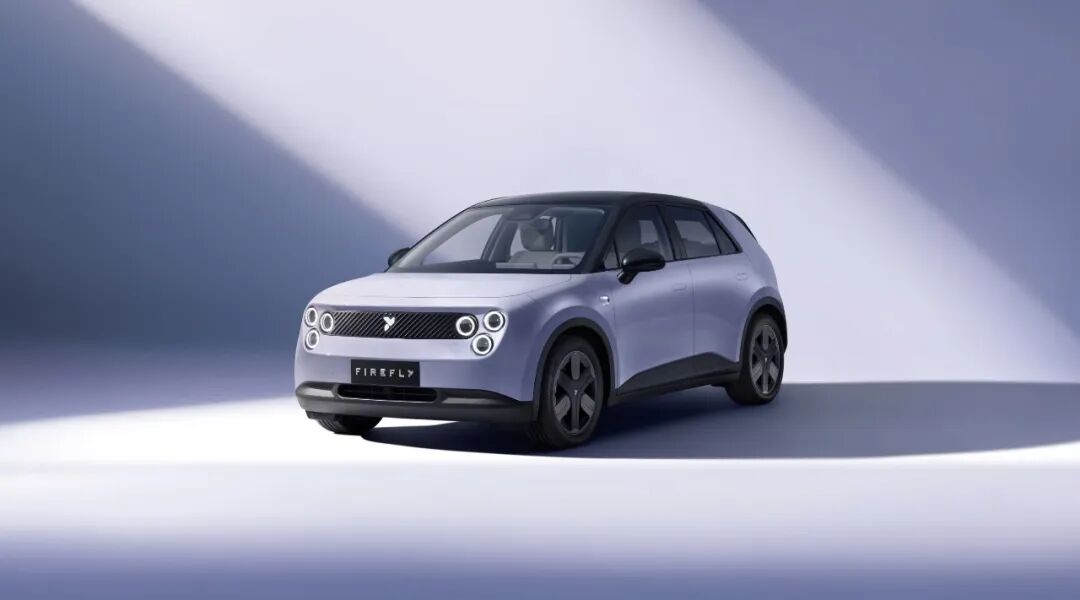
To enter the European market, NIO prepared a comprehensive European profile for the Firefly.
Its design center is located in Munich, the European Intelligent Driving and Innovation Center is in Berlin, and a vehicle engineering team operates in Oxford, UK. The Firefly is just over 4 meters long, features rear-wheel drive with a five-link suspension, boasts a tight turning radius, includes a 92L front trunk, and offers over 400L of rear cargo space.
For an urban small car, these specifications cater to familiar European consumer priorities: a compact exterior with a spacious interior, maneuverability in old city centers, and the capacity to handle daily family loads.
Europe was originally the Firefly's core target market. At its 2024 brand launch, NIO positioned Mini and Smart as key competitors. That year, Europe's small car market reached approximately 4 million units annually.
This market remains vital today. In the first half of 2026, the Dacia Sandero still ranked first in European passenger car sales, while the Renault 5 led the B-segment (equivalent to China's A0) pure electric sales. During the same period, pure electrics accounted for 20.7% of new EU vehicle registrations.
For Chinese automakers preparing to enter Europe, small cars represent a stable, mainstream local market with high price sensitivity, making China's supply chain and cost advantages more easily convertible into compelling purchasing reasons—naturally becoming a primary battleground for overseas expansion.
The Firefly was initially highly anticipated. NIO hoped it would transform their situation of selling only a few hundred units annually in Europe.
Actual deliveries commenced in August 2025, with Norway and the Netherlands—markets with high EV penetration—chosen as the initial launch regions. By then, the EU had already imposed additional tariffs on Chinese-made pure electrics, with the Dutch price reaching €29,900.
At nearly €30,000, the Firefly competed directly with established European models like the Renault 5 and Mini. It achieved near-peer product quality but lacked decades of brand recognition.
Sales fell short of expectations. During the initial launch, both countries saw single-digit registrations; by July 2026, only 96 Fireflys were registered on Dutch roads. Meanwhile, the Firefly sold steadily at over 5,000 units monthly in China.
The product's competitiveness didn't suddenly decline in Europe—what changed were the pricing and competitive environment.
Subsequently, the Firefly shifted its focus to markets without EU tariffs, including the UK, Australia, New Zealand, and Southeast Asia. However, CEO Jin Ge emphasized that the Firefly would not become a brand competing solely on low prices.
It replicated a mature European market choice but failed to give consumers a compelling reason to switch from their existing options.
The Lynk & Co 02 provides another example.
While the Firefly had to learn about Europe from scratch, Lynk & Co was virtually born into the European automotive system. Headquartered in Gothenburg with close ties to Volvo, the 02 debuted in Europe before entering China as the Z20. To develop this model, Lynk & Co incorporated thousands of feedback points from European users.
It's hard to criticize the 02 for "not understanding Europe."
Yet the 02 followed a typical European product logic: compact size, rear-wheel drive, design appeal, driving texture, plus some new energy features. Priced starting at €35,000 in Europe, it aligned with local same-kind product pricing.
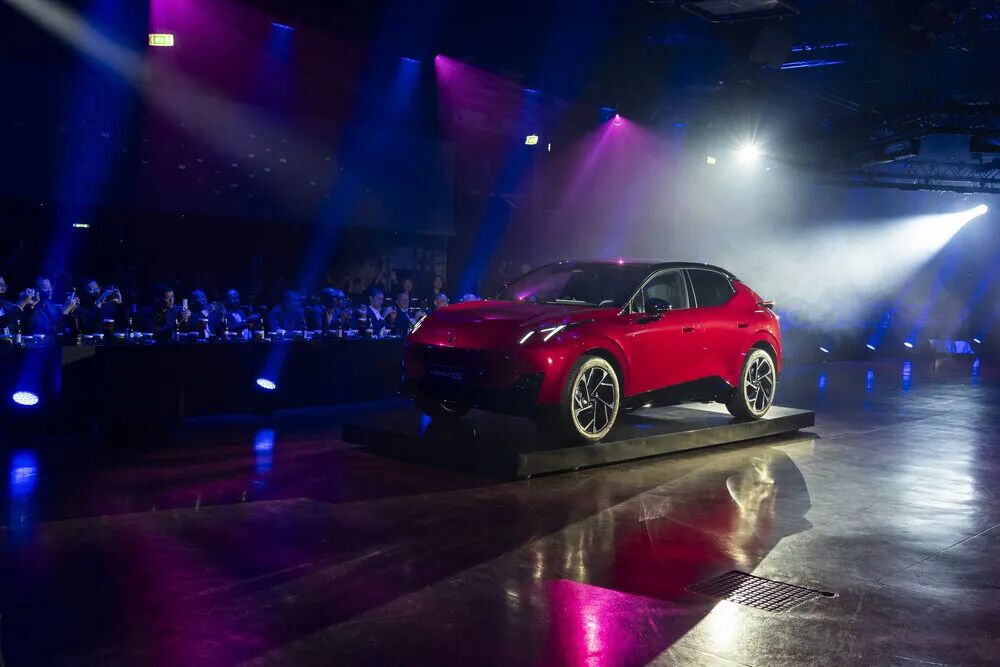
In China, the same Z20 sold for just over ¥100,000, roughly 40% of its European starting price. This significant price difference stemmed not only from tariffs and channel costs but also reflected differing product philosophies.
Sales failed to take off. In 2025, only 49 units of the 02 were registered in Germany throughout the year; Lynk & Co subsequently rapidly expanded traditional retail and service outlets, planning this year to directly integrate with Volvo's European sales and service network.
From the Firefly to the Lynk & Co 02, both companies invested heavily in understanding Europe and building cars to European standards.
The result? They proved capable of competing as qualified local players but didn't attempt to offer European consumers something truly novel.
These two cases exemplify a classic failure to adapt. Over the past few years, Chinese products like the Ora Good Cat and Zeekr X have entered Europe without breaking into the mainstream. Chinese car sales in Europe have shown no linear correlation with how "European" a vehicle is.
The markets the Firefly and 02 entered weren't blank slates waiting for Chinese cars to educate consumers. Before their arrival, Europe's automotive industry had spent nearly seven decades defining what small cars should be.
02 Europe Has Been Building Great Small Cars for 70 Years
Europe's small cars first addressed poverty.
In the 1950s, postwar Europe re-entered the private car era. Urban roads weren't prepared for mass car adoption, household incomes were limited, and oil supplies were unstable.
The 1957 Fiat 500 measured just over 3 meters. Priced at 490,000 lira, a factory worker could afford one with a year's salary. It became one of Italy's cheapest new cars, with over 3.8 million units produced, marking Italy's postwar automotive popularization.
Two years later, the British provided a more enduring answer.
The Suez Crisis caused fuel shortages, prompting the British Motor Corporation (BMC) president to order design chief Alec Issigonis to halt all current projects and build a truly small car as quickly as possible.
The requirements were stringent: smaller than any previous BMC model yet accommodating four adults and luggage, using existing engines.
Issigonis ultimately achieved a 3.05-meter length. To maximize passenger and cargo space, he rotated the engine horizontally in the front, used front-wheel drive, placed the transmission beneath the engine, and pushed four 10-inch wheels to the corners.
Ultimately, 80% of the car's footprint was dedicated to passengers and luggage.
This became the 1959 Mini.
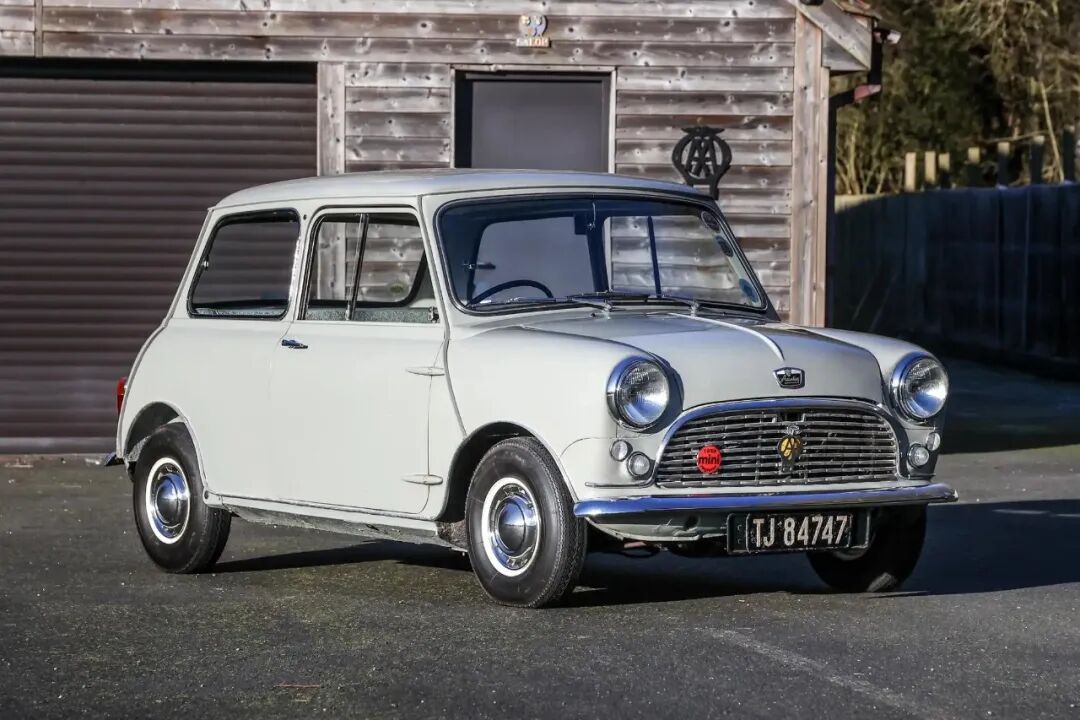 ▍1959 Austin Mini 850
Today, these designs are widely accepted. Transverse engines, front-wheel drive, and wheels positioned near the corners became standard for modern front-wheel-drive small cars. At the time, this restructured automotive design, with BMW later calling the original Mini's layout the "blueprint" for modern small cars.
More unexpectedly, years later, racing engineer John Cooper discovered that the Mini's extremely short wheelbase, corner-positioned wheels, and front-wheel drive made it exceptionally agile.
The Mini Cooper was born. In 1964, it defeated more powerful cars to win the Monte Carlo Rally overall, repeating the feat in 1965 and 1967.
A small car designed for fuel and space efficiency thus gained an additional identity: driving fun.
From 1959 to 2000, over 5.3 million classic Minis were produced. It left behind not just sales figures but also defined European small car paradigms: how to maximize space within minimal dimensions, how to ensure affordability doesn't equate to boredom, even how to imbue a small car with personality—the Mini touched on all these.
Subsequent European automakers built upon this foundation. The 1972 Renault 5 incorporated vibrant colors, plastic bumpers, and anthropomorphic design to inject youthfulness into small cars; the Polo insisted that while dimensions could shrink, Volkswagen's build quality, chassis, and cohesion must not suffer, with six generations accumulating over 20 million sales; the Peugeot 205 GTi made driving pleasure a lasting hallmark of French small cars.
As Europe grew wealthier, small cars didn't disappear. They evolved from cheap transportation into diverse products.
European automakers' definitions of small cars carried into the new energy era. When Peugeot launched the pure electric E-208 GTi, it brought 30 historic 205 GTis to Le Mans for the model's dynamic debut, serving as a manifesto for the brand's small cars.
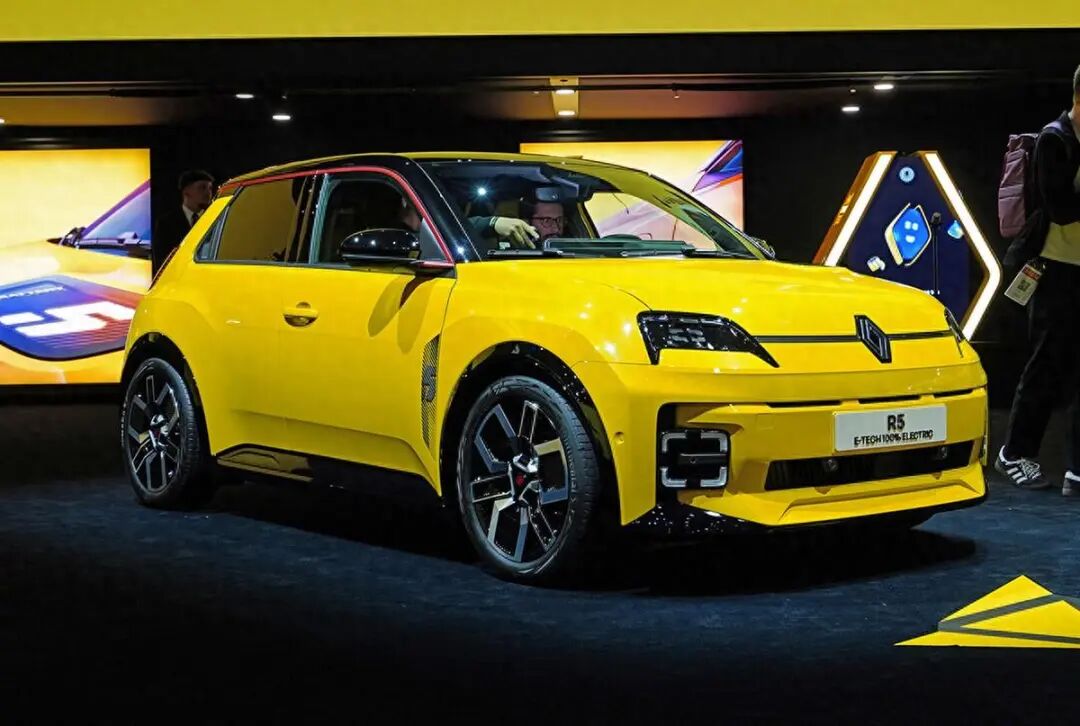
Renault revived the R5, reclaiming its 1972 persona of youthful, vibrant urban mobility; the Mini amplified its nimble, immediate driving feel; the Polo transformed into the ID.Polo, still emphasizing space, quality, and completeness within compact dimensions; the Fiat Grande Panda highlighted simplicity, practicality, and affordability.
The distinct roles small cars play haven't disappeared. European consumers can still find relatively mature products offering affordability, versatility, design, driving pleasure, personality, and brand appeal.
In this market environment, a "competent in all aspects" newcomer faces an awkward position.
Europe lacks no good small cars.
03 Bringing China's Market Solutions to Europe
The MG4 early on sidestepped this issue.
It featured a hatchback body familiar to European consumers and addressed chassis and driving dynamics seriously, but its market breakthrough came from pricing. From 2023, the MG4 became Europe's fourth-highest-registered pure electric model.
The Dolphin Surf, which entered Europe last year, is even more typical. Essentially the domestic Seagull's European variant, BYD met local regulations, charging, and safety requirements without altering the car's original product logic.
At nearly 4 meters long, its dimensions approach B-segment small cars like the Renault 5. Yet BYD officially positions the Dolphin Surf in the local A-segment market, equivalent to China's A00 class.
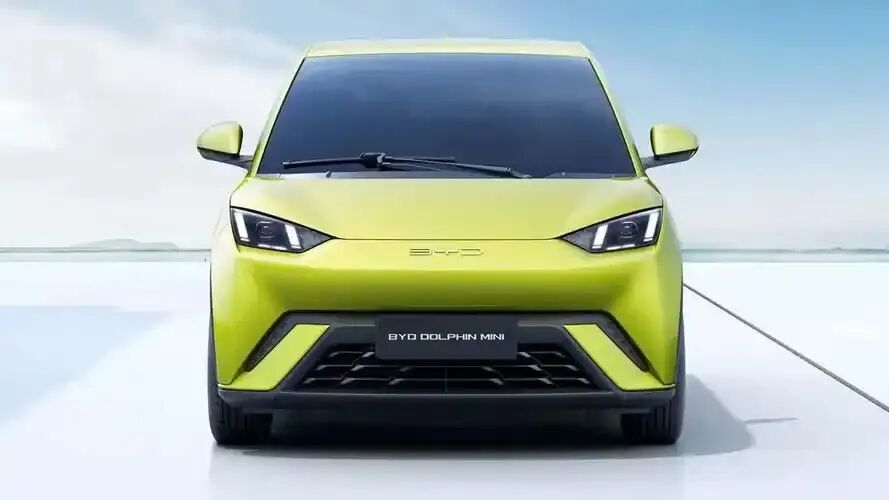
It brings to Europe a strategy familiar to Chinese automakers: positional competition.
Against A-segment rivals, it's not cheap but larger; against higher-segment opponents, it offers similar dimensions at a significantly lower price. Its official European starting price is €22,990, about €5,000 below the Renault 5's base model; during launch phases, it reached €19,990, nearly a 30% difference.
It didn't rely on improving other hard parameters. Its 322km WLTP range and 85kW fast charging aren't outstanding; the Renault 5 offers up to 410km range. Though the European version features a stiffer suspension, driving dynamics remain unexceptional.
Positioning and pricing convinced the market. By early 2026, the Dolphin Surf ranked first in German A-segment pure electric sales, even cracking the overall pure electric market's top ten in February.
The Leapmotor T03 pushed this strategy further. Smaller and simpler, without complex European premium narratives, its core was simply low pricing, leveraging Stellantis's distribution and service network to reach consumers.
By March this year, the T03 had become Europe's highest-selling A-segment pure electric model, with Leapmotor's European registrations exceeding 11,000 units that month, accounting for roughly 3.2% of Europe's pure electric passenger car market.
Neither model was developed specifically for Europe. They transported mature Chinese market products abroad with only essential adaptations, yet achieved faster market penetration.
Instead of replicating existing European solutions, they brought China's strengths in pricing, configuration, and cost efficiency to European shelves, creating new competitiveness.
Following this logic, the newly launched A05 aims to go further.
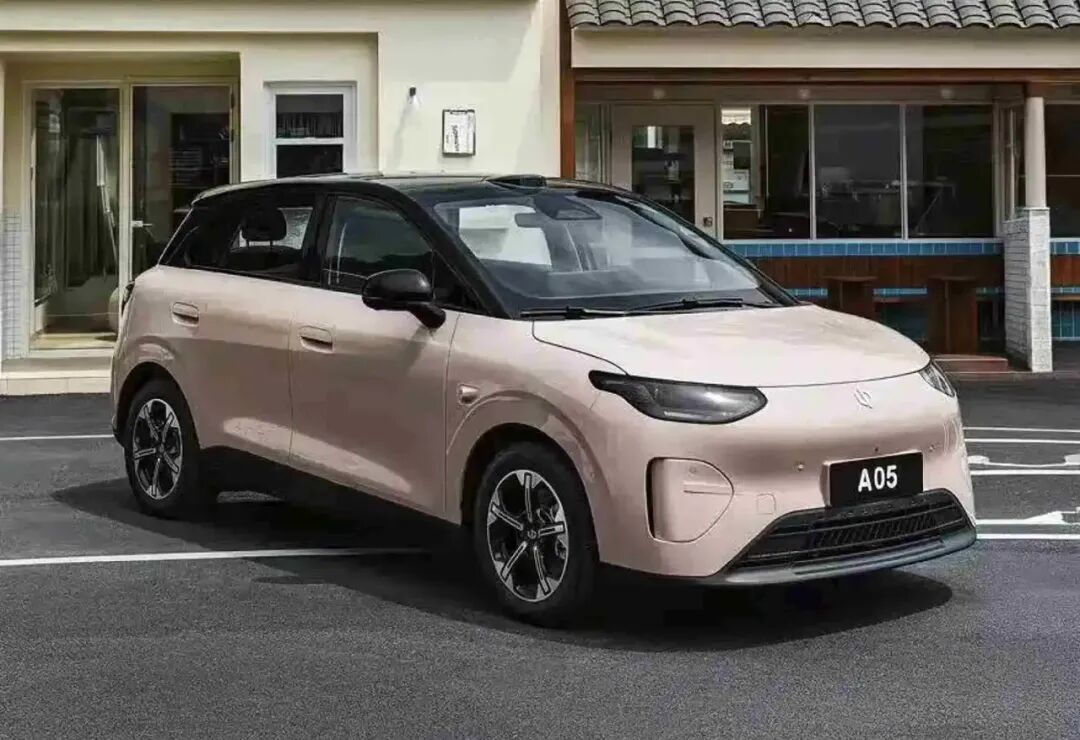
In China, the A05 already uses the Qualcomm 8295 cockpit chip, with high-end versions featuring a single LiDAR sensor supporting advanced driver assistance like urban NOA.
We've learned that Leapmotor will bring this same product philosophy to Europe. The high-end LiDAR version won't be exported initially due to currently unsuitable local usage conditions; details like paint finishes will adjust. However, complete smart cockpit configurations like the 8295 will be retained.
When it comes to small cars, manufacturers inherently face the challenge of determining which features are non-negotiable, even at lower price points. Now, Leapmotor is bringing the smart cockpit requirements shaped by China's market dynamics to Europe, aiming to establish this as a new competitive edge.
The MG4 exemplifies how Chinese cars can be constructed to meet European standards while maintaining cost-effectiveness. The BYD Dolphin Surf takes this a step further by directly introducing products that have already achieved success in China, thereby reshaping the local competitive landscape with its size, configuration, and cost-efficiency. With the A05, Leapmotor is adopting an even bolder strategy.
In the past, when Chinese cars entered international markets, their initial offerings primarily leveraged manufacturing and cost advantages. Now, they are beginning to introduce the product trade-offs honed through domestic competition as well.
Certainly, Europe will not compromise its standards as a result, but Chinese automakers are no longer confined to merely responding to external demands.
Could the automotive transformations that first emerged in China also pave the way for Europe's next phase of development?

This article represents original content from AutoPix (autopix). Any unauthorized reproduction is strictly prohibited.
-
The More Users, The More Money Lost: AI Transforms C-End SaaS into a Gym-Style Business
-
![]()
Unitree Technology Unveils 'Superman,' Igniting a Robotics Boom!
-
![]()
Regulators Put the Brakes on the Once-Popular 'Little Blue Light'
-
![]()
Major Leadership Shift at Geely Auto: Li Shufu Steps Down!
-
![]()
Porsche 'Steps Out of Group to Secure Carbon Credits,' Facing Fresh Electrification Challenges
-
![]()
Xiaomi Increases Stake in Xiangbin Electronics' IPO, Executives Face Financial Setbacks Selling Shares for Home Purchases
-
![]()
"The More a Car Resembles European Models, the Tougher It Is to Outcompete Them in Europe"; "Chinese Automakers in the European Market: Small Cars, Competitive Strategies, and the Leapmotor A05"; "Chi
-
![]()
From Market Leader to Outside the Top Five: Can Honor Revive Its Fortunes with a 9,999-Yuan 'Robot Phone'?