Despite Performance Pressures, Why Did Haier Smart Home Buck the Trend with Increased Market Share?
 08/30 2026
 409
409

By: Hou Yu
Edited by: Sun Congying
In the first half of 2026, the entire home appliance sector faced significant headwinds. The anticipated recovery in the real estate market fell short, the impact of trade-in policies diminished, the overall industry market contracted, and numerous brands experienced a decline in their market shares.
However, a closer look at Haier Smart Home's recently published semi-annual report reveals a striking contrast: despite facing overall performance pressures, the company managed to increase its market share across all product categories. What explains this divergence between the financial report's mixed performance and the market share gains?
Analysis of Key Financial Report Metrics: Surface Pressures Conceal Multiple Growth Avenues
In the first half of the year, weak terminal demand for home appliances, coupled with external factors such as rising raw material costs, had a certain impact on Haier Smart Home's core financial metrics.
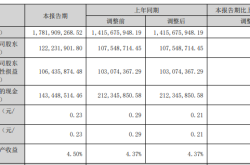
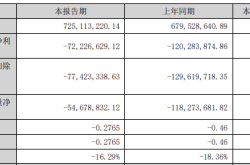
According to the financial report, Haier Smart Home's revenue for the first half reached RMB 152.115 billion, with a profit of RMB 10.316 billion. Specifically, Q2 revenue was RMB 78.428 billion, marking a year-on-year increase of 1.36%. The net profit attributable to the parent company in Q2 was RMB 5.665 billion, showing a quarter-on-quarter increase of 21.78%.
Following the release of the financial report, a question arose in the market: Given the overall industry downturn and the shrinking market shares of many competitors, why did Haier Smart Home's market share increase despite the impact on its financial metrics?
In fact, a deeper examination of the contrast between the financial report data and market share performance reveals the company's true growth potential.
First, let's delve into the core changes in the financial metrics. Profit fluctuations primarily stemmed from two key variables: one was non-recurring exchange rate disruptions, and the other was an increase in current sales expenses. The appreciation of the RMB resulted in exchange rate losses of RMB 704 million, with the impact of exchange rate gain and loss fluctuations reaching RMB 1.586 billion, representing one of the main factors contributing to the company's profit decline.
Another factor squeezing current profits was the rise in expenses. This increase was mainly due to phased investments resulting from the domestic TC transformation and overlapping overseas expansion, rather than a deterioration in operating efficiency.
The ongoing TC model transformation in China centralizes marketing resources that were previously dispersed across channels onto a unified platform for allocation. This model shift inevitably leads to phased cost increases. However, as marketing allocation becomes more refined, the input-output efficiency of the marketing sector is expected to gradually recover.
Overseas market expansion also continues to consume resources. Overseas markets must not only contend with the triple conventional pressures of tariffs, raw materials, and ocean freight but also deepen their presence in emerging markets. To achieve this, Haier Smart Home needs to accelerate the construction of four-network systems, establish local e-commerce channels, and gradually expand offline terminals.
The new air conditioner factory in Thailand, production lines in Pakistan, and multi-phase industrial parks in India have been successively completed and put into operation, solidifying local manufacturing capabilities. These upfront investments directly reduced current profits. In conjunction with European market expansion, Haier Smart Home also engaged in brand placements for international sports IPs, such as Liverpool, Paris Saint-Germain, and the French Open, all of which were included in current expenses, further increasing sales-side expenditures.
In summary, most of the pressures reflected in the financial report stem from phased consumption brought about by transformation and expansion. The company's product, supply chain, and channel strengths have not been weakened by the industry downturn, which is the core reason for its ability to achieve a counter-trend increase in market share.
Global Balanced Layout: The Performance Foundation for Mitigating Cycles
Haier Smart Home's confidence in maintaining and increasing its market share amid a downturn in the overall market stems from its balanced global multi-market layout. By not relying solely on a few regions for growth and leveraging the momentum of different markets, it hedges against the impact of downturns in single economies.
In the domestic market, the effects of the TC model reform are already evident. Online and offline market shares have solidified their leading positions, with further increases of 3.1 percentage points and 1.5 percentage points, respectively. Specifically, the online and offline market shares of refrigerators increased by a net 3.7 percentage points and 2.1 percentage points, respectively, while maintaining their leading positions. The market shares of washing machines increased by a net 2.8 percentage points and 2.4 percentage points, respectively, while maintaining their leading positions online and offline. Kitchen appliance retail growth was the only positive growth among the industry's top three. The online and offline market shares of air conditioners were 12.4% and 20.6%, with net increases of 0.9 percentage points and 0.8 percentage points, respectively. The online and offline market shares of water heaters increased by a net 5 percentage points and 4 percentage points, respectively, while maintaining their leading positions. The online and offline market shares of water purifiers were 19.5% and 21.6%, with year-on-year increases of 7.2 percentage points and 3.3 percentage points, respectively.
The North American market is facing pressure from both tariffs and high inflation, with the overall local industry weakening. However, Haier Smart Home achieved positive growth in USD terms in the second quarter, outperforming the overall market and its peers. This dual-line leading position comes from the coordinated operation of local production and the global supply chain.
The Thai refrigerator factory handles large refrigerator orders for the U.S. market, reducing unit production costs. The ongoing construction of washing machine and water heater bases in the U.S. consolidates local manufacturing capabilities. Combined with high-end brand operations, this directly drives an increase in market share. In the second half of the year, the company will also optimize procurement, streamline the supply chain, and implement digital transformations to continue mitigating tariff pressures.
Meanwhile, the European market, as one of the core regions of the company's globalization strategy, achieved a year-on-year revenue increase of 4.9%. The Horizon refrigerator doubled its market share in the high-end multi-door refrigerator segment, the triple-drum washing machine won the French Annual Consumer Choice award, and sales of the high-end T-platform oven increased by 60%. With the success of several high-end products, market shares in the core markets of the UK, Italy, France, and Spain increased simultaneously in the refrigeration and washing categories.

Growth in South Asia stems from product refinement tailored to local conditions. The T3 high-temperature-resistant air conditioner and large-capacity side-by-side refrigerator developed for the local market have received positive market feedback, with high-end products also continuously increasing profit contributions.
Southeast Asia delivered double-digit revenue growth. Haier's residential air conditioners ranked first in the local market in Thailand, and white goods sales topped the charts in Vietnam. Product iterations focusing on AI, high airflow, and high energy efficiency have led to a continuous increase in the proportion of mid-to-high-end products.
Decades of consistent globalization efforts have yielded significant results. Different regional markets support each other, jointly sustaining the company's overall market foundation.
AI and Digitalization: Future Growth Drivers
While the global supply chain forms the foundation for resisting cycles, AI and digitalization are the core drivers for Haier Smart Home to compete in the industry moving forward.
Leveraging the super intelligent agent "Zhixiaoneng," AI has penetrated the entire chain of R&D, manufacturing, supply chain, marketing, and service. Internally, over 14,000 intelligent applications built by employees and more than 60,000 digital partners have been integrated into actual business operations. Tangible results have been achieved: product design cycles have been shortened by 12%; AI-generated content has accumulated over 120 million impressions, with a net promoter score increase of 21%; intelligent customer service accounts for 83%, achieving cost reduction and efficiency gains across the entire chain.

Empowered by AI, home appliances are no longer just passive receivers of instructions but can proactively sense the home environment. Devices such as refrigerators and air conditioners can autonomously interact, and the Xiaoyou family robot can manage intelligent operations in home scenarios, significantly enhancing household intelligence.
More notably, thanks to AI, new categories such as Haier's household robots and healthcare exoskeleton robots are also opening up entirely new business tracks.
In the short term, channel transformation costs, exchange rate fluctuations, and continued overseas investments will still cause numerical fluctuations in the financial report. However, the company's global production capacity network has been established, and AI capabilities are no longer limited to back-end tools but are gradually being integrated into hardware products and real home scenarios.
Amid an overall market downturn and shrinking market shares for many competitors, Haier Smart Home's counter-trend increase in market share sufficiently demonstrates that its true operational capabilities have not been impaired. Rather, this competitiveness has been obscured by a series of phased factors in the financial reports.
In the long run, AI-driven upgrades in R&D, supply chain, and product experiences are expected to help the company navigate the home appliance industry cycle and further widen the gap with its peers.
-
At a Crossroads: From Profit to Loss, Will Investors Remain Patient with Insta360?
-
![]()
Silicon Flow IPO: The 'Token Factory' Experiencing 653% Growth—Why Are Sales Increasing While Losses Mount?
-
![]()
Employee Count Declines by 3,680 in Six Months, Li Auto Reports RMB 4 Billion Loss
-
Despite Performance Pressures, Why Did Haier Smart Home Buck the Trend with Increased Market Share?
-
![]()
Xpeng's Exquisite Cost Management: Visible Even in Seat Belt Design
-
![]()
Net Profit Surges 13.65% Year-on-Year! Yutong Optics Reports RMB 1.782 Billion in H1 Revenue
-
![]()
Q2 Net Profit Slashes Losses by 80%! Has Costar Emerged from Its Darkest Hour?
-
AI Agents: The Paradigm Shift from 'Conversation' to 'Execution'