Employee Count Declines by 3,680 in Six Months, Li Auto Reports RMB 4 Billion Loss
 08/30 2026
 349
349

Produced by Leida Finance. Text by Ding Yu. Edited by Meng Shuai.
On the evening of August 26, Li Auto released a half-year financial report that fell short of expectations.
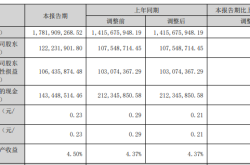
In the first half of the year, Li Auto generated revenue of RMB 48.65 billion, representing a 13.4% decrease year-on-year. Net profit swung from a gain of RMB 1.744 billion in the same period last year to a loss of RMB 3.981 billion.
As one of the pioneering new energy vehicle companies to achieve profitability in 2023, Li Auto has seen its profits decline in recent years: net profit dropped from RMB 11.809 billion in 2023 to RMB 1.139 billion last year, and has now slipped back into the red.
In the first half of the year, Li Auto's gross profit plummeted by 59.2% to RMB 4.644 billion, with the gross margin falling from 20.3% in the same period last year to 9.5%.
A key factor contributing to Li Auto's shift from profit to loss in the first half of the year was the transitional challenges associated with product updates. Additionally, escalating costs exerted pressure on the company's profitability.
However, compared to the first quarter, several financial indicators for Li Auto showed improvement in the second quarter: revenue increased by 11.7% sequentially, the gross margin recovered from 7.9% in the first quarter to 11%, and operating cash flow turned positive for the quarter.
Notably, as of the end of the first half of the year, Li Auto employed a total of 27,000 people, a decrease of 3,680 over six months, marking an approximate 12% decline year-on-year.
Once dubbed the 'King of Extended-Range Vehicles,' Li Auto is now firmly committed to a dual strategy of 'extended-range + pure electric.' Simultaneously, the company is steadily advancing its internationalization strategy, adopting a phased approach to market expansion.
Losses Reach RMB 4 Billion in the First Half, Employee Count Drops by 3,680 in Six Months
According to Li Auto's latest financial report released on August 26, in the first half of 2026, the company achieved revenue of RMB 48.65 billion, down 13.4% from RMB 56.172 billion in the same period last year.
Vehicle sales revenue amounted to RMB 45.6 billion, a 14.9% decrease year-on-year. Li Auto attributed this primarily to a decline in the average selling price due to varying product mixes and a reduction in vehicle deliveries.
In the first half of the year, Li Auto delivered 193,000 new vehicles, a 5.1% decrease year-on-year. The decline in sales was particularly pronounced in the second quarter, with 98,000 vehicles delivered, an 11.5% decrease year-on-year.
Despite the significant drop in vehicle deliveries, Li Auto's total sales costs for the first half of the year decreased only slightly by 1.7% to RMB 44.006 billion.
The gap between revenue and costs led to significant changes in profit. In the first half of the year, Li Auto's gross profit was RMB 4.644 billion, a sharp 59.2% decline year-on-year, with the gross margin dropping from 20.3% in the same period last year to 9.5%.
During the same period, Li Auto's vehicle gross margin was only 7.8%, a 11.8 percentage point decrease year-on-year, primarily due to varying product mixes.
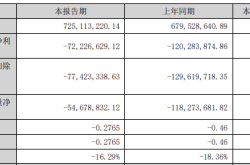
Several of Li Auto's profit indicators turned negative in the first half of the year. Operating losses reached RMB 5.3 billion, compared to an operating profit of RMB 1.099 billion in the same period last year. Net losses amounted to RMB 3.981 billion, compared to a net profit of RMB 1.744 billion in the same period last year.
On the expense side, Li Auto continued to invest heavily in research and development, with R&D expenses reaching RMB 5.498 billion in the first half of the year, a slight 3.3% increase year-on-year.
However, benefiting from a 17.6% decrease year-on-year in selling, general, and administrative expenses to RMB 4.327 billion, the company's total operating expenses decreased by 3.3% year-on-year to RMB 9.944 billion.
Li Auto stated that the decrease in selling, general, and administrative expenses was mainly due to a reduction in employee compensation.
As of the end of the first half of the year, Li Auto employed a total of 27,000 people, a decrease of 3,680 from the end of last year, representing an approximate 12% decline.
The functions of research and development, production, sales, and general and administrative management decreased by 359, 1,382, 1,552, and 387 people, respectively, representing declines of 5.9%, 14.7%, 12.3%, and 14.8%.
In the first half of the year, Li Auto's total employee compensation expenses (including share-based compensation expenses) were RMB 6 billion, a year-on-year decrease of RMB 700 million.
Q2 Performance Improves Sequentially, Large-Scale Share Repurchases Fail to Boost Stock Price
Tianyancha data shows that Li Auto was listed on the US and Hong Kong stock exchanges in 2020 and 2021, respectively. Although overall performance was under pressure in the first half of the year, Li Auto's performance in the second quarter was better than in the first quarter.
In terms of revenue, Li Auto recorded RMB 25.667 billion in the second quarter, a 15.1% decrease year-on-year but an 11.7% increase sequentially.
Vehicle sales revenue was RMB 24.067 billion, a 16.7% decrease year-on-year but an 11.8% increase sequentially.
In the second quarter, Li Auto delivered 98,000 new vehicles, an 11.5% decrease year-on-year but a 3.4% increase sequentially.
Li Auto stated that the year-on-year decrease in vehicle sales revenue in the second quarter was mainly due to a reduction in vehicle deliveries and a decrease in the average selling price caused by varying product mixes.
The sequential increase in vehicle sales revenue was mainly due to an increase in the average selling price caused by varying product mixes and an increase in vehicle deliveries.
From a sequential perspective, Li Auto's profitability also recovered to a certain extent in the second quarter.
In the second quarter, Li Auto's overall gross margin was 11%, a 9.1 percentage point decrease year-on-year but a 3.1 percentage point increase from 7.9% in the first quarter. The vehicle gross margin was 9.4%, a 10 percentage point decrease year-on-year but an improvement from 6.1% in the first quarter.
In the second quarter, Li Auto's operating loss was RMB 2.301 billion, turning from profit to loss year-on-year, but the scale of the loss narrowed by 23.3% sequentially. The net loss narrowed by 25.1% sequentially to RMB 1.705 billion.
In terms of cash flow, Li Auto's operating cash flow turned positive in the second quarter, changing from a net cash outflow of RMB 3.036 billion in the same period last year to a net cash inflow of RMB 0.15 billion.
During the same period, the company's free cash flow (non-GAAP) was -RMB 1.301 billion, compared to -RMB 3.842 billion in the second quarter of last year.
As of the end of the first half of the year, Li Auto's cash position was RMB 87.5 billion, a decrease of RMB 13.7 billion from RMB 101.2 billion at the end of last year.
Notably, on March 24 this year, Li Auto announced a share repurchase plan of US$1 billion. As of August 26, the company had repurchased approximately 92 million Class A ordinary shares (including approximately 24 million American depositary shares), spending approximately US$632 million.
Despite Li Auto's large-scale share repurchases, the company's recent performance in the capital market has been unsatisfactory.
As of the close on August 27, Li Auto's Hong Kong stock was priced at HK$47.98 per share, having fallen more than 25% since the announcement of the share repurchase, with the latest market capitalization falling below HK$100 billion.
Product Transitions Bring Short-Term Pain, Li Xiang Vows Not to Pass on Cost Pressures
A key reason for Li Auto's shift from profit to loss in the first half of the year was the transitional challenges associated with product updates.
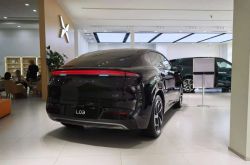
In May this year, Li Auto launched the all-new Li L9, followed by the all-new Li L8 in June, and the new-generation Li L6 in July.
During the transition, clearance promotions for older models lowered the overall average selling price, while the delivery ramp-up for new models had not yet fully released profits.
Ma Donghui, President of Li Auto, also admitted, 'During the transition phase, factors such as clearing old inventory, ramping up new products, and policy transitions have created temporary pressure on operations. We are optimizing related processes.'
China Fund News believes that Li Auto previously benefited from the extended-range market to achieve rapid growth in profitability but is now in a transition period towards the pure electric market.
Currently, Li Auto's order structure for extended-range and pure electric models is nearly balanced. Li Xiang, CEO of Li Auto, stated during the earnings call, 'We expect the proportion of pure electric vehicle orders to continue to increase in the future.'
Li Tie, CFO of Li Auto, stated that driven by the launch of the all-new Li L9, the company's gross margin recovered to 11% sequentially in the second quarter. With the continuous optimization of the product mix, an increase in the sales proportion of the Livis version, and the launch of refreshed pure electric models and the Li i9, the gross margin will further improve in the second half of the year.
At the same time, cost pressures cannot be ignored for Li Auto.
Li Xiang admitted during the earnings call that rising costs for core components such as batteries and memory chips are a common challenge across the industry. Li Auto's products are highly intelligent, requiring larger quantities of memory and semiconductor components, making the cost impact more significant.
Despite the pressure of rising semiconductor component prices, Li Xiang assured, 'Li Auto will not pass on the pressure of rising costs to consumers.'
To cope with cyclical cost fluctuations, Ma Donghui introduced that the company has taken two measures: on the one hand, it continues to promote refined operations to achieve cost reductions; on the other hand, it relies on full-stack technology self-research and an independent supply chain system to build long-term structural cost reduction capabilities.
Looking ahead to the third quarter of 2026, Li Auto expects its gross margin to further improve, mainly due to the full delivery of the new generation of L series models and the gradual launch of pure electric product matrices. In July, the new-generation Li L6 was launched, and the Li i8 added a rear-wheel-drive long-range version. In September, the new-generation Li MEGA and Li i9 will be launched.
Li Xiang also set a clear goal: 'With the launch and ramp-up of several new models in the second half of the year, we are confident to rank among the top three in sales among all brands in the Chinese passenger vehicle market above RMB 200,000.'
According to the financial report, in the third quarter of this year, Li Auto expects the company's vehicle deliveries to be between 95,000 and 100,000 units, a 1.9% to 7.3% increase year-on-year. Total revenue is expected to be between RMB 26.6 billion and RMB 28 billion, a -2.8% to +2.3% change year-on-year.
Against the backdrop of many automakers going overseas, Li Auto is also stepping up its overseas market layout and steadily promoting its internationalization strategy.
According to Li Auto, the company adopts a phased expansion strategy for different markets, relying on local leading partners to quickly establish a complete service system integrating sales, delivery, and after-sales service.
In terms of products, Li Auto adheres to regional precision adaptation, completing overseas regulatory adaptations during the research and development phase of new models and optimizing hardware and software performance for local usage scenarios, striving to build sustainable international competitiveness with an ultimate localized experience.
In April this year, Li Auto officially signed leading distributors in the UAE and Saudi Arabia. In July, the all-new Li L9 was launched in Kazakhstan and Uzbekistan, and the first localized assembly production was initiated in Kazakhstan.
In September, the all-new Li L9 will be launched in Dubai, marking the start of the layout in the Middle East market. Subsequently, Li Auto's series of products will also make an appearance at the Paris Auto Show.
'Li Auto adheres to a high-end brand positioning when expanding overseas,' Ma Donghui revealed. 'The company uses the extended-range models of the Li L series as the main products in the Middle East and Central Asian markets.'
Regarding the future development of Li Auto, Leida Finance will continue to follow up.
-
At a Crossroads: From Profit to Loss, Will Investors Remain Patient with Insta360?
-
![]()
Silicon Flow IPO: The 'Token Factory' Experiencing 653% Growth—Why Are Sales Increasing While Losses Mount?
-
![]()
Employee Count Declines by 3,680 in Six Months, Li Auto Reports RMB 4 Billion Loss
-
Despite Performance Pressures, Why Did Haier Smart Home Buck the Trend with Increased Market Share?
-
![]()
Xpeng's Exquisite Cost Management: Visible Even in Seat Belt Design
-
![]()
Net Profit Surges 13.65% Year-on-Year! Yutong Optics Reports RMB 1.782 Billion in H1 Revenue
-
![]()
Q2 Net Profit Slashes Losses by 80%! Has Costar Emerged from Its Darkest Hour?
-
AI Agents: The Paradigm Shift from 'Conversation' to 'Execution'