At a Crossroads: From Profit to Loss, Will Investors Remain Patient with Insta360?
 08/30 2026
 335
335

Text by Du Jie
Edited by Sun Congying
As a frontrunner in the global panoramic imaging sector, Insta360 (688775.SH) has continued to scale its operations following its public listing.
The semi-annual report released on the evening of August 27, 2026, revealed that the company's revenue continued to rise in the first half of the year. However, other key financial metrics presented a stark contrast: despite the revenue growth, profits failed to follow suit, and operating cash flow came under considerable pressure.
To stay competitive and enhance profitability, Insta360 has made an early foray into the AI sector.
According to the plan, the phased rollout of AI features on hardware and the boost in user engagement from cloud-based editing tools have laid out a comprehensive technological roadmap.
Nevertheless, the ongoing investment in new ventures and the extended timeline for implementing cutting-edge technologies have driven up overall costs. Whether AI can deliver the anticipated results has become a pivotal factor shaping the company's future.
Revenue Growth Outpaces Profitability
In the first half of 2026, Insta360's revenue maintained rapid growth, surging by 50.29% year-on-year, and the business scale expanded significantly.
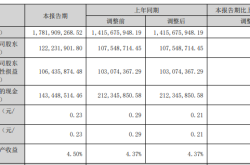
The core issue highlighted in the financial report is the disparity between revenue and profit growth. In the first half of the previous year, total profit stood at 540 million yuan, whereas in the current period, it turned into a loss of 90.0706 million yuan. Net profit attributable to the parent company remained a meager 30.4073 million yuan, all derived from non-recurring gains and losses. After excluding these items, the main business actually incurred a loss of 15.3392 million yuan. The profitability has reached a critical turning point.

Figure: From the 2026 semi-annual report of Insta360 Technology Co., Ltd.
Cash flow, a key indicator of a company's cash-generating ability, also reflects business receipts and cost absorption. During the reporting period, Insta360's net cash flow from operating activities was 2.761 billion yuan, a staggering 1245% decline from the net inflow of 241 million yuan in the same period last year, indicating a substantial increase in cash consumption pressure.
Meanwhile, inventory surged by 113% to 6.2 billion yuan, accounting for 43.7% of total assets. Insta360 attributed the revenue growth without corresponding profit increases to rising procurement costs for memory chips, coupled with significant investments in the nascent drone business, which eroded profits.
This assessment aligns with the current industry landscape. Homogenized competition in the consumer imaging hardware sector is intensifying, product prices are stabilizing, and with upstream component costs rising, a decline in gross profit margins is a common challenge across the industry.
However, this also poses significant financial risks, as a substantial portion of working capital is tied up in inventory. Should new product sales fall short of expectations, the company would face dual pressures from inventory depreciation and impairment, as well as capital occupation.
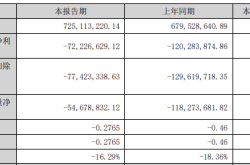
Additionally, the company's profit pressure stems from internal factors: during the reporting period, operating costs increased by 80.46% year-on-year, R&D expenses by 79.26%, administrative expenses by 86.74%, and financial expenses surged by 32 times (3182.53%).
The growth rates of these expenses and operating costs significantly outpaced revenue. On top of the margin compression caused by component price hikes and intensified competition, they further eroded revenue gains, leading to a significant decline in profit quality.

Figure: From the 2026 semi-annual report of Insta360 Technology Co., Ltd.
Looking at the financial report over a longer horizon, this weakening trend is not an isolated occurrence. Reviewing the financial data, it is evident that in 2024, the company's revenue increased by 53%, but the growth rate of net profit attributable to the parent company dropped to 19.91%. The profit growth rate significantly lagged behind revenue, and the trend of revenue growth without profit increases began to emerge.
In 2025, revenue continued to grow at a high rate, increasing by 74.76%, but net profit attributable to the parent company declined by 6.62% year-on-year. In the first quarter of 2026, revenue increased by another 83.11%, but net profit attributable to the parent company plummeted by 52.02% year-on-year, intensifying the pressure.
From profit growth lagging behind revenue, to an absolute decline in profit, and then to a total profit turning into a loss, the persistent divergence over multiple reporting periods has become an operational reality that must be confronted.
Pinning Hopes on AI as a Competitive Edge, Implementation Progresses in Stages
When it comes to practical paths for performance improvement, Insta360 focuses on technological innovation and product intelligence upgrades.
The new product, Go Ultra, is equipped with an AI voice assistant, integrating two major models, Tongyi Qianwen and Google Gemini, achieving a breakthrough in AI voice interaction in the sports camera field and enhancing product competitiveness. The cloud-based AI auto-editing tool "Moment Pro" was launched, with its export rate increasing to 60% in the second quarter. AI tools effectively drove user content production, and the number of paying users increased significantly.
As the growth dividends of traditional hardware fade, AI upgrades have become a common transformation direction for leading consumer electronics companies.
Compared to its peers, Insta360 has developed a comprehensive AI strategic framework. In the short term, it relies on the implementation of the Kira intelligent assistant, embedding large model capabilities into hardware terminals to expand functions such as voice interaction, intelligent shooting control, scene recognition, and real-time assistance.
In the medium to long term, it aims for fully automatic image creation by Cameraman, attempting to explore feasible solutions for the intelligence of the imaging industry.
Overall, the company's AI strategy has clear levels, aligns with the industrial trends of AI-ization of consumer hardware and intelligence of image creation, and also depicts a complete growth path for the capital market.
The blueprint is ambitious, but significant obstacles hinder its practical implementation. Kira, the carrier of Insta360's AI strategy closest to ordinary consumers, is also the key to testing the company's ability to transform into intelligence.
According to reports from Sina Finance and IT Home, this function was originally scheduled to be rolled out with a firmware update at 20:00 on August 5, 2026. However, the official announced a delay on the same day, stating that it needed to further refine the stability and complete experience of AI voice interaction, without providing a new launch time.

In fact, after a two-day delay, Kira was launched in batches through a firmware update on August 7. Even so, from the original schedule to the temporary delay and then to the batch rollout, the overall implementation pace appeared conservative compared to market expectations.
Currently, Kira has completed terminal deployment, and basic AI interaction and shooting assistance capabilities have been implemented, achieving the initial integration of AI technology and hardware. However, based on actual usage experiences and user feedback, the current functions are more of an embellishment at the experience level and have not truly touched the core links of image creation, with limited effects on product differentiation and terminal premiums.
Frankly speaking, AI imaging still faces numerous practical challenges. The computing power of hardware terminals has inherent limits, and in complex outdoor shooting scenarios, collaboration between devices and the cloud can easily encounter problems, which is a common challenge for the entire industry.
For example, for the narrative interpretation of long-form video content, capturing emotions in the footage, and automatically producing edited clips that match the style, there are no truly implementable and mature products on the market yet. Network delays, privacy protection of imaging data, and adaptation to different shooting scenarios are all hurdles standing in the way of commercialization.
The technological direction that Insta360 has targeted holds imaginative space, but there are currently no definite answers regarding the specific implementation path, timeline, and the ultimate commercial value that can be converted.
Premium Erodes, Market Re-evaluates True Enterprise Value
The uncertainty of technological realization has also directly impacted valuation judgments in the capital market. Under the current operational situation, how much tolerance can the capital market still offer Insta360?
The valuation of tech growth enterprises is not static. During market upswings, investors are willing to assign higher valuations to companies based on their future imaginative space and technological visions.
However, when the market shifts to a zero-sum game phase and uncertainties at the operational level increase, the logic supporting valuations will also change accordingly.
Compared to concepts on paper, the market places more emphasis on tangible outputs after technological implementation. The valuation premium supported by concepts is receding, and the market is more concerned with whether the company is profitable, whether the money is spent wisely, and whether the technology can be truly converted into visible market results.

The shift in capital attitudes is clearly visible from shareholder trading behavior. On June 11, Insta360 faced its largest-scale lifting of the lock-up period for restricted shares after going public, with the unlocked shares accounting for 56.5% of the total share capital, significantly expanding the market's free float.
In the first week after the lock-up period ended, block trades occurred frequently, with senior management and employee shareholding platforms and professional institutions being the main sellers. Multiple transactions were concluded at discounted prices, indicating a clear intention to reduce holdings.
The choice of internal shareholders to exit en masse during this time window also sideways reflects market concerns about the company's implementation progress and its ability to repair profitability.
For companies with a solid fundamental outlook, large-scale lock-up expirations are often met with external capital taking over the positions. However, the concentrated selling pressure at Insta360 indicates that internal shareholders and institutions have diverged on the company's long-term returns.
Restricted by share reduction rules, large positions cannot be disposed of all at once. Over the next one to two years, expectations of share reductions will continue to disturb market sentiment.
Looking back at past cases in the A-share market, once a company's growth momentum weakens, coupled with continuous outflows of low-priced positions, the valuation premium on growth stocks will quickly dissipate, and the stock price will come under pressure.
The company's previously high valuation was largely built on the imagination of AI commercialization. Once this expectation is adjusted downward, both valuations and stock prices will face double callbacks. With declining institutional confidence, in addition to pressure on the secondary market, the company's subsequent difficulty in conducting equity financing will also increase.
Changes at the debt level further amplify concerns about the company's liquidity tightening. During the reporting period, short-term borrowings surged by 763.41%, with new discounted bills and credit borrowings; other non-current liabilities increased by 262% year-on-year, mainly from equity repurchase obligations and corresponding interest, which is also an important reason for the increase in financial expenses.
Against the backdrop of business scale expansion, the net assets attributable to the parent company instead declined by 9.27%, the company's leverage rose rapidly, and short-term debt repayment pressure and interest burdens increased simultaneously.
The knock-on effect of valuation declines will transmit to internal budgets, with potential contractions in R&D and marketing investment space.
Reviewing the financial report, it can be seen that Insta360's growth is highly dependent on marketing investment: in 2024, sales expenses were 826 million yuan, surging to 1.679 billion yuan in 2025, and reaching 1.017 billion yuan in the first half of 2026. Overseas channel construction, influencer placements, and brand marketing all require continuous cash support. If the budget tightens, the strength of this growth platform built on high marketing investment will be weakened.
It is worth continuously observing how to strike a balance between long-term technological strategic planning (Note: The term "layout" is retained here as it serves a strategic purpose; in a broader context, it would be articulated as "strategic planning") and the immediate pressures of daily operations. Additionally, the extent to which Insta360's AI story can still garner market recognition is another aspect deserving ongoing attention.
-
At a Crossroads: From Profit to Loss, Will Investors Remain Patient with Insta360?
-
![]()
Silicon Flow IPO: The 'Token Factory' Experiencing 653% Growth—Why Are Sales Increasing While Losses Mount?
-
![]()
Employee Count Declines by 3,680 in Six Months, Li Auto Reports RMB 4 Billion Loss
-
Despite Performance Pressures, Why Did Haier Smart Home Buck the Trend with Increased Market Share?
-
![]()
Xpeng's Exquisite Cost Management: Visible Even in Seat Belt Design
-
![]()
Net Profit Surges 13.65% Year-on-Year! Yutong Optics Reports RMB 1.782 Billion in H1 Revenue
-
![]()
Q2 Net Profit Slashes Losses by 80%! Has Costar Emerged from Its Darkest Hour?
-
AI Agents: The Paradigm Shift from 'Conversation' to 'Execution'