Reflections on "The Demise of Smartphones"
 12/05 2025
 774
774
Produced by Zhineng Technology
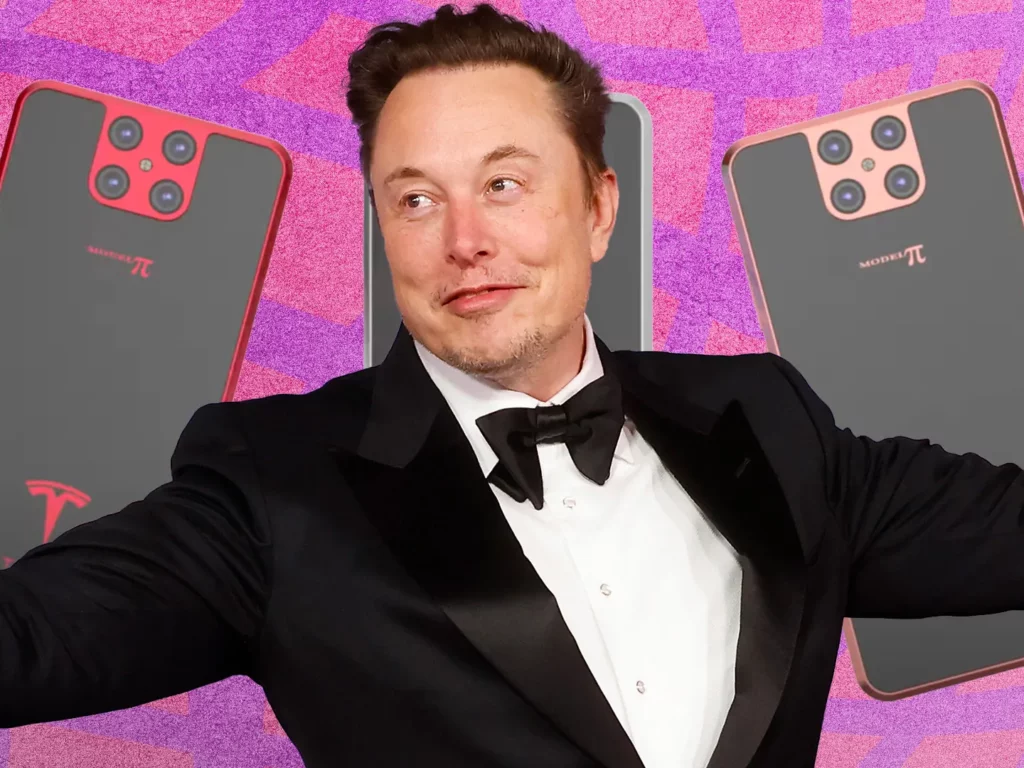
Elon Musk's earlier assertion that "smartphones will vanish, operating systems (OS) and applications (Apps) will become obsolete, and devices will be reduced to mere screens and AI chips" might have seemed a tad extreme...
However, with the emergence of Doubao Smartphone and considering the underlying transformations in chips, architectures, and edge AI projected for 2025, we are indeed witnessing a paradigm shift in the smart terminals that we carry and interact with most frequently.
The crux of this prediction lies in the transformation of smartphones driven by AI System-on-Chips (SoCs) and AI tasks, where terminals transition from being "program execution hubs" to "AI inference/generation nodes."
Traditional smartphone architectures predominantly rely on CPUs/GPUs, with operating systems providing APIs and App management, and Apps implementing functionalities through "hard-coded logic." The interaction between users and devices is essentially "program-controlled."
Musk's earlier statement flips this dynamic: programs fade away, OS functionality diminishes, and AI takes center stage.
In his envisioned future, a smartphone transforms into an "AI rendering terminal," where the screen displays pixels, the speaker emits sounds, and all core computations are handled by built-in AI chips. Users need not open any Apps or even be aware of their existence; they simply articulate their intentions, and AI models automatically generate task workflows, interfaces, information, and operations.
This concept bears resemblance to Li Auto's collaboration with smartphones to develop AI glasses, where numerous car control functions are managed through the phone, supported by Li Auto's underlying OS.
In such an architecture, smartphones become AI inference nodes; intelligence resides not in the operating system but in the AI models themselves, which operate the phone through their entry points.
From this vantage point, following the proliferation of large AI models in the cloud, their integration with "end-side models" as supplementary tools will herald significant changes.
◎ Firstly, Neural Processing Units (NPUs) emerge as the true protagonists: In Apple's A18 Pro and flagship SoCs from Samsung and Qualcomm, NPUs have been elevated in status, enabling them to perform multimodal reasoning, generate content in real-time, and run models on a 10-billion-parameter scale. Due to the limited size of these models, they must be used in conjunction with cloud models to gradually pave the way for "replacing App logic with AI." Furthermore, Apps are experiencing a resurgence.
◎ From the perspective of terminal processing capacity, it can load small models and execute more complex ones through techniques such as segmented scheduling, distillation, and mixed precision. Running a lightweight version of Grok locally would also be feasible, particularly for in-car systems.
With the integration of high-performance NPUs, customized matrix computation engines, and low-power modes, AI inference is gradually evolving into an "always-on operation."
In this context, whether it's AI smartphones, AI glasses, AI in-car systems, or AI TVs, the process of "ordering takeout" undergoes a transformation:
◎ Traditionally, users "opened an App" → the device executed fixed logic (opening a takeout App, searching, placing an order, paying).
◎ In the future, users "express their intentions" → models generate interactive interfaces and task workflows in real-time (the AI model directly generates an ordering interface, automatically selects options, makes payments, and presents the entire process without the need for any Apps).
If the App ecosystems that iOS and Android rely on were to disappear, the value of the OS itself would be compressed into a driver layer and an AI scheduling layer, with "system competition" giving way to "model competition." Everyone will be vying for entry points, and the form of smartphones will undergo substantial changes. Even all our hardware devices might transform, potentially being directly replaced by Neuralink, as Musk suggests.
Summary
Musk's proposed timeline of "5-6 years" may seem overly optimistic, but from an engineering standpoint, the direction of Doubao Smartphone's endeavor is clear and will serve as inspiration for smartphone giants like Apple, Samsung, Huawei, Xiaomi, and OPPO, as well as tech powerhouses like Alibaba and Tencent. The future of devices lies in "AI chips + AI entry points + displays + speakers." This world is indeed captivating.
-
![]()
A Week with QianWen Office: The Highs and Lows
-
![]()
It's Time to Invest in China's Auto Industry
-
![]()
An AI Position with an Annual Salary of 1.7 Million Yuan Suddenly Becomes Highly Sought-After
-
![]()
Chevrolet and Skoda Exit China Before Mazda and Peugeot-Citroen
-
![]()
Zuckerberg's Concerns About Superintelligence: Who Holds the Power When the Technology Arrives?
-
![]()
Auto Scene Competition in Full Swing
-
![]()
Just Hit with a $1.4 Trillion Lawsuit, Meta Open-Sources Its 30B "Pocket Rocket" Overnight: Zuckerberg Calls Out DeepSeek, Qwen, Kimi
-
![]()
Samsung Z Fold 8 Ultra Review: A $2,100 Foldable Flagship—What Justifies the Price?