Auto Scene Competition in Full Swing
 08/12 2026
 395
395
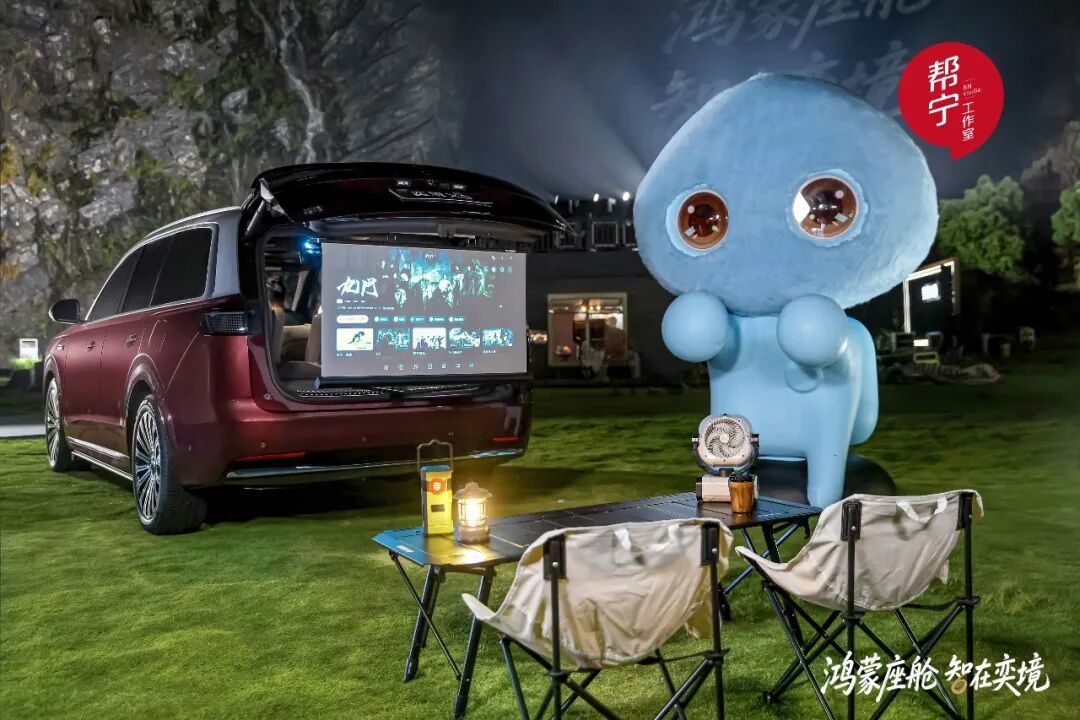
"New cars are increasingly resembling fully furnished apartments."
Author | Gong Chenyuan
Editor | Li Guozheng
Produced by | Bangning Studio (gbngzs)
"Remove your shoes to eliminate foot odor, brew tea and coffee, take showers, and change clothes—new cars are truly designed with the logic of a home." "Car toilets should become widespread; I find them extremely useful." "What other scenarios can car companies not think of?"
Currently, whether it's high-end flagship MPVs, SUVs, or family sedans, their highlights invariably focus on innovative scenario-based functional configurations upon release.
On August 5th, at the launch event for Aito's flagship MPV, Yu Chengdong, Huawei's Executive Director, Director of the Product Investment Review Committee, and Chairman of Terminal BG, introduced the MPV's selling points. These included lifestyle scenario functions such as an intelligent sterilizing shoe box, a triple-folding office desk, and a private beverage bar.
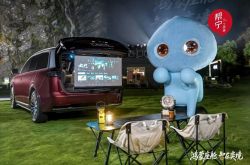
In late July, at Xiaomi's HyperOS technology launch event, Lei Jun, the founder of Xiaomi Technology, stated that by moving and rotating the seats, combined with small desk and bar accessories, the car could achieve four scenario forms: "a café on wheels," "a living room on wheels," "a studio on wheels," and "a playground for the whole family."
Zhu Shunjie, the head of industry platform experts for commercial transportation at Xiaohongshu, recently publicly stated that according to platform data, the top information and search terms in the industry used to be car configurations. However, these have been declining in recent years, replaced by scenario-related keywords. Hardcore evaluation notes have also ceded the top spot in industry rankings to lifestyle-oriented, non-vertical notes.
This indicates that users' decision-making logic for purchasing cars is changing, shifting from valuing hardware parameters to focusing on whether their car can integrate into daily life and solve pain points.
As a result, planning and product teams at major automakers are exhausting their ideas to create new car usage scenarios, sparking a scenario competition centered around mobile living spaces.
▍01 A Flourishing Scenario
From new cars released in the past year, product usage scenarios continue to expand, roughly divided into six categories:
The first category is basic family commuting scenarios.
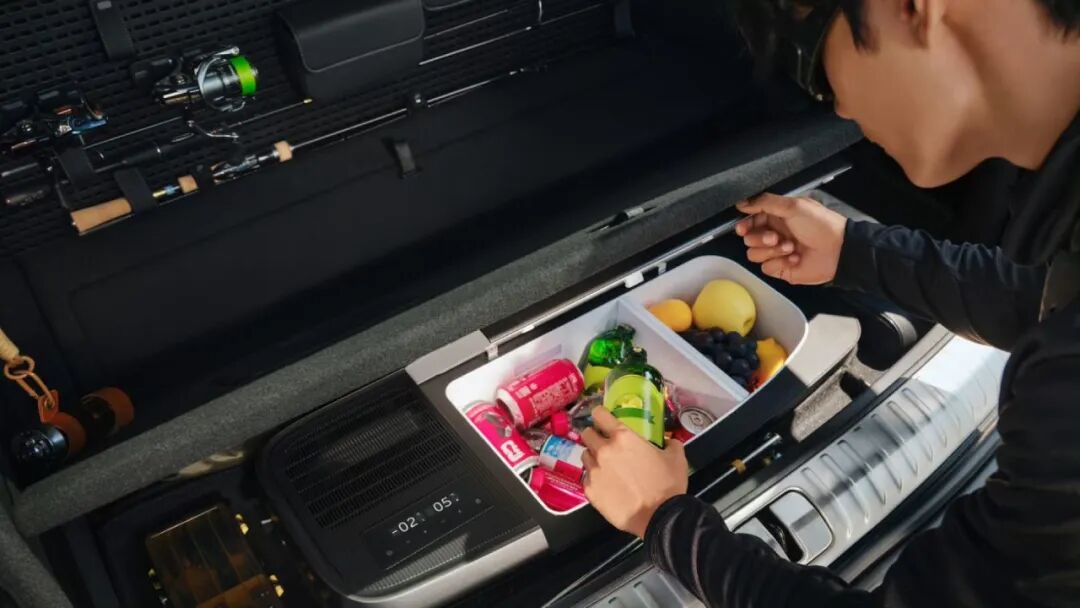
This is the market segment with the highest penetration rate. From A00-class micro electric vehicles to six-seater large SUVs, and then to family MPVs, they all generally come equipped with scenario function configurations such as in-car refrigerators, hidden storage spaces, pet modes when leaving the car, and baby modes.
A notable example is the intelligent sterilizing shoe box featured in the Aito V800. On major social media platforms, the most common complaints from netizens about in-car experiences are foot odor, body odor, and various other unpleasant smells in the car, with ride-hailing services being a major source of such complaints.
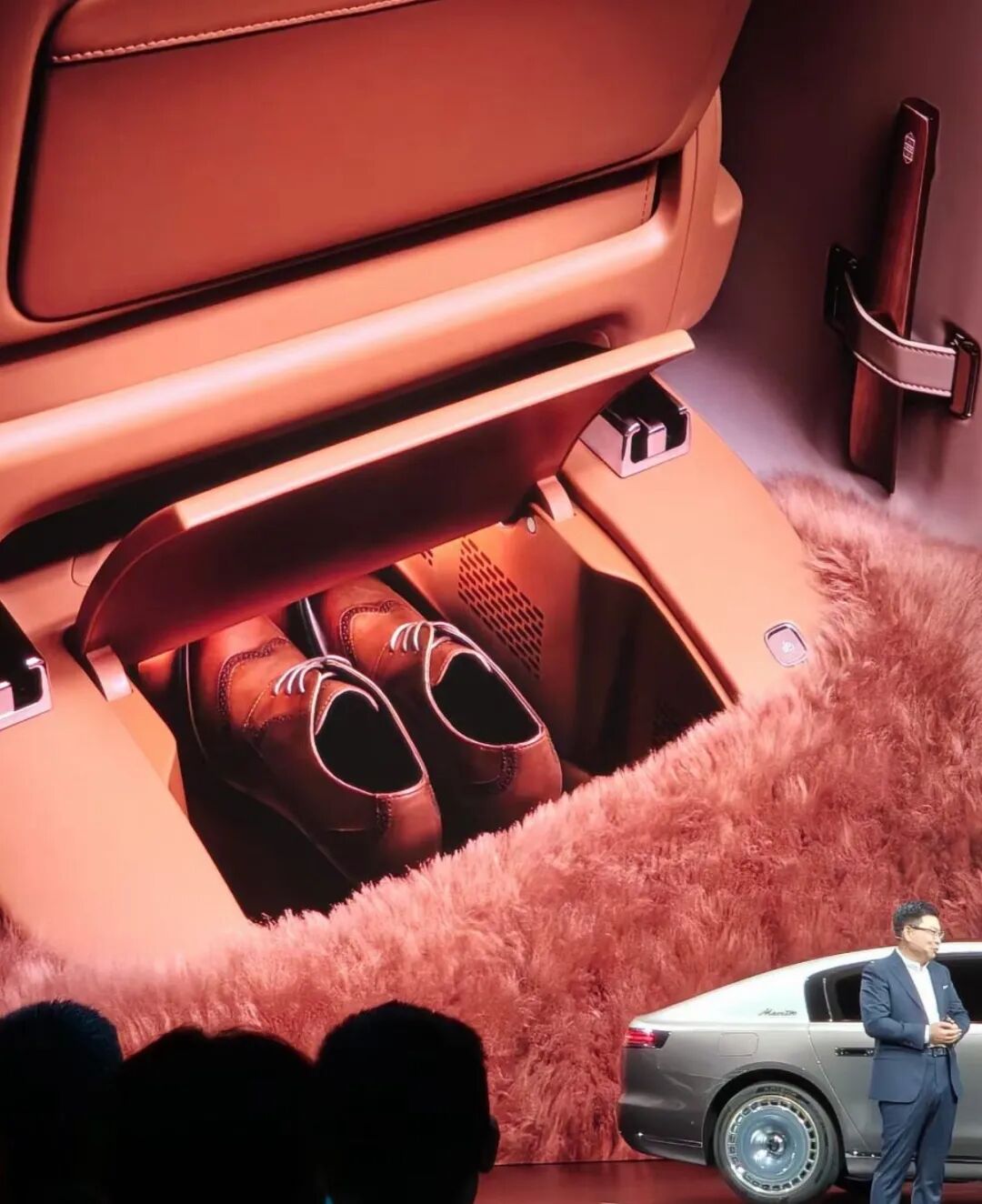
According to official information, addressing the pain point of foot odor, Aito has introduced an intelligent sterilizing shoe box equipped with a sterilizing and deodorizing system and a dual-fan air circulation system, achieving a 90% odor removal rate and a 70% fungal sterilization rate within 15 minutes.
These scenarios primarily target high-frequency needs such as daily commuting, picking up and dropping off children, and short grocery trips, addressing common issues like in-car odors, clutter, and lack of storage for maternal and infant supplies.
The second category is long-distance travel and camping scenarios.
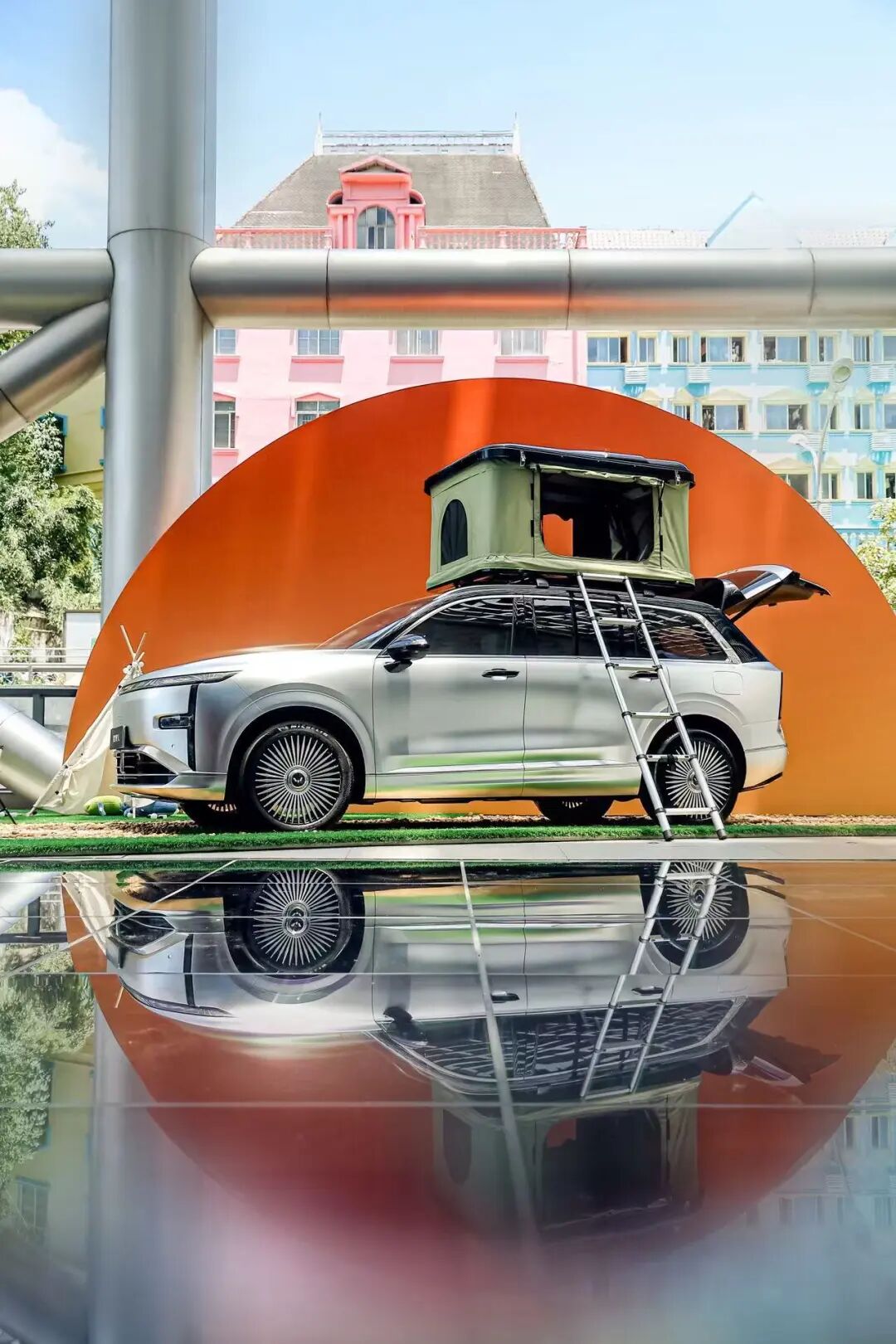
These are the core differentiating selling points for mid-size and large new energy SUVs. Roof-extending tents, external shower connections, in-car induction cookers, parking air conditioners, and rear-end kitchen countertops are becoming mainstream configurations in this market segment.
For example, from tech automakers focusing on intelligent experiences to traditional brands deeply rooted in outdoor off-roading, roof tents are now a major selling point for the launch of new six-seater SUVs.
The Seres G9, which opened for pre-orders on August 5th, comes with an integrated pop-up roof tent that can be electrically deployed with one touch and seamlessly integrates with the roof when retracted. The Wuling Starlight L, launched in mid-July, offers a matching tent solution based on its roof rack.
The third category is in-car office and business scenarios.
This primarily targets office workers. For example, the in-car folding round table released by Xiaomi in late July and the triple-folding desk with a makeup mirror released by Aito in early August support drivers and passengers in attending online meetings and processing office documents during traffic jams, turning the car into a mobile, independent office.
The fourth category is leisure and entertainment scenarios.
These scenarios primarily aim to meet personalized needs and cover a wide range of product areas, commonly seen in mid- to high-end price range models.
On August 10th, the Evo X9 announced the debut of the AI companion robot "HAMOMO Harmengmeng." It can intuitively display its wake-up, listening, and command execution states through different expressions and can even be taken out of the car to become an intelligent companion for children during travel.
The Aito M6 features a transparent inspiration display window that supports the placement of figurines, trendy toys, and models, paired with a 60W extended power supply and backlighting system to meet the emotional needs of anime and collection enthusiasts.
Several mainstream coupes are also equipped with in-car karaoke and ambient lighting cinema modes, suitable for short trips and outings with friends.
The fifth category is exclusive rigid demand scenarios for special groups, directly addressing pain points in niche segments.
For example, independent makeup stations for women, simplified voice interaction scenarios for the elderly, and rear-seat milk warming, diaper storage, and child safety monitoring functions for mothers and infants.
The sixth category is new scenarios explored by automakers, such as the car toilet patent announced by Seres, the outdoor shower function of IM Motors, and the in-car microwave ovens introduced by commercial vehicle manufacturers. Some netizens believe that certain new scenarios have a novelty factor, and their practicality is questionable.
These vast scenarios all require support from the vehicle's interior space, which directly explains why the market share of mid-size sedans continues to shrink.
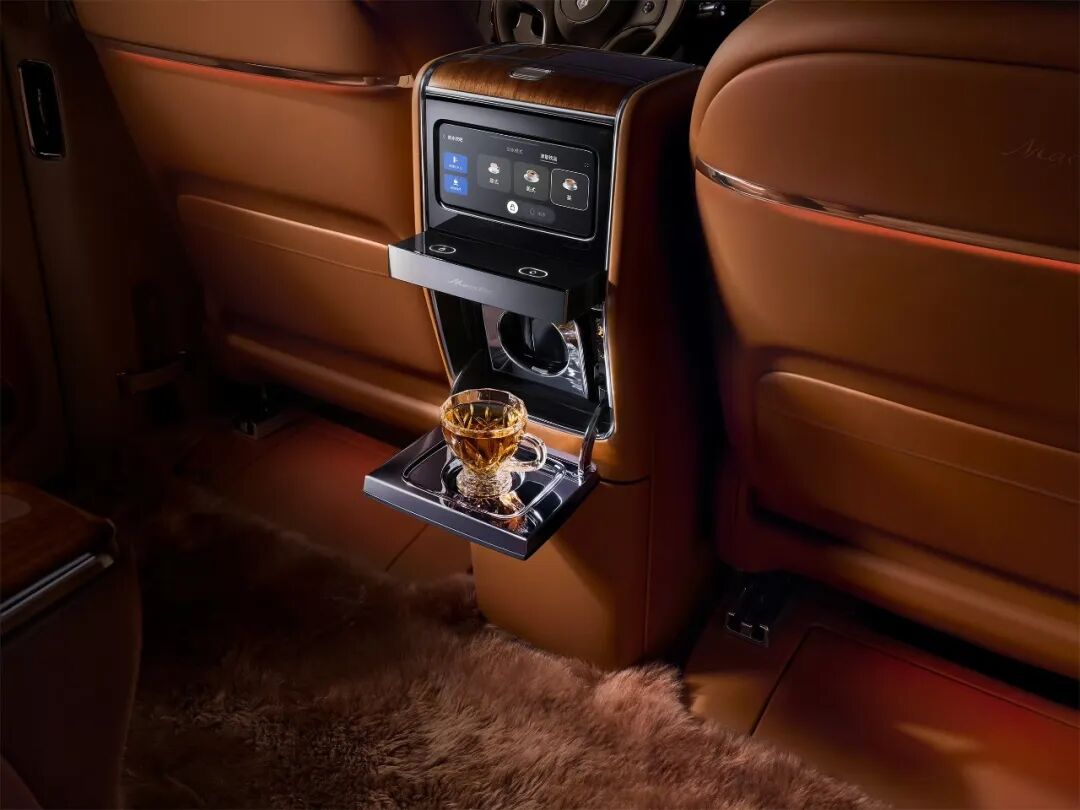
From a product's underlying logic perspective, the new energy skateboard chassis significantly raises the cabin's vertical space in SUVs, providing ample headroom, expandable trunk space, and a through-layout, thus accommodating most lifestyle scenarios such as camping, bathing, office work, and storage.
Mid-size sedans, constrained by their fastback and low-profile body structures, are unable to accommodate scenario functions like roof tents, in-car toilets, large folding tables, and outdoor kitchen expansions.
Wang Shen, General Manager of J.D. Power China's Automotive Product Competitiveness Solutions Division, once stated that during the fuel era, mid-size sedans relied on rear-seat comfort and chassis quality to capture the market for upgrades. After new energy reshaped spatial logic, SUVs could accommodate more diverse lifestyle scenarios within the same budget, leading to a continuous loss of upgrade and replacement users who originally belonged to mid-size sedans.
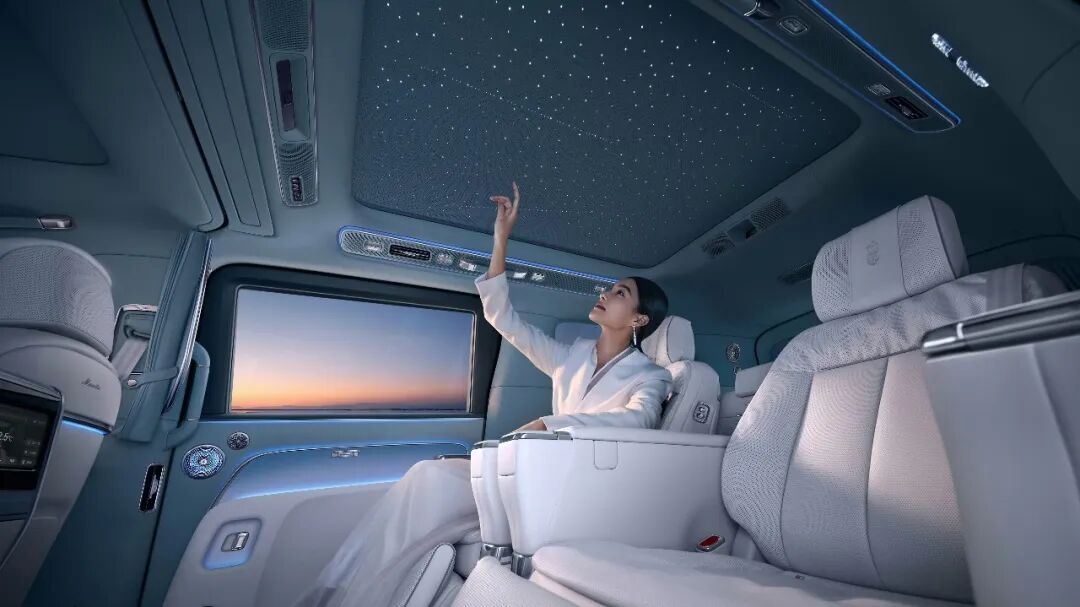
Li Yanlong, a doctoral supervisor at the School of Automotive Studies at Tongji University, stated that in car design, sometimes even a millimeter of refinement is pursued for a bit more interior space or visibility. However, after users get their cars, they often fill them with various small ornaments and dolls.
"In the minds of Chinese people, home and nest are the most important, and the car is a mobile home, a mobile nest. This is our cultural trait," Li further analyzed. "Saying that Chinese people don't understand cars is like saying foreigners don't understand Chinese houses. We just like to treat cars like houses. Since local users accept it and it creates value for companies, why not?"
Overall, automakers' large-scale deployment of diverse scenarios is essentially a means of breaking through in differentiated competition. When range, intelligent driving, and electric motor hardware become homogeneous, unique niche scenarios become the core selling points for automakers to differentiate themselves from competitors and impress users—making users pay for perceivable lifestyle functions rather than brand premiums.
▍02 Where is the Blue Ocean?
The frenzied expansion of scenario competitions, while driving upgrades in new car product capabilities, has also given rise to multiple pain points in the industrial chain, trapping relevant practitioners in an intensifying dilemma.
Lulu (pseudonym), a product manager for a self-owned brand's complete vehicle, stated that this year has been her most anxious year in the industry.
"A product manager's original role is market strategy, but now we are often required to unearth unique in-car scenario selling points. The boss wants creativity that is new, has low implementation costs, and has a self-consistent user logic," she told Bangning Studio. "The most frustrating part is that many far-fetched concepts are forcibly required to demonstrate feasibility."
She stated that from concept proposal to actual vehicle implementation, processes such as concept review, feasibility calculation, scheduling development, and complete vehicle testing must be completed. Most novelty scenarios are aborted midway due to cost, safety, and space constraints, yet they consume a significant amount of the team's R&D resources.
"In-car washing machines, in-car electronic bands, car gyms... these scenarios have actually been proposed, and there are even more outrageous ideas, but very few can be implemented," Lulu said, adding that other automakers are currently developing in-car shower room functions.
Suppliers also face similar issues.
"The current pace of scenario innovation and iteration far exceeds the verification cycle for components. Some clients continuously compress testing processes to keep up with new car launch timelines," stated an interior trim supplier. "I believe innovation does not mean simply moving home appliances into cars; the core should be solving genuine pain points for the masses, but many OEMs lack a standardized development methodology."
Some industry insiders believe that with automakers' new product iteration cycles now compressed to 12 to 18 months, a large number of water-related, high-voltage electrical, and expanded rest scenarios are being quickly mass-produced without completing full durability and extreme condition verifications, making them prone to issues in the long run. Some implemented innovative scenarios also deviate from real needs.
Of course, there are still untapped blue ocean markets in automotive scenarios.
For example, combining daily car usage pain points, a netizen proposed the idea of a front trunk mini dryer that utilizes the vehicle's powertrain and air conditioning waste heat to dry clothes, addressing issues of dampness and odor in clothing after rain or outdoor activities. Lulu believes this solution has some feasibility.
Zhu Shunjie believes that there are also three untapped segments with long-term development value. The first is the vehicle-home interconnection hub scenario, enabling seamless integration between the vehicle and whole-house intelligence, automatically activating home devices when approaching home to create an integrated lifestyle flow.
The second is the full-link age-friendly scenario, simplifying the entire in-car operation logic for the elderly to accommodate elderly users' travel needs.
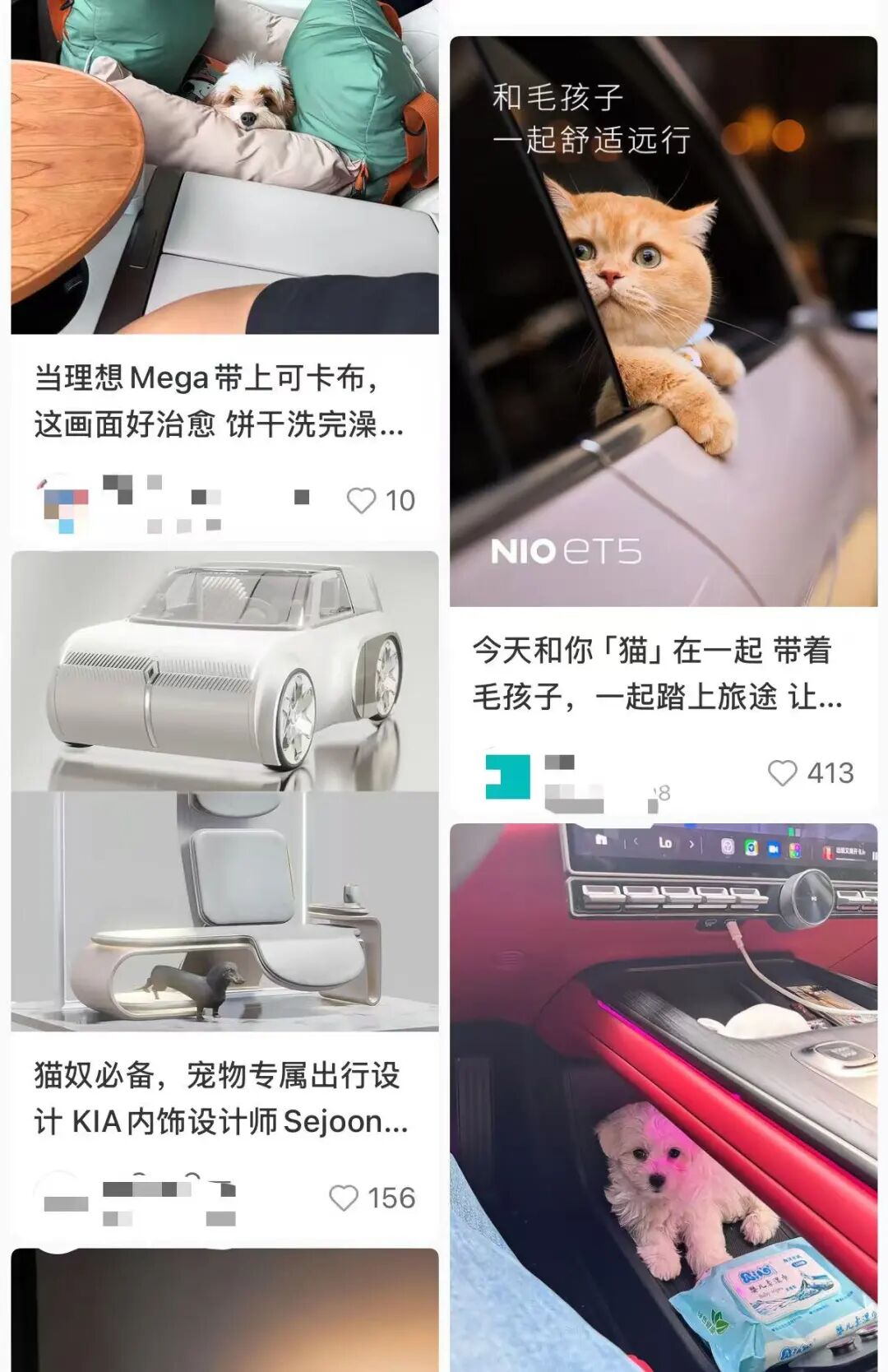
The third is exclusive scenarios for pet travel. For example, the trunk could be equipped with a washing space and a pet constant-temperature isolation mode. On social media platforms, netizens have posted similar needs, with tens of thousands of interactions, indicating strong demand for this niche functional scenario.
"Users no longer simply pursue configuration stacking but expect cars to support a complete lifestyle chain," Zhu said. "Exploring untapped scenarios should not be limited to in-car hardware modifications but should also address the full range of needs before and after travel."
Regarding the boundaries of scenario-based innovation, the industry consensus is that it is a core selling point for automakers to differentiate themselves but should never deviate from practicality and fundamental safety bottom lines.
From a practitioner's perspective, Lulu stated that delving into local lifestyle scenarios is the right choice to align with the market, but hardware safety and long-term durability are the foundations for all scenario innovations. If quality control is sacrificed for gimmicks, it will ultimately deplete brand reputation.
Scenario-based innovation is the inevitable path for new energy vehicles to meet the needs of domestic users, but an intensifying, gimmick-heavy, and practicality-light development model is not sustainable. How to unearth users' underlying rigid demands and create truly implementable mobile living spaces is a topic that automakers need to continuously delve into in the future.

-
![]()
A Week with QianWen Office: The Highs and Lows
-
![]()
It's Time to Invest in China's Auto Industry
-
![]()
An AI Position with an Annual Salary of 1.7 Million Yuan Suddenly Becomes Highly Sought-After
-
![]()
Chevrolet and Skoda Exit China Before Mazda and Peugeot-Citroen
-
![]()
Zuckerberg's Concerns About Superintelligence: Who Holds the Power When the Technology Arrives?
-
![]()
Auto Scene Competition in Full Swing
-
![]()
Just Hit with a $1.4 Trillion Lawsuit, Meta Open-Sources Its 30B "Pocket Rocket" Overnight: Zuckerberg Calls Out DeepSeek, Qwen, Kimi
-
![]()
Samsung Z Fold 8 Ultra Review: A $2,100 Foldable Flagship—What Justifies the Price?