Chevrolet and Skoda Exit China Before Mazda and Peugeot-Citroen
 08/12 2026
 406
406
Introduction
Among the trailing joint venture brands, numerous names still linger.
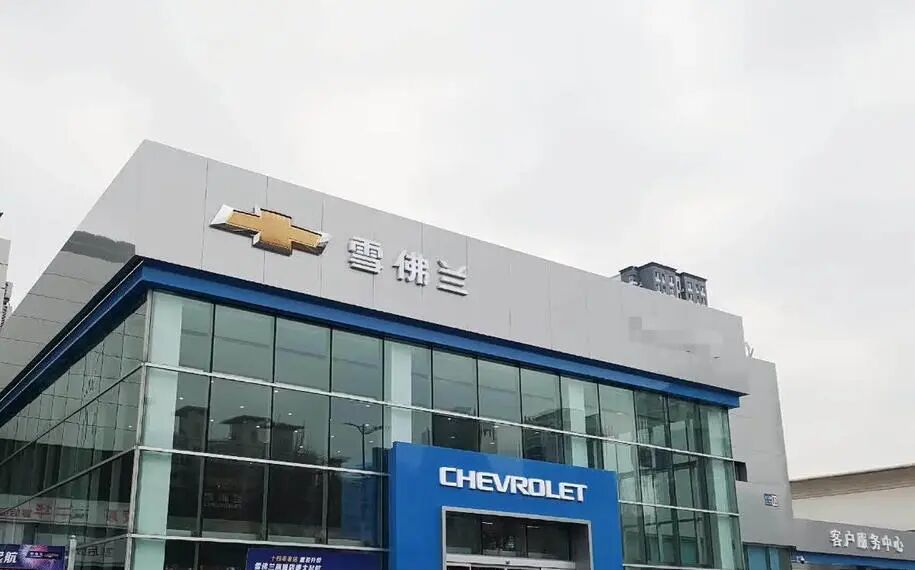
Five months from now, another foreign brand is poised to bid farewell to the Chinese automotive market. In August this year, multiple sources confirmed that new car sales for the Chevrolet brand have completely ceased in the Chinese market. General Motors China has clarified that while Chevrolet products will continue to be manufactured in China, their focus will shift to exporting to overseas markets, halting new car sales to Chinese consumers.
The latest automotive brand to follow suit was Skoda. In March this year, Volkswagen Group officially announced that its Skoda brand would exit the Chinese market by mid-2026. Post-exit, the brand will continue to provide warranty and after-sales service support to Chinese car owners, safeguarding the rights and interests of existing users.
Over the years, an increasing number of foreign brands have withdrawn from the Chinese market.
In 2018, Suzuki terminated its joint venture production in China; in 2020, Renault exited the Chinese fuel-powered passenger vehicle market; in 2022, Guangqi Honda declared it would cease producing and selling existing products under the Guangqi Acura brand from 2023 onwards; in the same year, domestically produced Jeep models halted production and sales; in 2023, Mitsubishi suspended its complete vehicle production business in China; and this year, Chery Jaguar Land Rover's domestically produced vehicles officially exited the Chinese market...
Foreign brands that once leveraged their brand prestige and joint venture dividends to dominate the Chinese market are now undergoing an unprecedented reshuffle. Since 2018, competition in the Chinese automotive market has intensified, particularly since 2023, with escalating price wars between new energy vehicles and fuel-powered cars, as well as between domestic brands and joint venture brands.
In this transformation, joint venture brands that failed to promptly transition to electric vehicles and whose brand positioning has become increasingly ambiguous are being swiftly eliminated from the market.
01 Brand Value Outweighs Temporary Sales
With only a handful of joint venture brands remaining in the Chinese automotive market today, speculation abounds regarding those trailing in sales and which brand will be the next to exit China. Among these trailing joint venture brands are Skoda, Peugeot, Chevrolet, and Citroen.
Interestingly, with Chevrolet and Skoda exiting the Chinese new car market, many wonder why smaller yet appealing automotive brands like Mazda and Peugeot-Citroen continue to thrive in the Chinese market, outlasting Chevrolet and Skoda, which are backed by larger automotive groups.
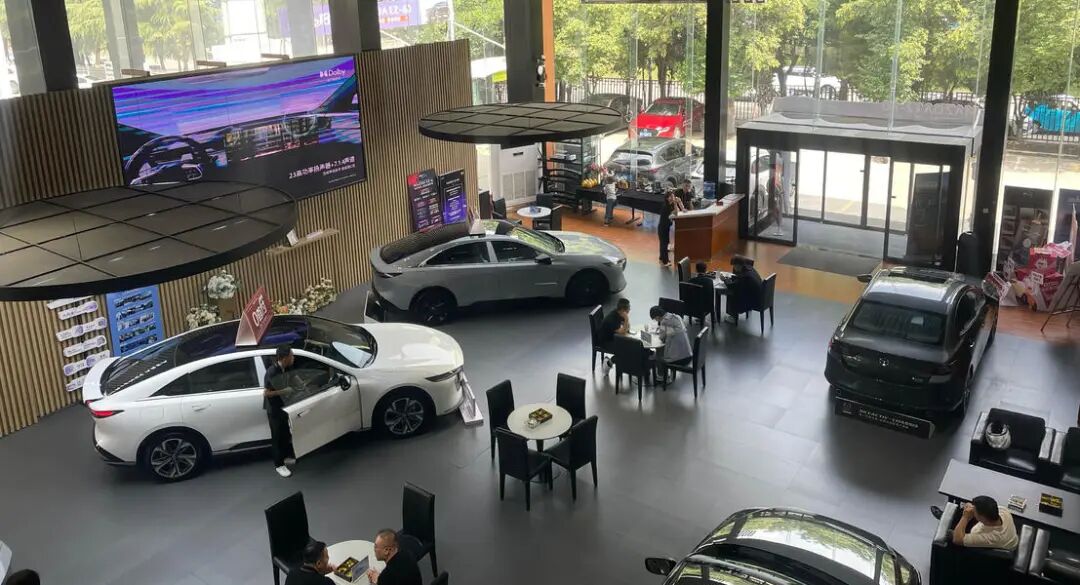
Data indicates that both Chevrolet and Skoda have achieved remarkable sales figures in the Chinese market. Chevrolet reached its peak sales of 767,000 units in 2014, positioning itself among the mainstream joint venture brands in China. Skoda sold approximately 340,000 units in 2018, with China being its largest single market globally.
In comparison, Dongfeng Peugeot Citroen Automobile (DPCA), the joint venture of Peugeot-Citroen, achieved peak sales of 711,000 units in 2015. Mazda's peak sales in the Chinese market were 309,400 units in 2017. Whether comparing brand sales or the popularity of individual models, Chevrolet and Skoda outperformed their counterparts.
Logically, brands with higher sales should have an easier time surviving, but the reality is the opposite today. Skoda and Chevrolet are no longer selling new cars in China, while Mazda and Peugeot-Citroen, with lower sales, persist. The fundamental reason behind this may lie in differences in brand value.
As is well known, Mazda is an extremely "stubborn" brand. For instance, it has long promoted naturally aspirated engines, refusing to blindly follow the trend of turbocharging; it rejects lengthening the wheelbase to optimize front-rear weight distribution and handling posture; and it has long retained physical buttons while downplaying large screens... Its models in the Chinese market are often criticized.
Even at this year's Beijing Auto Show, Mazda reiterated that regardless of changes in the era, environment, or power sources, it will adhere to a people-centric philosophy and continue to evolve the joy of driving. Of course, such rhetoric and practices have indeed cultivated a highly loyal user base, with "Mazda fans" strongly endorsing its automotive philosophy.
Similarly, French brands represented by Peugeot-Citroen also possess irreplaceable brand value in the Chinese automotive market. For example, French romantic design, widely recognized excellent driving experience, and solid chassis tuning are unique strengths that are difficult for other automakers to replicate.
Especially in recent years, as fuel-powered and new energy vehicles have begun to emphasize driving control and chassis performance amid severe configuration homogenization, Peugeot-Citroen's PHC adaptive hydraulic stabilization technology, which ensures comfort on long trips, stability on rough roads, and agility in corners, has become a key selling point.
In contrast, Chevrolet and Skoda also had distinct brand identities. Chevrolet's Cruze once led the Chinese sports sedan market, while Skoda's Octavia was a representative of solid family cars. However, compared to their sibling brands Buick and Volkswagen, Chevrolet and Skoda's positioning gradually blurred in the competition.
In many people's minds, the cheaper Chevrolet and Skoda became substitutes for their more expensive counterparts. This means that when a brand's selling point is merely affordability, it is destined to be eliminated in price wars. However, brand values like those upheld by Mazda and Peugeot-Citroen are what consumers are willing to pay for a unique experience and identity.
02 Joint Venture Brands: Made in China for Global Sales
Of course, it must be clearly recognized that whether it's Chevrolet, Skoda, Mazda, or Peugeot-Citroen, they all share a commonality in the Chinese automotive market: they are non-mainstream mass-market automotive brands, as mentioned earlier. There are many such brands, including Land Rover, Jaguar, Smart, MINI, Lincoln...
The question of how these trailing brands can survive in the Chinese market has become an unavoidable topic. Jaguar Land Rover sells imported cars in China, but most brands do not have this advantage. Therefore, their approach is unified: as General Motors China said, produce in China for export overseas.
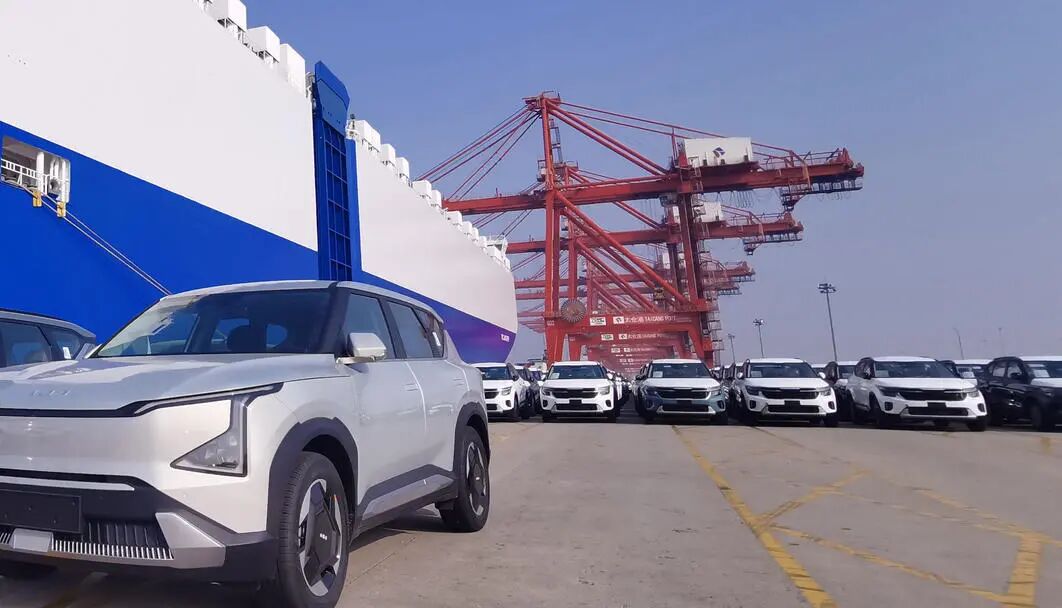
In this regard, Korean brands Hyundai and Kia were among the first to discover this "business opportunity." Data from April this year shows that Yueda Kia has exported over 568,000 complete vehicles, with export sales exceeding $6.18 billion. In addition to exporting complete vehicles, it has also exported over 505,000 engines. By 2025, Yueda Kia's export volume will account for 68% of its total sales, not only improving domestic factory utilization but also sustaining high profits.
Other brands following the "Made in China for Global Sales" path include Hyundai, Ford, General Motors, Volvo, as well as Mazda and Peugeot-Citroen, just mentioned.
In May this year, Dongfeng Motor, in collaboration with Stellantis Group and other enterprises, signed a strategic cooperation agreement in Wuhan, with a total investment exceeding 8 billion yuan, to jointly produce Peugeot and Jeep brand vehicles in China for global market sales. According to the agreement, starting from 2027, Dongfeng Peugeot Citroen Automobile's Wuhan factory will produce multiple new energy vehicle models under the Peugeot brand and introduce the Jeep brand, with products not only targeting China but also directly exporting overseas.
At this year's Beijing Auto Show, Changan Mazda announced further expansion of its global export scale. Its EZ-6 (overseas version: Mazda 6e) has been exported to over 20 countries and regions, including Europe and Australia, securing over 7,000 orders within two months of its European launch. In 2026, the CX-6e, based on the EZ-60, will be launched in Europe in summer and enter markets such as Australia and New Zealand within the year.
The transformation of these brands reveals a deeper logic: after decades of industrial accumulation, China has formed global leadership in areas such as the new energy vehicle industry chain, intelligent manufacturing, and supply chain efficiency. For brands like Hyundai, Kia, Peugeot-Citroen, and Mazda, rather than burning money in price wars in the Chinese market, it is more advantageous to position their Chinese factories as global supply hubs, leveraging China's manufacturing efficiency and quality to serve global markets.
It is said that joint venture brands in China are entering the 2.0 era, with two paths: one is to empower foreign products with Chinese technology, and the other is to manufacture in China for global resale. Joint venture brands in the 2.0 era may not replicate their sales glory in the Chinese market, but they have the opportunity to enhance their competitiveness with China's capabilities.
Besides the aforementioned brands, many other joint ventures are also facing sustained pressure from shrinking market shares, even leading or mainstream brands. Of course, it is also evident that many joint venture brands are gradually adapting to the rhythm of the 2.0 era.
Editor: Li Sijia Editor: He Zengrong

THE END
-
![]()
A Week with QianWen Office: The Highs and Lows
-
![]()
It's Time to Invest in China's Auto Industry
-
![]()
An AI Position with an Annual Salary of 1.7 Million Yuan Suddenly Becomes Highly Sought-After
-
![]()
Chevrolet and Skoda Exit China Before Mazda and Peugeot-Citroen
-
![]()
Zuckerberg's Concerns About Superintelligence: Who Holds the Power When the Technology Arrives?
-
![]()
Auto Scene Competition in Full Swing
-
![]()
Just Hit with a $1.4 Trillion Lawsuit, Meta Open-Sources Its 30B "Pocket Rocket" Overnight: Zuckerberg Calls Out DeepSeek, Qwen, Kimi
-
![]()
Samsung Z Fold 8 Ultra Review: A $2,100 Foldable Flagship—What Justifies the Price?