Just Hit with a $1.4 Trillion Lawsuit, Meta Open-Sources Its 30B "Pocket Rocket" Overnight: Zuckerberg Calls Out DeepSeek, Qwen, Kimi
 08/12 2026
 432
432
Meta’s Recent Fortunes: A Tale of Two Extremes
On one side, attorneys general from California, Colorado, Kentucky, and New Jersey are demanding $1.4 trillion in damages—nearly equal to Meta’s $1.48 trillion market cap—accusing the company of intentionally designing Facebook and Instagram to addict teenagers. On the other, Meta Superintelligence Labs abruptly open-sourced Muse Glimmer on August 10: a 30B-parameter agent model released under the permissive Apache 2.0 license.
This marks Muse’s first open-source release. Previously, the lineup remained closed-source, accessible only via API.
What Kind of Model is Muse Glimmer?
Let’s lay out the confirmed specs from public data.
Trained by Meta Superintelligence Labs—the same lab led by Scale AI founder Alexandr Wang—Muse Glimmer has a clear mandate: not a chatbot, but an always-on local agent.
Architecturally, it’s a 30B dense multimodal model: a 27.9B text decoder paired with a 1.9B ViT visual encoder and GELU projection layer. The text component uses 52 Transformer layers with grouped-query attention (32 query heads vs. 2 key-value heads) and hybrid sliding windows—every three layers employ 2048-window local attention, sandwiched between full-sequence attention layers. Local layers use RoPE, global layers use NoPE, extending context to 128k+ tokens.
Licensed under Apache 2.0: commercial use, modification, and redistribution are virtually unrestricted. Weights are now available on Hugging Face, with GGUF and Unsloth variants released simultaneously.
Deployment speed was abnormally fast: on launch day, llama.cpp, Hugging Face Transformers, Ollama 0.32.7, LM Studio, and SGLang all added day-0 support, with MLX and vLLM following days later. AMD, Arm, Intel, and NVIDIA collaborated on device-side optimizations. Meta clearly came prepared.
How Does a 30B Model Fit into 24GB of VRAM?
A full-precision 30B model requires over 55GB of memory—too large for even an RTX 5090. Meta deployed two key techniques.
First, quantization. Weights are compressed to ~4-bit precision, shrinking the core model to under 20GB. The saved VRAM accommodates KV cache, the visual encoder, and speculative decoding’s smaller models, fitting within 24GB/32GB envelopes. Officially, this compression has “near-zero impact” on agent task performance.
Second, speculative decoding—worth dissecting. Traditional decoding generates tokens one by one, fully processing 30B parameters each step. Glimmer pairs with a lightweight DFlash-based drafter model. Here’s the data flow:

The small model “guesses” large text chunks upfront. The main model verifies them in a single forward pass—correct guesses are kept, errors corrected. Quality remains unchanged while speed doubles or more. Benchmarks: RTX 5090 decoding jumps from 74.9 tok/s to 233 tok/s (3.1× faster); M5 Max MacBook hits 50 tok/s (1.8×); M4 Max reaches 1.5× faster. SGLang pushes RTX 5090 to 236 tok/s per user and 1452 tok/s in bulk with NVFP4+DFlash.
In essence, Meta engineered a 60GB-class model to run fast on 24GB hardware—solving the “five minutes to output one sentence” problem plaguing local agents.
Agent Capabilities: Distilled, Not Born
Where does its competence come from? Distillation of Meta’s closed-source flagship models.
Glimmer’s training occurs in three phases: pre-training uses Muse Spark’s outputs for logit distillation; mid-training extends context and injects denser agent data; post-training combines supervised fine-tuning, on-policy distillation, and reinforcement learning.
Logit distillation means the teacher model (Muse Spark) doesn’t just provide answers—it teaches confidence distributions for every candidate token. Complex reasoning chains and agent interaction data, generated by the massive teacher model, are distilled into the 30B student.
The resulting capabilities are agent-centric: precise schema-based tool calls, multi-step reasoning, self-diagnosis and retries after tool failures, multimodal inputs (screenshots, charts), support for 100+ languages, and compatibility with orchestration frameworks like OpenClaw.
A reality check: In official benchmarks, Glimmer scores 75.5 on MCP Atlas, outperforming Gemma4-31B (54.2) and Qwen3.6-27B (62.5). But on OSWorld-Verified, TerminalBench 2.1, and SWE-Bench Verified, Qwen3.6-27B takes the lead. This “pocket rocket” excels in tool-calling chains but falls short against same-size Chinese models in real-world computer operations and coding tasks.
Why Open-Source Now? Three Intersecting Forces
The timing is no coincidence—three threads converge.
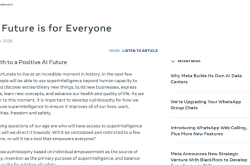
First, shifting tides in the open-source ecosystem. On the same day, Zuckerberg published a 14-page manifesto, *The Future is for Everyone*, defining Meta’s AI strategy: superintelligence should belong to everyone, not concentrated in a few corporations. He explicitly praised DeepSeek, Qwen, and Kimi as open-source leaders. After retreating from open-source last spring, Meta now admits Chinese models dominate this space—and aims to reclaim ground.
Second, Muse’s commercial strategy. Muse Spark’s API launched last month but lags behind Anthropic and OpenAI’s flagships in coding, reasoning, and writing benchmarks. Meta’s solution? Compete on price—mirroring DeepSeek, Moonshot AI, and Alibaba’s playbook of using permissive licenses to capture market share. Open-sourcing Glimmer distills flagship capabilities for free, driving traffic to the paid API. Alexandr Wang also teased an open-source version of Muse Spark 1.2.
Third, the $1.4 trillion lawsuit looming overhead. The four states calculated damages by multiplying “affected teen users” by statutory penalty caps—a figure Meta dismisses as “sensationalist” with no precedent in consumer protection law. With an August trial in Oakland, the “open-source,” “privacy,” and “personal superintelligence” narrative offers clear PR benefits. It’s plausible Glimmer’s release timing aligns with this Public opinion warfare (public opinion battle).
A final detail: *The New York Times* reports Meta is developing a more powerful model codenamed Watermelon, with no word on open-sourcing. Glimmer’s role is clear—it open-sources distilled flagship capabilities while Meta retains its core innovations.
Conclusion
Zooming out, Glimmer’s real innovation lies in its product strategy: cloud flagships push capability boundaries, local models inherit those abilities via distillation, then quantization and speculative decoding cram them into consumer hardware. High-frequency, privacy-sensitive tasks—files, calendars, code, chat logs—will inevitably run locally.
The broader context is starker: When Zuckerberg needs to name-drop three Chinese labs to justify open-source AI, the global center of gravity for open models needs no further explanation.
-
![]()
Zhong Shanshan Renews Critique of E-commerce: Are Retail Challenges Driven by Platform Dominance?
-
![]()
A Week with QianWen Office: The Highs and Lows
-
![]()
It's Time to Invest in China's Auto Industry
-
![]()
An AI Position with an Annual Salary of 1.7 Million Yuan Suddenly Becomes Highly Sought-After
-
![]()
Chevrolet and Skoda Exit China Before Mazda and Peugeot-Citroen
-
![]()
Zuckerberg's Concerns About Superintelligence: Who Holds the Power When the Technology Arrives?
-
![]()
Auto Scene Competition in Full Swing
-
![]()
Just Hit with a $1.4 Trillion Lawsuit, Meta Open-Sources Its 30B "Pocket Rocket" Overnight: Zuckerberg Calls Out DeepSeek, Qwen, Kimi