A $1.75 Trillion Epic IPO Arrives! SpaceX Opens the Door to the Capital Universe, Valuation Bubble and Space Revolution Compete on the Same Stage
 03/30 2026
 555
555
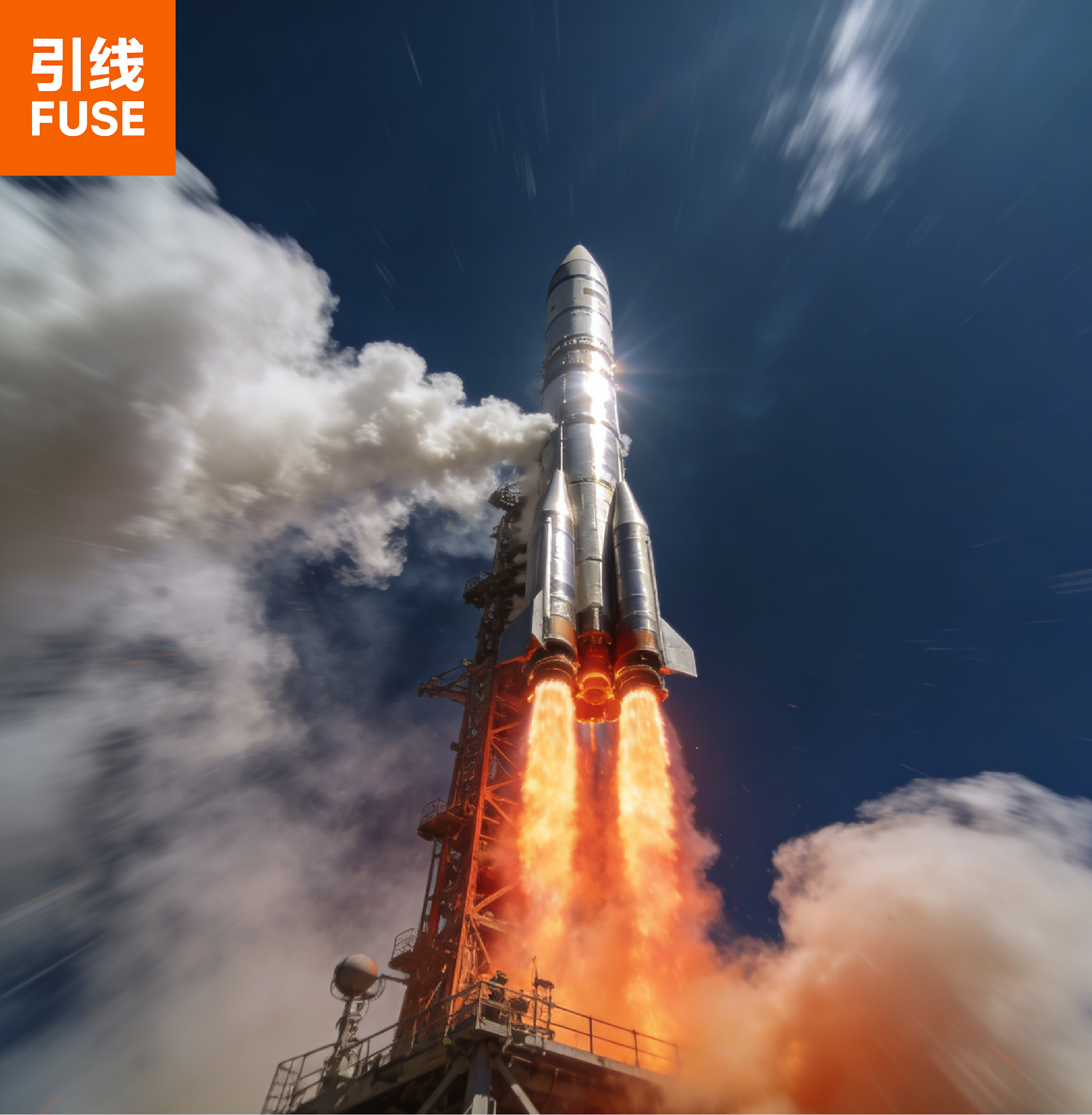
When Apple first surpassed a $1 trillion market cap in 2018, capital markets took years to digest this milestone. Just seven and a half years later, 13-digit valuations have evolved from exclusive labels for tech giants to industry norms. Now, a "cosmic-level storm" poised to disrupt the global capital landscape is brewing—Elon Musk's SpaceX has officially launched its IPO plan, aiming to raise $75 billion and shatter global IPO records with a $1.75 trillion valuation target, propelling it to the center of the capital stage.
Meanwhile, OpenAI and Anthropic in the AI sector are following closely, with unicorns valued at hundreds of billions of dollars preparing to go public. A super capital race spanning space and artificial intelligence has begun. This is not just a capital coronation for SpaceX's rise from a space startup to an industry leader but also the ultimate market test of Musk's "space + AI" vertical integration strategy. Under the dazzling glow of a trillion-dollar valuation, will public market investors pay for this cosmic gamble? How will Starlink's stable cash flow balance xAI's massive cash burn? Is the $1.75 trillion valuation an anchor for the space revolution's value or the peak of a capital bubble? An ultimate showdown over business logic, technological reality, and capital faith is fully underway as SpaceX's IPO approaches.
Cosmic-Scale IPO Lands: June Listing, $75 Billion Raise to Shatter Capital History
On March 25, 2026, *The Information* cited sources stating that SpaceX plans to submit a confidential IPO prospectus to the U.S. SEC this week or next, targeting a June Nasdaq debut and making "inclusion in the Nasdaq 100 Index as soon as possible after listing" a core condition. This timeline means only two to three months of regulatory review from filing to trading, accelerating a mega-offering set to shake global capital markets.
The escalating fundraising target underscores SpaceX's capital ambitions. Financial advisors involved in preparations revealed that the IPO goal has risen from an initial $50 billion to $75 billion, far surpassing Saudi Aramco's 2019 record of $29.4 billion. If successful, this would become the largest IPO in history, 2.5 times Aramco's size and exceeding total U.S. IPO fundraising in 2025. Valuation estimates from investment banks and analysts range between $1.25 trillion and $1.75 trillion. At the upper limit, SpaceX's market cap would rank among the global top 10, surpassing the combined value of traditional aerospace giants like Boeing and Lockheed Martin.
Wall Street is fully engaged, with an underwriting lineup dubbed the "all-star team." Bank of America, Citi, Goldman Sachs, JPMorgan Chase, and Morgan Stanley—five global top-tier banks—have confirmed participation. Morgan Stanley, Goldman Sachs, and JPMorgan serve as joint sponsors, leading issuance, marketing, and pricing. For retail investors, while hot IPO allocations are limited, platforms like Robinhood and SoFi may open subscription channels, allowing some retail participation.
Valuation Logic: Starlink Cash Flow as Anchor, Space AI Narrative as Wings
The $1.75 trillion valuation isn't backed by short-term profits from a single business but by SpaceX's triple commercial closed loop (closed loop) of "aerospace + AI + internet," with Starlink as the core cash flow pillar. In 2025, SpaceX's revenue reached $16 billion, with EBITDA around $8 billion. Starlink contributed 80% of revenue, boasting over 9 million users across 60+ countries. Direct-to-phone technology further unlocks a multi-billion-dollar incremental market. With reusable rocket tech, Falcon 9 launch costs dropped to 1/10th of traditional aerospace, capturing over 80% of commercial launch market share while securing billions in government contracts as a cornerstone of U.S. space programs.
The all-stock acquisition of xAI in February 2026 became a key catalyst for valuation growth. The deal, completed at a 0.1433:1 share exchange ratio with zero cash payment, preserved SpaceX's ~$10 billion cash reserves while incorporating xAI—valued at $250 billion—into its ecosystem. The merged entity's valuation reached $1.25 trillion. xAI's Grok AI assistant naturally synergizes with Starlink's global real-time data: satellite data feeds AI models, while the vision of space AI data centers positions "space computing power" as a new valuation growth driver. Musk stated the goal is to build a "vertically integrated innovation engine," creating a unique public market ecosystem through deep integration of aerospace, internet, and AI.
Pitchbook analysts noted, "Starlink's user growth, rocket launch monopoly, and direct-to-phone network progress form a combination unavailable elsewhere in public markets." This uniqueness underpins SpaceX's confidence in breaking traditional valuation ceilings.
Core Debate: xAI's Cash Burn Shadow and Valuation Sustainability Scrutiny
Despite the lofty valuation, doubts persist, focusing on xAI's cash burn and alignment with fundamentals. Industry data shows xAI consumes ~$1 billion in cash monthly, primarily for AI model training and infrastructure, with quarterly losses rivaling OpenAI's. This "cash burn model" contrasts sharply with Starlink's stable cash flow, raising investor concerns: Could SpaceX, originally focused on aerospace, be dragged down by AI's financial strain?
More critically, the $1.75 trillion valuation defies current public market logic for comparable firms. Amazon trades at ~60x P/E, Tesla at ~40x, while SpaceX's static P/E exceeds 150x based on 2025 EBITDA—far higher than traditional tech giants. In a bull market, investors may pay a premium for the "space revolution" narrative, but sustainability is questionable if sentiment cools.
Post-IPO compliance pressures and control battles also pose risks. As a public company, SpaceX must disclose financials quarterly, facing scrutiny from Wall Street analysts and retail investors. Volatility from technical delays or regulatory shifts could disrupt its space plans. While Musk retains ~80% voting control, long-term reliance on a single leader may decline if performance lags, introducing governance uncertainties.
Capital Strategy and Future Path: From Cosmic Blueprint to Commercialization
SpaceX's IPO is more than a funding round—it's a pivotal step in its cosmic strategy. Funds will target three core areas: (1) Starship rocket R&D, aiming to produce 1,000 ships annually by 2027, slashing satellite deployment costs to 1% of current levels to support lunar bases and Mars colonization; (2) space AI data center construction, building an orbital computing network via millions of satellites to achieve "space computing costs below ground"; (3) lunar base expansion, advancing resource development and space ecosystem layout (layout).
To clear listing hurdles, Musk swiftly optimized debt after acquiring xAI, planning to refinance and cut ~$18 billion in high-interest debt, easing financial pressure. This "lean-before-IPO" move signals fiscal health to investors, boosting valuation credibility.
Long-term valuation resilience hinges on three metrics: (1) Can Starlink sustain 30%+ annual revenue growth to cover xAI's cash burn? (2) Can Starship achieve industrial-scale production to truly reduce space exploration costs? (3) Can space data centers validate prototypes by 2028, delivering promised computing cost advantages? If achieved, xAI's short-term losses could become a technological moat, stabilizing the $1.75 trillion valuation. Otherwise, the bubble may burst quickly.
Epilogue: A Cosmic Showdown Between Valuation and Reality
SpaceX's IPO is the ultimate dialogue between capital and technology—a capital endorsement of Musk's "space revolution" faith and a test of global valuation logic. As a $1.75 trillion valuation coexists with $1 billion in monthly cash burn, and as Starship's flames meet AI's computing power in space, capital markets face a choice: "Believe in technological faith" or "return to financial reality."
For investors, this epic IPO offers historic opportunity and high risk. It carries humanity's ultimate dream of cosmic exploration but hides risks of overvaluation and technical underperformance. As Wall Street puts it, SpaceX's listing isn't just a company's capital event but a milestone marking the global tech and capital landscape's shift to the "space age."
As the June IPO deadline nears, the $1.75 trillion valuation faces its ultimate public market test. Regardless of outcome, this cosmic gamble will rewrite tech valuation paradigms, opening a new space chapter for human commercial civilization.
Source: Investor Network
-
![]()
Proposed to Raise 955 Million Yuan through Private Placement! Huicheng Vacuum Boosts Localization of Ultra-Precision Optical Coating Equipment
-
![]()
Cash Flow Soars 13-Fold! What Major Strategic Move is Wuhan Five Square Optoelectronics Planning?
-
![]()
Leaked Design of vivo X500: Reverts to Circular Camera Module in Top-Left Corner, Pays Homage to Classic X90 Aesthetic
-
![]()
DeepSeek Shows Signs of Foraying into Code Agents, Launches WeChat Official Account Focused on Harness
-
![]()
Auto Companies Deny Claims That ‘Cooperation with Huawei Is Non-Essential’, as Huawei Transforms into a ‘Public Platform’
-
![]()
Starship to Independently 'Return to the Launch Tower': SpaceX's Ambitions Extend Beyond Rocket Building to Dominating Space Transportation
-
![]()
Starship Set to Independently 'Return to the Launch Tower': SpaceX is Revolutionizing Space Transportation, Not Just Building Rockets
-
![]()
Anthropic and OpenAI Face Off Against Deepseek