Hot Stocks to Track | SpaceX: Releases First Quarterly Report After Listing, Revenues Soar by 92%, Capital Expenditure Reaches $18.4 Billion, Trillion-Dollar Target Advanced to 2030
 08/06 2026
 340
340
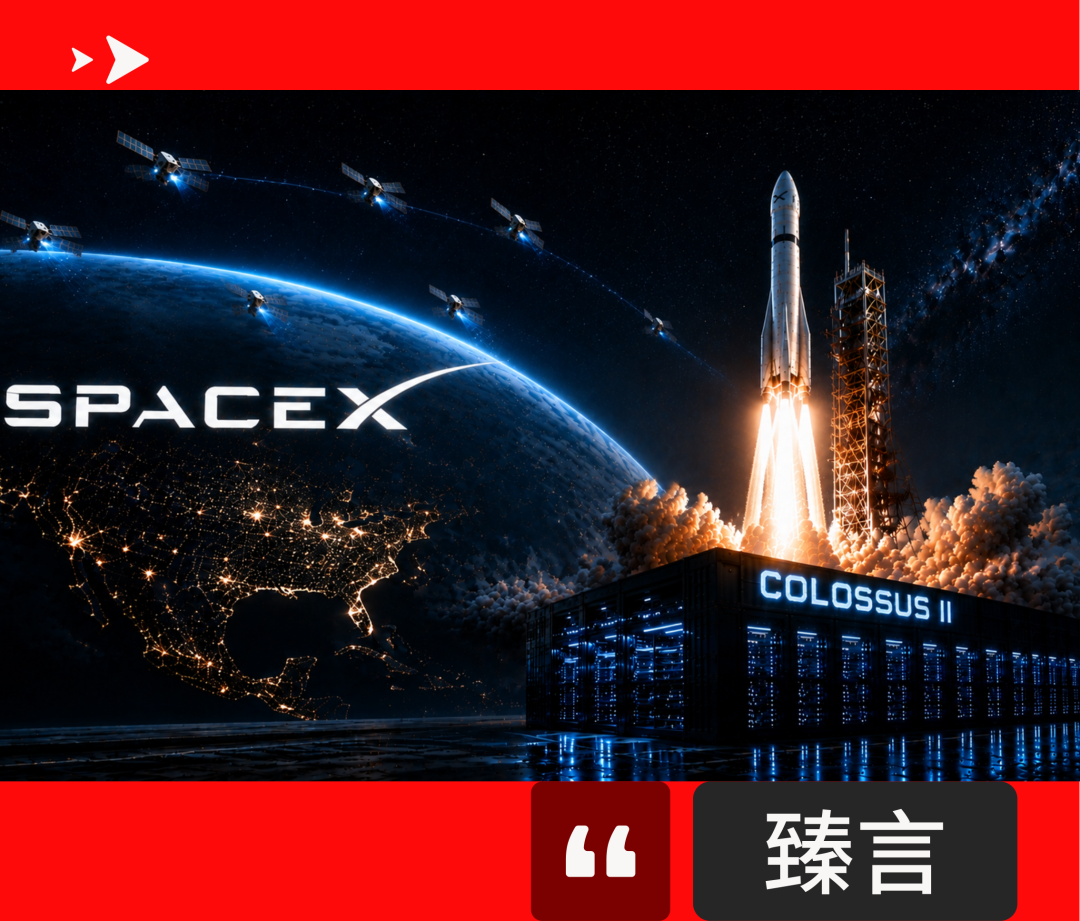
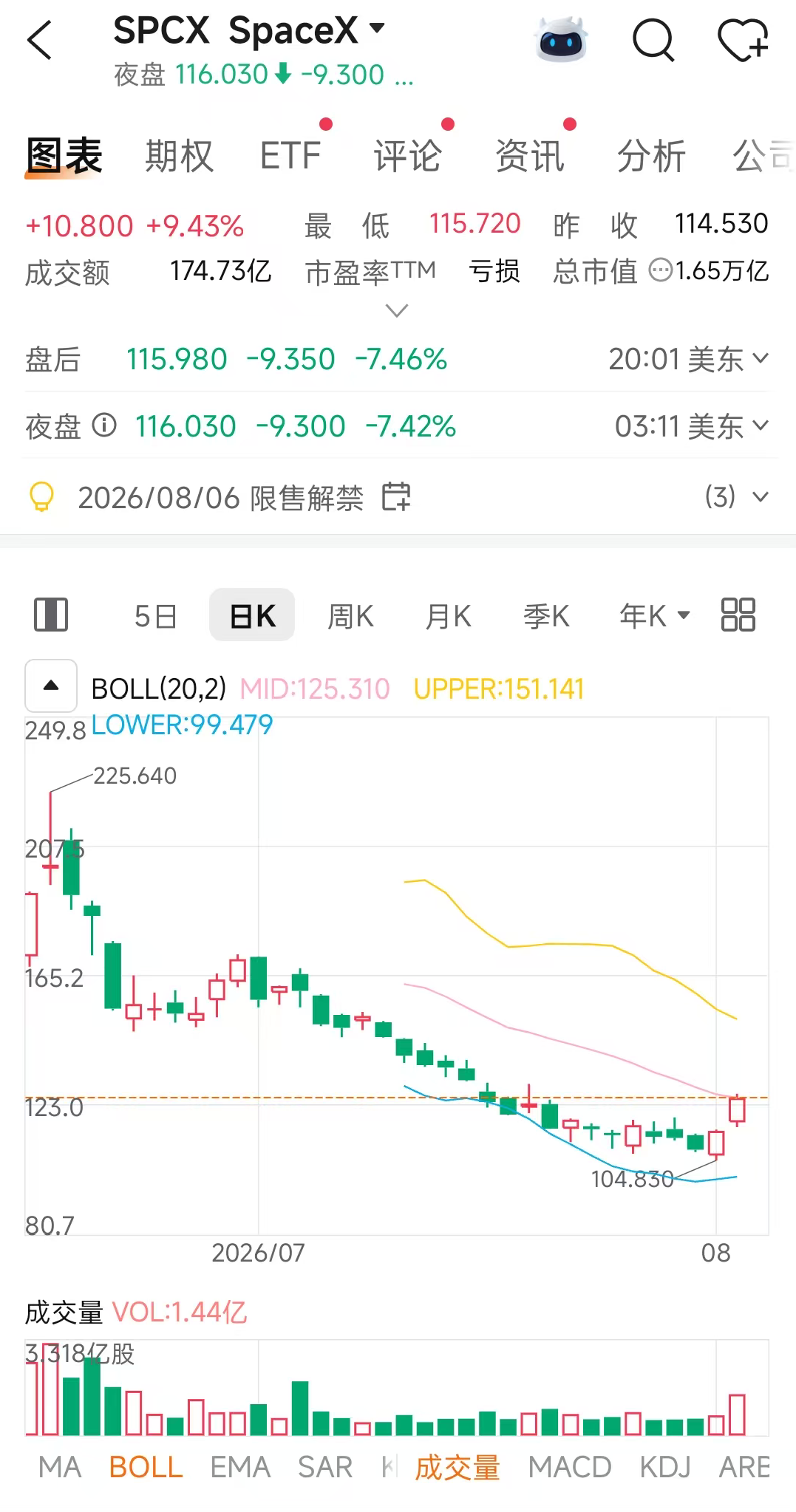
SpaceX released its Q2 2026 financial report on August 4, 2026 (ET), marking its first earnings report since listing on NASDAQ on June 12. Revenues nearly doubled year-over-year, core profit metrics significantly outperformed market expectations, Starlink maintained stable profitability, and AI business revenue surged with narrower-than-expected losses. However, a staggering $18.4 billion in quarterly capital expenditures far exceeded estimates, sparking investor concerns over long-term cash burn. The stock price plunged over 8% after hours following the report.
Overall, the results validated SpaceX's three-tier business model of "communications for cash flow, aerospace for barriers, AI for growth" but exposed market sensitivity to capital efficiency amid high valuations. The company is at a critical juncture in transitioning from a commercial space leader to a space + AI infrastructure platform. Balancing short-term performance with long-term investments will be the key determinant of its valuation trajectory.
Design | Tian
Core Financial Overview: Profitability and Spending Diverge Amid Revenue Surge
Revenue & Profitability: Scaling Up, Losses Narrowing Faster Than Expected
SpaceX reported total Q2 revenues of $7.814 billion, up 92% YoY, significantly exceeding consensus estimates of $6.93 billion. Profitability also improved markedly: Adjusted EBITDA reached $3.538 billion, surging 191.4% YoY. Net loss narrowed to $541 million, a 46% reduction YoY, with diluted EPS loss at $0.09, far better than the expected $0.23-0.26. The profit improvement was driven by business mix optimization: Higher-margin Starlink communications now account for a larger share, with scaling effects enhancing overall profitability resilience.
However, the company remains in an overall net loss position, heavily reliant on the communications segment for profits, while aerospace and AI businesses are still in the investment phase. Cash Flow & Reserves: IPO Financing Strengthens Liquidity Buffer As of Q2 end, cash, equivalents, and marketable securities totaled $100.009 billion, with a backlog of $47.5 billion in orders, marking historic highs in liquidity.
The substantial cash position stems from two major Q2 fundraisings: June's IPO raised approximately $85.7 billion net, coupled with a $25 billion investment-grade bond issuance, boosting total assets from $92.079 billion at the end of 2025 to $192.770 billion.
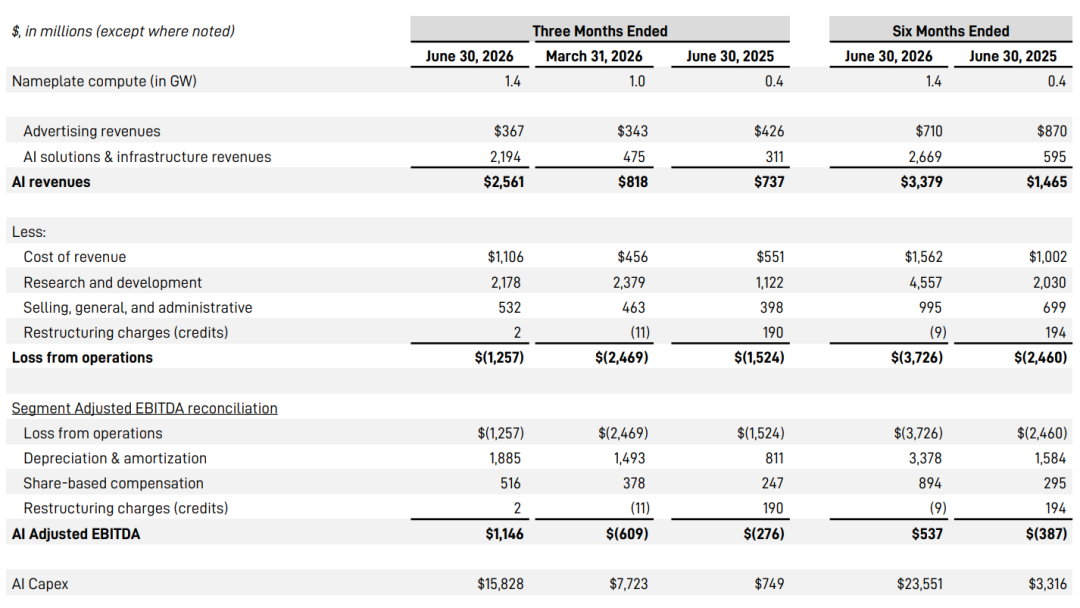
The $100+ billion cash reserves mean that even with current quarterly AI investments exceeding $10 billion, the company has several years of financial flexibility, significantly reducing short-term liquidity risks and providing a buffer for long-term R&D. Capital Expenditures: AI-Driven Spending Surge Sparks Market Concerns Total Q2 capex reached $18.369 billion, up 550% YoY, far exceeding the expected $13.2 billion. Of this, $15.828 billion went to AI, primarily for the Colossus II computing center and server procurement.
Management guided that Q3 and Q4 AI capex will remain at Q2 levels, implying full-year capex could exceed $45 billion. This massive spending triggered the stock sell-off. The core market concern is not the investment itself but the ROI timeline and profit certainty: While management claims AI computing investments can recoup costs within a year, the AI business is still operating at a loss, with its path to Large scale profitability (mass-scale profitability) not yet fully validated. Sustained high spending raises uncertainties over long-term ROE.
Source: Futu Bull
Three Business Segments Unpacked: Cash Cows, Tech Foundations, and Future Bets
SpaceX divides its business into aerospace, communications, and AI—each representing "tech barriers, cash flow, and growth potential" respectively, forming a clear tiered model.
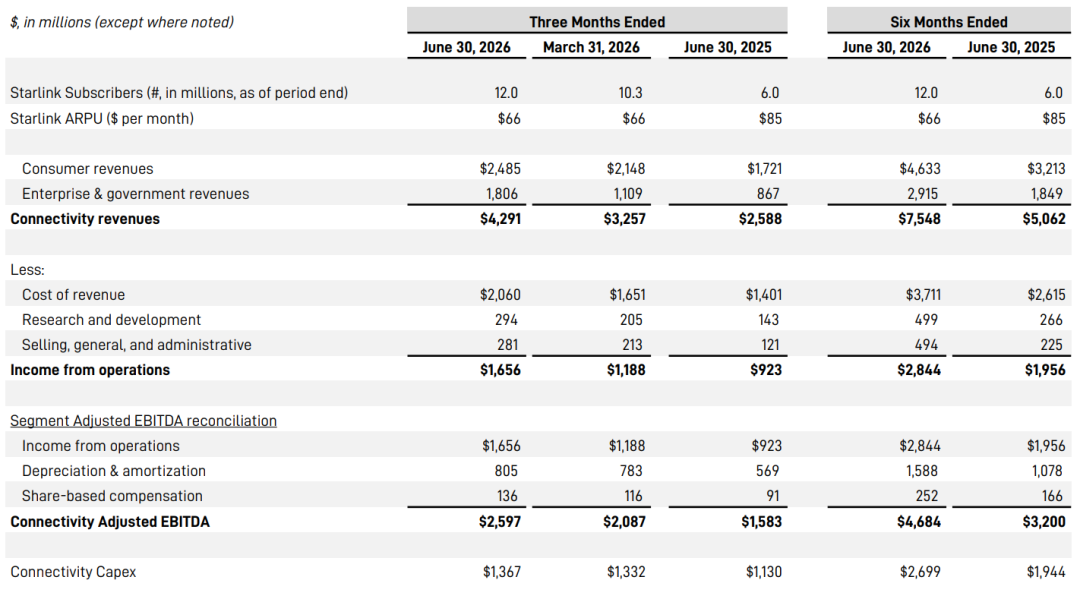
Communications: Starlink + Starshield Drive Profits, the Sole Earnings Pillar Communications (led by Starlink) is the primary revenue and profit engine. Q2 segment revenue hit $4.291 billion, up 66% YoY; operating profit reached $1.656 billion, up 79% YoY—the only profitable segment.
User data shows Starlink's global subscriber base reached 12 million, doubling YoY and adding 1.7 million QoQ. ARPU held steady at $66, reflecting strong user payment stickiness and pricing power.
Beyond consumers, the government-focused "Starshield" business secured over $6 billion in multi-year U.S. government contracts, with enterprise/government orders rising as a share of revenue, further stabilizing income.
Source: SpaceX Official Website
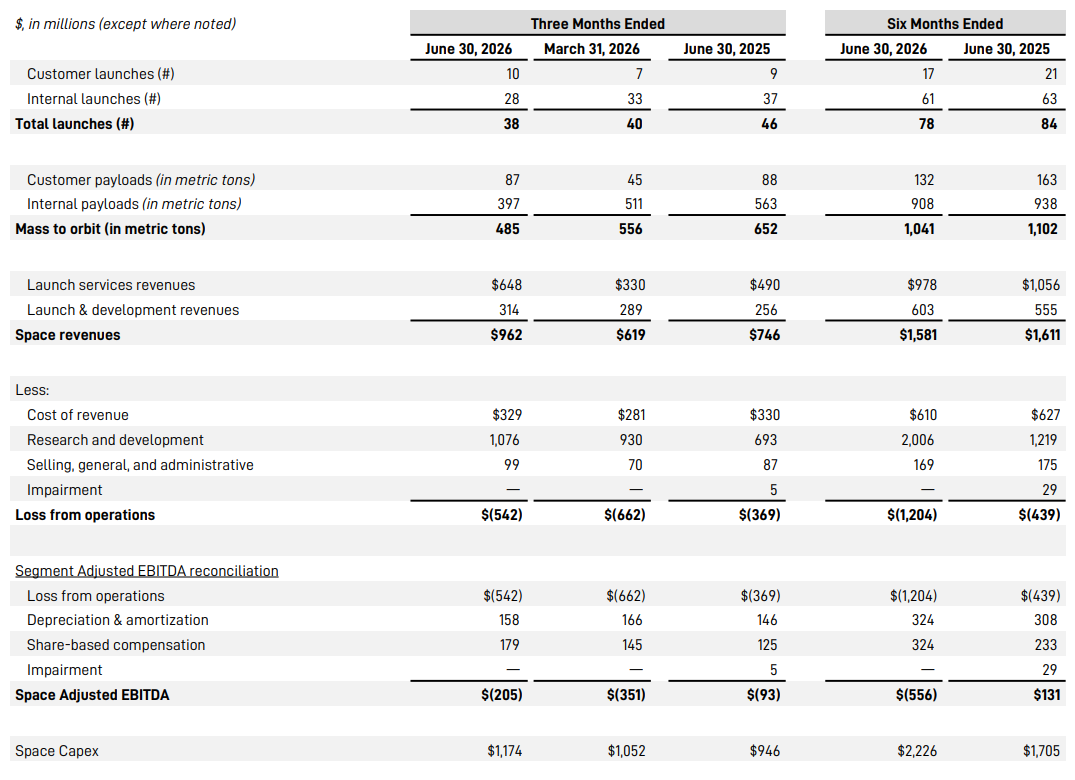
Aerospace: Launch Volume and Pricing Rise, Starship R&D Weighs on Short-Term Profits Aerospace revenue hit $962 million in Q2, up 29% YoY, driven by more large commercial launches and optimized customer mix. H1 saw 78 launches, delivering 1,041 tons to orbit, maintaining global market dominance.
However, operating losses widened to $542 million, a 47% increase YoY, due to intense R&D spending on Starship (over $1 billion this quarter), eating into launch profits. Long-term, Starship's mature reuse could cut launch costs by an order of magnitude, enabling Starlink expansion and space business growth—a core source of long-term tech barriers, though short-term profit drag will persist.
Source: SpaceX Official Website
AI: Revenue Explodes, Losses Narrow Faster Than Expected The AI segment was the top growth driver in Q2, with revenue surging to $2.56 billion, up 247% YoY; operating losses narrowed to $1.257 billion, beating expectations.
Computing capacity expanded from 1.0GW in Q1 to 1.4GW. New cloud service agreements totaled $14.1 billion this quarter, with partners including Anthropic and Google. Long-term contracts are now delivering, accelerating computing revenue. SpaceX also announced a collaboration with NVIDIA to develop Starmind AI1 satellite computing payloads, deploying data center-grade computing power in space to build a space computing network. AI is the fastest-growing segment and main capex recipient; its commercialization speed will directly drive valuation upside.
Source: SpaceX Official Website
Business Model Flywheel: Cross-Segment Synergies
SpaceX's core value lies not in linear growth of a single business but in the internal synergy flywheel across three segments—its key differentiator from ordinary aerospace firms or cloud providers.
First-Layer Synergy: Cost advantages in launch capabilities support rapid, low-cost Starlink deployment. Reusable rocket tech slashes satellite launch costs, enabling Starlink to complete global coverage faster than peers, quickly building user scale and cash flow.
Second-Layer Synergy: Starlink's stable cash flow funds aerospace R&D and AI computing investments. Communications profits provide internal funding for Starship development and AI computing, reducing reliance on external financing.
Third-Layer Synergy: Full-stack capabilities in space + communications + computing create an irreplaceable infrastructure barrier. Starlink's global network + space computing nodes + low-cost launch form an end-to-end space digital infrastructure—a model neither cloud firms nor aerospace companies can replicate alone.
Valuation & Stock Adjustment: Multiple Factors Converge at High Premiums
Despite beating revenue and profit expectations, the stock fell post-earnings due to a confluence of high valuation thresholds, Exceeding expectations capex (exceeding expectations), and lock-up expiry supply shocks.
Valuation-wise, as of August 4, 2026, the market cap stood at ~$1.64 trillion, implying a PS (TTM) of 84.91x; based on 2026 consensus revenue (~$31 billion), the forward PS reaches 52.9x. For context, NVIDIA's PS (TTM) is 32.46x, Amazon's is 3.85x, and mature cloud businesses typically trade at 12-15x. Even against high-growth AI peers, SpaceX's valuation multiple remains significantly above average. Historically, the stock briefly surpassed $3 trillion post-IPO, implying a PS over 140x, entirely built on growth narratives around Starlink, Starship, and AI computing. After two months of correction, valuations have fallen over 40% but remain at the top tier globally. At this level, market thresholds for performance have risen sharply—revenue growth alone cannot justify the premium; capex efficiency and profit inflection timing now dominate pricing.
Fundamentally, the $18.369 billion quarterly capex far exceeded estimates, with management guiding similar Q3/Q4 AI spending, directly sparking concerns over long-term ROI and triggering the post-earnings sell-off.
From a supply perspective, ~911.5 million internal locked-up shares will become freely tradable on August 6 (ET), primarily from early investors, employee plans, and insiders, valued at ~$114.2 billion at current prices—exceeding total existing float. This massive lock-up expiry poses a significant supply overhang, weighing on the stock and offsetting some of the earnings upside, amplifying market caution.
Summary & Outlook
This first earnings report marks a pivotal moment for SpaceX's business model transparency. It validates Starlink's stable cash-generating ability and AI's commercialization potential through explosive revenue growth and sharply narrower losses, cementing AI as the core driver of the second growth curve. Aerospace launch remains short-term pressured by Starship R&D but retains its long-term tech barrier value. The three-tier growth framework is now clear, with the company evolving from an "R&D-driven aerospace firm" to a "multi-business infrastructure platform."
In the earnings call, Musk updated long-term targets: Accelerating the annual revenue $1 trillion milestone from 2031 to 2030, with 2029 also deemed possible; and guiding 2026 annualized recurring revenue (ARR) to exceed $100 billion. Growing from $7.8 billion quarterly revenue to $1 trillion annually in four years requires over 10x growth, driven by AI computing scale-up, Starlink user/government order penetration, and space economy expansion post-Starship commercialization.
However, significant risks loom: 1) Capex intensity may suppress net profit and free cash flow for 2-3 years; 2) Tech adoption timelines (Starship reuse, space computing monetization) carry uncertainty, potentially delaying the $1 trillion target; 3) Competition intensifies in satellite internet and AI cloud, with pricing power and market share still contested.
Overall, SpaceX is in a "high-spend, high-growth, high-expectation" phase, with short-term volatility reflecting market divergence (divergence) over investment efficiency at high valuations. From an industry standpoint, it has built a unique "launch-network-computing" full-stack infrastructure capability—hard to replicate globally. AI profitability timing and Starship flight/commercialization progress will be key indicators for validating long-term growth and supporting valuations.
This analysis is for informational and industry logic-sharing purposes only and does not constitute investment advice.
Disclaimer:
1. This article is based on publicly available information, aiming to provide factual observations and industry research references. It does not constitute any form of investment advice or securities trading offer. Data on companies, stock prices, valuations, and market shares are sourced from issuer disclosures, HKEX disclosures, public news, and third-party research. No explicit or implicit guarantees are made regarding completeness or accuracy.
2. Any investment decisions made by readers are at their own risk. Hong Kong and mainland markets have different regulatory requirements; cross-border investments should consider policy, exchange rate, liquidity, and compliance risks.
3. Investment involves risks, and decisions should be made with caution.
-
![]()
Five-Year Market Share Dive: 65% Drop Sees Japanese Automakers Falter in China
-
![]()
Innovative ‘Large Family Box-Shaped’ Model, Great Wall H10, Officially Launches with Limited-Time Trade-In Price Starting at 201,800 Yuan
-
![]()
Google No Longer Lets Top Scientists 'Call the Shots'
-
![]()
Ctrip Loosens Its Grip on Hotels, While Fliggy Remains Trapped Within Taobao
-
![]()
Four Visits to Lu Fang: The Vision of VOYAH in My Heart | Insight
-
![]()
Hot Stocks to Track | SpaceX: Releases First Quarterly Report After Listing, Revenues Soar by 92%, Capital Expenditure Reaches $18.4 Billion, Trillion-Dollar Target Advanced to 2030
-
![]()
Hot Stocks to Monitor | SpaceX: Releases Inaugural Quarterly Report Post-IPO, Revenue Soars 92%, Capital Expenditure Reaches $18.4 Billion, Trillion-Dollar Revenue Goal Moved Up to 2030
-
![]()
Porsche China Shifts Focus Amid Sales Struggles