Five-Year Market Share Dive: 65% Drop Sees Japanese Automakers Falter in China
 08/06 2026
 405
405
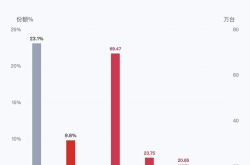
Recently, data released by an authoritative organization revealed that, as of the first half of 2026, the market share of Japanese automakers in China had plummeted to below 8%.
To put this into perspective, it was 9.8% in 2025, approximately 23% in 2020, and at its zenith in 2008, Japanese cars commanded a 30% share of the Chinese market.
This translates to a staggering 65% decline in market share over five years, or a 75% drop from the peak, with the proportion continuing to dwindle.
Consequently, many observers assert that Japanese automakers have suffered a complete collapse in the Chinese market.
Frankly, while this may seem hyperbolic, it is, regrettably, the reality. Japanese cars have indeed seen a significant downturn in China.
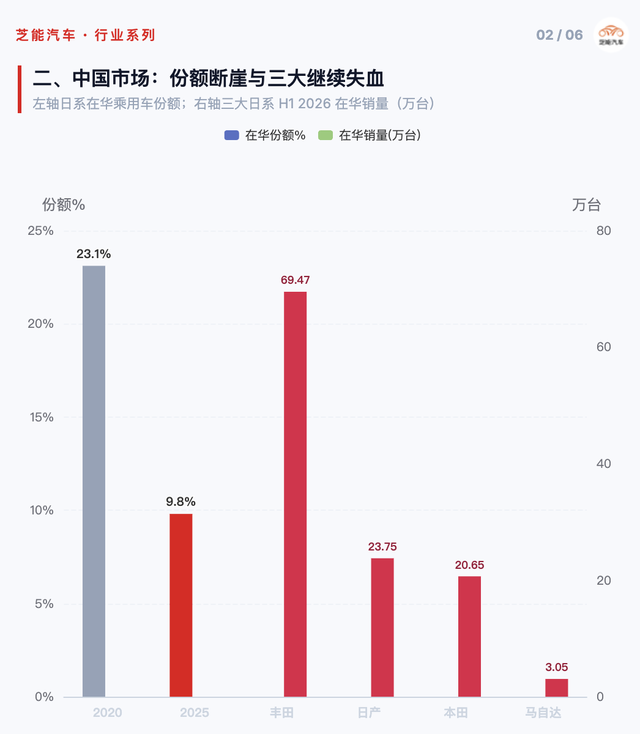
Historically, Japanese automakers had been on an expansion spree in the Chinese market, with numerous brands seeking their fortune in this vast market. However, in recent years, a slew of brands have exited the Chinese market, including Suzuki, Mitsubishi, and Acura.
Some brands, such as Mazda, Isuzu, and Daihatsu, are struggling to stay afloat, having witnessed substantial declines. Although they haven't officially announced their withdrawal, some have effectively faded into obscurity.
The main contenders still in operation are Toyota, Honda, and Nissan.
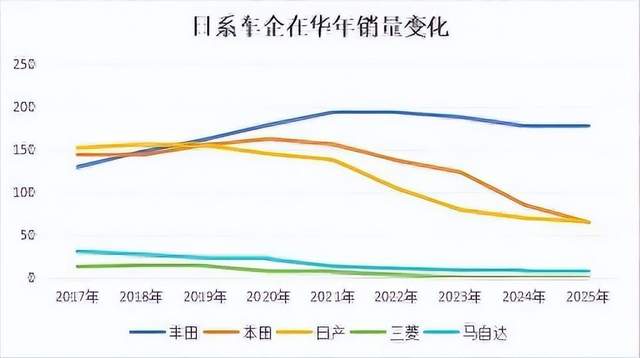
However, the sales of these three giants have also been on a downward trajectory in recent years. Examining the aforementioned data, only Toyota has demonstrated relative resilience, with no significant decline in recent years. The other brands have experienced sharp drops, far worse than a mere halving.
What's behind this trend? There's only one primary reason: the meteoric rise of China's domestic automotive industry.
According to data from the China Association of Automobile Manufacturers, by the first half of 2026, Chinese brands accounted for over 71% of domestic auto sales, while foreign brands held less than 30% of the market. As a subset of foreign brands, Japanese automakers, with an 8% share, are actually faring relatively well.
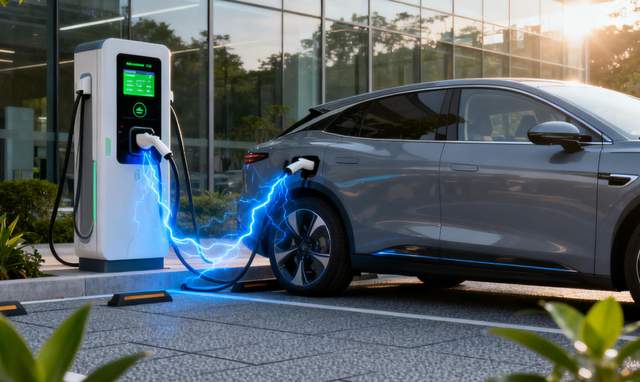
The ascent of Chinese brands is closely tied to the growth of the new energy vehicle (NEV) industry.
Previously, Japanese cars were highly popular in China due to their fuel efficiency, durability, and excellent cost-performance ratio. However, in today's Chinese auto market, electric vehicle sales continue to soar, with NEV penetration now exceeding 60%.
Japanese cars, which remain primarily focused on gasoline vehicles, lack competitiveness in the NEV sector and are unable to compete with their Chinese counterparts.
Therefore, as more consumers switch to new energy vehicles, it's hardly surprising that Japanese car sales are declining. This trend isn't limited to Japanese brands; American, German, and Korean brands are also experiencing declines and facing challenges. Only China's domestic electric vehicles are on the rise, capturing an increasing share of the market.
-
![]()
Traditional Fuel Vehicle Market Base Dwindles: BBA Vehicles Struggle Despite 300,000 Yuan Price Cuts, Prompting Closure and Absconding of Several 4S Dealerships
-
![]()
Largan Precision Makes Another Attempt at Hong Kong Stock Exchange IPO Amid High Growth, Raising Concerns Over 'Apple Dependency' and Operational Independence
-
![]()
From "Tongyi" to "Qianwen", and on to "Qianwen Office": A Showcase of Alibaba's Astute Leadership Decision-Making
-
![]()
Is Qwen3.8 the 'Zelda' for Qianwen Office?
-
![]()
Why Did Musk Remove Chinese Elements Post-Delivery of 10GW Photovoltaic Gear?
-
![]()
Five-Year Market Share Dive: 65% Drop Sees Japanese Automakers Falter in China
-
![]()
Innovative ‘Large Family Box-Shaped’ Model, Great Wall H10, Officially Launches with Limited-Time Trade-In Price Starting at 201,800 Yuan
-
![]()
Google No Longer Lets Top Scientists 'Call the Shots'