Porsche China Shifts Focus Amid Sales Struggles
 08/06 2026
 330
330
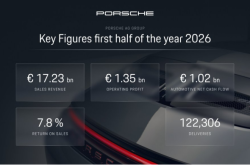
Recently, Porsche unveiled its financial report for the first half of 2026. The results are a mixed bag—not outright poor, but certainly challenging. Operating profit has risen, yet sales have dipped. Specifically, in the first half of 2026, Porsche's sales revenue reached 17.23 billion euros, marking a 5.11% decrease year-on-year. Conversely, operating profit surged by 33.86% to 1.348 billion euros, while global deliveries totaled 122,300 units, down 16.5% from the previous year. The primary concern remains the Chinese market, a notoriously tough nut to crack, which continues to pose significant challenges. In the first half of this year, Porsche delivered 14,500 new cars in China, a significant 31.93% decline year-on-year, with this sales slump being particularly notable in the global context. 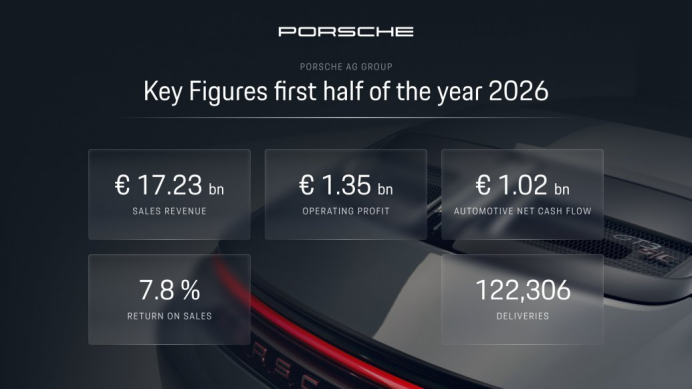
In response to the ongoing pressure in the Chinese market, Porsche's management acknowledged that growth in China has slowed and the operating environment remains difficult. Faced with sales pressure, Porsche is prioritizing 'value over volume' and is steadfast in its commitment to not being solely sales-driven.
Porsche also highlighted that, lacking a factory in China and thus unburdened by local production constraints, the company can flexibly adjust its European production capacity and plans in response to market fluctuations. This flexibility, Porsche asserts, is a strategic advantage in the current market landscape. Over the years, the Chinese market has been a vital growth engine for Porsche. However, with the rapid acceleration of the new energy vehicle (NEV) trend, the dynamics of China's luxury car market are shifting, and Porsche is finding it increasingly difficult to navigate.
Predictably, Porsche's sales in China continued to decline in the first half of 2026. Looking back, after peaking at 95,700 units in 2021, Porsche's sales in the Chinese market began a downward trajectory: 93,300 units in 2022, 79,300 units in 2023, further dropping to 56,900 units in 2024, and only 41,900 units in 2025. Notably, sales in 2025 were nearly halved compared to the peak.
The downward trend persisted into 2026, with Porsche's sales in China reaching only 14,500 units in the first half of the year, a 32% year-on-year decline. For Porsche, regaining its growth momentum may hinge on the gradual enhancement of its new energy product lineup. 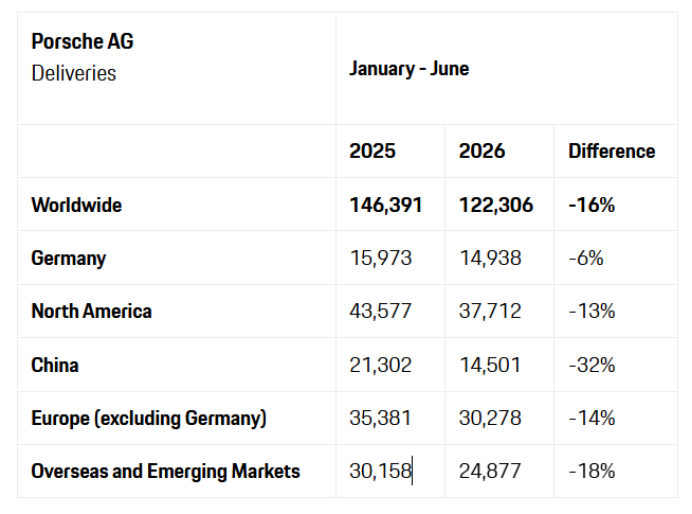
Against the backdrop of China's auto market's accelerated transition to new energy, the penetration rate of NEVs continues to climb, eroding the market share of traditional fuel vehicles. Porsche, a brand once synonymous with fuel-powered performance cars, is now under considerable pressure.
To stimulate sales, Porsche previously increased inventory at the dealer level. However, as market demands evolved, these cars became harder to sell, forcing dealers to resort to significant discounts to clear inventory. Take the Porsche Macan, for instance; some dealers in first-tier cities have quoted prices below 400,000 yuan, representing a hefty 40% discount.
Despite these substantial price reductions, sales have not shown a marked improvement. In March of this year, nationwide sales of the Macan fuel version were a mere 243 units. The Taycan's performance was equally lackluster, with only 372 units delivered in the first quarter. Faced with mounting sales pressure and inventory, some dealers even opted to halt deliveries as a sign of dissatisfaction with Porsche. 
The pressure on dealers has prompted Porsche to re-evaluate its sales network in China. Over the past few years, Porsche's store count in China peaked at around 150 but has since dwindled to 114, with plans to further reduce it to approximately 80 by the end of 2026. This contraction pace has clearly quickened compared to the previous plan to adjust to around 100 by 2027.
By the end of June this year, some Porsche centers in Jining, Shandong; Huai'an, Jiangsu; and Nanning, Guangxi, have ceased operations or adjusted their sales authorizations. For Porsche, reducing the number of stores is just one facet of its response to the evolving Chinese market. With the rapid advancement of NEVs, competition in the luxury car market is shifting from traditional brand influence to electrification and intelligence capabilities. In light of this trend, Porsche is accelerating its new energy product lineup and bolstering localized R&D efforts, hoping to discover new strategies tailored to the Chinese market. 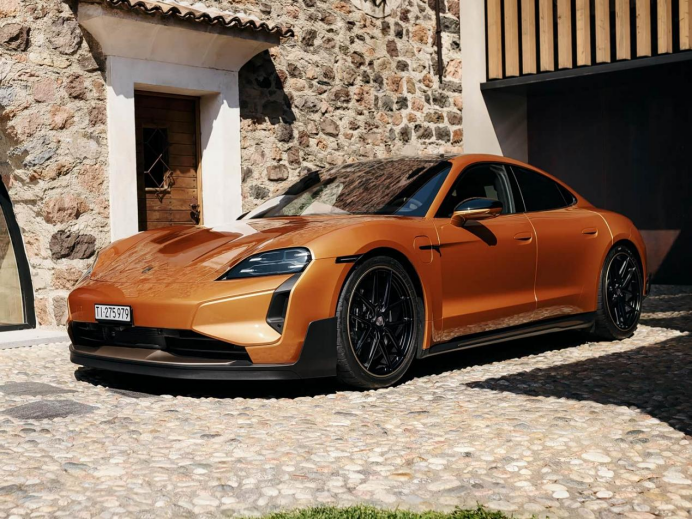
Facing the dual trends of new energy and intelligence, Porsche is not halting its transition. Currently, Porsche has introduced the all-electric Taycan and all-electric Macan, with the next major offering, the all-new all-electric Cayenne, slated to begin deliveries from late 2026 to early 2027.
Furthermore, Porsche plans to unveil more NEV models and develop localized products specifically for the Chinese market. In terms of intelligence and localization, Porsche is also stepping up its efforts. Within 2026, Porsche's first China-exclusive infotainment system will debut, featuring in models such as the 911, Panamera, Cayenne, and Taycan. Led by Porsche China's R&D team, the system will introduce an AI voice assistant based on large language models and further integrate with China's digital ecosystem. Simultaneously, Porsche's Shanghai R&D center will develop more localized functions and experiences to cater to Chinese consumers' needs.
However, judging by the current market performance, Porsche's new energy transition is encountering hurdles. The market reception of the previously launched Porsche Taycan and all-electric Macan has fallen short of expectations. The Taycan, in particular, delivered only 372 units in the first quarter of this year, performing exceptionally poorly. The all-electric Macan, while faring slightly better, also faces market pressure. Currently, Porsche has suspended personalized option orders for these two models in the Chinese mainland and plans to halt production of the relevant models in September this year. 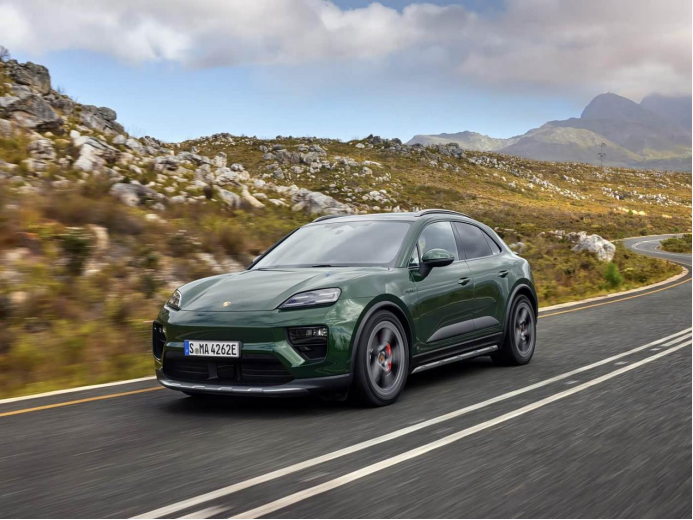
Overall, amid the significant trend of new energy transition, Porsche must introduce new products that better align with the Chinese market's needs. However, the shift to electrification is not an overnight process. Whether new models will be embraced by consumers and whether brand value can sustain high premiums remains to be seen. In the future Chinese luxury car market, competition will intensify, and consumers will place greater emphasis on the inherent value of the products. For Porsche, the key to regaining its growth rhythm may lie in striking a balance between maintaining its brand essence and launching products that truly resonate with consumers. (Images sourced from the internet, removed if infringing)
-
![]()
Five-Year Market Share Dive: 65% Drop Sees Japanese Automakers Falter in China
-
![]()
Innovative ‘Large Family Box-Shaped’ Model, Great Wall H10, Officially Launches with Limited-Time Trade-In Price Starting at 201,800 Yuan
-
![]()
Google No Longer Lets Top Scientists 'Call the Shots'
-
![]()
Ctrip Loosens Its Grip on Hotels, While Fliggy Remains Trapped Within Taobao
-
![]()
Four Visits to Lu Fang: The Vision of VOYAH in My Heart | Insight
-
![]()
Hot Stocks to Track | SpaceX: Releases First Quarterly Report After Listing, Revenues Soar by 92%, Capital Expenditure Reaches $18.4 Billion, Trillion-Dollar Target Advanced to 2030
-
![]()
Hot Stocks to Monitor | SpaceX: Releases Inaugural Quarterly Report Post-IPO, Revenue Soars 92%, Capital Expenditure Reaches $18.4 Billion, Trillion-Dollar Revenue Goal Moved Up to 2030
-
![]()
Porsche China Shifts Focus Amid Sales Struggles