Why is Robot Phone important to Honor?
 08/14 2026
 440
440
Source | Bohu Finance (bohuFN)
Author | All too well
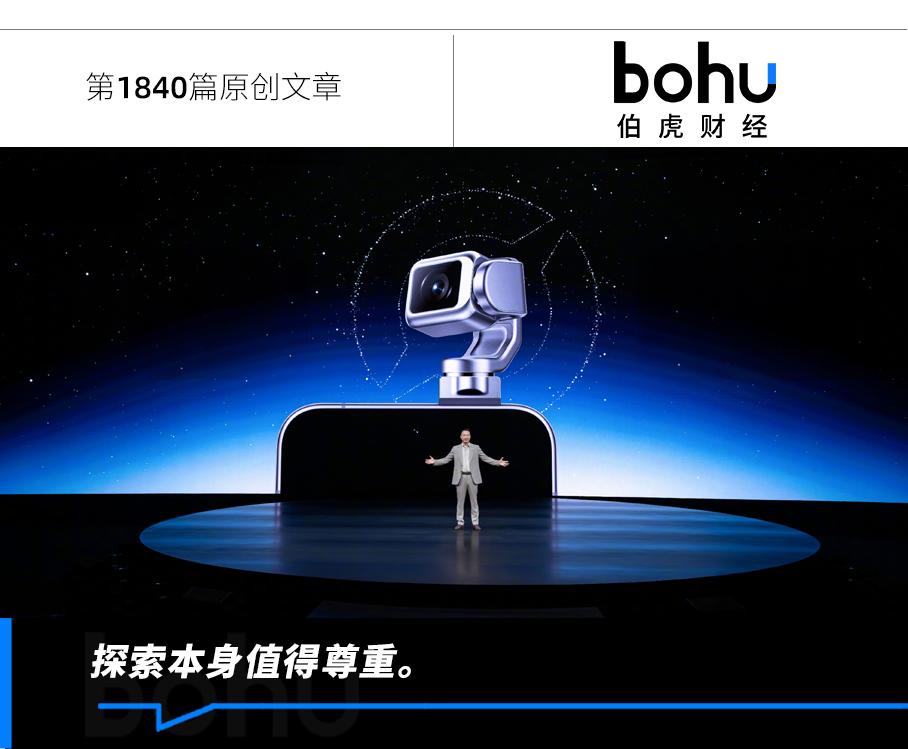
The Honor Robot Phone launch event has finally arrived.
This is the world's first mass-produced phone with a built-in mechanical gimbal and a rare innovation in the phone industry in recent years.
Although the price is not low, its starting price of 9,999 yuan is actually lower than market expectations.
The buzz seems decent, with Honor's latest data revealing that pre-orders surpassed 400,000 units on the evening of the launch event.
But what draws my attention more is why Honor released the Robot Phone and what this world's first robotic phone means for Honor.
01 Phone manufacturers can't rely solely on phones
Over the past decade, Chinese phone manufacturers have rapidly risen by relying on a mature strategy: better screens, stronger imaging capabilities, faster chips, and lower prices.
Hardware upgrades drive replacement demand, while scale growth dilutes costs.
But now, this methodology is losing its effectiveness.
On one hand, consumer replacement cycles keep lengthening. By 2026, the average replacement cycle for Chinese consumers had reached 42 months, nearly double that of five years prior; the global average cycle also extended to 47 months. In other words, smartphones are transitioning from fast-moving consumer electronics to durable consumer goods.
On the other hand, phone manufacturers face increasing cost pressures. Core components like memory chips, advanced manufacturing processes, and imaging components continue to rise in price, driving up phone manufacturing costs. However, consumer acceptance of price hikes has not increased proportionally.
Products are becoming more expensive, yet users' willingness to replace their phones is decreasing. Most phone manufacturers likely feel this chill keenly.
Domestically, Huawei and Apple continue to grow by leveraging brand advantages and high-end market positioning, while manufacturers including Honor, Xiaomi, OPPO, and vivo have all experienced varying degrees of decline. Among them, Honor saw a 9.5% year-on-year decline in Q2 2026, with a market share of 11.3%, ranking sixth.
Therefore, phone manufacturers are all seeking new growth avenues.
Xiaomi has entered the automotive industry; Huawei has extended from phones to the HarmonyOS ecosystem and smart cars; OPPO has focused on tablets, earphones, and smart wearables; vivo has ventured into robotics, small-screen high-end phones, and other businesses.
Honor's answer is the AI terminal ecosystem.
In 2025, Li Jian made his first public appearance after taking over as Honor's CEO, unveiling the "Alpha Strategy" and announcing Honor's transition from a smartphone manufacturer to an AI terminal ecosystem company. Meanwhile, it plans to invest over $10 billion in AI-related layout (layout) over the next five years.
Robot Phone is a highly representative product in this transformation.
02 After Huawei's return, Honor defines itself with AI
In fact, Honor didn't start its AI layout (layout) in 2025.
From 2021 to 2022, while most phone manufacturers were still competing around chips, imaging, screens, and foldable screens, Honor chose a different path: reconstructing the phone operating system with AI.
This decision stemmed from Honor's most practical choice at the time. Having just become independent from Huawei, Honor lost its original brand advantages, supply chain synergies, and channel resources, making it difficult to engage in high-cost hardware competition like established manufacturers. AI offered a relatively lower-cost path that could directly transform user experience. Through MagicOS, Honor began exploring ways for phones to understand user needs and proactively provide services.
Later, scenarios like the widely discussed "AI milk tea ordering" were actually concentrated expressions of Honor's years of AI capability accumulation.
But the issue is that a first-mover advantage doesn't equate to a permanent advantage. AI has evolved from a differentiating capability into a standard feature across the industry.
Today, almost all phone manufacturers are talking about AI phones. At launch events, manufacturers showcase capabilities like large model performance, edge-cloud collaboration, intelligent agent scheduling, and multimodal understanding. However, for most users, the currently high-frequency uses remain AI photo retouching, translation, searching, and so on. In other words, AI hasn't yet delivered revolutionary experiences that drive consumer replacements.
More importantly, AI capabilities are being rapidly replicated. An AI feature first launched by one brand, such as AI object removal or image expansion, soon appears on other phones through system updates. As more terminal manufacturers integrate large models like DeepSeek, Tongyi Qianwen, and Doubao, the gap in underlying model capabilities is further narrowing.
AI innovation at the software level alone can no longer form a genuine competitive advantage. For Honor, the pressure from this change is even more pronounced.
In 2020, Honor became independent from Huawei. After losing Huawei's brand, supply chain, and channel support, Honor's market share once plummeted to 3%, becoming a true "Others" player. Subsequently, Honor regained its position in the first tier by leveraging the Magic series, a high-end strategy, and the "Huawei alternative" label. In Q1 2024, Honor topped the Chinese smartphone market with a 17.1% market share.
But this spotlight didn't last long. After a 12.6% year-on-year decline in full-year shipments in 2025, Honor's downturn persisted, with its market share falling to 11.3% again in Q2 2026.
If, when it first became independent, Honor still retained the "Huawei alternative" label, then after Huawei's return, Honor must answer a new question: Who is Honor? This is Honor's greatest anxiety and the reason it keeps emphasizing its AI strategy.
03 Why is Robot Phone important?
From a product perspective, Robot Phone is indeed innovative.
The mechanical gimbal is a major highlight of this product. By redesigning the internal architecture, Honor achieved miniaturization and lightweighting of the mechanical structure within the limited phone body space, reducing the overall structure volume by 65% and using a dedicated motor weighing just 2.6 grams. Meanwhile, Robot Phone is equipped with the Agentic OS kernel, supporting a system-level intelligent agent architecture.
Some scenarios showcased at the launch event were quite interesting. Robot Phone can move to music, recognize human emotions, describe the surrounding environment, and proactively respond when it judges that the user needs help.
Additionally, Honor collaborated with professional filmmaking equipment manufacturer ARRI to launch the world's first phone supporting ARRI Log3, featuring cinematic-grade color configuration for professional users to perform post-production color grading.
Currently, the market generally recognize Honor's spirit of innovation, but questions remain about the phone's actual sales volume.
On one hand, the starting price of nearly 10,000 yuan raises doubts about whether ordinary consumers will accept paying such a high premium for a mechanical gimbal. On the other hand, in the professional imaging field, DJI and Insta360 already have mature product lines, with their mature products averaging around 4,000 yuan.
Therefore, at least at this stage, Robot Phone seems more like a product showcasing technical capabilities, which is also its significance.
Over the past few years, Honor has faced a persistent issue: competitive products but a lack of brand distinctiveness. This gap is even more pronounced in the high-end market. For example, market rumors indicate that since its launch in October 2025, the Honor Magic 8 series has sold nearly 1.5 million units; meanwhile, media reports suggest that the Huawei Mate 80 series sold nearly 7.8 million units within just eight months of its release.
This gap isn't solely due to product differences. Huawei has Kirin and HarmonyOS, Xiaomi has cost-effectiveness and chip self-research, while vivo and OPPO have imaging capabilities. But Honor has long lacked a brand label that consumers can quickly remember.
Honor is taking a bold step by not only venturing into AI but also embodied intelligent robots. From dominating the robot half-marathon to the Robot Phone launch, Honor's AI narrative keeps expanding. They aim to become China's first genuine "AI terminal ecosystem" company, exploring a collaborative model between "phone AI agents and robotic terminals."
However, while labeling is easy, building competitive barriers is difficult. AI hardware can generate attention and enhance brand image, but there's still a long way to go before forming stable revenue and profits.
More importantly, competitors in the AI era may no longer be just other phone manufacturers. From AI glasses to robots, from smart wearables to various new terminals, more companies are vying for the next generation of entry points.
For Honor, how many Robot Phones it sells isn't crucial; what matters is whether AI can truly become Honor's competitive barrier.
Reference Sources:
1. Yiou: From "Huawei Alternative" to Falling Out of the Top Five: Where Did Honor Go Wrong?
2. Baobian: Can Honor's Bet on Robot Phone Turn Its Fortunes Around?
3. Jiemian: 600 Days After Honor's Leadership Change, Li Jian Still Falls Short of the Passing Grade
The copyright of the article's cover image and accompanying pictures belongs to their respective copyright owners. If the copyright holder believes that their work is unsuitable for public browsing or should not be used free of charge, please contact us promptly, and our platform will make corrections immediately.
-
![]()
JD Delivers an 'Above Expectations' Earnings Report, but the Market Doesn't Buy It
-
![]()
The 'Boxy' SUV Market Welcomes a 'Behemoth': Can the Great Wall H10 Stand Its Ground?
-
![]()
Half-Year Report | In the first half of 2026, sales volume of China's smart glasses market soared by 85.5%, with sales amount doubling; full-year sales volume forecast to reach 2.5 million units
-
![]()
DeepSeek-V4-Pro Official Version Tested: A Mountain's Height Matters Less, Presence of 'Liang' Matters More
-
![]()
Why is Tesla's Integration of Doubao Mocked by the Public?
-
![]()
CoreWeave, Nebius: Compute Power Price Hikes, Backing from 'Godfathers' – How Long Can NVIDIA's 'Adopted Sons' Thrive?
-
![]()
Wuhan Optics Valley Initiates 7 National Standards for Humanoid Robots: How Did a Startup Secure Hubei’s Exclusive Standard-Setting Role?
-
![]()
What If the AI Bubble Bursts Completely...