What If the AI Bubble Bursts Completely...
 08/14 2026
 545
545
This is a near-future sci-fi novel.
The catalyst was the collective market correction in global AI computing power and large model sectors in July, which rapidly propelled the topic of the “AI bubble burst” into mainstream discourse. From assessments by some investment banks to topping trending searches, the issue showed no signs of cooling for about a month. Amidst the green stock markets and the wailing of investors, we found that what was more terrifying than the bursting of the bubble was the struggle and horror preceding its imminent collapse.
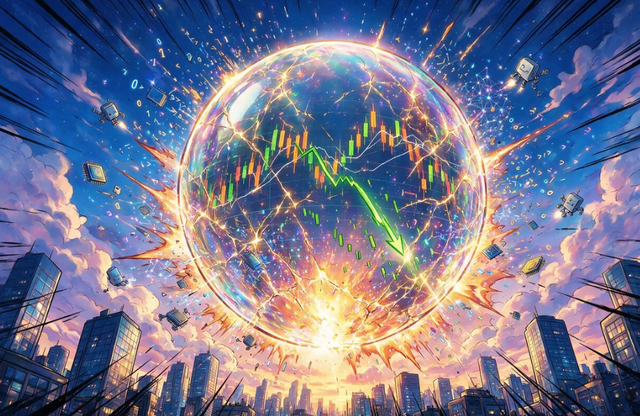
Let's consider a scenario: suppose a massive “Black Swan” event causes the global AI bubble to burst completely and instantaneously. What would happen next?
First, we need to reach a consensus. The envisioned AI bubble burst is fundamentally very similar to the 2000 dot-com bubble burst. That is, while the technological direction is viable in the long term, short-term capital exuberance excessively drains industry credibility, triggering a chain-reaction financial tsunami when AI commercial profitability expectations fail to materialize.
Taking this as a premise, the story that follows would likely unfold like this:

Three months after the “Black Swan” event.
At 10 p.m., Dou Chao is still on the phone. Normally, he dislikes being called by his Chinese name at the office, nor does he like being addressed as CEO Dou or Professor Dou. Instead, he prefers to be uniformly called Elias. But tonight, in call after call, his opening line is always, “Hey, it's me, Xiao Chao.”
Over the past two years, Dou Chao—or Elias—successfully transformed from a former AI lab head at a major tech company and an MIT prodigy into the owner of a unicorn company valued at 12 billion RMB. Like twenty of his peers, he was dubbed by the media as the “pioneer of China's large model entrepreneurship”; his company, like fifty others, was hailed as the “Chinese version of OpenAI.”
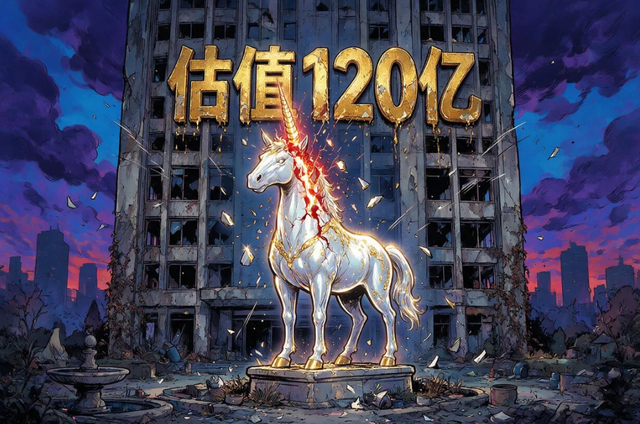
But just now, the 300 million USD in financing that this unicorn, which had risen to prominence through self-developed foundational large models, had just secured suddenly evaporated. The VC's tone was unprecedentedly icy: “The investment committee unanimously rejected it, believing your commercialization data doesn't support the valuation.”
Facing the unicorn company is the near-simultaneous termination by domestic leading cloud providers of their large model API procurement frameworks for the year. Enterprise clients, who were semi-gifted the services, delayed payments indefinitely, while other commercialization channels yielded virtually no cash flow. Without new financing, the cash on hand would only last 10 days.
That evening, Dou Chao made 27 calls. Twenty-three went unanswered, and the remaining four replied they'd need to wait and see. Six months earlier, these same investors would have bribed the company's receptionist just to meet Elias.
On Thursday morning, Dou Chao, who had been up all night smoking e-cigarettes, stood in the center of the company's office. He announced the cessation of operations and the full dissolution of the team. The office erupted—some demanded N+6 compensation, others yelled about seizing computers as collateral.
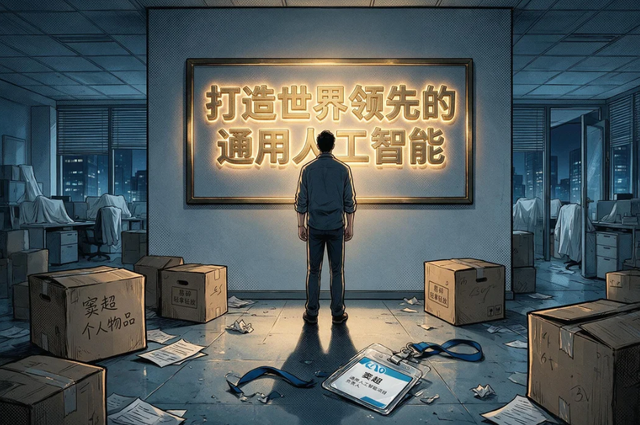
Amidst the chaos, Dou Chao recalled many past events. Had the path of self-developed large models been a mistake? Or was it too late for an IPO to bail them out? He wondered if relying solely on financing to sustain the company was ultimately untenable.
Meanwhile, over 50% of foundational model companies saw their valuations wiped out, the vast majority of AI and embodied intelligence firms faced a financing cliff, and small-to-medium funds massively exited the AI sector.
Dou Chao still stood in the company he had founded, with the words “Build the World's Leading Artificial General Intelligence” written on the wall behind him.

Six months after the “Black Swan” event.
Deputy Director Wang was called to the city for another meeting today. As the head of investment promotion at the Big Data Bureau of a computing power hub city and the primary advocate for the intelligent computing center project, he remembered his glory at the ribbon-cutting ceremony a year ago. This was the region's first intelligent computing center planned for 100,000 PetaFLOPS of computing power, with leaders declaring it would “build China's AI highland” and attract over a hundred AI companies.
Now, 14 of the 17 settle in (zhù rù, meaning "settled in") companies had left, and the remaining three planned to cut away (cái diào, meaning "lay off") their computing resource-focused branches and relocate staff to headquarters in first-tier cities. Today's meeting aimed to address the intelligent computing center's investment attraction challenges. The new strategy focused on targeting provincial universities, research institutes, and locally supported enterprises.

At the meeting, calculations revealed the center's Annual utilization rate (cháng nián lì yòng lǜ, meaning "annual utilization rate") hovered around 7%. Annual electricity costs reached 120 million RMB, and with bank loan interest, this behemoth had become a heavy burden on local finances.
After returning to the bureau, Deputy Director Wang led his team in meetings for half a month. The transformation plan they devised was highly specific: convert half the server rooms into cold data storage centers for lease (zū lìn, meaning "leasing") to cloud computing firms. Lease some racks to provincial agricultural research institutes and remote sensing companies, which had stable computing demands and Financial allocation (cái zhèng bō fù, meaning "government-funded payments"). Package a portion of computing power for university research projects. The center's 1,200-square-meter “AI Technology and Achievement Transformation Exhibition Hall” would be repurposed into a live-streaming e-commerce base. Recruit a dozen streamers to sell local specialties and promote cultural tourism.
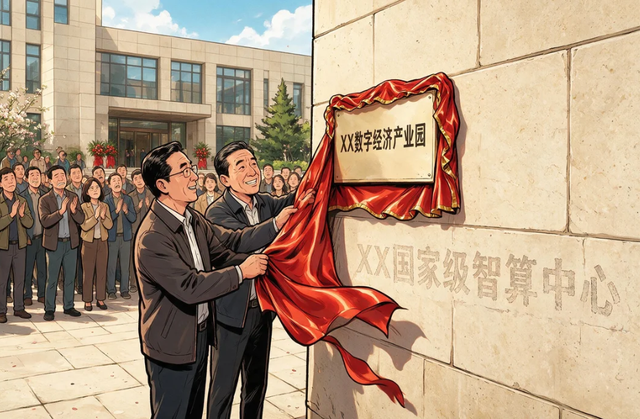
Later, the sign at the entrance changed from “XX National-Level Intelligent Computing Center” to “XX Digital Economy Industrial Park.” Deputy Director Wang held another ribbon-cutting ceremony. Afterward, a leader privately instructed him: “It doesn't matter what kind of computing power it is—if it generates revenue, it's good computing power.”
At times, Deputy Director Wang wondered if this was better than the AI infrastructure projects that hadn't even been completed or were halted during planning.
In his office drawer lay a thick stack of planning documents with “Build the AI Capital” written on the cover.

Nine months after the “Black Swan” event.
Like many peers, Hu Lai was struggling. He had quit his IT job two years ago to pursue his childhood dreams of Astro Boy, Gundam, and Transformers, becoming a player in the embodied intelligence wave.
But now, the situation was dire. Investors abruptly halted further cooperation, primarily due to doubts about the commercialization timeline. Three companies that had previously agreed to purchase intention (yì xiàng, meaning "intent") all reneged—they had bought robots to decorate showrooms and shoot corporate promotional videos. But now, with the AI market plummeting, most tech companies were struggling. Without substance, there was no need for facade. As market budgets slashed, the first procurement plans to go were “purchasing promotional materials—humanoid robots.”
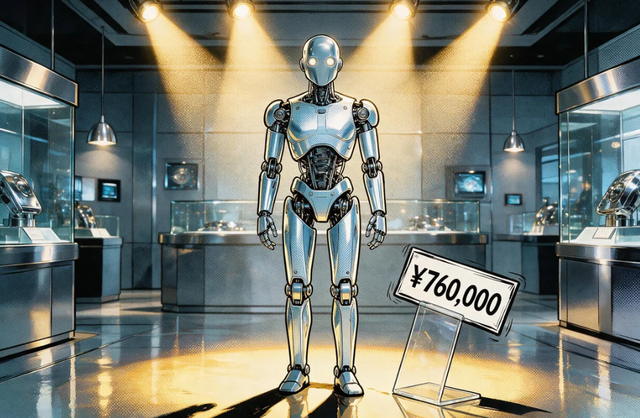
A flagship humanoid robot cost 760,000 RMB to produce. Even sold at 800,000 RMB each, the overall cost still resulted in losses, not to mention lost orders. While clients vanished, creditors arrived. To inflate valuations and undercut competitors, Hu Lai and his partners had decided to stockpile core components in advance. The warehouse held 200 sets of high-precision joint modules, servo motors, and carbon fiber shells, owing over 30 million RMB to a dozen suppliers. Debt collectors blocked the building entrance, and administrative staff repeatedly called the police in fear.
Robots couldn't leave, but people could. As the company laid off staff, Hu Lai's handpicked hires returned to IT, cloud computing, enterprise consulting, finance, healthcare, appliances, and even high-end toys.

The company's costly, sci-fi-esque exhibition hall had once hosted government inspections, investor due diligence, media interviews, public open days, and school research groups. Now, emptied and cleaned, it appeared as if no one had ever been there—not even the robots.
When the team shrank from 120 to just five, his close friend and algorithm director voluntarily resigned. Tearfully, he said, “Lai, building robots has been my dream since childhood, but we won't survive to see them profitable.”

Twelve months after the “Black Swan” event.
At 9 a.m. on Monday, Wu Shi took a deep breath and entered a job interview. Six months earlier, he had managed a modest AI project at a major tech company, with his CTO presentation slide reading “Next-Generation 10-Trillion-Parameter Multimodal Large Model.” Moments after finishing, he received a company-wide email from HR: the entire AI division was being dissolved, optimizing 337 roles with N+3 severance and immediate departure.
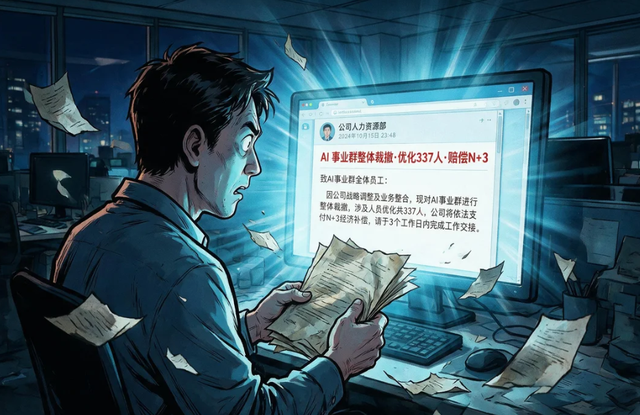
That day, Wu Shi's stock options became worthless. The company's stock price had plunged 57% before the vesting period even began, rendering them meaningless.
What followed was a six-month gap period, burdened with a mortgage, car loan, and childcare debt. His glamorous past offered little advantage in job hunting, as he discovered most major firms were cutting algorithm roles while hiring in manufacturing, healthcare, and energy. Job listings emphasized “engineer” over “large model” or “intelligent agent.”
This Monday marked his sixth interview. The interviewer posed an unexpected question: “Have you done defect detection on metal materials?” Amidst mental clouds of tokens, model architectures, and agents, Wu Shi dredged up a fading memory. “I did that in grad school,” he replied.
Thus, he took a 40% pay cut and relocated from Shanghai to Suzhou, becoming the AI department head at an IT service provider for the automotive manufacturing industry. Opening the window beside his desk revealed a massive factory.
Subsequently, Wu Shi's projects succeeded repeatedly. After sharing substantial project bonuses, his boss once mentioned during overtime that he wanted Wu Shi to become a partner, overseeing full-service technical and market support for key clients. Life, it seemed, was improving.
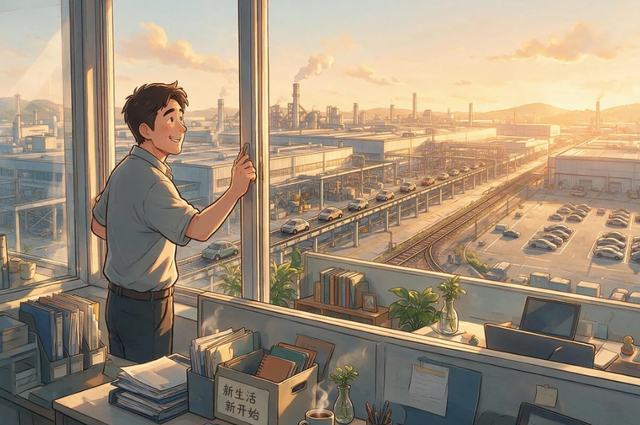
Many laid-off tech professionals transitioned identities at this juncture. Previously, they hadn't truly been to C (consumer)—more like to VC (venture capital). Now, some returned to B2B (business-to-business), while others joined B2B sectors. Factories, power, energy, finance, and healthcare became new havens in the AI employment tide. The importance of “industry expertise + AI understanding” resurfaced prominently.
One morning, Wu Shi opened his laptop to see a screensaver quote: “We want to solve intelligence, and then use that to solve everything else.” Elegantly paired with its English translation.
For no clear reason, he suddenly felt uncomfortable about colleagues seeing it. He replaced it with three bold, gilded characters:
“Cost Awareness, Industry Insight, Customer First.”

Eighteen months after the “Black Swan” event.
Gao Qian, founder of Xiangqian Tech. He wasn't quite sure how to lead the company forward—when naming it, he had simply used a homophone of his own name.
Xiangqian Tech's main business was selling AI operational tools for cross-border e-commerce. The idea originated when Gao Qian, a former cross-border e-commerce operator, failed at running his own e-commerce venture but noticed that poor tool usability was a widespread issue. He and his roommate developed an AI tool in a few days using free models, embarking on their tech entrepreneurship journey.
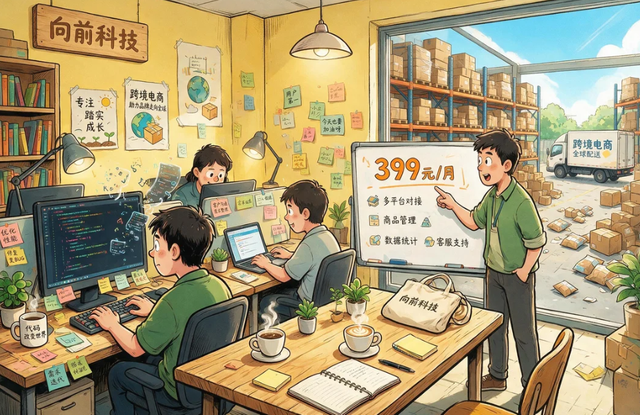
His company was tiny—at its largest, it could field a soccer team (without substitutes); at its smallest, barely a basketball team. It never secured any investment.
Initially, they had considered seeking financing. But VCs deemed his market too niche, with a monthly subscription price of just 399 RMB and little room for imagination. Some advised rebranding the project as a “cross-border e-commerce intelligent agent” to at least double its valuation. But Gao Qian felt his creation didn't qualify as an intelligent agent and declined.
His products did not rely on self-developed large models, nor did he extensively use paid APIs. At the peak of the AI bubble, he only had over 3,000 clients. While he could make money, there was no opportunity to move to a bigger office, hire algorithm experts, or grow the company significantly. He was truly a marginal figure in the tech arena.
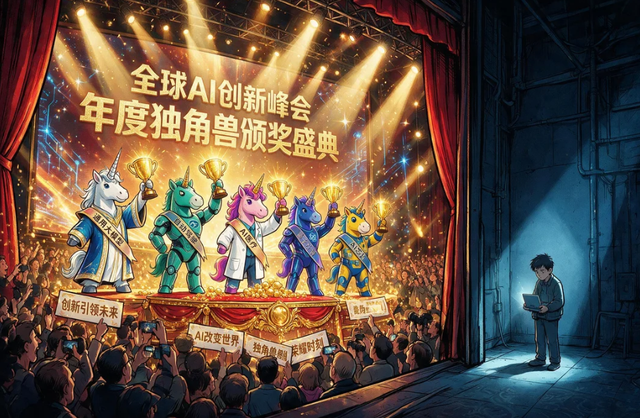
After the bubble burst, everything changed. Large model companies closed down in droves, corporate AI budgets were slashed across the board, AI investment and financing retreated entirely, and major players rapidly tightened their strategies. Stable, low-cost tools costing a few hundred dollars a month suddenly became essential. Xiangqian Tech's paying user base surged to tens of thousands, with a renewal rate as high as 82%, and the company consistently achieved positive cash flow. It barely needed marketing expenses, as buyers already knew exactly who to pay.
At a major AI summit where he previously couldn't even secure a ticket, he now stood as a representative of AI developers who had navigated through the cycles. After his sharing session, many VCs expressed interest in investing in his Series A. But Gao Qian felt that even if cash flow stopped immediately, the money in the accounts could sustain the company for three to five years. So, what was the point of raising funds?
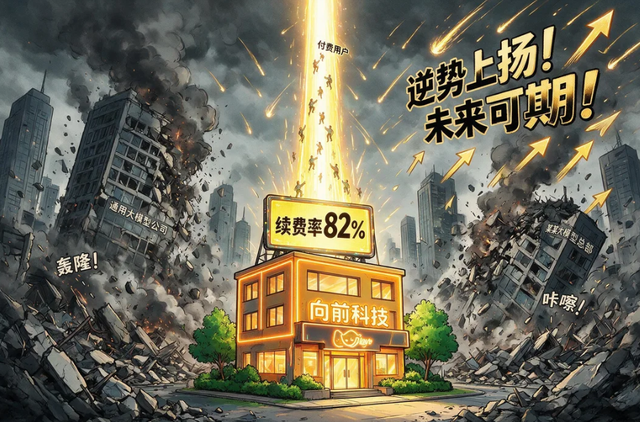
During the media interview after the summit, a reporter mentioned that Xiangqian Tech's chosen vertical AI application direction, while seemingly narrow and with limited imagination, directly addressed commercial needs, had a short payment chain, and maintained healthy cash flow, allowing it to grow against the trend. "Mr. Gao, how did you successfully predict the future of AI?"
Gao Qian said, "I'm just cautious."

X months before the "black swan" event.
After much pleading from a man, his wife finally agreed to accompany him to watch "Spider-Man 4."
His wife asked, "I've already forgotten the previous plots. What were the titles of the first three movies?" He replied, "They were Homecoming, Far from Home, and No Way Home."
"Then is the fourth one called Where is my home?"

"No, the fourth one is called Brand New Day. It translates to 'A Brand New Day.'"
-
![]()
JD Delivers an 'Above Expectations' Earnings Report, but the Market Doesn't Buy It
-
![]()
The 'Boxy' SUV Market Welcomes a 'Behemoth': Can the Great Wall H10 Stand Its Ground?
-
![]()
Half-Year Report | In the first half of 2026, sales volume of China's smart glasses market soared by 85.5%, with sales amount doubling; full-year sales volume forecast to reach 2.5 million units
-
![]()
DeepSeek-V4-Pro Official Version Tested: A Mountain's Height Matters Less, Presence of 'Liang' Matters More
-
![]()
Why is Tesla's Integration of Doubao Mocked by the Public?
-
![]()
CoreWeave, Nebius: Compute Power Price Hikes, Backing from 'Godfathers' – How Long Can NVIDIA's 'Adopted Sons' Thrive?
-
![]()
Wuhan Optics Valley Initiates 7 National Standards for Humanoid Robots: How Did a Startup Secure Hubei’s Exclusive Standard-Setting Role?
-
![]()
What If the AI Bubble Bursts Completely...