Starting at 92,800 Yuan! Leapmotor Lafa5 Sparks a Price War, Initiating the Auto Industry's Survival Gamble
 12/01 2025
 696
696

Produced by | Dali Finance
Author | Dali
Introduction: The Industry Upheaval Behind Pricing Strategies.
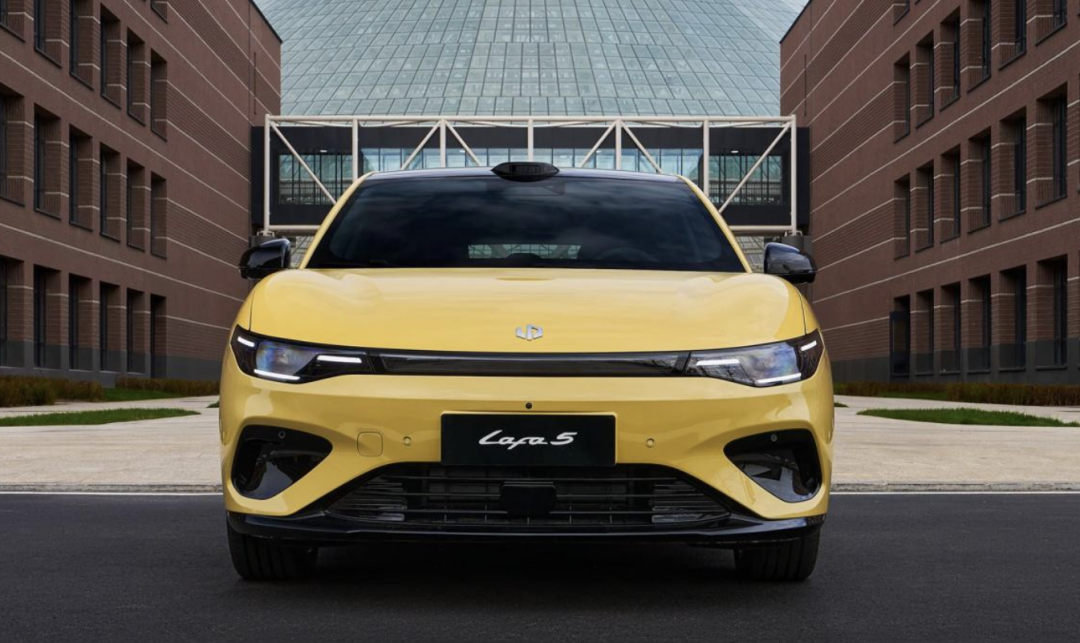
The Leapmotor Lafa5 makes a splash with a starting price of 92,800 yuan, effectively throwing a grenade into the already simmering new energy vehicle market.
As the industry teeters on the brink between 'high-price internal strife' and 'low-price bloodbath,' Leapmotor's move rips open the harsh reality beneath the new energy sector's glittering exterior: the so-called 'overtaking on the curve' is never about technological idealism but a life-or-death commercial wager.
01
Industry Disruption:
The Leapmotor Lafa5's Game-Changing Entry
With a starting price of 92,800 yuan, the Lafa5 directly targets the core price range of traditional fuel vehicles. Compared to rivals like the BYD Dolphin and Ora Good Cat, which are priced above 100,000 yuan, Leapmotor reshapes market expectations with a 'dimensional reduction strike' strategy.
This is not merely a concession on cost but a clear message to consumers through pricing: new energy vehicles don't have to be luxury items but can be accessible daily transportation options.
Despite its low price, the Lafa5 does not significantly compromise on core features such as range, smart cockpit, and assisted driving. Instead, it achieves 'over-specified configurations' through supply chain optimization and modular platforms. This 'high-spec, low-price' combination directly challenges traditional automakers' reliance on single-configuration differentiation. As technological barriers diminish, user experience becomes the new competitive frontier.
Third- and fourth-tier cities and county-level markets are highly price-sensitive but have long been overlooked by high-end new energy products. Leapmotor's low-price strategy precisely targets this untapped market, avoiding the saturated competition in first- and second-tier cities while preemptively capturing incremental user mindshare. This 'rural surround urban' approach mirrors the comeback strategy of domestic smartphone brands.
02
Overtaking on the Curve:
Redefining the New Energy Sector's Fundamentals
Traditional automakers once considered engine and transmission technologies as their core strengths, while the new energy era's three electric systems (battery, motor, electric control) are rapidly becoming standardized. Open platforms from leading suppliers like CATL and BYD allow new brands to build cars 'like assembling Lego.' Leapmotor and others no longer require a century of technological accumulation but can achieve 'lightweight overtaking' through supply chain integration capabilities.
BYD controls costs with self-developed batteries and chips, while Tesla reduces production costs through integrated die-casting technology. Leapmotor, on the other hand, opts to collaborate with giants like Stellantis to share R&D investments through global procurement. As the industry shifts from 'technology competition' to 'cost competition,' the ability to extremely compress costs while maintaining quality becomes critical for survival.
Traditional automakers are accustomed to defining products with an engineer's mindset, while new forces excel at addressing user pain points with internet-style tactics. The Leapmotor Lafa5 focuses on urban commuting scenarios, downplaying redundant performance while emphasizing practical configurations, aligning with the consumption philosophy of 'adequacy is rationality.' This scenario-based product definition logic is rewriting traditional automotive R&D paradigms.
03
Turbulent Undercurrents:
The Risky Gamble Behind the Low-Price Strategy
Low prices imply razor-thin profit margins or even phased losses. NIO and XPeng Motors have struggled with the 'selling one at a loss' dilemma, and whether Leapmotor can offset these losses through secondary profitability from software services and accessory ecosystems after sales volume ramps up remains uncertain. Capital markets' patience with continuous bleeding models is wearing thin, with profitability timelines hanging like a sword of Damocles.
History is filled with quality crises triggered by excessive cost control. Tesla faced early criticism for rough craftsmanship, while WM Motor fell from grace due to battery issues. Whether Leapmotor can maintain quality control bottom lines in its supply chain management will determine whether it is hailed as a 'conscience enterprise' or labeled 'industrial trash.'
The Volkswagen ID.3 has dropped its price to the 120,000 yuan range, while Toyota accelerates its pure electric platform rollout. Traditional automakers are launching counteroffensives with more mature manufacturing systems and channel networks. When 'legacy players' stoop to price wars, the advantages painstakingly built by new forces could crumble instantly.
04
Pattern Evolution:
The Industry Reshuffle Landscape in the Next Five Years
Among the current over 100 new energy brands, most will disappear or be acquired within three years. Market resources will concentrate toward the top, with annual sales of 100,000 units becoming the entry ticket and 500,000 units the safety line. If Leapmotor fails to quickly ascend to the first tier, it risks marginalization amid technological iterations and capital depletion.
Between 2025 and 2027, the commercialization of solid-state batteries may trigger a range revolution, while L4 autonomous driving will redefine vehicle attributes. By then, price wars alone will not suffice to hold ground; only enterprises establishing barriers in core technology areas can survive cycles.
Leapmotor must prove the existence of technological strengths beyond its low-price strategy.
The domestic market is nearing saturation, with Southeast Asia, Europe, and Latin America emerging as new battlegrounds. BYD and NIO have already led the charge overseas. If Leapmotor fails to leverage Stellantis' channels for rapid globalization, it risks being confined to internal competition. However, every step in overseas markets—regulatory adaptation, cultural integration, and brand building—is a life-and-death struggle.
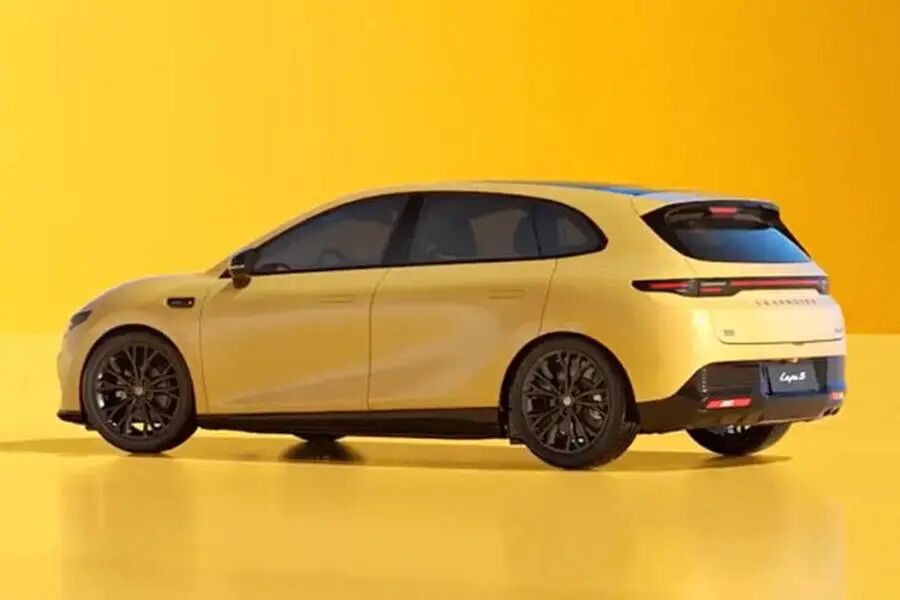
Dali Finance believes: The low-price strategy of the Leapmotor Lafa5 is essentially a signal of the new energy industry's shift from 'technology-driven' to 'efficiency-driven.' As electrification technologies become ubiquitous, manufacturing efficiency, supply chain efficiency, and user operation efficiency will become the core of competition. Only enterprises capable of simultaneously mastering cost control and technological iteration can discuss 'overtaking.'
Low prices accelerate market education but may also overdraw brand premium. Leapmotor relies on price to open the situation in the short term but must build technological distinctiveness in the long run. Referencing Xiaomi's transformation in the smartphone industry—from 'cost-effectiveness' to 'technological prowess'—requires dual courage in R&D investment and brand reshaping.
Merely knowing how to build cars or understand users is no longer sufficient. Survivors must possess manufacturing prowess, technological DNA, and commercial wisdom. Tesla's vertical integration, BYD's ecological layout, and Li Auto's precise positioning all validate different paths. To truly overtake, Leapmotor must find its 'irreplaceability' beyond cost advantages.
Conclusion
The 92,800 yuan price tag of the Leapmotor Lafa5 sounds the horn for the era of new energy popularization. This seemingly crazy pricing game is, in fact, an inevitable phase in China's automotive industry's lane-changing race.
When the bubble bursts and the glamour fades, the final survivors on the track will not be gamblers but long-termists who can both see the direction clearly and step to the rhythm accurately.
Matrix Accounts
-
![]()
ByteDance, DJI, and Xiaohongshu Secure Top Three Positions Among China’s Fastest-Growing Unicorns
-
Tesla's in-car voice system in China is finally learning to 'understand human language'
-
![]()
Foreigners Are Amazed: Chinese Electric Vehicle Drive Systems Unveil Innovative 'Poses'
-
![]()
700,000 Brothers and the Future of Robots: Behind JD.com's 'Nirvana Plan'
-
![]()
Zhipu's Trillion-Dollar Valuation: A New Chapter for China's AI
-
![]()
Is Laifen, a 'Dyson Alternative' on the Rise, Now Ensnared by the 'Alternative Curse'?
-
![]()
Beyond Patents: Insta360 and DJI Compete in Retail
-
![]()
Piercing Through Industry Chaos: The Curtain Rises on Compliance for Autonomous Driving