Another Industry Titan is Set to Step into the Car-Making Arena: What Are Sharp's Ambitions in the Automotive Market?
 12/01 2025
 639
639
In recent years, if you were to inquire about the most prevalent trend, cross-industry car manufacturing has undeniably emerged as a go-to strategy for numerous companies. Recently, Sharp, another industry giant, has announced its foray into the automotive market. What exactly does Sharp aim to accomplish by venturing into this domain?

I. Another Titan on the Horizon of Car Manufacturing?
According to a report by Red Star News, Sharp, once a titan in the color TV industry, is now gearing up to manufacture cars.
Recently, the Japanese home appliance brand Sharp unveiled its plans to launch its first battery electric vehicle (BEV), the LDK+, in 2027, and is contemplating selling it through channels such as home appliance stores and residential builders. The all-new LDK+ concept car made its grand debut at the 2025 Tokyo Auto Show, which commenced on October 29.
Media reports indicate that the "LDK+" model, as referred to by Sharp, is a pure electric MPV familiar to domestic consumers. Currently, Sharp has released the latest official images of the LDK+ concept car. The new vehicle will be built on the Foxconn electric vehicle platform and positioned as a pure electric MPV, aiming to transform the car into an "extension of the living room."
In fact, as early as September 2024, Sharp declared its entry into the electric vehicle market and outlined plans to launch multiple electric vehicle models in the future.
At that time, Sharp announced its collaboration with Foxconn to build pure electric vehicles and showcased a teaser for its first concept model, the LDK+, on social media. It is reported that the model was jointly developed by Sharp, Foxconn's parent company Hon Hai Group, and the Japanese startup electric vehicle company FoloFly.
Public information reveals that Sharp is a globally renowned home appliance brand founded by Tokuji Hayakawa in 1912, with its headquarters in Osaka, Japan. It has introduced numerous groundbreaking innovations in fields such as televisions and liquid crystal displays. For instance, the AQUOS TV was once a star product in the global television industry.
Sharp, hailed as the "Father of Liquid Crystal Displays," commands a significant position in the global liquid crystal TV market. Data released by the U.S.-based DisplaySearch company showed that in the third quarter of 2004, Sharp ranked first in the global liquid crystal TV market with a 28% market share, followed by Philips, Sony, and Samsung in second, third, and fourth places, respectively.
II. What Are Sharp's Ambitions in the Automotive Market?
In today's ever-evolving business landscape, cross-industry car manufacturing is no longer a novel concept. However, when news broke that Sharp would enter the automotive market, it still sparked widespread attention and discussion. What exactly does Sharp, a brand renowned in the home appliance sector, aim to achieve by venturing into car manufacturing?
Firstly, the entry of non-automotive companies into the car manufacturing industry is no longer a rare occurrence. In recent years, we have witnessed numerous companies from diverse sectors venturing into the car manufacturing arena. Tech giants like Xiaomi and Huawei have leveraged their deep expertise and robust R&D capabilities in the smart technology sector to make their mark in automotive manufacturing. Xiaomi directly entered the market, and its two models, the Xiaomi SU7 and YU7, became instant hits upon release. Recently, on November 20, the 500,000th Xiaomi vehicle rolled off the production line at the Xiaomi Auto Super Factory located in the Beijing Economic and Technological Development Zone. Although Huawei has not manufactured cars under its own brand, its HarmonyOS Intelligent Connected Vehicle solution has gained widespread recognition. At the end of October, Yu Chengdong announced that the cumulative delivery volume of vehicles equipped with HarmonyOS Intelligent Connected Vehicle solution had surpassed 1 million units, achieving this milestone in just 43 months from zero to one million.
Turning to the home appliance market, Gree, a leader in the traditional home appliance industry, has also been actively exploring car manufacturing with ambitious dreams. Similarly, emerging brands like Dreame are not far behind, attempting to carve out a share in the automotive market. While these home appliance-turned-car manufacturers are still in the exploratory phase compared to the success of Xiaomi and Huawei, it is undeniable that cross-industry ventures have become the norm in this environment. With continuous technological advancements and the rapid development of the automotive industry towards intelligence and electrification, the boundaries between various sectors are gradually blurring. It is not surprising that companies are looking to the automotive market for broader development opportunities and new business growth points. As a company with extensive influence, Sharp naturally would not miss out on this market brimming with opportunities.
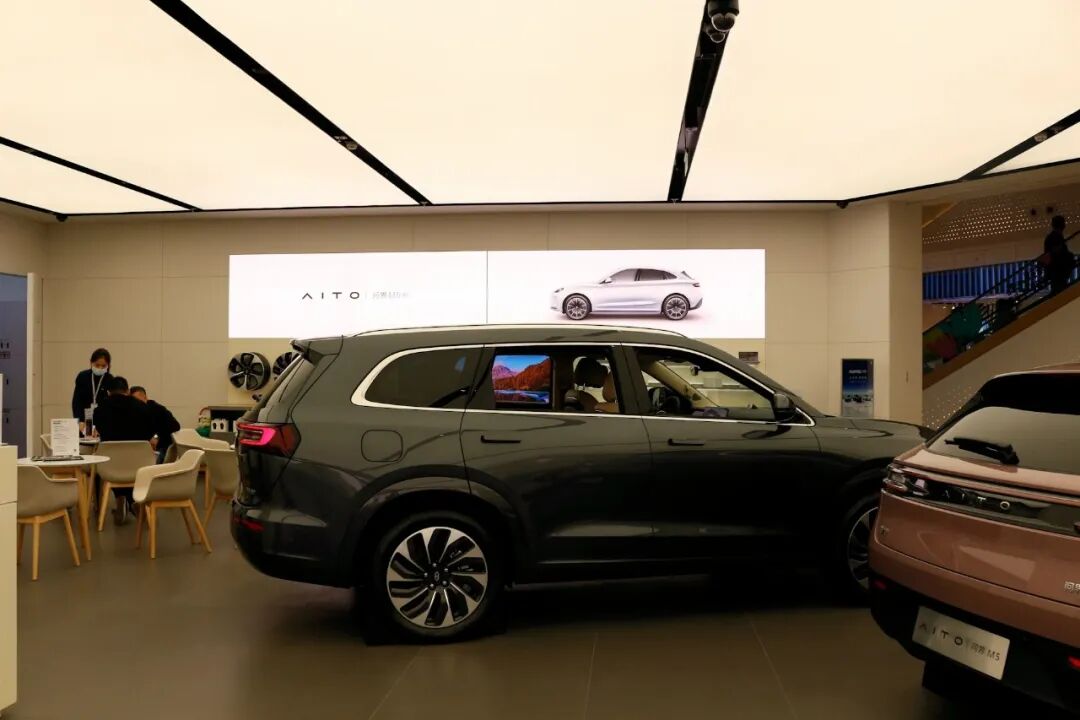
Secondly, Sharp urgently needs to find a new growth driver for its performance. The home appliance market, where Sharp operates, has now entered a mature phase. After years of development, the technology of home appliances has gradually stabilized, and the market is highly saturated. Consumer demand for home appliances has shifted from purely functional needs to personalized and intelligent directions. However, this shift has not led to a significant increase in market profits; instead, the profit margins have become very limited.
Meanwhile, the rise of domestic competitors has exerted immense pressure on Sharp. In recent years, Chinese home appliance companies have made significant strides in technology research and development, manufacturing, and marketing. With cost-effective products and comprehensive after-sales services, they have quickly captured both domestic and international markets. Taking televisions as an example, Chinese brands now rival international brands like Sharp in terms of picture quality and smart features, often at more competitive prices. This has gradually eroded Sharp's market share, particularly evident in the domestic market.
In this context, finding new growth avenues has become the most pressing issue for Sharp. The automotive market, as a vast industry, holds immense development potential, with the new energy vehicle market experiencing explosive growth. Simultaneously, the development of smart vehicles has brought about new transformations in the automotive industry. Cars are no longer just a means of transportation but have evolved into mobile spaces integrating intelligent travel, entertainment, office functions, and more. Sharp has identified this market opportunity and hopes to achieve business diversification through cross-industry car manufacturing, thereby breaking free from the stagnant growth in the home appliance market.

Thirdly, the contract manufacturing model provides opportunities for companies unfamiliar with car manufacturing. Previously, car manufacturing was a highly capital-intensive industry. Whether it was the renowned BBA (BMW, Benz, Audi) or American giants like Ford and General Motors, they all had to accumulate technology over decades to secure a foothold in the automotive market. However, the market has undergone significant changes in recent years. Sharp's smooth entry into the automotive market would not have been possible without the support of the renowned contract manufacturing giant, Foxconn. Foxconn possesses extensive experience and advanced technology in electric vehicle platforms, providing a solid foundation for Sharp. Foxconn's underlying logic in car manufacturing has always been CDMS (Contract Design and Manufacturing Services), attempting to replicate the "iPhone contract manufacturing model" in the electric vehicle sector, even going so far as to declare its ambition to become the "Android of electric vehicles" and the "TSMC of the automotive industry." This model holds significant implications.
More crucially, the business model adopted by Foxconn shares considerable similarities with Sharp's home appliance business. This similarity allows Sharp to leverage its successful experience in the home appliance sector to quickly enter the automotive market at a lower cost. For instance, in the production process, Sharp can utilize Foxconn's mature manufacturing system and supply chain management capabilities, reducing substantial upfront investment and exploration time. In terms of sales models, the current prevalent direct sales model in shopping malls is highly compatible with Sharp's existing sales system. Sharp can directly apply the channel resources, customer relationships, and marketing experience accumulated in home appliance sales to automotive sales, achieving efficient resource integration and utilization. This approach not only enables Sharp to lower the barriers and risks of entering the automotive market but also enhances operational efficiency, allowing it to establish a foothold in the market more quickly.
Fourthly, how should we view Sharp's future in car manufacturing? From a long-term perspective, while Sharp's entry into the car manufacturing sector may not seem overly challenging, achieving sales success is far from easy. This is also the most crucial issue that Sharp needs to deeply consider and address in the future. In the fiercely competitive automotive market, consumers have high expectations for a car's quality, performance, safety, and intelligence. To stand out among numerous competitors and create a hit product that resonates with consumers, Sharp must invest significant effort in technology research and development, product design, brand building, and after-sales service. From the perspective of industry development patterns, cross-industry car manufacturing is never a game of "hopping on the bandwagon" but a protracted battle that tests a company's comprehensive capabilities. Xiaomi's success stems from the precise combination of its ecosystem traffic and cost-effectiveness strategy, while Huawei's breakthrough relies on its long-term accumulation of underlying technologies. For Sharp to establish itself in the automotive market, it must find its unique core competitiveness.
Therefore, for Sharp, entering the market is just the first step. What truly determines success is whether it can find a unique value proposition in the fierce market competition, tell a compelling story that resonates with consumers, and ultimately deliver a product that people are willing to pay for. For Sharp, the journey in car manufacturing has just begun, and its future performance remains to be seen, depending on its own efforts.
END
-
![]()
ByteDance, DJI, and Xiaohongshu Secure Top Three Positions Among China’s Fastest-Growing Unicorns
-
Tesla's in-car voice system in China is finally learning to 'understand human language'
-
![]()
Foreigners Are Amazed: Chinese Electric Vehicle Drive Systems Unveil Innovative 'Poses'
-
![]()
700,000 Brothers and the Future of Robots: Behind JD.com's 'Nirvana Plan'
-
![]()
Zhipu's Trillion-Dollar Valuation: A New Chapter for China's AI
-
![]()
Is Laifen, a 'Dyson Alternative' on the Rise, Now Ensnared by the 'Alternative Curse'?
-
![]()
Beyond Patents: Insta360 and DJI Compete in Retail
-
![]()
Piercing Through Industry Chaos: The Curtain Rises on Compliance for Autonomous Driving