Tesla's 'Initial Foray' in India Hits a Snag, Selling Just 100 Units in Two Months
 12/02 2025
 765
765
Introduction
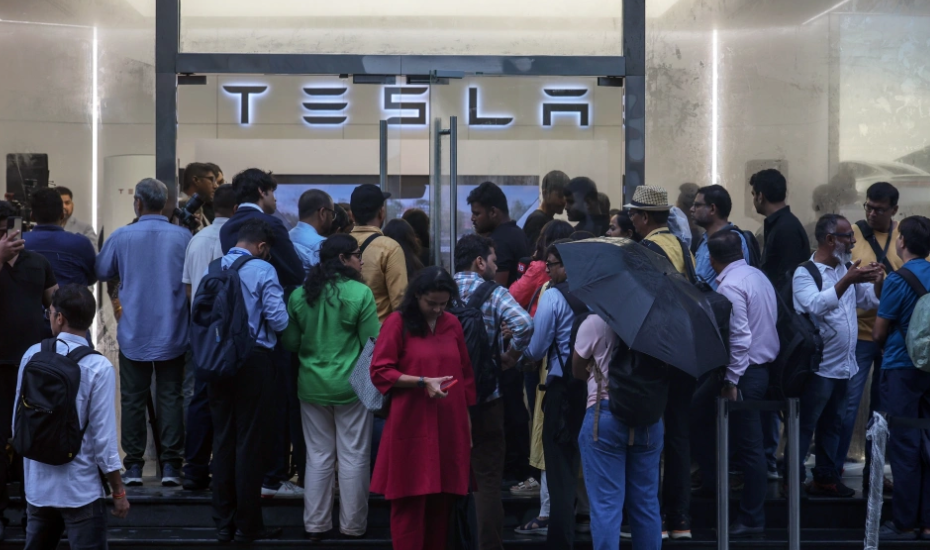
Since launching sales in mid-July, Tesla's market performance in India has not met expectations, whether measured by order volume or final delivery numbers.
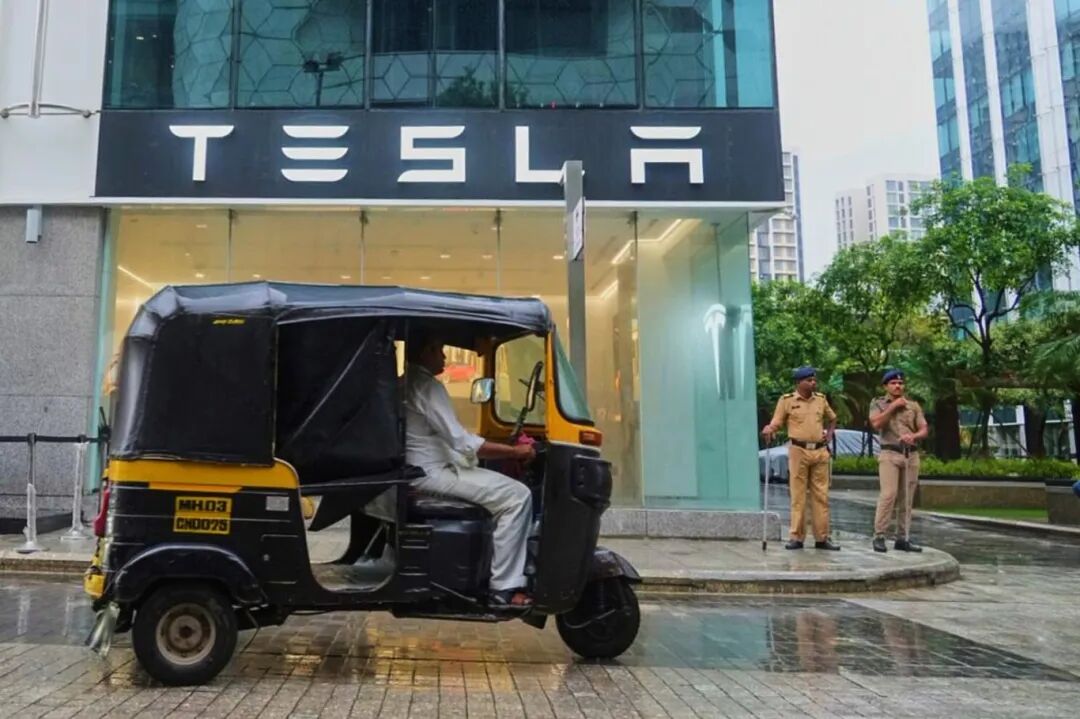
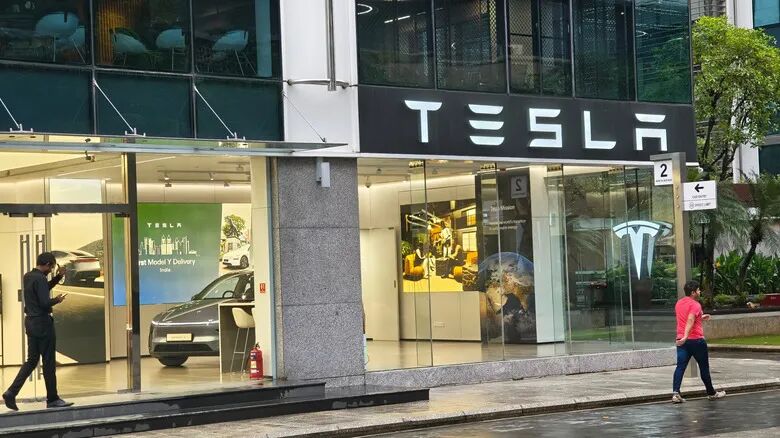
After witnessing two consecutive quarters of declining sales, Tesla embarked on a global quest for new markets. In this pursuit, the company officially entered the Indian market in July this year, inaugurating its first showroom in Mumbai.
Situated within a sprawling 4,000-square-foot commercial complex, the China-manufactured Model Y stands as Tesla's sole offering in the Indian market, entrusted with the mission of securing the company's 'initial victory' in India. Priced at a starting point of 5.989 million rupees (approximately 499,000 yuan), with the long-range rear-wheel-drive variant fetching 6.789 million rupees (approximately 566,000 yuan), the Model Y targets the premium segment.
However, the market response in India, in terms of both order volume and final delivery, has fallen short of Tesla's aspirations since the mid-July sales commencement.
As of early September, Tesla had garnered slightly over 600 new car orders, a figure that undoubtedly cast a shadow of disappointment over the management team, including Musk. To put this into context, these 600-plus orders pale in comparison to Tesla's global delivery rate of one vehicle every four hours in the first half of this year.
What came as a surprise to Tesla was the minuscule conversion rate of these orders into actual deliveries. According to statistics from foreign media outlet Insideevs, since the formal launch of deliveries in September, Tesla had managed to sell just over 100 new cars in India within two months by the end of November, averaging a mere 50-plus deliveries per month.
The lackluster response in the Indian market was an unexpected blow for Musk. Interestingly, in the Indian market, brands such as BMW, BYD, and Mercedes-Benz also offer models within the same price range as the Model Y. However, benefiting from tax incentives, their sales in the retail market have outstripped Tesla's.
It is reported that Tesla currently operates only two Supercharger stations in India, located in Mumbai and New Delhi, respectively. Sources informed the BBC that Tesla has commenced efforts to bolster the construction of India's electric vehicle ecosystem in a bid to revive sales momentum.
Tesla's strategy to bolster sales in the Indian market revolves around a 'three-pronged' approach: firstly, to enhance market acceptance; secondly, to expand the charging station network across India; and thirdly, to elevate service quality and fortify customer experience.
Experts opine that high taxes and limited market acceptance remain the primary hurdles impeding the growth of India's electric vehicle industry. For Tesla, the premium pricing of the Model Y, its inaugural model in the Indian market, has further complicated its early market expansion endeavors.
Tesla's rocky start in India has also caught the attention of local media.
Hormazd Sorabjee, Editor-in-Chief of Autocar India magazine, remarked to the BBC, 'By any metric, Tesla's current sales figures are underwhelming. However, I believe this represents a strategic move for a specific phase. They've just taken their inaugural step in India, and the potential for future sales growth is immense.'
India is a pivotal market that Musk has long aspired to conquer.
While the Indian market has posed a formidable challenge for numerous multinational automakers, and even Musk has encountered setbacks in previous negotiations, this has not deterred Tesla's resolve to penetrate the Indian market.
As early as 2021, the Indian government extended an olive branch to Musk, offering substantial policy and business incentives. The mere prospect of tariff reductions was sufficient to entice Musk in Texas.
However, the honeymoon period between Musk and the Indian government was short-lived, as tariff barriers erected by India compelled Tesla to suspend numerous plans for factory construction and electric vehicle sales. In 2022, Tesla abandoned its search for sales showrooms in India and redeployed its recruited team to other regions worldwide.
'These are the highest tariffs globally!'
Musk once voiced his discontent with the situation in India, but Tesla eventually broke free from the over-year-long negotiation impasse with the Indian government.
Although subsequent opportunities arose to re-enter India and invest in local factory construction, considering the Modi government's erratic policies and harsh business environment, Tesla ultimately abandoned the notion of establishing a factory presence. Instead, it sought opportunities to open showrooms in major cities such as New Delhi, Mumbai, and Bangalore.
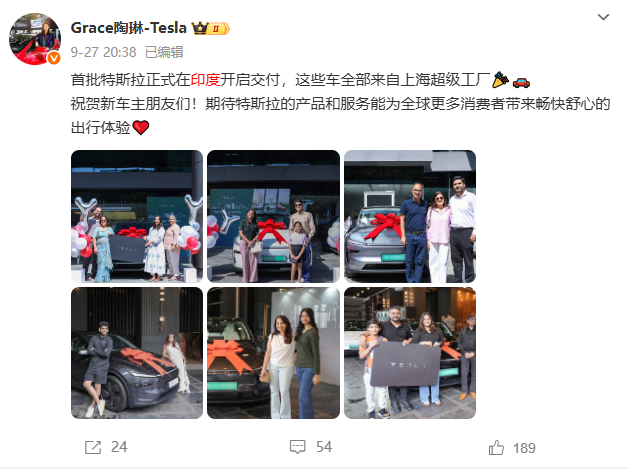
The Model Y sold in India this year is entirely manufactured in China. On the day of the official opening of Tesla's first showroom in India, Tesla Vice President Tao Lin promptly extended blessings on social media and announced that the first batch of Tesla Model Ys in India had been formally delivered, all produced at Tesla's Shanghai Gigafactory.
Although the Indian government unveiled incentive policies in March last year to attract global electric vehicle manufacturers, given past setbacks, Musk has lost interest in local production in India and continues to prioritize an import-based market strategy.
From recent operations, it is evident that policymakers led by Modi aim to leverage foreign investment to bolster their position while harboring concerns that these foreign entities may become too dominant and erode their market share. This 'dilemma' lies at the heart of Tesla's previous setbacks in India and is a pivotal reason why Musk ultimately opted to introduce 'Made in China' vehicles.
However, these new Tesla vehicles from the Shanghai Gigafactory still confront practical hurdles, such as the sluggish development of charging infrastructure in India. According to statistics, electric vehicles constitute less than 3% of passenger car sales in India, and charging infrastructure remains a significant bottleneck, with only about 25,000 charging stations nationwide.
On the flip side, Indian consumers are becoming increasingly discerning.
Interviews conducted by foreign media with local car buyers in India reveal that compared to five years ago, individuals now place greater emphasis on a new car's practical performance rather than brand prestige. Especially for new entrants like Tesla, with a local supercharging network yet to be established, the inclination to purchase the first batch of models has naturally waned.
Of course, Tesla also lacks a price advantage locally.
Currently, the Model Y launched in the Indian market is fully imported, resulting in exorbitant tariff costs. Unless Tesla subsequently establishes a local factory in India, its prices are unlikely to be competitive. According to S&P Global Mobility data, the premium car market in India (priced above $40,000) accounts for a mere 1% of total sales, with electric vehicles comprising roughly 10% of this segment.
Editor-in-Chief: Shi Ye Editor: He Zengrong
THE END
-
![]()
ByteDance, DJI, and Xiaohongshu Secure Top Three Positions Among China’s Fastest-Growing Unicorns
-
Tesla's in-car voice system in China is finally learning to 'understand human language'
-
![]()
Foreigners Are Amazed: Chinese Electric Vehicle Drive Systems Unveil Innovative 'Poses'
-
![]()
700,000 Brothers and the Future of Robots: Behind JD.com's 'Nirvana Plan'
-
![]()
Zhipu's Trillion-Dollar Valuation: A New Chapter for China's AI
-
![]()
Is Laifen, a 'Dyson Alternative' on the Rise, Now Ensnared by the 'Alternative Curse'?
-
![]()
Beyond Patents: Insta360 and DJI Compete in Retail
-
![]()
Piercing Through Industry Chaos: The Curtain Rises on Compliance for Autonomous Driving