Dongfeng Nissan: A Long-Dormant Giant Finally Stirs
 12/02 2025
 508
508
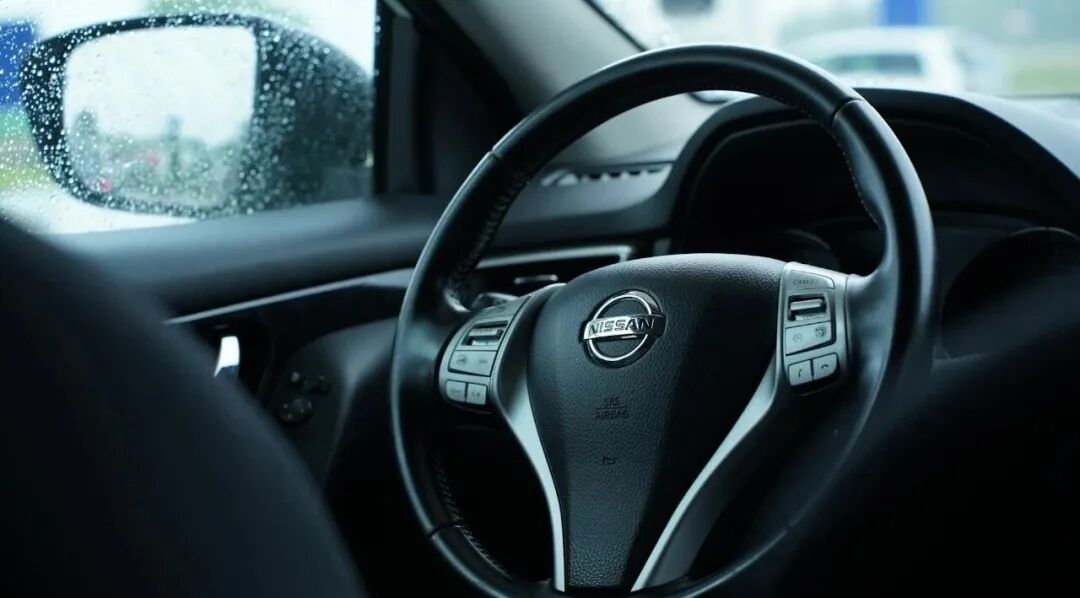
Dongfeng Nissan and its industry peers are now scrambling to keep pace in a rapidly evolving market.
Produced by | Xinpinlue Finance and Economics Author | Wu Wenwu
Dongfeng Nissan's foray into sofa sales marks a significant awakening, as the once-complacent automotive giants, long dormant, are now collectively racing to catch up. Yet, questions linger.
01
Dongfeng Nissan's Sofa Venture: A Sign of Revival
At the recent Guangzhou Auto Show, major automakers were in full swing, showcasing their latest offerings. While Chinese new energy vehicle (NEV) startups and domestic automakers stole the limelight, several established joint venture automakers also drew considerable attention.
Xinpinlue Finance and Economics observed that on November 29, the topic "Dongfeng Nissan Heeds Advice, Diversifies into Sofa Manufacturing" briefly topped Baidu's financial hot search list, sparking widespread market attention and online discussions.
It turned out that Dongfeng Nissan's Zero-Pressure Cloud Blanket Sofa quickly became an internet sensation, with netizens clamoring to purchase it.
Consequently, on November 29, Dongfeng Nissan officially announced its entry into the home sofa market, stating that its flagship product, the Zero-Pressure Cloud Blanket Sofa, would make its debut at the N6 launch event on December 1.

A Dongfeng Nissan executive described the sofa as ergonomically designed, offering exceptional comfort for prolonged sitting, while being environmentally friendly, healthy, and safe. The venture is backed by the strength of a joint venture with a central enterprise.
It is reported that Dongfeng Nissan has incorporated a three-layer cushioning system and a spring frame structure into the sofa, with the surface crafted from automotive-grade eco-friendly leather.
In Xinpinlue Finance and Economics' view, while this move can be seen as a pre-launch marketing strategy for Dongfeng Nissan's new car, it has undoubtedly garnered external attention. Clearly, Dongfeng Nissan is capitalizing on this wave of popularity, continuously generating buzz, and choosing to strike while the iron is hot by venturing into a "side business."
Behind Dongfeng Nissan's sofa venture lies a more noteworthy aspect: its rapid response mechanism for product development.
It is reported that Dongfeng Nissan swiftly acted on user demand, conducting an emergency review within 48 hours of users expressing purchase intent and producing a prototype within 30 days. The current product development cycle is 60% shorter than the industry average.
Dongfeng Nissan also plans to introduce a "Vehicle-Grade Home Furnishings" category on its Tmall flagship store, initially launching five seat-derived home furnishing products.
Well-known automotive brands have distinct labels: Mercedes-Benz for luxury, Audi for technology, BMW for driving pleasure, Honda for "buying an engine and getting a car," and Toyota for durability. Nissan's label? The Nissan Big Sofa.
Xinpinlue Finance and Economics recalls that when Didi Chuxing's premium service was first launched a few years ago, the Nissan Teana was highly popular among consumers. Back then, opting for a premium ride often meant getting a Nissan Teana.
Over the past year or two, Dongfeng Nissan has been accelerating its electrification transformation in the Chinese market. Leveraging Nissan's big sofa as a major selling point, it has won over many consumers.
Last week, while driving on the highway at night, Xinpinlue Finance and Economics spotted a green-licensed car ahead that looked quite impressive. Initially, it was assumed to be from a new energy vehicle startup or a Chinese electric vehicle brand. However, upon checking the rearview mirror, it was discovered that the car bore the Nissan logo.
From Dongfeng Nissan's sofa venture and its rapid product response, it is evident that this established joint venture automaker has finally woken up.
02
Dongfeng Nissan's Dilemma: The Only Way Forward is to Adapt
Why is Dongfeng Nissan increasingly heeding advice in the Chinese market now? The answer is simple: in the fiercely competitive Chinese automotive market, Nissan has found itself in a dilemma in recent years and can only adapt to survive.
Public information shows that Nissan was one of the early Japanese automotive brands to enter the Chinese market, with the first Nissan Cedric sedan arriving in China. It wasn't until 1985 that Nissan Motor established an office in Beijing.
In 1993, Nissan's first joint venture for complete vehicles in China, Zhengzhou Nissan, was established. Later, in 2003, Nissan and Dongfeng Motor formed Dongfeng Nissan as a joint venture.
During the era of traditional fuel vehicles, Dongfeng Nissan enjoyed the dividends of China's automotive industry development. Data shows that at its peak in 2018 and 2019, its sales in the Chinese market exceeded 1.5 million units, marking a glorious period.
During its heyday, Dongfeng Nissan's cars were highly favored by Chinese consumers, ranging from the compact Tiida to the family car sensation Sylphy and the benchmark B-class car Teana. Nissan even launched a Teana Royal version in the Chinese market and engaged Huang Xiaoming as a spokesperson, positioning it as a solid mid-to-high-end sedan.
However, the good times did not last long. After 2019, Nissan's car sales in the Chinese market declined year by year. By 2023, its sales in China had plummeted to 798,300 units, a year-on-year decrease of 24.05%.
Data shows that in 2024, Nissan's car sales in China, including both passenger vehicles and light commercial vehicles, amounted to approximately 690,000 units, a year-on-year decrease of 12.2%. Compared to the 1.13 million units sold in 2021, sales have nearly halved.
Nissan's decline coincided with China's accelerated entry into the new energy vehicle era, particularly the strong rise of local NEV startups like NIO, XPENG, and LI Auto, as well as the continuous emergence of established local automakers such as BYD, Chery, and Geely, which have captured a portion of Nissan's market share.
Nissan was actually a pioneer in the global electrification field, having launched the Leaf pure electric model in the global market early on. However, when faced with the accelerated development of China's NEV market, Nissan failed to keep pace and increasingly fell behind.
Coupled with Nissan's global debt crisis and operational difficulties, which led to massive layoffs, the closure of seven global factories, and even an expected annual loss of 275 billion yen in 2025, the company is considering selling its headquarters building to raise funds.
Fortunately, in the Chinese market, Nissan adopts a joint venture model. Facing the electrification trend in China's automotive consumer market and consumer demands, Nissan is fully accelerating its localization in the Chinese market and embarked on a new round of localization transformation in October 2025.
Under the new Glocal (Global + Local) cooperation model between Nissan and Dongfeng, the Chinese team has gained product leadership for the first time, with the research and development cycle compressed to within 24 months.
From a market feedback perspective, models like the N7 launched by Dongfeng Nissan have achieved remarkable sales. Dongfeng Nissan (including Nissan, Venucia, and Infiniti brands) sold 62,794 units in October 2025, a year-on-year increase of 9.5%, which of course includes newly launched new energy models.
Clearly, faced with strong competitors from all sides, Nissan, which is in a dilemma, can only adapt and heed advice.
03
The Long-Dormant 'Gas Guzzlers' Have Awoken and Are Racing to Catch Up
During the era of traditional fuel vehicles and joint venture cars, luxury brands like Porsche, Mercedes-Benz, BMW, and Audi, as well as mass-market brands like Volkswagen, Toyota, Honda, and Nissan, along with American and French brands, could all easily succeed. Many models even required a price premium to purchase.
With China's entry into the new energy vehicle era and the rise of NEV startups, established local automotive brands also followed suit, continuously seizing and eroding market share from traditional joint venture and foreign automotive brands. This led to declining sales and reduced brand influence for some, and even the withdrawal of brands like Suzuki, Fiat, and Mitsubishi from the Chinese market.
China's proportion in the global automotive market and its importance to international mainstream automotive brands remain unchanged, whether in the past, present, or future.
Faced with changes in China's automotive consumption trends and rapid industry iterations, complacent joint venture and foreign automakers have had to re-examine the Chinese market, especially the new demands and changes in car consumption among China's new generation of young people.
For joint venture automakers to continue developing in the Chinese market in the future, there are only two paths: the first is to continue lagging behind or remain complacent, and the second is to further accelerate localization in the Chinese market. There is no third option.
From the market trends observed over the past year or two, several mainstream joint venture automakers have chosen the second path, with Dongfeng Nissan being just one of them.
Toyota, a fellow Japanese automaker, is also accelerating its localization development in the Chinese market. It has made adjustments to its product lineup, technological cooperation, research and development system reforms, and market positioning optimization in China. It has launched pure electric models under the bZ brand, with market sales and performance being quite good. If one didn't see the Toyota logo, they might mistake it for a domestic car brand.
Toyota has even granted more research and development authority for existing or next-generation models to its Chinese joint venture automakers. For example, Toyota plans to launch extended-range models in the Chinese market in the future.
Volkswagen has not only accelerated the introduction of global models to the Chinese market but has also begun to focus on developing localized models. For instance, Volkswagen also plans to launch extended-range models in the Chinese market.
Buick, which is even more localized in the Chinese market, has launched different price points and powertrain options (fuel and plug-in hybrid) for its original iconic model, the GL8, in the MPV segment, transforming the GL8 into a large model family. It has also introduced the Buick Avenir brand.
Several mainstream joint venture automakers are further localizing their operations in the Chinese market, including model positioning, product research and development, manufacturing, brand marketing, and customer service. It is almost like a process of reshaping, restructuring, or reinventing.
Another point worth noting is that these joint venture automakers are catching up on smart technologies in the Chinese market. Previously, joint venture automakers were reluctant to hand over their "souls" to others, but now they have no choice.
Brands like Audi, Mercedes-Benz, BMW, Volkswagen, Toyota, and Nissan are all catching up on smart technologies, aiming to make their cars smarter. For example, they are incorporating HarmonyOS cockpits, adding more lidar sensors and advanced intelligent driving assistance systems. A notable example is the domestic A5 models from FAW-Volkswagen and SAIC-Volkswagen, which have launched Huawei Qiankun Intelligent Driving versions. Dongfeng Nissan has also introduced a Teana model with a HarmonyOS cockpit.
Overall, these joint venture automakers still possess brand advantages and have their own brand user bases and fans. Given the diversity of car consumption in China, there is still a promising market outlook for the future.
Xinpinlue Finance and Economics believes that the full localization of joint venture automakers in the Chinese market is a double-edged sword. Some models specifically designed for the Chinese market may not be recognized by all consumers. Therefore, it is crucial for joint venture automakers to balance global models localized for the Chinese market and models specifically designed for the Chinese market.
Furthermore, when all joint venture automakers are accelerating localization, making their vehicles smarter, and adding more intelligent driving assistance functions and HarmonyOS cockpits, homogenization may occur. Ultimately, it still comes down to an automaker's underlying product strength.
A new era of joint venture automaker models has arrived in the Chinese automotive market. It's a race to see who can move faster. Now, it's Dongfeng Nissan's turn to venture into sofa sales; in the future, it won't be surprising to see other joint venture automakers engage in more crossover businesses.
The cover image and accompanying pictures in this article are sourced from the internet, with copyright belonging to their respective owners. This article does not constitute any investment advice.
-
![]()
ByteDance, DJI, and Xiaohongshu Secure Top Three Positions Among China’s Fastest-Growing Unicorns
-
Tesla's in-car voice system in China is finally learning to 'understand human language'
-
![]()
Foreigners Are Amazed: Chinese Electric Vehicle Drive Systems Unveil Innovative 'Poses'
-
![]()
700,000 Brothers and the Future of Robots: Behind JD.com's 'Nirvana Plan'
-
![]()
Zhipu's Trillion-Dollar Valuation: A New Chapter for China's AI
-
![]()
Is Laifen, a 'Dyson Alternative' on the Rise, Now Ensnared by the 'Alternative Curse'?
-
![]()
Beyond Patents: Insta360 and DJI Compete in Retail
-
![]()
Piercing Through Industry Chaos: The Curtain Rises on Compliance for Autonomous Driving